
Sheep enclosure is a method of raising sheep, allowing them to grow vigorously and maintain robust health. Sheep farmers build specialized enclosures of various types and designs. Let's learn how to choose the right location for a pen and what to consider when building one.
Why do you need a corral: advantages and disadvantages
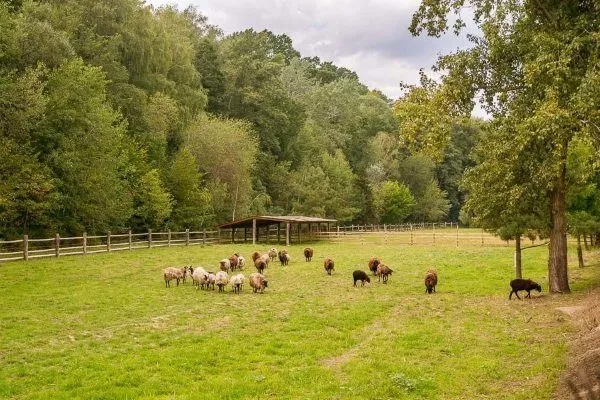
Not everyone who decides to raise and breed sheep has extensive fields and meadows for grazing. In such a situation, a corral—a fenced area where animals are kept freely—comes to the rescue.
Advantages of the corral:
- Keeping sheep in conditions close to natural conditions has a positive effect on their health, growth and productivity.
- Preventing predator attacks and flock dispersal.
- Saving money - no need to hire shepherds.
A disadvantage of keeping sheep in paddocks is the need for additional green fodder and vitamin-mineral complexes in the animals' diet, since the vegetation growing in permanent pens is quickly eaten and trampled.
Types of pens
| Name | Type of construction | Fencing material | Possibility of movement |
|---|---|---|---|
| sheepfold | Stationary | Wood/metal | No |
| Stationary pens | Stationary | Tree | No |
| Portable fencing | Portable | Metal | Yes |
| Baz | Stationary | Wood/metal | No |
There are several types of pens:
- sheepfoldA sheep shed consists of a barn and a small area for grazing. In areas with harsh climates, permanent structures are built, while in warmer regions, lightweight frame structures are used. A sheep shed cannot completely replace a grazing area.

- Stationary pensLarge areas for grazing sheep, surrounded by wooden fencing. The animals roam freely within them, but do not wander off. These pens are in use throughout the season.
- Portable fencingIt is assembled from metal sections that are secured to posts driven deep into the ground. When assembled, the enclosure takes up a small amount of space. A significant advantage of this design is the ability to move it to new grass areas as needed. During the winter, the enclosure is stored disassembled.
- BazThis is a permanent pen, completely covered by a canopy. It is used in areas with frequent precipitation to avoid driving the flock into the barn during inclement weather.
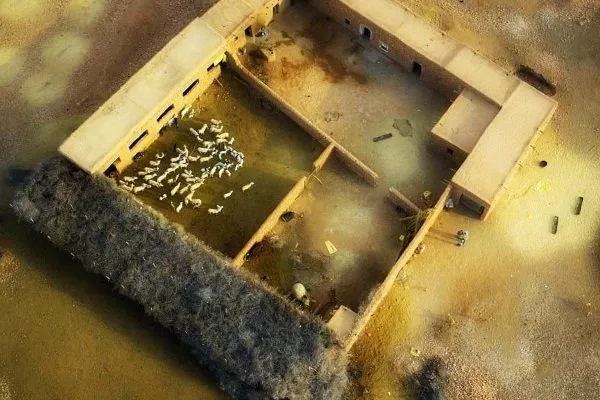
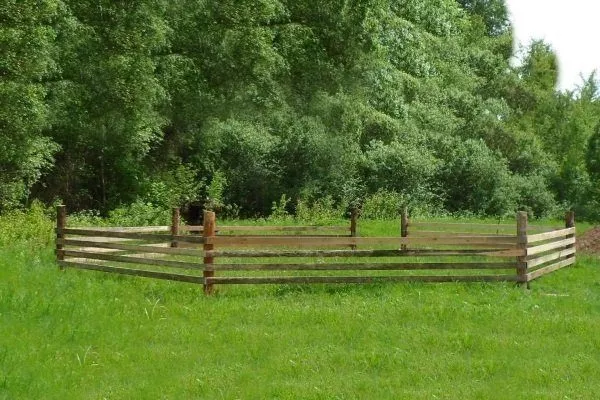
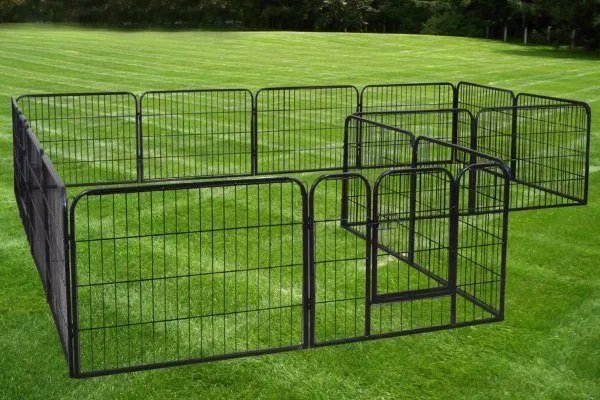
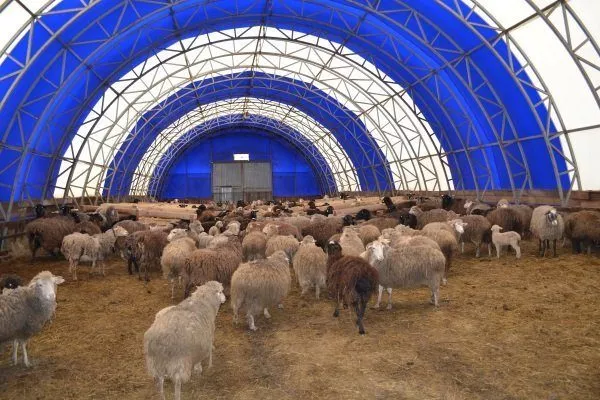
The choice of fencing for grazing a flock depends entirely on the availability of space and finances, as well as the planned number of livestock on the farm.
What is the design of the pen?
A permanent structure is considered a universal solution. It is used as a base for sheep enclosures and bases. Most often, the enclosure is rectangular and at least 1 m high.
Principles of pen construction:
- Carefully reinforce the support posts and secure the partitions so that animals cannot knock them down.
- Make the gate wide enough and have a reliable locking mechanism.
- Provide the pen with a shelter where the sheep can hide from the scorching sun.
- Place the required number of drinking bowls and feeders.
If the flock is large, it's a good idea to divide the enclosure into sectors. This will allow the flock to be separated by age and functional groups: young animals, ewes with lambs, and does with rams.
Sheep pen requirements
Keeping sheep in barns permanently leads to losses for the farmer. Maintaining constant cleanliness and automatic feed and water supply is difficult and costly. Ensuring adequate ventilation, maintaining the right temperature, and maintaining the right microclimate for the animals is challenging.
When confined, sheep become sick more often, show signs of lack of exercise, weight gain slows down, and reproductive performance decreases.
In addition to the sheepfold, it is necessary to build a corral, which must meet the following requirements:
- The area of the pen should be significantly larger than that of the barn. Spaciousness is important for sheep, even though they are herd animals. Young animals love to frolic, which is difficult in cramped conditions.
- The structure must be reliable and stable to withstand the aggression of sheep, prevent them from wandering off, and protect against predators.
Building materials
When building a sheep pen, you will need the following building materials and equipment:
- rope, stakes for marking;
- hand drill and/or shovel;
- roulette;
- building level;
- wooden posts or beams for support at least 2.5 m long;
- gate beam
- canopy beams;
- boards;
- roofing material;
- nails/screws and a hammer/screwdriver;
- bolts and nuts for them;
- bitumen mastic;
- brush;
- screenings, gravel or crushed stone;
- cement;
- container for mixing concrete mortar, bucket.
When choosing boards at the building supply store, be careful not to buy defective wood. Boards with knots, uneven surfaces, and other unmarketable materials are perfectly acceptable for a corral—they'll perform their intended function, with aesthetics taking a back seat. This approach allows you to save money without compromising the quality of the end result.
The process of building a corral
You can build a sheep fence without hiring a construction crew. Consult with someone knowledgeable or read up on the subject. Once you have a drawing, purchased the necessary materials, and marked out the layout, get to work.
How to choose the right place?
When planning a sheep pen, choose its location carefully. It's highly desirable to choose a flat area with a low water table.
- ✓ The groundwater level should not be higher than 1.5 m from the surface.
- ✓ The presence of a natural slope of the site for the drainage of storm water.
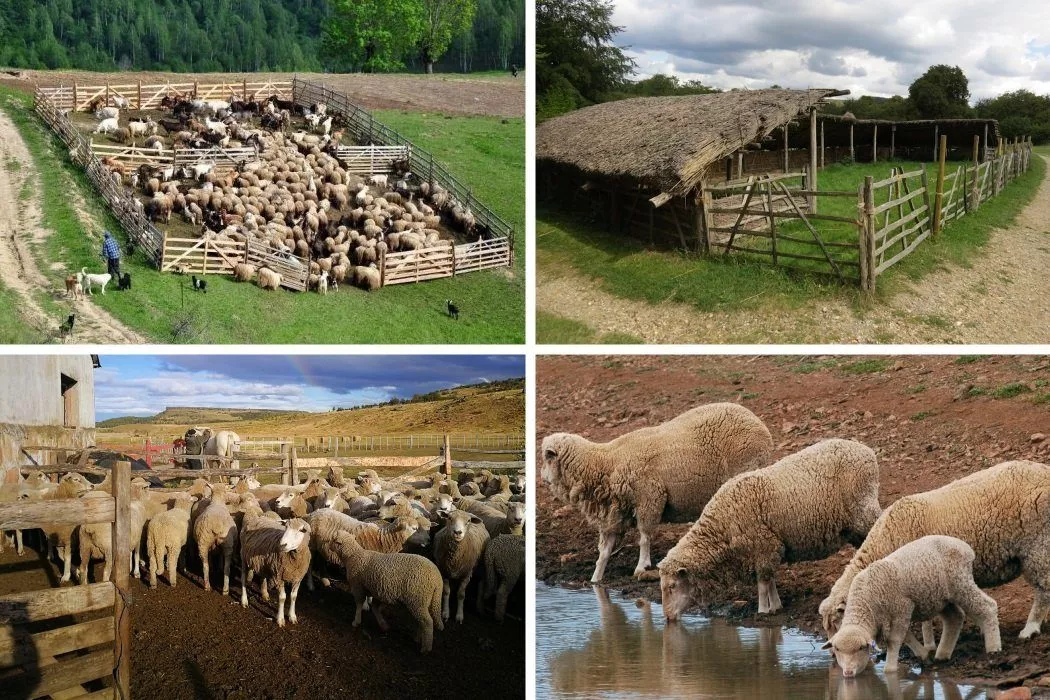
Having a natural pond or stream nearby is a major advantage. Otherwise, choose a site with a gentle slope to allow for an artificial reservoir fed by rainwater. Alternatively, consider automated waterers, as sheep refuse to drink standing water.
The plot size should be large enough to accommodate the sheep, not just the barn, but also the ability to graze them freely. Make sure there's easy access to the paddock. Multiple access roads will be a significant advantage.
Check with your local utility company to make sure there are no underground utilities running through the property. Their presence will prevent you from building a corral.
Refuse the site if:
- it is located in a swampy area;
- has low-lying terrain or high hills;
- is located in close proximity to highways or industrial enterprises;
- there is a cattle burial ground nearby;
- The pastures have soft soil or clay soil.
Marking and calculation of area
To avoid making a mistake when choosing a site, first calculate the required area of the pen. To do this, multiply the standards from the table below by the size of your herd.
| Herd composition | Minimum veterinary area, sq. m per 1 individual |
| Young animals | 0.8 |
| Adult | 1 |
| Sheep with lamb | up to 3 |
| Stud ram | 1.6 |
Example: There are 40 young goats. You will need a pen with an area of S = 40 x 0.8 = 32 sq. m.
Once you've obtained the figure through mathematical calculations, compare it with the size of the selected plot. If the minimum is met, and there are still some "empty" square meters left over, feel free to begin drawing up plans and planning the construction.
If the plot is barely big enough, or not enough at all, forego the construction. Another option is to purchase another plot for construction and split the flock into two.
Once you've decided on a site, begin drawing. This will help you visualize the future enclosure and accurately calculate the required building materials. Another advantage of drawing is the ability to make adjustments on paper rather than during construction.
Work order:
- Transfer all the enclosure dimensions to scale onto graph paper, and list the types and quantities of building materials below. This will make it easier to navigate the market when ordering and purchasing the necessary materials and equipment.
- Mark out the area according to the planned dimensions of the enclosure to define its boundaries. First, drive in small stakes to mark the corners of the structure. Stretch a string or rope between them. This guide will help ensure the walls and fences are erected evenly.
- Determine the location of the gate and place the canopy stakes opposite them. Calculate the location of the supporting posts. Maintain a distance of 1.3-1.7 m between them.
Clearing the area and preparatory work
The area designated for the construction of a permanent pen must be prepared. To do this:
- Cut down any excess tall trees, if any. Sheep need sunlight, but shade from a canopy or a few trees is sufficient. After cutting, uproot the trees.
- Clear the area of large objects, such as snags, tree trunks, boulders, etc. Level the area if necessary. Use a grader to move the high soil layer to the lower areas. Another option is to add soil to the uneven areas of the site instead of raking the high areas.
- If the area is heavily overgrown, mow the grass. If you have time before the flock is released into the paddock, you can sow the area with mixed grass.
Prepare the support posts:
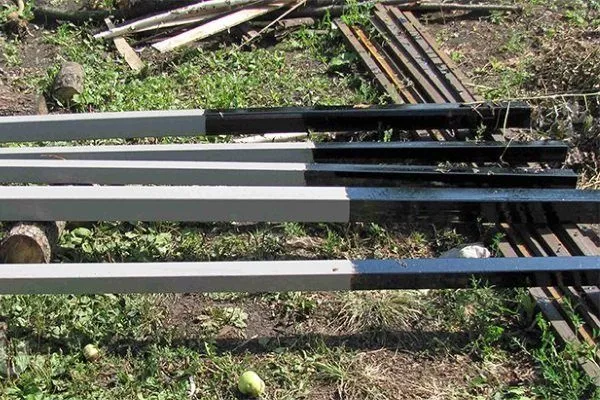
- To extend their lifespan and prevent damage from soil moisture, coat them with bitumen mastic, drying oil, or used motor oil at a depth of 1-1.3 m from the base. Rub the mixture thoroughly into the wood. Do not leave even the slightest untreated streak.
- After applying the protective layer, set the supports aside until they dry completely.
Fence installation instructions
To install the enclosure, follow the following steps:
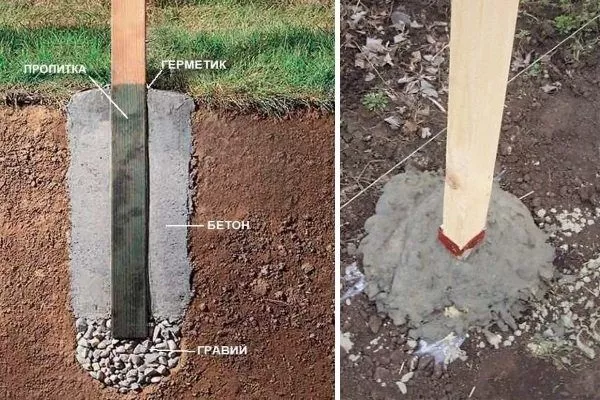
- Preparing holes for support pillarsWhen marking out the locations where the stakes will be installed, dig holes 30-40 cm in diameter. The depth depends on the soil type. In dense soil, a depth of 50-60 cm will be sufficient; in loose soil, a depth of 1-1.2 m is recommended. Place a 5 cm layer of crushed stone or gravel at the bottom of the hole.
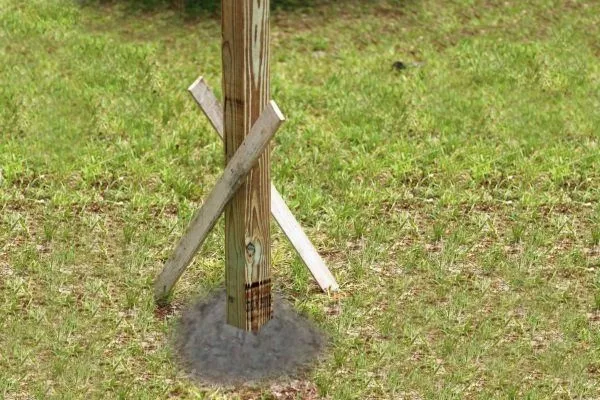
- Installation of supportsLower the posts into the prepared hole and level them. To secure the posts, construct supports using whatever materials are available. Check the vertical alignment of the supports again and adjust if necessary. Fill the hole with concrete. Install all the supports in this manner. After finishing the work, allow the concrete to set for 2-3 days.
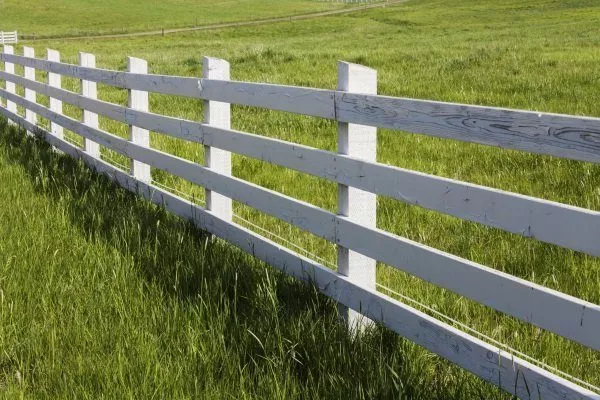
- Installation of crossbarsSecure the first crossbar 15-20 cm above the ground, nailing it to the support or screwing it in place. The longer the boards, the sturdier the fence will be. Attach the next horizontal bar end-to-end along the post's longitudinal axis.
Install the first row of boards in this manner, and then the rest up to the top of the supports.The reliability of the board-to-post attachment points can be increased by securing them through a section of board parallel to the support. This installation ensures that the crossbars are positioned within the supporting structure.
The distance between rows of crossbars is determined by the farmer. These can be either closed panel sections with minimal gaps or a fence with a 15-20 cm gap between the crossbars.
Canopy
The canopy provides shelter for the sheep from inclement weather and the scorching sun. The area of the canopy is calculated based on a standard of 0.8 square meters per sheep.
The progress of work during the construction of a canopy:
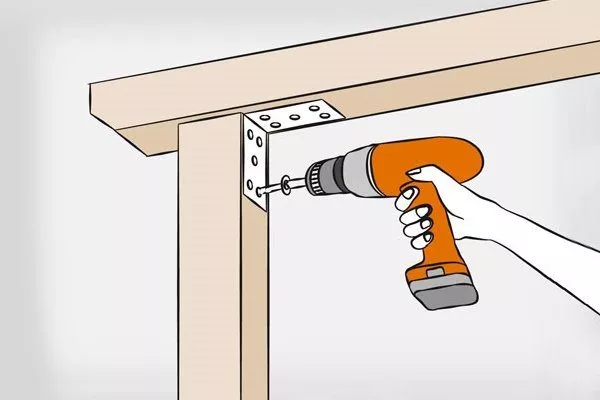
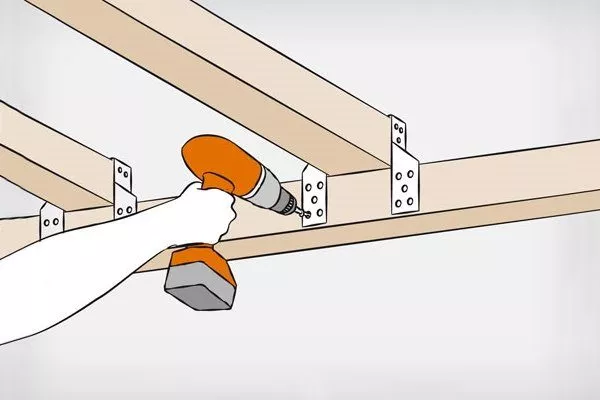
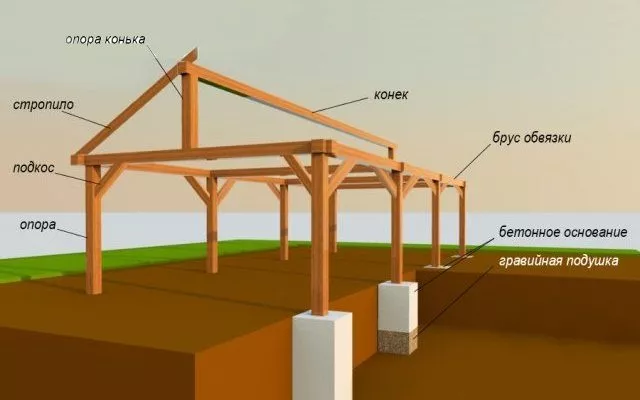
- Make the frame of the canopy from beams secured to the support posts, for example, using corners:
Depending on the scale of the structure, additional rows of support posts may be required. These are installed in the same way as fence posts.
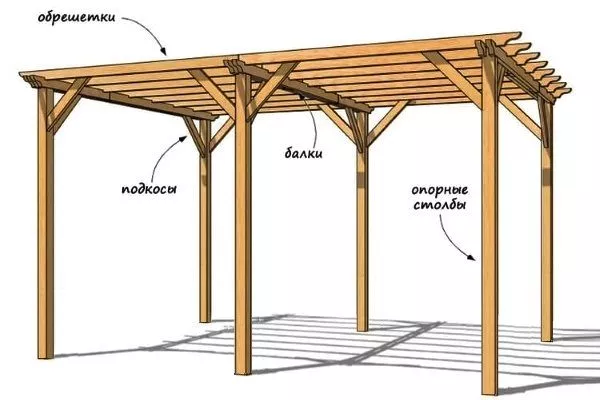
Work plan for installing a canopy- Determine the number of additional support posts based on the area of the canopy.
- Make sure all wooden elements are treated with an antiseptic.
- Check the roof pitch to ensure water drainage.
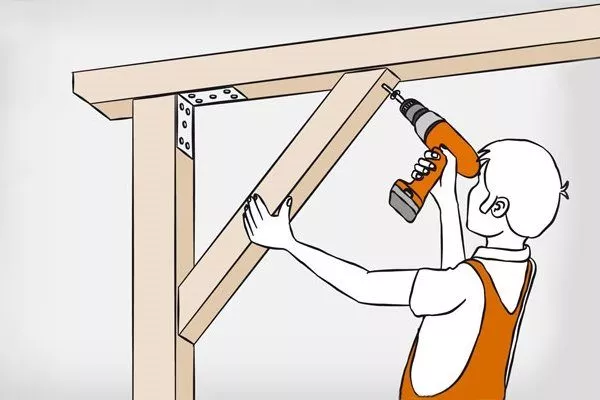
- To strengthen the structure, additionally secure the braces with self-tapping screws - on both sides at an angle of 45 degrees from each support post:
- Fasten rafters with a cross-section of 40x150 mm across the beams using bolts and nuts.
If the canopy roof is planned to be gable, then the middle row of pillars should be higher than the outer ones:
 If the area of the canopy is large, then a counter-lattice of transverse boards with a distance of 0.5 m between them will be required:
- Lay the roofing material on the roof frame. Slate is preferred, as the corrugated metal profile gets very hot in the summer, making it uncomfortable for the sheep. Overlap the slate and corrugated metal sheets, securing them with slate nails and screws, respectively. If the shed is small, you can cover the beams with boards and attach a tarp on top.
- To protect the animals from drafts and draughts, seal the back and side walls. Use adobe, brick, cinder block, wood, or other materials. It's important to leave no gaps in the walls; this allows for air circulation and retains heat.
Gates
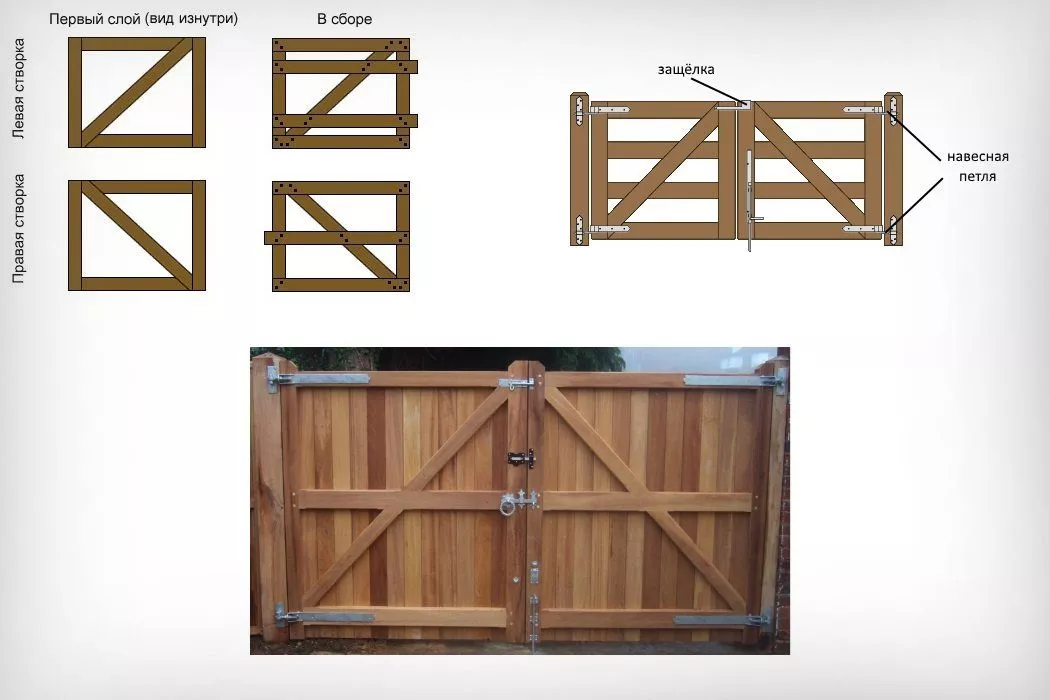
It's recommended to make the gate double-leaf or with a wicket door for people. The gate should be wide enough to allow two or three sheep to pass through without creating a bottleneck or causing panic.
Gate installation:
- Assemble the gate frame from timber in the shape of a mirrored Z. Nail boards to it vertically or horizontally, leaving a gap of 10-15 cm between them.
- Assemble the second sash in the same way.
- Screw the hinges onto the blanks and support posts. Hang the gate leaves and install the locking mechanisms and latches.
Arrangement of the enclosure
In the center of the fence, install on supports sheep feeders, as well as water bowls. Keep in mind that one container is designed for 4-5 individuals.
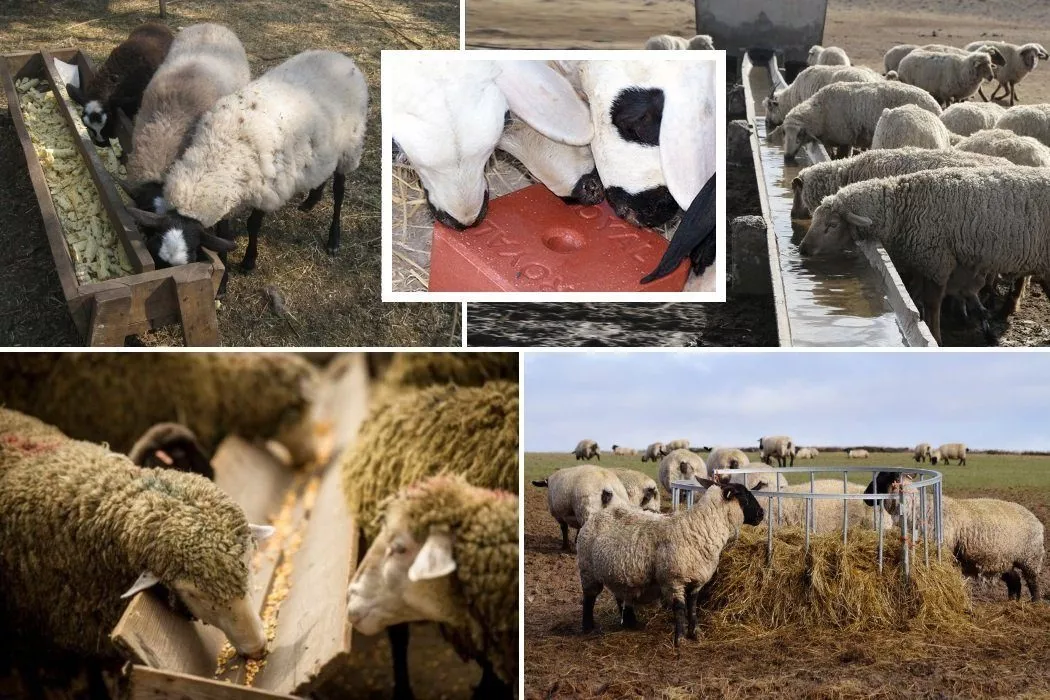
Types of feeders used in pens:
- Containers for compound feedTheir presence is important when animals are deliberately fattened for subsequent slaughter.
- Feeders for hay and grassThey consist of a trough made of slats spaced 10 cm apart. The bottom is solid. For lambs, this type of feeder is made in the form of a wooden box on legs with a total height of 45 cm. Slats are nailed onto the box, spaced 15 cm apart. This prevents the hay from scattering.
- Container for salt lickYou can buy ready-made products or make them yourself, for example, small wooden troughs.
- Drinking bowlsRecommended dimensions for waterers: width – 40 cm, height – 25 cm. Any material can be used for their manufacture. Automatic waterers are also available.
Everything you need to build a fence is available at the farmers' market. However, such purchases are quite expensive. DIY is not difficult, and the cost is significantly lower.
A sheep pen is a simple structure, so you can build it yourself. Choose the right site carefully, as this decision will determine your ability to expand your flock. A self-built pen will quickly pay for itself with improved health, growth, and development of your sheep.