
In summer, farmers release their sheep into a large area where lush grass grows. Feeding is easy: the animals eat whatever they can find.
But the situation changes in winter, when sheep are fed pre-prepared hay. To make feeding more convenient and to use feed more efficiently, farmers use feeders. The types and differences between them are discussed in this article.
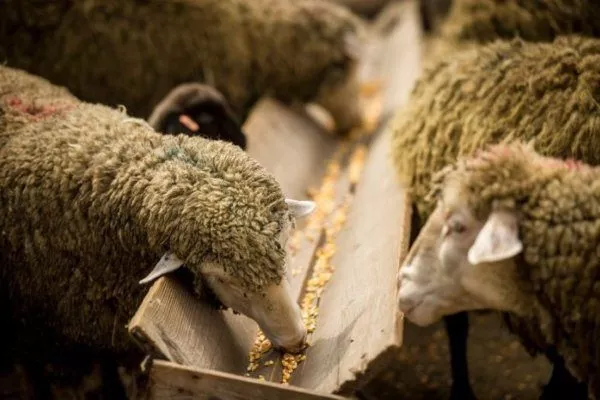
Description and types of feeders for sheep
| Name | Material | Type of feed | Hygiene |
|---|---|---|---|
| Combined wooden | Tree | Various feeds | Low |
| Brick | Brick | Succulent food | Average |
| Plastic hanging | Plastic | All types | High |
The purpose of a feeder is to provide feed to livestock. It's undesirable for a feeder to have cracks, holes, or holes. These can cause feed to fall out and end up on the ground, where it gets trampled into the mud, making it unsuitable for feeding.
- ✓ Moisture and rot resistance for wooden feeders.
- ✓ Absence of toxic substances in the composition of plastic feeders.
- ✓ Strength and durability of metal feeders.
Feeders are made from:
- scrap metal;
- plastic materials;
- concrete gutters;
- tree;
- bricks;
- sawn metal pipes.
Feeders can be designed exclusively for succulent food or concentrated food.
| Material | Hygiene level | Easy to clean |
|---|---|---|
| Tree | Low | Complex |
| Brick | Average | Moderate |
| Plastic | High | Easy |
| Metal | High | Easy |
There are many different types of feeders, each with its own pros and cons. Let's look at the three most commonly used types.
The first ones include combined wooden Feeders. Their advantages include ease of manufacture and versatility. The disadvantage is that these feeders require mixing different feeds.
The second type includes brick Feeders. The brick container is coated with a cement-sand mortar, which prevents water and rodents from getting through—though only for a short time. Another drawback is the inability to clean the feeder.
The last type is plastic hanging A feeder or rubber basin. The advantage of this type of feeder is that it's considered hygienic. Rubber and plastic are easy to clean. Containers made from these materials are suitable for all types of food.
Plastic hanging feeders are designed for one individual, which is considered a disadvantage of such devices for feeding sheep.
How to make a bird feeder from scrap materials with your own hands?
There's a common belief that sheep are content with the grass that grows under their feet (also known as "grass"). This is a very misconception.
When the sun is shining outside, the sheep's main diet is lush field grass. But when cold weather sets in, the flock is moved indoors, where they feed from indoor troughs.
The different types of sheep feeders are shown in the following diagram:
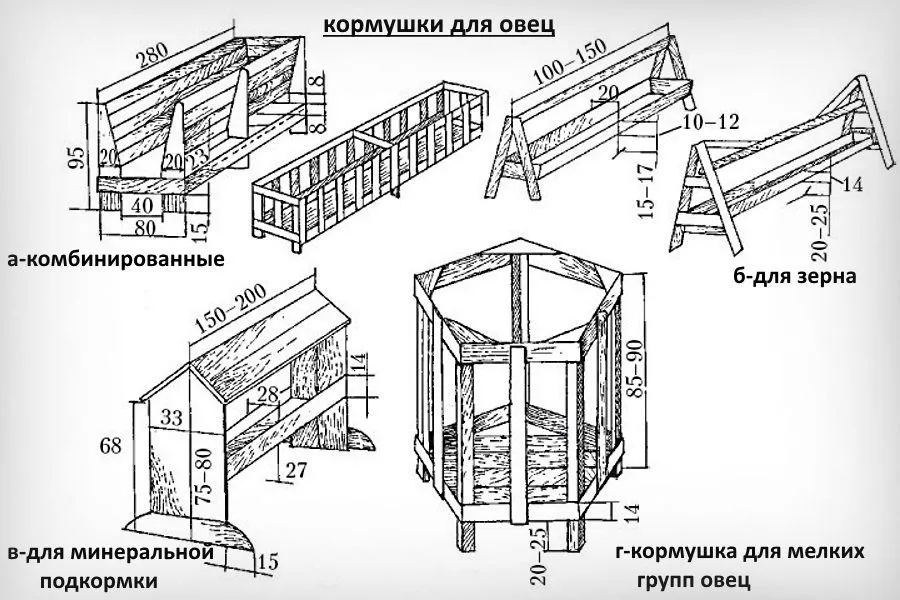
The main food source for animals in winter is feed prepared in the summer and fall. Sheep are fed:
- hay;
- succulent feed (silage);
- pea straw;
- barley straw;
- combined feeds.
The design of the feeder should be such that the feed is spilled and wasted as little as possible. These designs are divided into the following types: portable, permanent (stationary), and universal.
The height of the feeder is determined based on the requirement that there should be at least 40 cm of feeder length per sheep. So, if you have 10 sheep in your flock, the required length is at least 4 m.
Portable feeders are often made of wood. These feeders can be double-sided or single-sided (for placement near the walls of the barn).
In winter, when manure quickly accumulates in the barn, these structures need to be raised during cleanup. When it's time to completely clean out the barn in the spring, it's advisable to move them outside entirely.
Portable feeders look like a wooden trough or a cut pipe (it all depends on the material they are made of).
Wooden
A common type of manufactured structure is a wooden bird feeder. For anyone who has ever held a hammer and driven a nail into a wall, constructing one is not difficult.
The technology for making a wooden feeder for sheep is as follows:
- Take 2 square-section beams (from any type of wood) 125 cm long. The cross-section should be 50x50 mm.
- Nail these blocks together in a cross shape and place them vertically on two support points. The resulting structure should resemble the Roman numeral 5 (V).
- Screw an identical beam into the center of the "crosses." This beam will serve as the axis for the structure.
- Then, secure the same beams to the tops of the cross. Finally, use a beam with a smaller cross-section—40x40 mm. Nail it to the feeder every 30 cm. The beams will be vertical.
The advantage of this type of feeder is that the sheep's head (approximately 30 cm) fits through the gap without any difficulty. It receives the exact amount of food it needs. The feed will remain in the feeder, as the crossbars will retain it.
Since the raw materials from which the feeders are made are relatively inexpensive and the manufacturing process is quite simple, these designs are in high demand among small farmers.
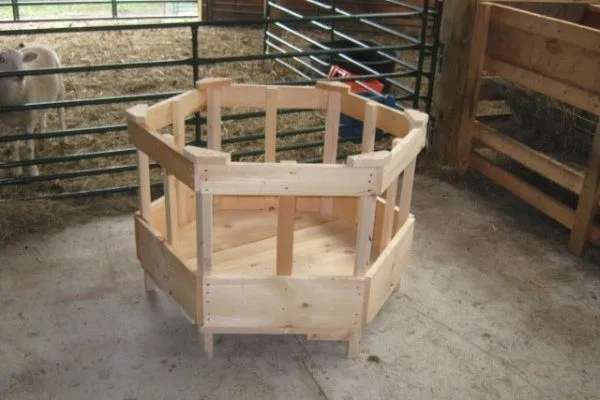
Manezhnaya
Many livestock owners use a plastic or wooden arena as a feeding area. Raise the arena approximately 0.5 m above the floor and store it in a dry location.
If the frequency of the planks in a given arena is quite high, and the distance between them is less than 30 cm, then the solution is to knock out every other plank to increase the distance between them.
If the playpen feeder is to be used for feeding the young, then a playpen with slats spaced less than 30 cm apart can be used. This distance is used to prevent adults from crawling through and reaching the young's food.
An important aspect of such a feeder is maintaining its dimensions. If the feeder is too large, the sheep will spend too much time rummaging around in it. This will lead to the feed inside becoming contaminated.
Metal and wood should not be coated with anti-corrosion agents, as sheep chew and lick the surfaces of feeders when feeding. Only impregnating the wood with vegetable oils is permitted.
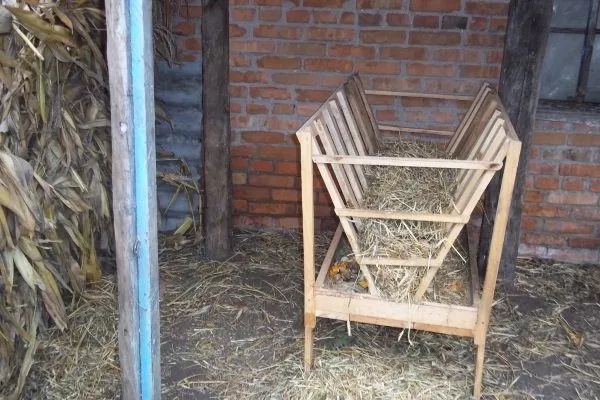
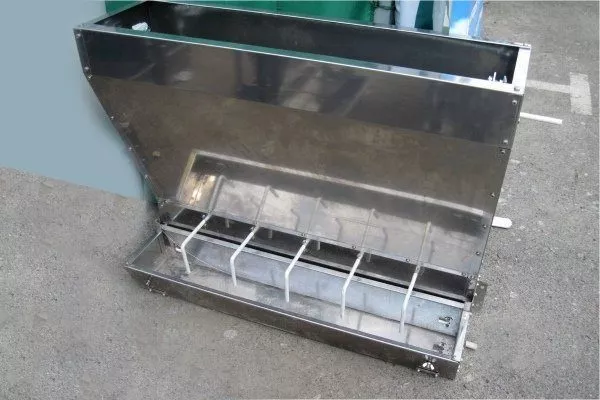
Bunker
The main difference with this type of feeder is that you can refill the food only once a week. This type of feeder is placed near a wall.
The barn wall serves as the far wall of the manger. The near wall is made of bars, the spaces between which correspond to the size of a sheep's head.
A platform—made of wood or scrap metal—is installed at an angle inside the resulting rectangle. The feed slides down the platform toward the grate at the front.
Metal
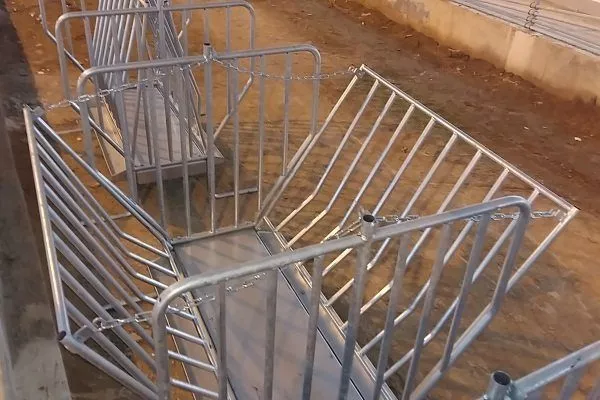
Practicality and durability are the key qualities of a metal feeder. It's also easy to assemble:
- Take window bars or sections of metal fencing (like “peaks”) - 2 pcs.
- Weld them together at right angles using electric or gas welding.
- Place them on the floor with the resulting “ridge” and weld 4 supports for stability.
The downside of this design is the cost of the material and the manufacturing costs. Not every homeowner has a welding machine or the skills to use one.
Salt feeders
Sheep need salt just as much as humans do. They often suffer from a lack of sodium or sodium starch in their bodies. Without mineral supplements, wool production drops sharply, and sheep become ill.
The amount of salt in the diet usually varies, depending on the sheep's weight (0.5%). The approximate daily requirement is 15 g of salt, or 4 kg in total per year. Salt is either added to the water or placed near the feeders.
Salt is most often sold not in loose form, like table salt, but in brick form—this makes it convenient to store and feed to sheep.
Feeders for lambs
When fattening lambs, manger feeders are used.
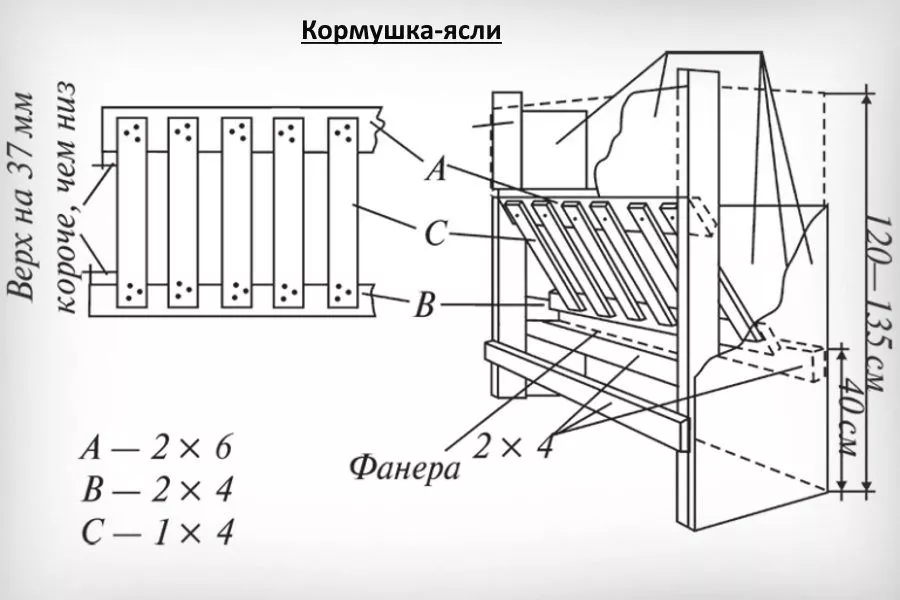
What is a crèche and what is it used for?
A manger is a device for feeding lambs. It is usually constructed as a lattice structure, where the farmer places hay. Alfalfa or sainfoin hay is the best hay for sheep of any age.
You can't pour food into the crate—this is the main difference between a crate and a feeding trough. Because a feeding trough has both a bottom and sides, the food doesn't spill out, but stays inside.
The disadvantage of almost all mangers is that other livestock (older sheep) also pull the hay out of the manger and scatter it on the ground.
Types of feeders for lambs
| Name | Type | Easy to download | Availability for adults |
|---|---|---|---|
| Hanging manger | Nursery | Complex | Low |
| Floor-standing crèches | Nursery | Convenient | High |
| Nursery using a pallet | Nursery | Convenient | Low |
| Combination feeder | Feeder | Convenient | High |
| Slow-release feeder | Feeder | Convenient | High |
| Reptuh | Feeder | Convenient | Low |
There are several types of crèches. Let's take a closer look at their pros and cons:
- Hanging manger. Bunker-type mangers are installed one level below, with small gaps between the bars to prevent adults from interfering with the young's feeding. Hanging mangers are smaller than floor-standing ones, making them more difficult to load with hay.
- Floor-standing crèches. The low height makes them easy to load with hay. However, adult ewes tend to climb into the floor cribs, which can result in the lambs not getting enough roughage. The hay stored in the floor cribs is also accessible to the adults.
- Nursery using a pallet. Hay that falls out of the manger ends up on a tray. It's difficult for the sheep to reach it.
- Combined feeder. It's easy to make yourself. The downside is that all types of food get mixed together in the feeder.
- Slow-release feeder. The feed stops falling onto the floor and is loaded into the structure once a day. When eating hay, the sheep's heads remain in a natural position. The downside is that adult sheep can climb on top and ruin the hay.
- Reptuh. It can be hung anywhere and takes up little space. It doesn't scatter grass too much. It's easy to weave a rotunda with any mesh size. It's less expensive than other types of feeders. The downside is that with larger mesh sizes, sheep get tangled. You need to check the rotunda occasionally for any strings that sheep have chewed through. This feeder also doesn't last very long.
Where can I buy a sheep feeder?
It's almost impossible to find sheep feeders online. If you do find an online farm store, the selection won't be great. For example, the Agroserver website sells wall-mounted plastic feeders with lids measuring 33x28 cm, but they don't inspire confidence.
At first glance, they seem so fragile that they'll break before they're even attached to the wall. I don't even want to think about what would happen to them when a ram sinks its teeth into them.
Avito has good plastic feeders and metal hay racks, but they're quite expensive. For less, it's better to buy a feeder or hay rack at a horse store. While the selection may be limited, you can return or exchange the item.
Mistakes when using sheep feeders
No matter how hard a farmer tries, without experience and knowledge, the likelihood of making a basic mistake when feeding sheep from mangers is high. Let's look at common mistakes and how to correct them:
- Lack of drinking bowls near feeders. Some farmers believe that sheep don't need water in winter because they feed on snow. Snow is frozen distilled water, which doesn't provide the animals with the necessary nutrients. Therefore, be sure to place clean water troughs near the feeders.
- Lack of drainage near drinking bowls. Even tiny hamsters knock over water bowls, let alone sheep, which are much larger! Water from the bowls spills out, and the ground doesn't absorb it completely. The result is a slurry (liquid mud) that mixes with livestock excrement. This environment is unsuitable for sheep due to colonies of putrefactive bacteria.
- Unwashed feeders. Some food in wooden and stone feeders gets stuck in the cracks and rots. This mostly affects silage. If the feeders aren't cleaned, sheep develop gastrointestinal problems.
The following video explains how to properly use a feeder and how to feed sheep in general:
Mixing feeds
Many farmers believe that proper feed distribution is the most important thing on the farm. At the very beginning (during the stall-winter period), adult ewes and lambs should be given good feed. Use lesser feed on cold days, when frosts become noticeable. Save the best quality feed for spring.
Hay and carrots have always been considered the best feeds. They should be fed first to lambs, and then to ewes and rams.
Before bedtime, to relieve the sheep's stomachs, they are given less nutritious feeds, and during the day, they are given more caloric feeds. Succulent feeds are given before the sheep drink water, and the rest are given after they drink water.
All sheep should be fed compound feed—a supplement to the sheep's roughage and succulent feed. Compound feed provides the cattle with all the nutrients they lack, making their diet optimal.
The most economical option is considered to be mixing compound feed yourself.
Sheep better absorb highly nutritious substances when fed a rich feed. Their weight increases, as does their wool production, and their reproductive functions are enhanced.
Sheep differ from other livestock; their feeding depends on: age, physiological phase, time, and direction towards a certain type of productivity.
It's important to remember that any sheep's productivity depends on feeding practices. If a sheep's body lacks the necessary minerals or proteins, the quality of its wool deteriorates.
On average, sheep need about 100-200 g of compound feed per day during the summer, and during periods of active growth and reproduction, the dosage increases—30-40% of all feed is compound feed.
Unkempt bird feeders
Sheep digest food poorly if they eat from a dirty trough. They become seriously ill if they eat from a fungus-infected feeder. The fungus penetrates the sheep's body, releases toxins, and causes the animal to die.
It's also important to monitor feed storage, as moisture often penetrates it. For example, flaxseed meal releases hydrocyanic acid when exposed to high humidity. When a sheep eats this meal, its coordination is impaired, it develops cramps, and its heart rate weakens.
Anti-corrosion coating
Never treat metal or wooden feeders with anti-corrosion coatings. Sheep will chew on the feeder bars and also lick and chew the wood. If the material is coated with an anti-corrosion agent, the chemical will end up in the sheep's stomach, which is harmful.
Don't worry about the condition of the wood; insects won't damage it. They don't like the microclimate and smell typical of a sheep barn.
As a preventative measure, saturate the surface of the feeders with vegetable oil. This will make the product look beautiful.
Conclusion
Sheep are constantly fed with rich feed, root vegetables, and mixed feed. Haymaking should begin when the grass begins to bloom.
Almost any type of straw, including corn stalks, is suitable for harvesting. Forage that is succulent, prepare beets and silage. Concentrated feeds and grain mixtures are suitable for sheep. Feed them in small portions, as they are expensive.
The main problem in feeding sheep is food spilling out of the feeders. Dirt accumulates near the feeders, which is a breeding ground for harmful bacteria, posing a threat to the sheep's health.
Also, too much feed is used, which is wasteful. The right type of feeder will save sheep farmers from such problems.