
Sheep pox is an infectious disease found in sheep that is easily transmitted to other animals and humans. The Latin name is Variola ovina, and the English name is sheep pox. The disease is considered dangerous because it causes significant damage to sheep farms due to factors such as forced slaughter of rams, mortality, decreased productivity, and veterinary costs.
History, degree of danger and economic damage
Based on historical references, smallpox was discovered even before the Common Era in India and China. Avicenna once described the disease in his works, but this concerned humans. References to the disease in sheep were made in the 2nd century CE, and the Latin term only appeared in the 6th century CE.
Historians have established that sheeppox in Europe originated in Central Asia, with the first mass epidemic recorded in England in 1272 and France in 1460. Scientific works describing sheeppox were published only in 1777 by Daubenton and Thyssen, and just 20 years later, Gilbert assigned the disease a specific form.
In terms of economic damage, it is considered global and large-scale. There are several reasons for this:
- productivity is significantly reduced;
- significant mortality is noted;
- farmers are forced to send sick animals to slaughter;
- Large expenses for treatment and disinfection are expected.
Epizootology
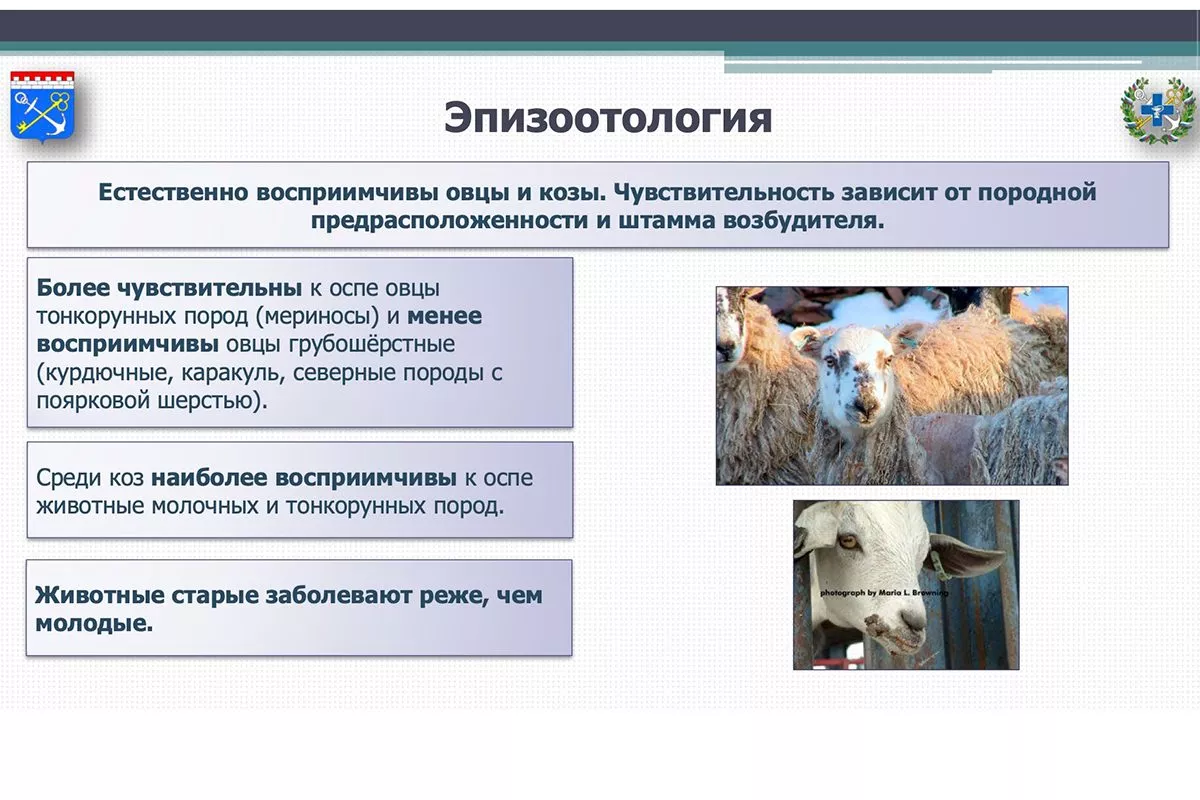
The disease affects absolutely all breeds of sheep. There are no gender or age restrictions. However, it has been noted that:
- fine-wool breeds are most often infected and have a harder time with the disease;
- The most difficult to bear is an outbreak that occurs in winter or during damp weather;
- If one individual is infected, half of the herd is affected within 2 weeks.
The pathogen is transmitted by airborne droplets and is transmitted through the female's milk, feces and household items.
Spreading
According to the International Classification of Diseases, sheeppox is listed as a Type A disease, and is therefore considered a particularly dangerous contagious disease with a very rapid spread. Today, mass vaccination of sheep against smallpox is mandatory. As a result, the prevalence of the disease is no longer as high as it was a century ago.
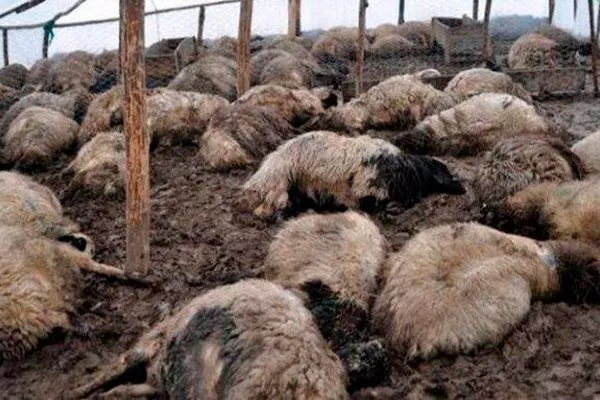
Currently, mostly sporadic outbreaks are registered, arising from the importation of the pathogen from other countries. This can be accomplished by simply purchasing animals or livestock feed.
Not all federal districts are affected by outbreaks, but they are most often observed in:
- in the North Caucasus;
- in the Volga region;
- in the Southern regions.
The following countries are considered the most unfavorable for sheep pox:
- Afghanistan;
- India;
- Libya;
- Kuwait;
- Tunisia;
- Algeria;
- Pakistan;
- Türkiye;
- Morocco;
- Libya;
- Iran.
Epidemics are also observed in border areas with these countries. The disease spreads rapidly, and if it's the time of year when sheep are grazing, infection quickly spreads to other farms, leading to the development of a regional epidemic.
The causative agent of the disease
Sheeppox, a highly contagious viral disease, is caused by a virus of the Capripoxvirus genus and the Poxviridae family. The pathogen has its own DNA and exhibits the following characteristics:
- characterized by tropism in relation to epithelial cells;
- the size, unlike other similar viruses, is quite large;
- the virus is not afraid of freezing, so it does not die;
- the pathogen is sensitive to high temperatures - when it reaches +54-55 degrees, it dies within 15 minutes, and instantly when boiled;
- remains active for up to six months in sheepfolds, and for two months in pastures and in rams' wool.
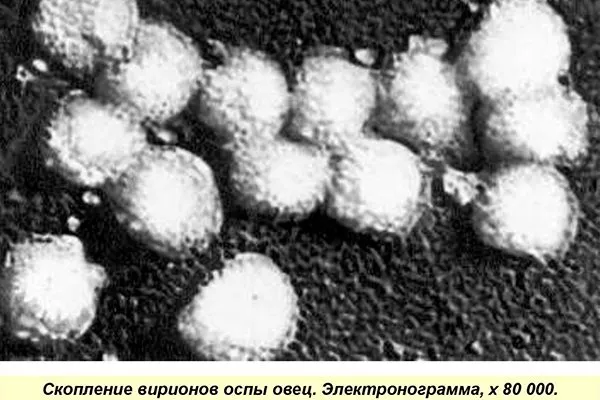
A special feature is that the pathogen is unstable in the external environment and can be destroyed by certain disinfectants – formaldehyde, carbolic sulphate mixture, bleach, alkaline solutions, etc.
Pathogenesis
The virus can enter the rams' bodies through the air. In this case, it is detected in the parenchyma and similar internal organs, as well as in the blood. This occurs as early as the fifth day. After this, the pathogen multiplies and accumulates in the epithelial cells of the respiratory tract, causing the changes typical of smallpox.
Subsequently, viruses in the bloodstream migrate to the mucous membranes and epithelium, resulting in smallpox. If fever is present, the pathogen is also present in other organs, such as the kidneys and lungs.
Course and symptoms
The pathogen enters the sheep's body in three ways: through the skin, through the respiratory tract, and through the alimentary canal. In the first case, the pox lesion manifests itself exclusively locally, and the disease progresses moderately. In the other two cases, lesions appear not only on the epidermis but also on the mucous membranes. The course of the disease is severe, as the progression to generalization occurs in stages:
- roseola appears in the first two days;
- in the next three days – papules;
- then – vesicles, which takes up to 6 days;
- followed by pustules that remain on the animal for 30-34 days;
- The last to appear are crusts, which last a maximum of two weeks.
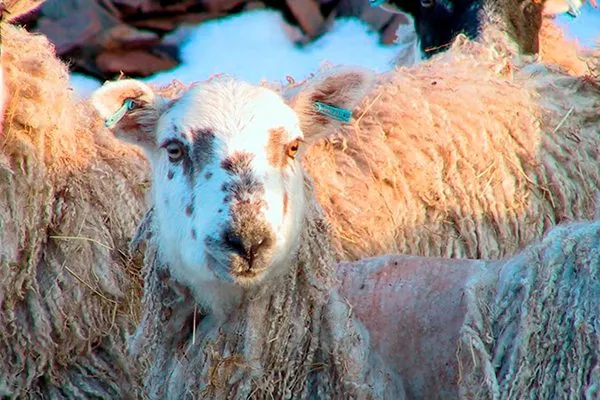
The incubation period varies from 3 to 14 days, symptoms appear sequentially:
- swelling of the eyelid area;
- serous-mucous discharge from the nose and eyes, after which purulent exudate is formed;
- snoring and difficulty breathing;
- the formation of a rash in the form of rounded spots of a pink hue and slight swelling at the periphery;
- loss of appetite;
- hair loss;
- then the spots transform into compacted papules with a red raised belt;
- body temperature rises (up to 41 degrees), which decreases slightly after a few days;
- After a couple of days, the peripheral skin rises, and a serous, transparent-yellowish fluid is noted inside the papules.
Vesicles, pustules, and crusts don't always form, so the papules eventually become pale (gray or yellowish), but the rim remains pink. During this period, the epidermis is very easy to separate, as it turns into a film. Scars form directly beneath the scab, which can become covered with hair.
There are two forms of sheeppox:
- Heavy. In this case, numerous papules form and, over time, merge, affecting a large area of the sheep's body. This is accompanied by purulent inflammation with corresponding symptoms. Another name for the severe form is confluent. Lambs are more often affected than adults. Mortality from sepsis ranges from 40 to 80%.
- Abortive. Characterized by minor smallpox lesions that disappear quickly and do not progress to other stages. The disease is mild, with virtually no mortality.
Smallpox forms on all extremities, around the eyes, on the lips, and all over the head. The genitals are also affected—in females, the labia, and in males, the scrotum and foreskin.
Diagnosis of the disease
To establish an accurate diagnosis, a comprehensive approach is used. First, the veterinarian examines the animal and determines the extent of the lesion and its symptoms. Next, the following treatment is prescribed:
- Study. Biomaterial is collected to differentiate it from other identical diseases (skin samples, tissue samples, etc.). The following methods are then used:
- PCR (polymerase chain reaction);
- multicomplex PCR with species-specific primers;
- copying sections of DNA with enzymes.
Unique features for differential diagnosis- ✓ The presence of specific papules with a red raised belt, not characteristic of other diseases.
- ✓ Serous-mucous discharge from the nose and eyes, turning into purulent exudate, is a pathognomonic sign of sheeppox.
- Pathological changes. In addition to the typical signs of sheeppox, pathological changes are also present. These include ulcers, erosions, and hemorrhagic inflammation in the oral cavity, trachea, pharynx, gastrointestinal tract, and respiratory tract. Hemorrhages are sometimes observed.
The lungs are affected by hepatization and gangrenous lesions, the spleen and lymph nodes enlarge, and the liver takes on a clay-colored hue. The doctor incises the papule and stains its contents using the Paschen and Romanovsky method, which identifies the causative agent.
Treatment
There is no specific treatment, so symptomatic medications are prescribed. However, first, sick animals are removed from the herd and their diet is modified. What is prescribed:
- antibacterial agents that eliminate the risk of secondary infection;
- symptomatic drugs – needed to eliminate unpleasant symptoms (hemodes, calcium gluconate, glucose in the form of intravenous infusions);
- local treatment of the skin and mucous membranes.
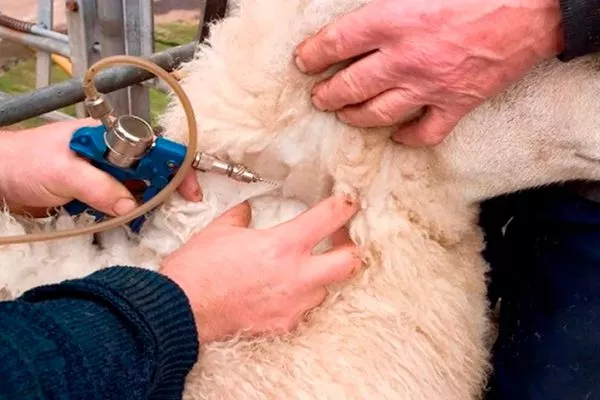
It is strictly forbidden to transport sick rams or keep them with healthy ones. Disinfection measures are mandatory:
- walls;
- ceilings;
- feeders;
- drinking bowls;
- floor;
- bedding;
- manure;
- sheep's milk;
- pens;
- fences, etc.
To disinfect milk, pasteurization is used at a boiling point of 85 degrees Celsius (approximately half an hour). For other tasks, one of the following methods is selected:
- caustic potash or sodium (2%) in hot form;
- sulfur-carbol mixture (3%) also in hot form;
- slaked lime (20%);
- bleach (2%);
- formaldehyde (2%).
If a locality has been free of smallpox for three or more years, a quarantine and mass slaughter of livestock are declared. Meat products are subject to sanitary assessment based on regulations for veterinary inspection of slaughter animals and veterinary and sanitary expertise. The quarantine is lifted three weeks after the rams have recovered.
Immunization of sheep
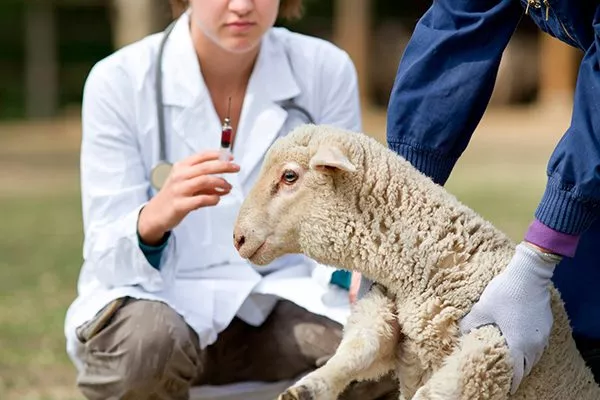
Sheep that have already recovered from smallpox are no longer susceptible to the disease, as their bodies develop immunity. Other sheep are vaccinated with culture-based virus vaccines, which are effective for one year. These include NISKHI, Dordan, VNIIZZH, GK, and B/5-96.
Preventive measures
In addition to vaccination, every farmer must ensure their livestock is protected against sheeppox. This can be accomplished by following these simple steps:
- do not import animals and feed from disadvantaged countries;
- After purchasing sheep, place them in separate quarantine for at least 30 days;
- periodically treat equipment and your own shoes/clothing with disinfectants;
- vaccinate livestock in a timely manner;
- comply with sanitary and hygienic requirements;
- Do not take sheep to pastures where sheep from other farms are grazing, especially those where smallpox has recently been detected.
Measures to combat the sheeppox outbreak
When an outbreak of sheep pox occurs, special measures are taken, which include the following prohibitions:
- import and export of sheep to/from the quarantine zone;
- sale of lambs;
- sale of meat products and skins;
- regrouping of individuals from different herds within one farm;
- grazing sick sheep on a common pasture;
- removal of feed from a farm where a smallpox epidemic was detected;
- shearing of sheep with subsequent sale or use of wool;
- drink milk that has not undergone the disinfection process;
- sale of live individuals.
Sheep pox is an infectious and highly dangerous disease, which, if detected, can cause significant losses to farmers. It is important to promptly initiate treatment, separate sick sheep from healthy ones, and ensure proper disinfection of premises, tools, and other equipment.