
Nutria are semi-aquatic rodents bred for their valuable fur and dietary meat. These animals are raised on a commercial scale in backyard farms and specialized farms. Their ease of maintenance and low maintenance make them an attractive option for farming.
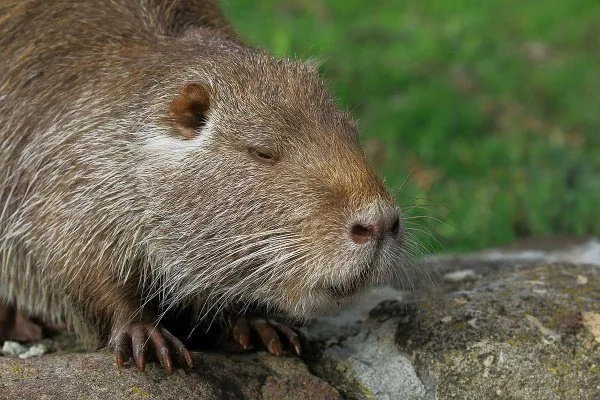
Nutria breeding is a new economic direction
It's hard to say that nutria farming is anything new or unusual for domestic livestock farming. However, in terms of production scale, this industry is incomparable to traditional livestock farming sectors. Nutria products have virtually no competition in the market, making the nutria farming business highly profitable.
There's nothing particularly complicated about keeping nutria. By starting a small farm, you can establish a profitable, quickly profitable business. Breeding nutria yields two valuable products: dietary meat and pelts, which are in demand in the fur industry.
Advantages of the Nutria Breeding Business:
- Unpretentiousness. Nutria care is simple. Nutria feed is inexpensive, and no expensive equipment is required.
- Cost-effectiveness. In summer, you can use plant foods readily available in our latitudes—grass, vegetables, and fruits. This reduces the cost of keeping swamp beavers.
- High immunity. The animals rarely get sick, much less than rabbits.
- Fertility. Thanks to their high fertility, the farm is expanding using its "internal reserves." To start a farm, it's enough to purchase 10 animals.
- Ease of marketing. Nutria skins are inexpensive compared to other skins, making them easy for entrepreneurs to sell.
- Demand. Nutria meat is valued for its high dietary qualities, so it is not cheap.
- High productivity. The animals quickly gain weight, and it only takes a few months from the start of the project to receiving the first profit.
- Benefits. If you sell fur and meat through special procurement offices, you can take advantage of tax breaks.
When setting up a nutria farm, it is recommended:
- Decide on the direction – whether the animals will be bred for meat or fur.
- Buy several individuals of the same breed and color at once. This will allow you to obtain uniform pelts that will be easy to sell.
- Buying several breeds of nutria (several individuals within each breed) – this approach will allow you to make a profit faster.
Watch a video about nutria breeding as a business:
Despite their ease of care, creating favorable living conditions for nutria requires considerable effort. But the main challenge of this business is the unique nature of nutria. Essentially, they're rats. Water rats. And not everyone wants to care for them. Therefore, it's advisable to select personnel in advance. Furthermore, nutrias are energetic and active, so slaughtering them requires a certain amount of physical strength, skill, and mental preparation.
The nutria's native home is South America. Here, like many fur-bearing animals, they were nearly exterminated. Nutria farming began in the early 20th century.
If there are no deaths, a nutria breeding business, even started from scratch, begins to break even within six months. Such rapid results indicate the business's potential and profitability.
Description of the animal
The nutria resembles two animals at once. It has tenacious paws and a long tail like a rat, and strong incisors like a beaver. The animal reaches 60 cm in length, not counting the tail. An adult weighs 5-12 kg. Males are larger and heavier than females.
Nutria are massive animals with small ears and eyes. Everything about the nutria's body is adapted to a "double" life—on land and in water:
- Paws. There is webbing between the fingers.
- Fur. Waterproof, made of coarse guard hair, the undercoat is very dense.
- Ears. Water does not penetrate into the ears of swamp beavers thanks to the dense and fluffy fur covering their ears.
- Nostrils. Water doesn't enter the body through the nose. When diving underwater, the animals' nostrils close, activated by special muscles.
- Lips. Nutrias do not swallow water while submerged, even with their mouths open. Their lips meet behind the teeth and are separated in front. This lip structure prevents water from entering the mouth.
- Nipples. Four to five pairs of nipples are located quite high. If the mother nutria is in shallow water, the young can suckle without leaving the water.
Nutria shed their fur all year round, but their fur acquires its best qualities in winter.
Features of the lifestyle of swamp beavers:
- These animals are excellent divers and swimmers – they can easily stay underwater for 10 minutes.
- They prefer moderate temperatures. In hot weather, they stay in the shade. They also dislike the cold, but can tolerate temperatures down to -35°C.
- In the wild, animals don't store food for the winter or build winter shelters. Marsh beavers are unable to survive in frozen bodies of water. They often die under the ice, unable to find a way to the surface.
- They live in families of 2-12 individuals, which always include a dominant male, females, and cubs. Young males live alone.
- Nutrias are skilled at building nests in which to rest and raise their young. They use cattails and reeds as building materials.
- Activity increases in the late evening.
- They lead a semi-nomadic lifestyle. However, if food is plentiful, they graze in one place.
- They feed on plant and animal food: cattail, reed, bulrush, water chestnut, pondweed, arrowhead, water lilies, tree branches, mollusks, leeches, and rarely small fish.
- Nutria have excellent hearing, but their sight and sense of smell are problematic. They are timid animals—the slightest noise sends them running. Nutria run in leaps and bounds. They are poor runners—they tire quickly.
- The lifespan of nutrias in the wild and in captivity is the same – 6-8 years.
Productivity of nutria
A single nutria can produce up to 18 puppies, but the average litter size is 4-5. Nutria productivity depends on the conditions of care, the age of the female, and the breed. Table 1 shows the productivity of females of different breeds.
Table 1
| Breed | Average number of puppies from one female, pcs. | Maximum number of puppies from a female in one litter, pcs. |
| Standard | 5.2 | 9 |
| White Italian | 5.0 | 12 |
| Mother-of-pearl | 5.2 | 10 |
| Golden | 4.7 | 8 |
The weight of males and females also varies by breed. However, all nutrias, except giant ones, are roughly the same weight. Males weigh about 7 kg, females 5.6-6.6 kg.
What breeds are there?
Nutria breeders have conventionally divided all nutria into three groups:
- Standard. They are almost indistinguishable from wild swamp beavers.
- Colored. These breeds are the result of selective breeding. They are not as prolific as standard nutria and are more difficult to raise.
Standard
| Name | Weight of an adult, kg | Average number of puppies from one female, pcs. | Maximum number of puppies from a female in one litter, pcs. |
|---|---|---|---|
| Standard | 5-7 | 5.2 | 9 |
| White Italian | 5-7 | 5.0 | 12 |
| Mother-of-pearl | 5-7 | 5.2 | 10 |
| Golden | 6-8 | 4.7 | 8 |
In appearance, standard nutrias most closely resemble their wild counterparts. They weigh 5-7 kg, although some specimens can reach up to 12 kg. Their color ranges from light brown to dark red. They have dark brown eyes, and the hairs at the tips are lighter than at the roots. The belly is always lighter than the background color.
These are the most unpretentious nutrias. They don't require a special diet to maintain their color. The breed is known for its fertility, and their puppies are born only in standard colors. Pelts of standard colors are valued less than those of colored nutrias. These prolific and unpretentious nutrias are worth raising for both their meat and their pelts.
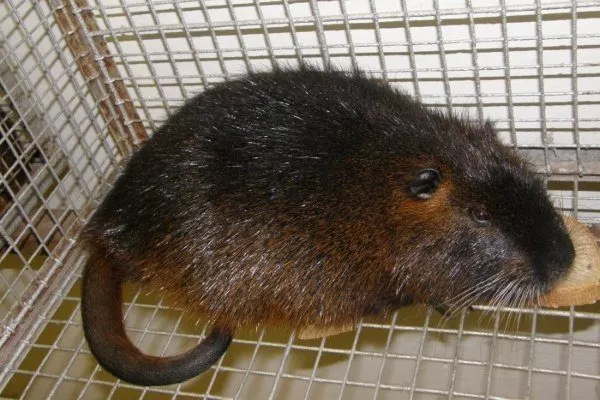
Colored rocks
Colored rocks are divided into two groups:
- Dominant. If you cross a dominant nutria breed with a standard one, the resulting offspring will have unique coloring. These include:
- Azerbaijani white. Mating produces white and brown animals. The meat has excellent flavor. While nutritious like rabbit meat, it is much tastier. The fur of this breed is highly prized for its white color and exceptional fluffiness. A distinctive feature of the breed is that the down and guard hairs have the same structure, so the hair and undercoat blend together. The animal weighs 5-7 kg.
- Black. Pelts of this color are highly prized. The fur is high-quality—it doesn't mat and is very thick. Individuals weigh 5-7 kg. They have a high average daily weight gain. They are prolific. A very profitable option for breeding for both pelts and meat.
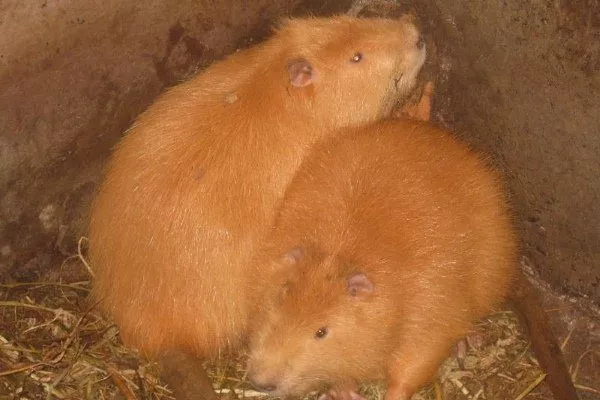
- Golden. Intense golden color. Animals weigh 6-8 kg. Fertility is low—3-4 puppies. Their fur is in demand. They require a balanced diet to keep their fur shiny. They are bred for their valuable fur.
- Recessive. Crossing a representative of this group with a standard brown nutria produces brown-colored offspring. This group includes the following breeds:
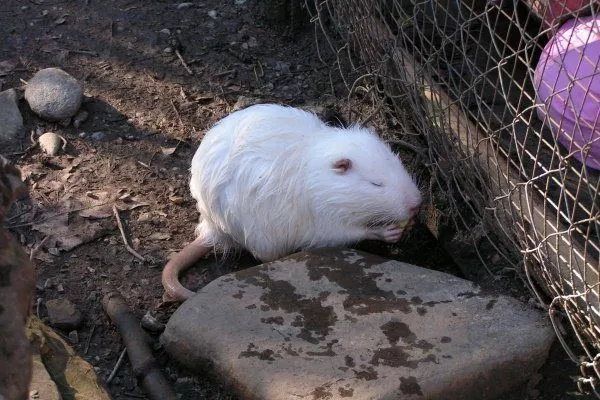
- Italian white. They differ from white Azerbaijani nutrias in their creamy white underfur. They are as fertile as the standard breed, with five puppies per litter. When crossing white nutrias, all the puppies are white; when crossing them with standard nutria, the offspring are silver. The meat is tasty, tender, and nutritious. The fur is highly prized.
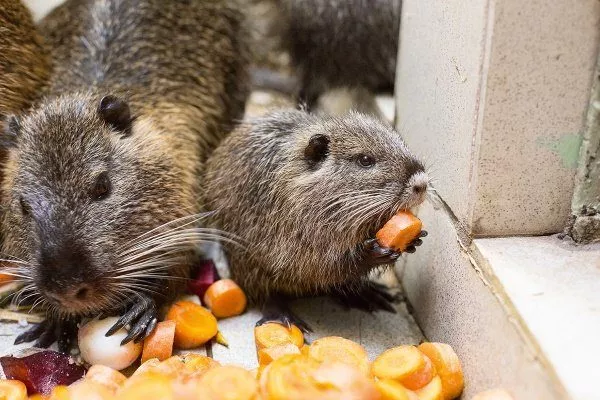
- Beige. One of the most popular breeds among breeders. The fur has a noble appearance. The color ranges from beige-gray to dark silver. The undercoat also varies from light to dark tones. Fertility is 5-6 puppies. Weight: from 5 kg. The meat is very tasty and nutritious.
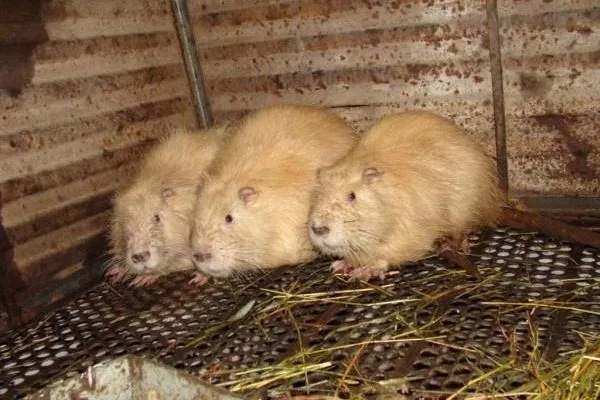
- Lemon. The pelts are a warm orange color. The fur is in high demand if the color is clear and the pelt is of high quality. The animal weighs 5-7 kg. Females are fertile, giving birth to 5-6 puppies. The puppies vary in color, but all have lemony notes. To obtain fur that meets quality standards, it is necessary to maintain a proper temperature regime, maintain cleanliness, and provide a nutritious diet.
- Silvery. These nutrias were created by crossing beige and Italian nutrias. They are distinguished by their unusual fur color and dense dark undercoat. The fur is used to make luxurious coats, hats, and vests. These animals weigh 8 kg. Their meat yield is over 53%. The meat is highly palatable.
- Snowy. These snow-white animals weigh up to 10 kg. There are 4-5 cubs per litter. Their fur is luxurious and is used for making fur coats. Their meat is a delicacy.
- Mother of pearl. Silvery-gray nutria weighing 5-7 kg. They are as beautiful as mink. Their fur is highly durable. Their meat is highly palatable. A litter contains 4-5 puppies.
- Pastel. The fur is brown. The animals weigh 5-6 kg. The pelts are used to make fur coats and hats. The fur resembles pastel mink. There are 4 puppies in the litter.
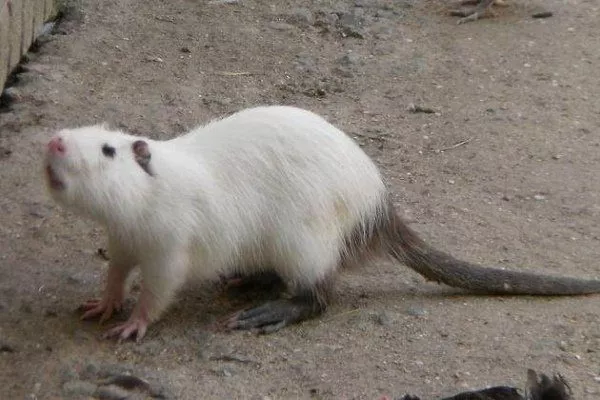
Azerbaijani nutria breed
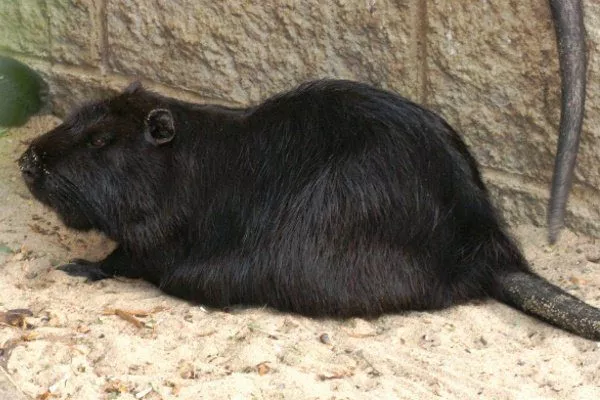
Black nutria breed
Golden nutria breed
Italian breed of nutria
Beige nutria breed
Lemon nutria breed
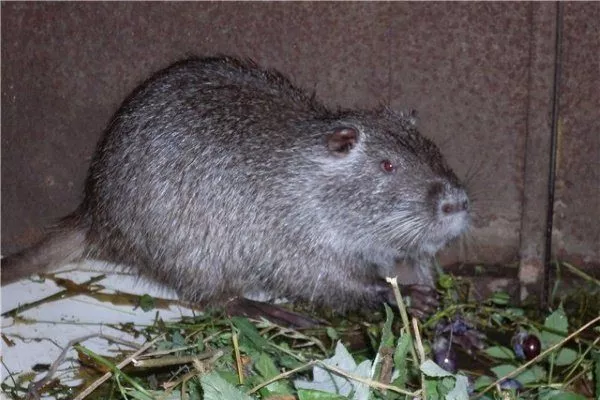
Silver nutria
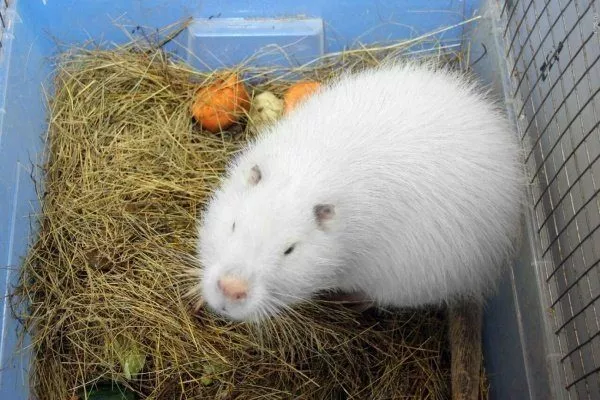
Snow nutria
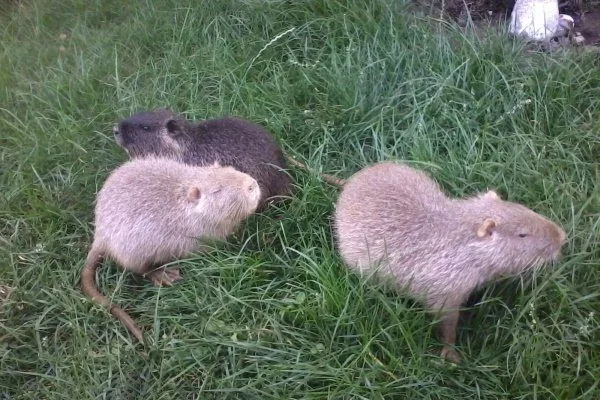
Mother-of-pearl nutria
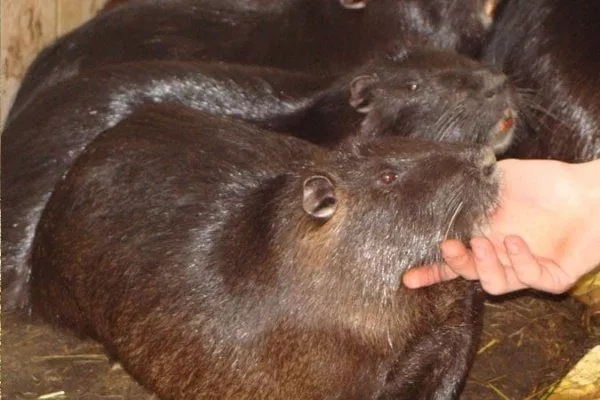
Pastel nutria
More information about nutria breeds can be found in this article.
Buying an animal
It's best to buy nutria from specialized farms or private breeders. They are also sold at markets, but there are no guarantees of breed purity, and dangerous diseases may be present.
Tips for buying nutria for breeding:
- If your mini-farm focuses on pelts, choose adult males and females of the same breed. It's preferable to breed colored breeds, as their pelts are more in demand.
- If the goal is to obtain meat, take young animals aged 2-3 months.
- When choosing individuals, pay attention to the incisors. Healthy individuals have bright orange incisors. Blackened or pitted teeth are a warning sign.
- The fur of healthy nutrias is shiny.
- Buy the animals in spring or early summer – then they will have time to gain marketable weight before the cold weather sets in.
- Beginners are better off choosing standard breeds - they are prolific, rarely get sick, and grow quickly.
- It is advisable to take rodents that have grown up in enclosures with access to water and are properly fed.
- After examining the insides, check their documents.
When buying an adult, newbies immediately see what the animal should look like, including its fur and size. However, breeders recommend buying juveniles aged 2-3 months. At this age, animals weigh 1.3-2.3 kg.
The price of an adult, well-grown nutria starts at 1,500 rubles. Juveniles start at 500 rubles. However, prices are rarely listed in advertisements—sellers prefer to negotiate during the conversation.
Determining the sex of an animal
To accurately calculate the proportions of a productive herd, it's important to know the number of males and females. It's also important to know information about each female, including when they became pregnant and when they gave birth. This will help you plan your hunt.
It's impossible to tell whether a bird is male or female by appearance or behavior. The only way to determine sex is by examining the animals' genitals.
How to distinguish a male from a female:
- Take the nutria by the back of the head and, turning it with its back down, spread the fur to the sides near the anus.
- The female's genitals look like a slit - it is located directly above the anus, the location is very close.
- In males, the genitals are located significantly further from the anus. The genitals are clearly visible and point upward. The testicles are located in the lower abdomen and can be felt.
Nutria maintenance
The conditions under which nutria are kept significantly impacts their health, including growth rate and fur quality. To ensure their animals remain healthy and their pelts meet quality standards, breeders must ensure comfortable living conditions, adequate feeding, and disease prevention and treatment.
Terms and conditions
When the first nutria arrive at the farm, they should be provided with housing, food supplies, and a water reservoir.
With good care, nutrias gain up to 85% of their maximum weight in six months and produce high-quality fur ready for sale.
Conditions for keeping nutria:
- One individual should have 70-80 liters of water for swimming.
- The water in the pond must be clean. Change the water every two days.
- When kept in cages, each pair should have at least 1 square meter.
- The room should be maintained at a temperature comfortable for the animals - 15–25 °C.
- Animals must receive a balanced diet and fresh water.
- ✓ The minimum room temperature in winter should not fall below +8 °C, for pregnant females and young animals - not below +15 °C.
- ✓ The volume of swimming water per individual should be 70-80 liters, with water changes every 2 days.
Nutria need to be provided with:
- Warm room. Nutria should not be kept outdoors in winter. These animals tolerate severe frosts well, but it's not worth testing their endurance. In cold weather, the rodents refuse to eat and instead burrow into their bedding. Nutria hatchlings born in freezing temperatures can die within hours. To preserve the population, they are moved to a warm room with a thick layer of bedding for the winter.
- A reservoir. You can get by without it. However, the lack of water negatively impacts the health of semi-aquatic animals. It is advisable to provide at least a small pool.
Equipment
Keeping nutria requires feeders and waterers. These can be purchased or made using designs from experienced nutria breeders. There are several types of this equipment.
Types of feeders:
- Standard. It resembles a large trough. This is the simplest and most common option. A more common design is a feeder with a mesh screen.
- Nursery. They have high sides and are used for roughage and green fodder. They are hung on the wall of the house or placed in the enclosure.
- Bunker. Convenient and functional. It's tip-over-proof, and most importantly, the high sides prevent the animals from getting their food dirty or scattering it.
Any container will do for dispensing water, but an automatic waterer is the most convenient. Waterer requirements:
- They must be securely attached to the walls of the houses so that the nutria cannot turn them over.
- The volume should be appropriate for the number of animals. All animals should have access to water at any time of the day or night.
- The materials used must be durable—the animals shouldn't damage them with their teeth. Ceramic is the best option.
Types of drinking bowls:
- Vacuum. It consists of two parts. Water is poured into the jar, the neck of which is covered, and the jar is turned upside down and placed in a bowl. The nutria drink the water, and the water gradually rises in the bowl, spilling out of the jar.
- Nipple. Another name for these is nipple-type water bottles. To obtain water, the animals press their tongues against a ball with a nipple that releases liquid from the reservoir. This option is more expensive and better—the water stays cleaner longer.
Selecting and furnishing a house
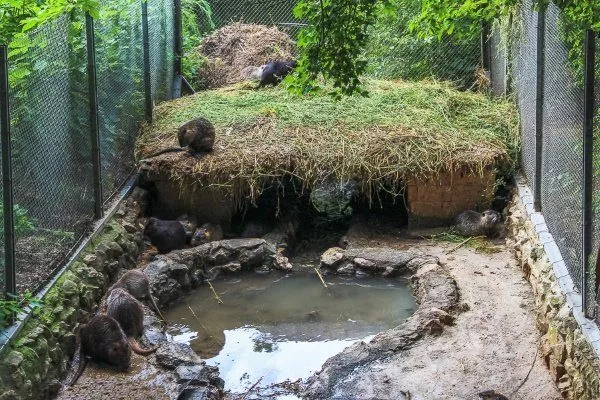
Each farmer decides where to house the nutria. Typically, houses or cages with open entrances are installed near a pool or large water tank. The area is fenced with chain-link fencing. The nutria can live here until the cold weather sets in.
The second option is cages with a closed entrance. Each cage is equipped with a feeding bowl and a small bowl of water, replacing the pool. The choice of housing method depends on resources, space, and other factors.
Arrangement of different types of housing:
- Little house. The materials used to construct the houses must be rodent-proof. A permanent house is usually built from brick and boards. Adjacent to the house is a walking area, which is either enclosed with mesh or built with concrete walls. Houses are also often made entirely of concrete—they are no worse than brick ones. The design of the houses largely depends on the climate and the availability of building materials. For example, in southern regions, they are often built from expanded clay or cinder blocks.
You will also need:- cement;
- vapor barrier;
- nails;
- insulation;
- metal mesh;
- profile;
- spatula;
- welding machine;
- various tools.
- Cell. Cage housing is common in temperate climates. Cages can be set up outdoors for outdoor exercise, or indoors for winter housing. Cages can be simple or multi-tiered. A family consisting of one male and several females is housed in a single cage. Young animals are separated from the family at one month of age and kept separately until sexual maturity. The young are then separated by sex. Males should not be housed together, as they will fight. Females can be housed in groups of 5-10. Cages are made of metal and typically have several compartments:
- feed;
- nesting;
- walking;
- bathing.
- Aviary. Enclosures are common in southern regions with short, warm winters. The enclosure has a direct connection to the pool. Nest boxes are placed inside the enclosures to provide shelter from heat and bad weather. The material used is chain-link fencing. Several compartments are created inside the enclosure using partitions:
- for family;
- for the male;
- for young animals.
- Pit. Pit housing is practiced in regions with mild climates. The pit walls are lined with slate sheets, and the floor is poured concrete. The pit is divided into sections and equipped with houses, which are insulated for the winter. Nutria, like rabbits, reproduce better under light, so the pit is wired for electricity or has a transparent roof. Pit dimensions:
- width – 1.5 m;
- length – 3-4 m;
- depth – 1.5-2 m.
In winter, the temperature in the room where the animals are kept should not fall below 8°C. The area where pregnant females and those who have recently given birth should be kept even warmer – at least 15°C.
Staff
A mini-nutria farm requires minimal staffing. Two people are sufficient. Raising animals on a large scale requires not only hiring several employees proportional to the number of animals, but also a veterinarian.
To ensure the nutria are always well-cared for, cared for, and fed, it's advisable to arrange accommodation for the staff near the farm. Nutria require 24-hour monitoring and care. Ideal qualities for workers include hard work, health, and responsibility.
Feeding nutria
The nutria's diet changes depending on the season. Nutrition is selected based on the animals' needs and the availability of seasonal feed. What's unavailable in winter can be obtained for next to nothing or even free in summer.
A balanced diet affects not only the mood, well-being, and health of nutrias, but also the quality of their meat and fur. Daily feeding schedules for nutrias based on sex, age, and season are shown in Table 2.
Table 2
| Feed, g | For females in winter | For females in summer | For males in winter | For males in summer | Young animals from 1 month to six months |
| Hay | 200 | — | 175 | — | — |
| Grass | — | 600 | — | 600 | 100-500 |
| Roots | 200 | — | 200 | — | 50-200 |
| Concentrates | 175 | 150 | 120 | 100 | 50-100 |
| Salt | 0.5 | 0.5 | 0.5 | 0.5 | 0.2-0.5 |
The daily diet of nutria, taking into account its physiological state, is shown in Table 3.
Table 3
| Physiological state | Grass and root vegetables, g | Concentrates g | Hay and grass meal, g |
| Adults | 200-300 | 150-200 | 30-40 |
| Readiness for mating | 180-270 | 120-200 | 20-40 |
| Mating and the onset of pregnancy | 200-300 | 150-240 | 25-40 |
In industrial breeding, they often switch entirely to pelleted concentrates. However, they are also used in home breeding, as concentrated feeds contain everything necessary for complete nutrition of nutria.
How to select granulated concentrates:
- Young animals up to 5 months of age and females that have given birth are given feed with a reduced concentration of grass meal.
- During the mating period, individuals of both sexes are given concentrates containing grass meal at a level of 20-25%.
- To produce high-quality skins, animals are fed concentrates with a high content of barley, grass meal, flaxseed meal and wheat bran.
Granulated feed is stored in a dark, dry place for no more than three months – this is in a warehouse, and in utility rooms of private farms – no more than 10 days.
Summer diet
The summer diet of nutria consists of the following types of food:
- Green mass. One nutria receives approximately 400 grams of greens per day. In summer, greens become a crucial part of their diet. Rodents readily consume nutritious young shoots of birch, oak, apple, willow, pear, and cherry trees. Avoid feeding nutria shoots of linden, bird cherry, and ash—they dislike them.
Also, nutria are fed:- beet and carrot tops (chalk is added to vegetable shoots to neutralize the acid);
- marsh vegetation - reeds, bulrushes, cattails, etc.;
- greens of grain legumes;
- a mixture of rye, peas, vetch, alfalfa, corn, clover, etc.;
- grape vine.
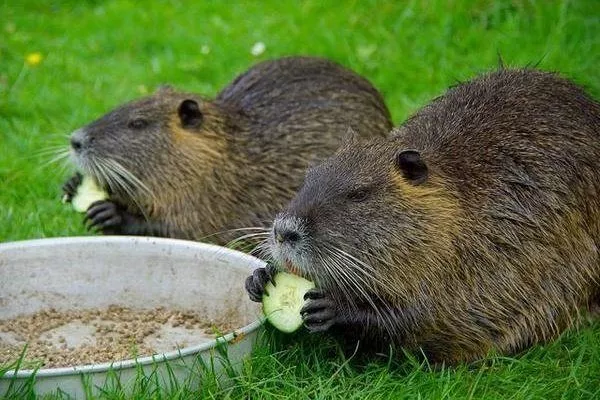
- Fruits and vegetablesNutria eat almost any fruit with gusto – tomatoes, watermelons, zucchini, cabbage, potatoes, etc. But Jerusalem artichoke is considered the most important element in their diet – both the tubers and the thick tops are used.
The summer diet of nutria is shown in Table 4.
Table 4
| Feed in summer | Adult nutria | Young animals up to 2 months old | Young animals aged 2-6 months |
| Green, g | 800-100 | 150-400 | up to 800 |
| Cereals, g | 100-150 | 35 | 80-100 |
| Additionally: | |||
| salt, g | 0.5-1 | 0.2 | 0.5 |
| chalk, g | 1.5 | 0.5 | 1.0 |
| whole milk, g | 15-20 | 10-15 | 10-15 |
| fish/meat, g | 7-10 | 5-8 | 5-8 |
In the summer, they mow and prepare greens for the cold season – coltsfoot, quinoa, dandelions, fireweed.
Winter diet
In winter, nutria are fed:
- Dry food. Grass meal (available in pellet form), hay, twigs, leaves, and straw should be present in the feeders at all times.
- With succulent feed. The animals are given carrots, beets, and Jerusalem artichokes. Zucchini and pumpkin are also good choices—they're rich in fiber and vitamins.
- In mashed potatoes. Ingredients for mash include wheat, bran, corn kernels, potatoes, compound feed, and flour (straw or grass). Vegetables, grains, and leftover liquid food are also added. Soups are the basis of mash, making up 15-20% of the total. Whey, liquid porridge, and milk can also be added. The resulting mixture is rolled into balls and fed to the animals.
- Legumes and compound feed. Nutria are fed millet, wheat, oats, corn, and barley.
The winter diet of nutria is shown in Table 5.
Table 5
| Feed in winter | Adult nutria | Young animals up to 2 months old | Young animals aged 2-6 months |
| Root vegetables, g | 400-500 | 150 | 300 |
| Cereals, g | 100-150 | 35 | 80-100 |
| Hay, g | 100 | 50 | 100 |
| Branches, g | 150 | 50 | 150 |
| Additionally: | |||
| salt, g | 0.5-1 | 0.2 | 0.5 |
| chalk, g | 1.5 | 0.5 | 1.0 |
| fish oil, g | 0.5 | 0.3 | 0.5 |
Vitamins and minerals
Each individual should receive no more than 200 g of mineral supplements per day. Administering supplements is simple—they are mixed with the feed. Required supplements include:
- meat and bone meal;
- chalk;
- salt.
Vitamins are especially essential for animals in late winter, when their diet and body levels are low. Nutria are given vitamins A, D, E, B1, B6, B12, and folic acid. The complete set of essential nutrients is contained in the special vitamin supplements "Pushnovit-1" and "Pushnovit-2."
You can learn more about feeding nutria from this article.
Mating of nutrias
Successful fertilization requires favorable conditions. What is important for breeders to know:
- On the behavior and physiology of males. Males who are more interested in food than in the female during estrus are culled. Males who have not impregnated a single female are also no longer used for breeding. If the males' penises are covered with hair rings (from matted fur), this may interfere with fertilization. The genitals must be inspected and cleaned of any hair.
- On the behavior and physiology of females. If the female does not show aggression toward the male who approaches her, she is ready to mate. There is no limit to the number of matings she can perform; there is no specific favorable period for pregnancy. The fetus gestates for 130 days. After giving birth, the female recovers for two days, after which she is ready to mate again. A female cannot be mated for more than three years; after this, she is capable of showing aggression toward her offspring, even killing them.
Nutria reach sexual maturity at 12 weeks of age. Mating begins only at 7 months. The estrus period lasts 1-2 days. Several mating methods exist, and we'll examine them in more detail.
Seasonal mating
The fertility of the offspring is monitored. This allows for the optimization of livestock care. The animals are mated twice a year:
- in the winter-spring season;
- early autumn.
A dual approach ensures that all females are included—any that were not fertilized in the spring will be fertilized in the fall. Seasonal mating allows for the production of high-quality, beautiful, and healthy offspring.
Starting from 1.5 months of pregnancy, the fetus in the womb of the female can be felt.
There are two methods of breeding:
- Homogeneous. It's also called uniform mating. Mating pairs are selected to be similar in color, build, and fur quality. The offspring inherited from their parents develop specific traits.
- Heterogeneous. Pairs are selected with different traits to improve certain characteristics in their offspring, such as coat thickness.
Year-round mating
This mating method allows for the highest possible yield. It is used in industrial breeding or on large farms—only these can support numerous offspring born at different times. Before slaughter, the offspring are kept for 10 months, receiving food, medical treatment, and comfortable living conditions.
Hand mating
During manual mating, the pregnant female is placed in a cage with the male planned to be used as a breeder for subsequent litters. If the animals show interest in each other and live peacefully without fighting, they are brought back together 25 days after the female gives birth.
School mating
This method is typically used for young nutrias who have no experience mating and producing offspring. Young, nulliparous females and calm males are placed in the same cage. Once the animals become accustomed to each other, the males are separated.
After six months, a male is introduced to the females. A separate room is created for him in the enclosure for rest. When releasing the male to the females, the results of the first mating are noted, and a second mating is planned based on this. The male should be older than all the females in the group to rule out any consanguinity and to be able to handle the insemination of several females at once. If the females become friendly, they are not separated; they are used in this group for further insemination.
| Method | Advantages | Flaws |
|---|---|---|
| Hand mating | Control over the process, the ability to choose a partner | Requires more time and attention |
| School mating | Time saving, natural selection | Risk of aggression between males |
Family mating
This type of mating is similar to shoal mating, but far fewer animals are introduced into the cage—five females and one male. The females may be related. To prevent the females from strangling or mixing the offspring, they must be provided with sufficient living space.
Pregnancy and whelping
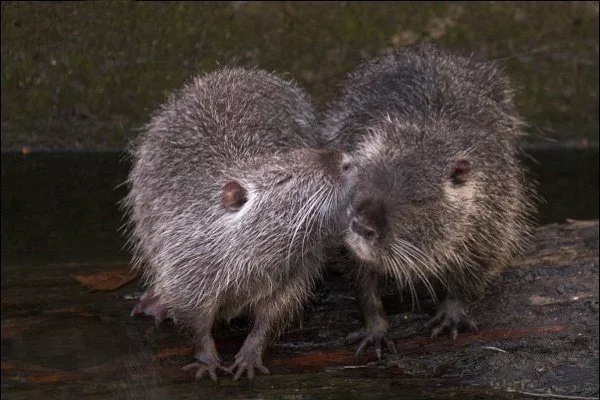
Nutria gestation lasts from 127 to 132 days. The offspring are born with open eyes and normally developed fur. Table 6 shows the timing of fertilization, whelping, and weaning of the young.
Table 6
| Cycle | Mating | Whelping | Weaning of young animals | Slaughter of young animals | |
| Date | Age, months | ||||
| 1 | 5.08-25.11 | 5.01-5.03 | 15.02-15.05 | 5.12-5.02 | 10-12 |
| 2 | 15.02-5.05 | 25.04-15.08 | 5.06-25.09 | 5.04-5.05 | 8-10 |
Females may spread bedding before giving birth—it's important to add bedding to prevent the newborns from becoming chilled. Births usually occur at night and last 20-120 minutes. It's best not to disturb the females during labor—human intervention is usually not required.
Caring for nutria offspring
Newborn puppies have teeth and are already given solid food by the third or fourth day. However, their most important nutrition is their mother's milk. Milk production peaks during the third week, then decreases. At seven weeks, the puppies can go without milk, and the mother is weaned from the puppies.
The young are raised in groups. They are separated by sex until they reach four months of age, before they become sexually active. The young gain weight quickly, doubling their weight within two weeks, tripling it within a month, and increasing twentyfold by the end of the year.
Young nutria are fed high-fiber feed. The feed is mixed with hay or grass meal, making up 10% of the feed weight. Alternatively, the feed is mixed with succulent grass. Young nutria benefit from concentrated feed with 13-14% protein and 5-10% animal protein.
Hygiene
To ensure that nutria grow and stay healthy, it is important to maintain hygiene in their environment:
- Cleaning and tidying of the cage is carried out daily at the same time.
- Every day, the bedding in the cage is changed, and any remaining food, garbage, and manure are removed.
- Feeders and drinking bowls are washed daily.
- The cages are disinfected every 2-3 months.
- The fluff is washed off the mesh runs with a stream of water.
- The water in the tanks is refreshed regularly. The animals urinate and defecate in the water, so it is changed daily in the summer and every 2-3 days in the winter.
Animal nests should not be disturbed unless they are parasite-free. If the nest is damp and dirty, the bedding should be replaced.
Water from the paddock must not be discharged into watercourses; it must be diverted to settling tanks or sewers.
Animal diseases and prevention
Diseases can be triggered by unsanitary conditions, poor feeding, and improper care. Poor living conditions lead to a weakened immune system, making a weakened animal susceptible to infections.
If treatment isn't started promptly, you can forget about quality fur. Many diseases are incurable, and the animals die. Table 7 lists the main nutria diseases, their symptoms, and treatment options.
Table 7
| Disease | Symptoms | Treatment | About the disease |
| Ringworm | The fur and skin are affected. Hair falls out in the affected areas, and the skin becomes scabby, itchy, and flaky. | A scraping is taken for diagnosis. The animal is isolated. The enclosure is disinfected, and the bedding is changed. The affected areas are treated with soapy water and iodine. Antifungal therapy is prescribed. | The causative agent is a fungus of the genus dermatophyte. Mice, dogs, and cats are carriers. Infection also occurs through fur, equipment, and dirty bedding. |
| Salmonellosis (paratyphoid) | Loss of appetite, weight loss. The fur becomes ruffled, green diarrhea appears, and the eyes become watery and sore. | Severe cases are fatal. If symptoms are severe, it's best to euthanize the animal. In other cases, antibiotic therapy is used. | The causative agent is Salmonella. The bacteria enters the body through water or food. Infection occurs from birds, rodents, and insects. |
| Coccidiosis | Diarrhea, constipation, weight loss. In advanced stages, seizures and paralysis of the legs. | They administer Norsulfazole and Phthalazole – they add them to the food. Feeders and cages are disinfected. | The causative agent is coccidia, a protozoan single-celled parasite. Infection occurs through food and water. The liver, spleen, and intestines are affected. |
| Pasteurellosis | Lack of appetite, drowsiness, inactivity, salivation, convulsions, paralysis of the legs, internal bleeding. | There is no effective treatment. Prevention is necessary. All infected individuals are slaughtered, their bedding is changed, and their cages are disinfected. | The causative agent is the Pasteurella bacterium. Transmission occurs through food and water. The bacteria are found in feces. |
| Tularemia | Cough, mucus production, diarrhea. | There is no cure. | The carriers are rodents. The causative agent is a fungus. The disease lasts for two weeks, after which the animal dies. |
Nutria can become infected with various types of helminths, which gradually destroy the animals' bodies. This problem can be easily solved by adding anthelmintics to their feed.
If an animal is injured, it receives prompt treatment—wounds are treated, x-rays are taken if necessary, and bandages are applied. To prevent nutria from developing digestive disorders, they are fed only fresh, high-quality food and are not allowed to eat poisonous plants.
It's much easier to prevent a disease than to treat it. Moreover, many diseases are incurable. Preventive measures:
- At the entrance to the pen, a mat is placed, regularly moistened with a creolin solution.
- Food is prepared only in clean utensils.
- The feed is checked for infections.
- The water must be clean.
- Individuals are purchased from trusted fur farms.
- Sick individuals are immediately separated from the herd.
- If necessary, sick animals are destroyed.
- The cages are disinfected and cleaned regularly.
Sales of products
Nutria is a highly specialized commodity, so buyers are found in advance. The meat, as a valuable dietary product, may be of interest to restaurants. The fur is of interest to factories and private ateliers. Contracts are concluded directly or through intermediaries, depending on the individual entrepreneur's preference.
Meat and skins are sold through the following channels:
- City market.
- Fur factory.
- Special procurement offices.
- Internet.
- Farmers.
Advertising is practically unnecessary. The nutria breeding business is not particularly developed; buyers get information literally by word of mouth.
Expenses and income
To start a small business, it's recommended to limit yourself to a few pairs of nutria. Considering that each female will produce 6-10 viable pups, the litter will be substantial. After 6-7 months, the young animals can be slaughtered for meat, but it's best to wait until they're 10-12 months old, allowing them to gain weight and their coats to become more attractive.
Costs for small production volumes, in rubles:
- site rental fee – 30,000 per year;
- cost of cages for adults and offspring + preparation of housing/rooms for nutria – 70,000 one-time;
- feed purchase – 20,000 per year;
- purchase of individuals – 5 females and 1 male – 20,000 one-time.
Total – 140,000 rubles in the first year (you will need about 96,000 rubles immediately and then 4,000 rubles each year).
These are the maximum costs. In reality, they may be significantly lower (as little as 30,000-50,000 rubles), for example, if:
- owns a plot of land;
- use homemade cages rather than store-bought ones (then 7 cages will cost around 15-20 thousand rubles);
- there is no need to construct/prepare a room for keeping nutria;
- You can purchase non-breeding individuals (then 6 individuals can cost about 5-7 thousand rubles) or fewer in quantity (let's say 3 females and 1 male).
Income from nutria farming depends on production volume, market prices, the type of product sold (meat, fur), the breed of nutria, and their fertility. It is estimated that 100 adult nutria sold can yield a profit of 400,000 rubles (500 rubles per kg).
Feed and other expenses must be subtracted from the profit. The farm's payback period is 2-3 years. The greater the production volume and the more rare and valuable breeds bred, the greater the profit. However, you'll need to hire livestock workers, which adds another 50,000 rubles to your monthly expenses.
The breeder explains the costs involved in breeding nutria in the video below:
Myths about nutria and their breeding
Nutria are not native animals, but were brought from the South American continent, so it is not surprising that there are many misconceptions about these animals:
- Myth 1: Nutria come from warm countries and are therefore not adapted to the cold. This is only half true. Nutria have very warm fur, so they can withstand short-term temperature drops to minus 35-40°C. However, they do have some vulnerabilities: their paws and tail can become frostbitten at low temperatures.
- Myth 2: Breeding nutria requires a lot of space and running water. These conditions are desirable, but not essential. Nutria are herd animals, enjoying company and moving around little. Running water facilitates the breeding process and promotes cleanliness, but its absence is not critical—you can always bring water in buckets.
- Myth 3: To prevent animals from injuring themselves, fences and housing should be made of wood. In fact, nutrias don't even think about gnawing on metal—they won't ruin their teeth. But they'll easily chew through wood or plastic.
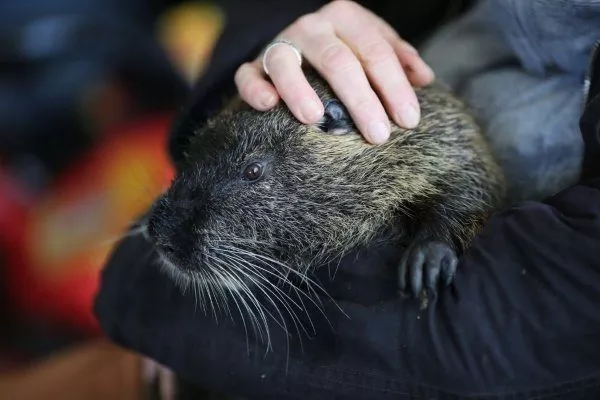
- Myth 4: Nutria are dangerous – they can bite or even bite off a finger. These rodents have enough bite force, but they are quite friendly and non-aggressive. They are even kept as pets and allowed to be played with by children. However, if pain or aggression is felt, the animal is capable of responding by defending itself.
Nutria farming is a profitable business with little competition. The pelts of many colored nutrias are highly prized. Some breeds have fur as beautiful as mink. Moreover, these animals are easy-to-care-for and prolific. A well-established business quickly pays for itself and generates a substantial profit.