
For an inexperienced farmer wanting to try their hand at nutria breeding, it's difficult to immediately estimate the profitability of the venture. For clarity, it's best to compare the swamp beaver with another rodent with valuable fur and meat—the muskrat. This animal is also kept for mass reproduction for subsequent sale.
Description of animals
Nutria belong to the family Nutria. They lead a semi-aquatic lifestyle.
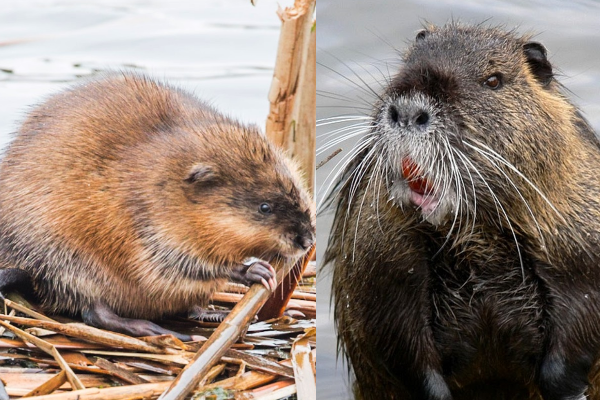
Characteristics of an adult:
- weight 10–12 kg;
- body length 46–60 cm (tail not included);
- strong build;
- The incisors are characterized by a bright orange color;
- lips fit tightly to teeth;
- there are 5 fingers on the forelimbs;
- The fur on the back is brown, on the belly it is a little lighter with slight yellow specks.
- ✓ Bright orange incisors indicate health and good genetics.
- ✓ Thick fur without bald spots is a sign of high-quality fur.
The muskrat is not a close relative of the nutria, although both animals belong to the same order of rodents. While the nutria resembles a beaver, the muskrat resembles a rat in appearance.
Nutria Almost 10 times larger than a muskrat (the latter weighs 1.3–1.8 kg). The body length of the rodents also varies dramatically (the semi-aquatic rat is only 23–35 cm).
But the animals have many similar features in their appearance:
- the body is round in shape;
- head is small in size;
- the eyeballs are located high;
- there are membranes on the hind limbs (both animals are excellent swimmers);
- the fur is thick and soft.
These fauna are easily confused by the coloration of their backs. Their color ranges from brown to dark brown.
The difference lies in the coloring of the belly. The nutria has light brown tones with slight yellow flecks. The muskrat has a light gray coat with a blue tint.
Nutria and muskrats have similar habitat preferences. They inhabit the shores of bodies of water and marshes, where vegetation is abundant. Grass is the mainstay of their diet.
Peculiarities of behavior in nature and at home
The lifestyles of these animals are completely different in the wild and in captivity. Characteristic features of nutrias include:
- They are active exclusively at night, emerging from their burrows in search of food.
- They build their nests on slopes or steep banks. Each burrow contains about 10 individuals: several females, one male, and newborn cubs. Young males, upon reaching maturity, leave their nests and live separately.
- Domesticated nutrias are characterized as friendly and kind pets. They quickly warm up to people.
- Among nutrias living in captivity, there are individuals with asocial behavior. They dislike contact with their fellow nutria, much less people. Such animals are kept in a separate cage.
Unlike nutria, muskrats have the following characteristics:
- Peak activity occurs in the early morning and evening before sunset. Generally, these are sluggish, clumsy, and helpless animals.
- For long-term residence, they build shelters from any natural material: reeds, grass, sedge, or rushes. They construct two-story structures. Temporary shelters are smaller.
- They are monogamous and live exclusively in large groups. A single family occupies a territory up to 150 meters long. Individuals guard their home, which even contains specialized feeding stations.
- Muskrats have a hard time surviving in captivity. On farms, the animals become timid and intolerant of human contact. It's not uncommon for animals purchased for breeding to fail to produce offspring.
Reproduction and lifespan
Although the animals are similar in appearance, their reproductive processes are different. Reproduction occurs as follows:
- In nutria. Sexual maturity occurs at 4-5 months of age. Females are dominant in the relationship. They "hunt" for males for mating once every 24-30 days. New offspring are born twice a year, typically in the first and third quarters.
Nutria gestation lasts 127 to 137 days. Females give birth to approximately six puppies, all of whom have teeth, short hair, and good eyesight. Each newborn weighs between 80 and 380 g. - Muskrats. A female muskrat is ready to mate at 8 months of age. Sexual attraction lasts 30 days. A single female muskrat gives birth three times in 12 months.
The female nurses her offspring for 128 days. Five to six pups are born per birth. They are helpless and blind.
In lifespan, the nutria surpasses the muskrat:
- In the wild, swamp beavers live for about 4–5 years, as they are often preyed upon. Domesticated beavers live up to 12 years on farms.
- In the wild, a semi-aquatic rat can live up to 3 years. With proper care, its lifespan can extend to 10 years in captivity.
Nutrition of nutria and muskrat
The diet of nutria and muskrat is completely similar. These animals include in their diet:
- cattail;
- reed;
- water lilies;
- cane;
- frogs;
- newts;
- shellfish;
- small fish.
Rodents eat sprouts and rhizomes. Stems are rarely eaten. Animal food is only present in the diet when there is a shortage of plant foods.
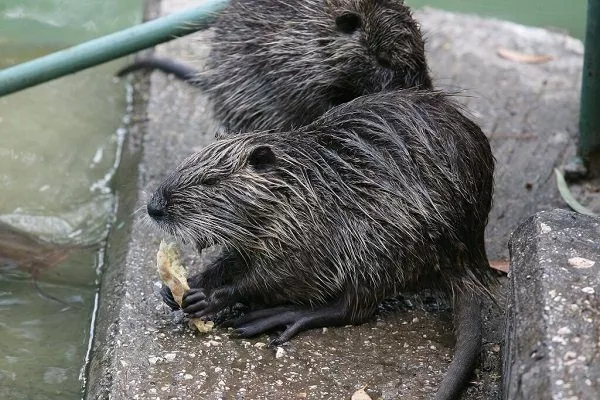
The beneficial properties of meat
Many people disdain nutria and muskrat meat because they are rodents. However, this product has a good chemical composition and a number of beneficial properties.
Comparative table of animal meat:
| Nutria meat | Muskrat meat | |
| Chemical composition | Contains:
| Contains:
|
| Nutritional value | 100 g of product contains:
| 100 g of product contains:
|
| Caloric content (per 100 g of product) | 176 kcal | 162 kcal |
| Benefit | Meat has a positive effect on:
| Muskrat meat is recommended for people suffering from the following diseases:
|
| Harm and contraindications |
Those who suffer should not eat:
| The product does not pose any harm to the human body. |
Including visceral meat products in children's diets is not prohibited. Muskrat meat should be introduced into children's diets with caution and in small quantities.
The cost of nutria and muskrat meat is roughly the same—from 600 to 1,500 rubles per kilogram. The exact price depends on the age of the animals.
In addition to meat, animal fat is highly valued. This component has medicinal properties and is used as a dietary supplement.
The value of animal fur
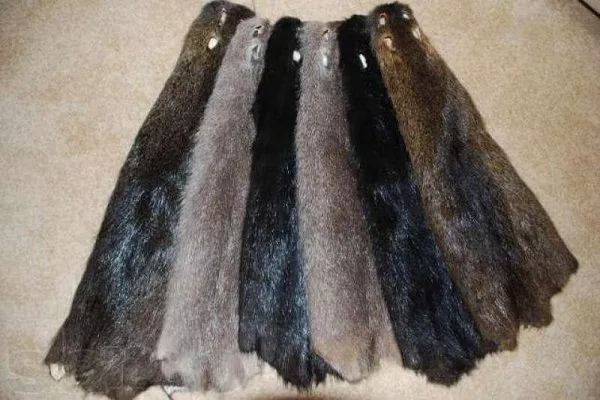
Farmers sell not only the animals' meat but also their pelts. The fur of nutria and muskrat is equally prized by consumers.
Properties of rodent fur:
- Moisture resistance. Fur products are waterproof in rainy weather. All moisture remains on the surface of the garment, not penetrating into the layers.
- Attractive appearance. The skin's aesthetic appeal is comparable to that of mink. The fur is silky and smooth.
- Ability to retain heat. The skins of rodents retain the heat emitted by the human body.
- Softness. Products made from muskrat and nutria fur do not lose their properties even after cleaning.
- Strength. The fur is resistant to various types of mechanical influences.
- Ease. Coats made from valuable fur are equivalent in weight to a light down jacket.
The price of semi-aquatic animal pelts is roughly the same: nutria pelts cost 500 rubles, muskrat pelts cost 450 rubles. The price depends on the quality of the tanning, the fur, and the animal's breed.
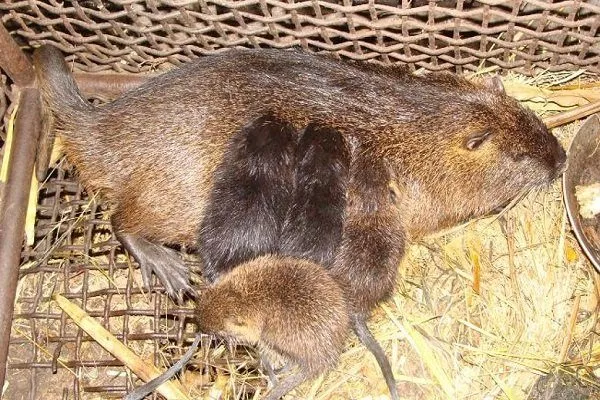
Breeding on farms
Nutria breeding is a relatively rare but profitable business. Nutria provide valuable meat, skins, and fat.
However, the content and nutria breeding There are some nuances. It is the special care that determines the fertility of rodents and the quality of their pelts. Features:
- a special cage or enclosure with access to plenty of water is needed;
- animals need to be provided with silence (otherwise they become frightened, become depressed, lose their appetite, and do not want to reproduce);
- nutria prefers sunlight to artificial lighting (lamps are used if the animal is raised for slaughter);
- Nutria must be fed twice a day, and the diet differs at different times of the year;
- the animal cannot imagine its life without water - it drinks a lot and often;
- Domesticated individuals require warmth (the required temperature is not lower than + 8 degrees);
- Only females and males of reproductive age are allowed to mate.
- ✓ The room temperature should not fall below +8°C to prevent diseases.
- ✓ Access to plenty of clean water for drinking and bathing is essential.
Advantages of the nutria breeding business:
- the animal provides its owner with valuable products on the market;
- additional income from the sale of newborn nutria;
- they eat in small quantities, which reduces the cost of preparing feed;
- no special skills required for cultivation;
- rarely get sick, mortality rates are low;
- grow to adult size in a few months;
- A number of government programs have been developed for this type of business (according to them, the activity is not subject to taxation).
There are some downsides to business:
- It is difficult for beginning farmers to find a buyer of their products;
- It takes time and a certain amount of money to advertise to attract customers;
- If there is no feed base, then it is necessary to find reliable and conscientious suppliers.
Unlike nutria, muskrats are easy to raise at home. They are housed in enclosures, but their small size allows them to be kept in cages designed for rabbits or chickens. Other husbandry considerations include:
- the animals should not be exposed to direct sunlight;
- the place of residence must be protected from drafts;
- It is recommended to provide ventilation in the enclosure, since males release a foul-smelling stream of liquid (the skin will absorb the smell and is not suitable for sale);
- In addition to plant food, it is permissible to feed them with compound feed produced for rabbits.
Cons:
- You need to get used to the animal's character and find an approach to it (otherwise you won't get any weight gain or offspring from a timid animal), which takes a lot of time;
- Profit is possible when keeping animals in large numbers, as their small size produces little meat and skins.
Breeding both types of animals requires significant investment. This includes:
- purchase of the first individuals (optimally up to 50 families), food;
- costs of construction of animal habitats (plus equipping the enclosures with bathing areas);
- payment of workers' wages (it is impossible to cope with large-scale breeding alone);
- equipment for tanning skins;
- advertising (the sales market is limited), etc.
You can save on a few things:
- buy used cages;
- build an enclosure from scrap materials;
- Plant vegetation for food on your site.
The payback period is influenced by several factors:
- individual conditions of the region;
- the presence of competitors in the area of cultivation and sale of products;
- presence of a sales market.
A nutria and muskrat breeding business will pay for itself in approximately 6-10 months, assuming the meat and pelts are sold. If additional offspring or fat are sold, the breakeven period is significantly shorter.
Comparative table of breeding profitability
All the above differences and similarities between nutria and muskrat are summarized in the comparison table. It shows the factors that influence the profitability of nutria versus muskrat farming.
| Indicator | Nutria | Muskrat |
| Life expectancy at home | 12 years old | 10 years |
| Animal size (weight/body length) | 12 kg / 60 cm | 2 kg / 35 cm |
| Price per adult/puppy | 1,500/500 | 1,500/500 |
| Fertility (number of puppies per litter / number of litters per year) | 6 / 2 | 6 / 3 |
| Average cost of skin (per piece in rubles) | 500 | 450 |
| Average cost per carcass (in rubles) | 800 | 800 |
Nutria and muskrats are very similar, not only in appearance. They share similar diets, habitats, and ability to swim well. Their reproduction processes and lifestyles differ. Both animals serve as a source of income for farmers.
Helpful article. We were debating whether to breed nutria or muskrats. After researching the details, we decided on nutria. We weighed the pros and cons and… took the risk. We've been breeding them for seven months now, and so far we haven't had any problems. We're trying to follow your recommendations. Incidentally, we've found feed suppliers and even know where to sell the meat.