
Breeding nutria is not only interesting but also profitable. But to produce high-quality and numerous offspring year-round, it's important to first understand the theoretical aspects of nutria pregnancy and birth, and then learn how to properly care for the offspring and the mother after birth. This also impacts future whelping.
Determining the gestational age of nutria
It's possible to accurately determine the gestation period of nutria. Simply note the mating date in the farmer's notebook. However, sometimes couples live in the same room or cage, making it difficult to determine the time of conception. In such cases, this can be done independently, at least a month after mating (as signs are not immediately apparent).
- ✓ The room temperature should be stable, without sudden changes, so as not to cause stress to the female.
- ✓ Lighting in the cage should be moderate, avoiding both too bright light and complete darkness.
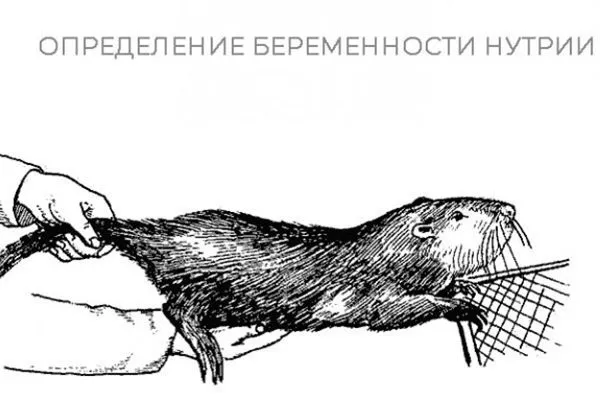
Peculiarities:
- Weighing. 30 days after conception, the female becomes at least 1 kg heavier.
- Palpation of the abdomen. You can feel the nutria's abdomen, but you need to do it correctly: position the female so that her front paws are resting on the floor and her hind legs are hanging down. Be sure to hold her by the tail. The abdomen should be in an extended position. Now place your fingers on the chest area and begin palpating, moving downwards (towards the pelvic region).
If the pregnancy is 40-50 days old, you'll notice small, lumpy bumps. You should proceed with extreme caution, especially when positioning the animal. Otherwise, the risk of miscarriage increases. - Examination of the nipple area. This procedure can only be performed on primiparous females. Sixty days after conception, the nipples become swollen.
- Discharge from the genitalsThey also appear only in primiparous females. The fluid takes on a reddish tint after about a month.
- Analysis of observations. The abdomen noticeably enlarges after two months of pregnancy, resembling an inflated balloon. After three months, the embryos begin to move, which can be observed when the nutria sleeps or rests.
- Behavior. It changes dramatically, but it manifests differently in different females. Some become aggressive, others calmer than before. All individuals move cautiously.
- Appetite. As with females, female nutria begin to consume larger amounts of food and liquid.
How does pregnancy proceed?
While carrying her pups, the female becomes anxious and cautious, and may become active or passive. However, any sudden movements, screaming, or creating stressful situations are strictly prohibited. Turning the pregnant female upside down for extended periods of time, or allowing her near other pets or farm inhabitants, is strictly prohibited.
- ✓ The cage should be equipped with a shelter where the female can feel safe.
- ✓ Access to clean water should be constant, especially in the last weeks of pregnancy.
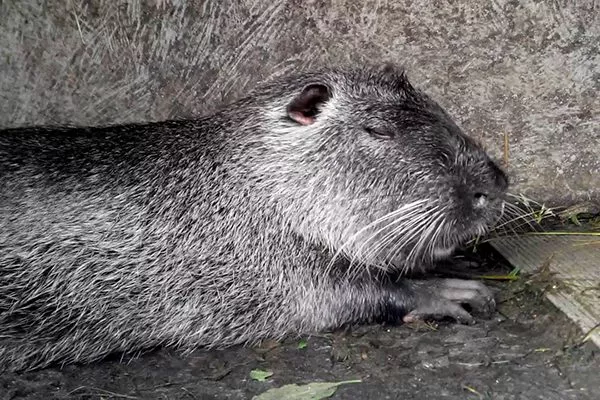
Experienced females know how to behave, but first-time mothers sometimes behave in a habitual manner, making them easily injured, which can lead to miscarriage. However, abortions are also common for other reasons:
- lack of protein food;
- female obesity.
Therefore, if you plan to breed nutria, monitor their diet and body weight.
Behavior of the female before giving birth
Just before labor, nutria behavior changes again. This is especially true for those who have never whelped before. Experienced farmers easily recognize the approach of labor, but this can be challenging for beginners. Therefore, pay attention to the following aspects and be sure to keep a diary in which you record absolutely every detail:
- If the female has been actively feeding throughout her pregnancy, her appetite will decrease sharply a couple of days before labor. Twenty hours before labor, the nutria will refuse food altogether, but will actively drink water, which should always be clean and readily available.
- Physical activity is noticeably reduced – the female lies down constantly and does not show any activity.
- Along with this, she becomes restless - lying on the bedding, looking around, nervously licking herself, frequently changing position.
- Anxiety in turn leads to an aggressive state towards the farmer, other nutrias or farm inhabitants approaching the cage.
- An hour or two before labor, the nutria climbs into a nest, which must be prepared in advance. Once this happens, it is absolutely forbidden to disturb her in any way, as she is preparing for labor.
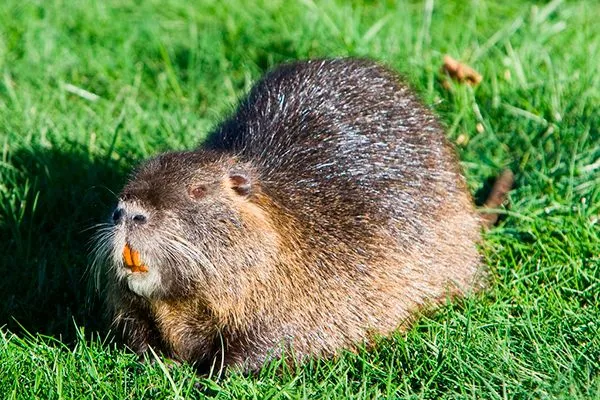
Keeping a pregnant nutria
Throughout the entire gestation period, it's important to ensure the female has adequate access to a comfortable environment. The main rule is to keep her separate, so if you even suspect she's pregnant, move her to a separate cage. Otherwise, you risk losing any future offspring.
Cleaning the cage
Maintaining sanitary and hygienic standards for pregnant nutria is crucial for producing healthy offspring and maintaining the health of the female. This is especially true since nutrias are extremely fastidious. Therefore, please note the following requirements:
- take the females out for a walk so they can breathe fresh air (the farmer also needs this time to clean up the premises);
- Remove feces and drain urine twice a day, and if the bedding gets wet, change it as well;
- Disinfect the room once a week – even the cage bars should be treated, because during pregnancy the nutria’s body is especially sensitive to bacteria and viruses;
- After each feeding, wash feeders and drinking bowls, preferably with antiseptics;
- exterminate rodents that are carriers of infection (mice, rats, moles);
- Prevent the entry of insects, especially flies, bedbugs, ticks and mosquitoes.
Don't forget about temperature control and ventilation – in winter, the minimum reading should be 10-12 degrees Celsius, and the rest of the year, 15 to 20 degrees Celsius. Avoid drafts.
Nutrition
Pregnant nutria eat a lot, so the feed amount will need to be increased. But the most important thing is to provide the female with a special diet that increases overall caloric intake by 20%. The diet should be rich in vitamins and proteins, but not carbohydrates, which contribute to obesity and complicate labor.
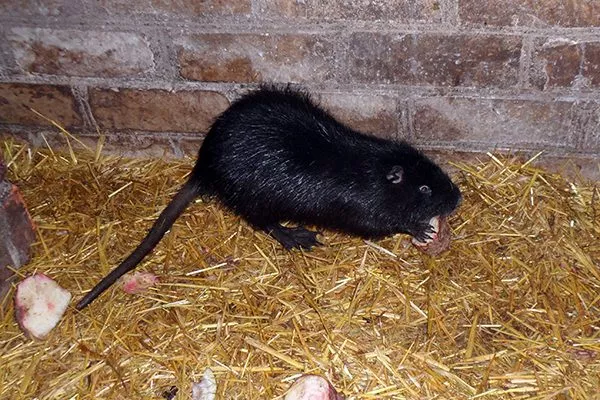
An approximate menu for a female nutria carrying her young:
- green fodder – 300-350 g;
- porridge-mash and dry concentrated mixture – 150-170 g;
- grass flour, hay, clover – 25-30 g;
- beans – 10 g;
- cake – up to 8 g;
- fish oil – 2.5 g;
- salt – 1.5 g;
- meat and bone meal and fish meal – 6-8 g.
Whelping
Nutria pups most often appear at night or early in the morning. Whelping occurs spontaneously, so it's easy for a person to observe the process from a distance. It's important that no one disturbs the mother. The duration of labor depends on the number of pups, but the interval between births is 15-20 minutes.
Please note that immediately after giving birth, the nutria may be particularly aggressive, so do not approach her immediately. It is also normal for the female to pace around the cage. She may also completely refuse food for several days in a row.
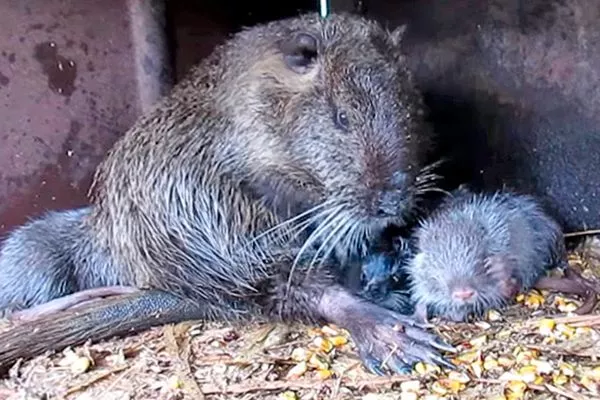
It's possible that a farmer finds one or more dead puppies. In this situation, it's important to take the right action, as the puppies can die from disease. But first, it's important to determine whether the puppies were stillborn or died after birth. Here's how to do this without veterinary intervention:
- Cut up the rabbit.
- Remove the lungs.
- Place them in a bucket of water.
- Observe what happens: if the lungs sink to the bottom, the puppy was stillborn. If the organs float, the nutria gave birth to a live, breathing pup. This is because air entered the lungs during breathing, which is what keeps the organ afloat.
Features of lactation
Nutria produce milk during pregnancy, but begin nursing their pups within the first few hours after birth. The milk of females is rich in nutrients and is high in calories and fat. The lactation period lasts for a month and a half, after which the puppies begin feeding exclusively on their own.
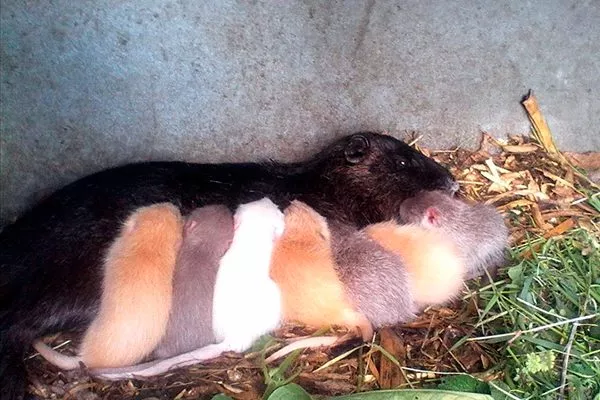
During breastfeeding, it's important to stimulate milk production, which can be achieved through enhanced nutrition. The diet is identical to that used during pregnancy, but the dosage is increased by 10-20%.
Postpartum care
Immediately after whelping, both the mother and the pups require care. Be sure to familiarize yourself with all the requirements and regulations to ensure the safety of the offspring and the health of the mother.
Caring for nutria after birth
Immediately after the puppies are born, you shouldn't touch the nutria, but as soon as she calms down, be sure to look into the cage and do the following:
- remove the remains of the placenta;
- remove dead puppies if present;
- replace soiled bedding;
- Under no circumstances should you handle live puppies, even if they are squealing from hunger (because milk is not yet produced in the first hours).
If the puppies feel well (they are not lethargic or passive), are developing normally, and their fur is not tousled or dull, then no measures need to be taken.
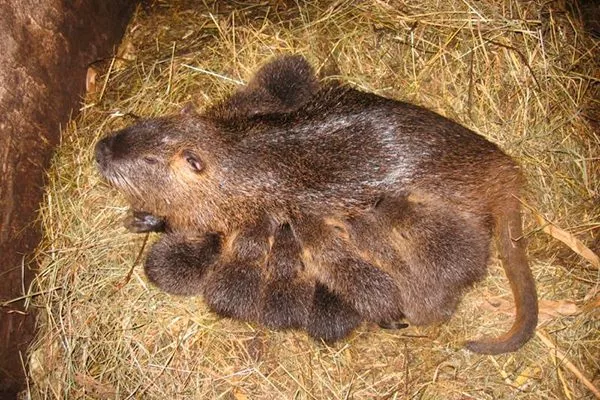
If the situation is the opposite, it means that the female does not have milk or produces too little of it.
In this case, check the mammary glands of the nutria:
- inspect and feel them – they should not be flabby or empty;
- Press on the nipple - milk should come out of it.
If a breast is found to be too hardened, then we can talk about the development of mastitis.
Caring for young nutria
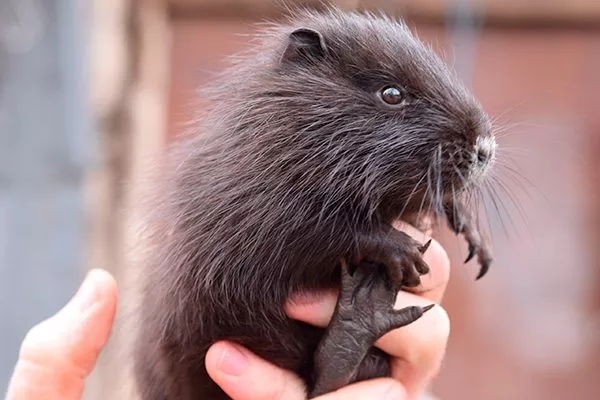
If the mother and puppies are feeling well, there's no need to touch them. Keep in mind that by the second or third day, the puppies will begin to move actively, eat food, and even swim. They won't die at temperatures as low as 10 degrees Celsius.
- ✓ Lack of milk in the female during the first 24 hours after giving birth.
- ✓ Decreased activity in puppies and lack of weight gain.
Special care for the puppies is required if the mother is not lactating. In this case, they are transferred to artificial feeding. Otherwise, the puppies will die of starvation within exactly two days.
Important features:
- cow's milk is mainly used for feeding;
- there is no need to boil milk;
- keep the product fresh;
- Only milk feeding lasts for 5 days, then additional food is introduced - apples, carrots and bread;
- at 14 days, bread is excluded from the diet and replaced with young grain or steamed compound feed;
- For feeding, first use a pipette, then a nipple.
The puppies can be separated from their mother on the 45th day, after which they are cared for in the same way as young animals.
Answers to important questions
There are a number of problems and questions that are difficult to answer. We offer three of the most popular and in-demand.
Why do female dogs bite their newborn puppies?
Many farmers encounter the unusual situation of a female nutria killing her own puppies. Few know why this happens, but there are several possible causes:
- inexperienced females mistake their own cubs for the placenta;
- in difficult labor;
- if the entrails were born dead;
- in case of a lack of vitamin A and others, as well as minerals (the fault of the farmer who incorrectly fed the pregnant nutria).
If you find puppies that have been chewed but are still alive, this indicates that the birth was difficult – the female was trying to extract the puppies.
The nutria can't give birth, what should I do?
Difficulties with whelping arise for one reason - the puppy is stuck in the birth canal and in several cases:
- lack of nutrients;
- fruit size;
- features of the female body at the physiological level;
- too young or too old;
- intoxication of the body;
- diseases.
To help the animals come into the world, do the following:
- Insert a finger (disinfected) into the nutria's vagina.
- Find the head of the gut.
- Feel the incisors.
- Gently pull towards you as the female strains.
If the fetus is not positioned correctly, pull on one of the limbs.
How many puppies does a nutria give birth to?
The standard litter size ranges from 4 to 6 puppies, with a fertile female giving birth to 10 puppies. However, cases have been known for females to give birth to up to 18 puppies at a time.
Female nutrias easily tolerate pregnancy and give birth quickly, but it's important to follow simple guidelines: feeding properly during pregnancy, maintaining sanitary and hygienic conditions, and avoiding stress. By following these simple rules, you'll ensure healthy and strong offspring in your nutria family.