
When breeding nutria, to obtain not only meat but also fur, it's important to know how to slaughter them properly and at what time. The farmer must accurately determine whether the animal is ready for slaughter. There are several methods for butchering the carcass that preserve the attractiveness and value of the pelt.
How to determine the slaughter date for nutria?
The slaughter time is adjusted based on the maturity of the fur. Nutria pelts reach their highest quality when the animals reach 9-10 months of age. With the onset of cold weather, the fur becomes much softer and thicker. Therefore, slaughter time is also influenced by climate conditions.
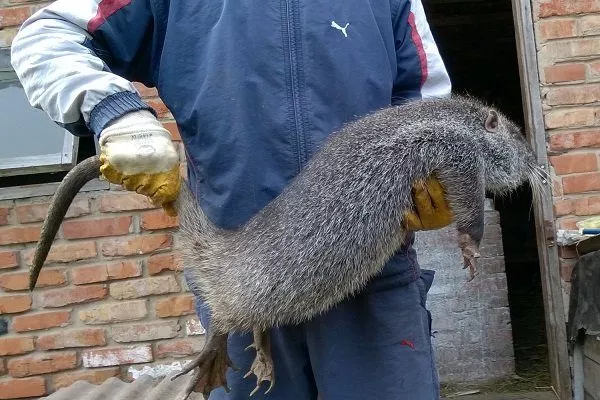
Taking into account the region of habitation, the time of slaughter of animals is also adjusted:
- north of the European continent – beginning of November – mid-March;
- center of Europe – mid-November to early March;
- south – the last days of November (beginning of December) – the first days of March.
If the nutria wool meets all quality requirements, slaughter can be carried out in spring or summer.
Before slaughtering, farmers must carefully select the animals. It's important to properly assess the condition of the animals' fur. Even when slaughter time has arrived, only those nutria whose fur meets the following requirements should be selected:
- on the back the fur is at least 12 cm long;
- the coat is thick and has an attractive shine;
- in the groin area the skin is covered with an even layer of fur, the length of the fluff is at least 10 cm;
- the covering hairs are visible on the lower abdomen;
- no tangles on the belly and spine.
- ✓ Check the uniformity of the fur color over the entire surface of the skin.
- ✓ Check for any areas of loose or damaged hair.
When all parameters are within the norm, the animal is fully prepared for the upcoming slaughter process. In this case, the farmer will receive an excellent quality pelt, which will command a high price.
If there is dirt or tangles in the fur, the animal should first be washed and combed thoroughly.
Animals weighing less than 3 kg should not be slaughtered. To promote rapid growth and weight gain, many farmers use compound feed designed for piglets. This feed contains a high amount of nutrients. Nutria, once they reach 6 months of age, reach the required weight and are ready for slaughter. For information on feeding rules for nutria, read the article:What and how to feed nutria?
What equipment and supplies will be needed for slaughter?
Proper preparation will significantly simplify the slaughtering process. The following equipment will be required:
- several containers in which fat and blood will be collected;
- table for cutting the carcass - it should be covered with zinc sheet;
- Cooper scissors, simple;
- knives for bleeding, skinning, and trimming fat;
- metal scraper;
- brush;
- metal and wooden hammer;
- metal comb;
- hanger with ring;
- a needle that will be used to knit the skin;
- a blank needed to clean the skin from the remains of meat and fat.
Depending on the chosen method of nutria slaughter, the necessary tool—electrodes or a stick—is selected. Rubber gloves will also be required.
What are the methods for slaughtering nutria?
Nutria can be slaughtered using several methods, including manual or electric slaughter. Each method has its advantages and disadvantages. Regardless of the method chosen, slaughter must be carried out in a properly prepared area with adequate lighting and ventilation.
- ✓ The farmer's experience should be a deciding factor when choosing between manual and electric methods.
- ✓ The size and temperament of the animal may influence the choice of slaughter method.
Manual
The manual method uses a moderately thick, but heavy, stick. One end is wrapped in cloth or rubber. This prevents damage to the fur and pelt during the strike.
Algorithm of actions for manual slaughter:
- Use one hand to lift the nutria so that you can simultaneously hold the tail and hind legs;
- rest your front paws on a hard surface;
- deliver a clear blow to the back of the head or forehead - this will kill the animal;
- Calculate the force with which you will strike, since the animal should die immediately, but try not to injure the skull and skin;
- hang the nutria head down, securing it by its hind legs;
- Use a knife to cut the blood vessels located in the mouth;
- Place a container under the carcass to collect blood;
- After 3-4 minutes, after the blood has completely drained, remove the animal from the hook and turn it over;
- remove urine by pressing in the groin area;
- Now remove the skin before the animal's body begins to stiffen.
Manually slaughtering an animal requires a certain amount of skill and experience. The first time, you might want to ask someone more experienced to assist you, who can provide full instructions on how to perform the procedure.
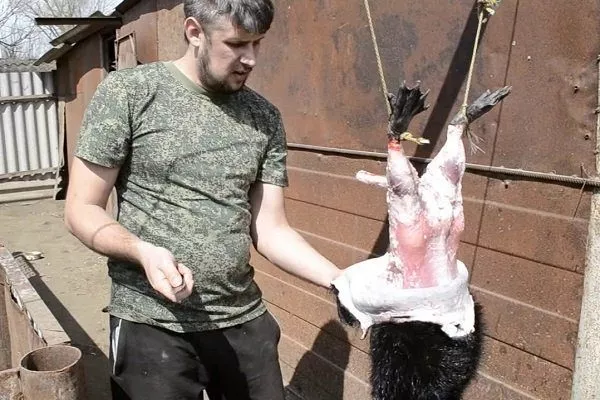
Using electric current
This is a simpler and more humane method of slaughtering animals, as death occurs instantly (within four seconds). However, not every farmer has the resources to implement it, as it requires specialized equipment. This method is most often used when slaughtering large animals.
Algorithm for carrying out the procedure:
- attach electrodes to all paws;
- pass an electric shock (220V) through the carcass;
- After a couple of seconds, hang the animal by its hind legs to remove all the blood.
Working with electricity is very dangerous, so strict safety precautions must be observed – work only with thick rubber gloves.
Rules and methods of skinning
Skinning an animal must be carried out in a specific sequence, taking into account the following rules:
- Remove the skin first from the lower legs and finish with the head;
- First of all, the males' sex glands are removed - place the animal on a table, previously covered with a layer of sawdust, and make a circular incision in the area of the anus;
- hang the carcass by its two hind legs and make an incision in the skin;
- First, make cuts near the hind legs in the area where the border with the fur runs, and then draw a line along the inside of the thigh;
- the tail is cut from the inside of the body;
- On the front limbs, cut the skin in the same way as when working with the hind limbs;
- remove the skin with your fingers, removing the layer of connective tissue;
- Do not rush or make any pulling or sudden movements, as this may damage the skin.
To prevent the fur from getting dirty with grease and blood, sprinkle it with sawdust.
How to repair and store nutria skin?
Once the skin has been removed, it's time to begin dressing it. Clean the inside of the skin of any remaining meat and fat:
- wrap the skin with the fur inside on a previously prepared wooden block, securing it to the wall - it should remain motionless during work;
- carefully remove any remaining meat and fat;
- To clean the inside of the skin, use surgical blades and scissors, which will minimize the risk of cutting the fur;
- then place the skin on a wooden ruler, which you will have purchased in advance, to dry it and give it the correct shape;
- In summer, place the rake under a canopy, but the temperature should not be higher than +30 degrees Celsius, otherwise rotting will begin, which will cause damage to the skin.
This procedure must be carried out by a farmer with sufficient experience, otherwise there is a risk of spoiling the valuable product and devaluing the skin.
Once the skin has been removed and processed, it's stored. If it won't be used immediately, preserve it in a salt solution:
- Sprinkle the skin generously with salt;
- place in a container with a slight slope, from which the resulting ichor will begin to flow;
- After 1-2 days, check; if the skin is not well preserved, repeat the procedure.
Then fold the skin so that the fur is inside, and wrap it in a layer of plastic wrap. You can store the prepared skin in the freezer or refrigerator for up to 6 months.
Cutting up the carcass
Once the skin has been removed, you can begin the process of cutting up the nutria, following the following procedure:
- remove the paws with an axe;
- make an incision in the peritoneum area and remove the entrails;
- work very carefully so as not to accidentally rupture the bladder, otherwise its contents will spill onto the meat, and it will acquire an unpleasant odor;
- intestines with bladder and lungs - throw away;
- rinse all remaining organs thoroughly with warm water;
- wash the carcass well;
- dry the meat and do the same procedure for the giblets;
- Place the prepared organs inside the carcass if you plan to sell the carcass.
The slaughter and subsequent butchering of nutria requires a certain amount of experience. If you have absolutely no idea how to do it correctly, it's best to entrust the job to someone more experienced, as there's a high risk of damaging the skin and fur, which will lose their value.
You can also see how to properly cut up a nutria in the following video:
After learning the theory, it's worth practicing a bit, ideally with the help of an experienced slaughterer. Just a few times performing the procedure under the guidance of a specialist will build the necessary experience and confidence. In the future, butchering animals can easily be done independently.