
Nutria meat ranks near the bottom of the list of most commonly consumed identical products. This is largely due to its high cost and perceived disgust, as it is, after all, a water rat. Despite this, back in 1961, this meat was officially recognized as valuable and dietary. It is most popular in Europe and America.
Description and taste of nutria meat
The swamp beaver, as the nutria is also known, is considered the largest rodent, with some species reaching up to 12 kg. Its value lies in its meat, fat, and fur. Characteristic features of the meat product's appearance:
- the color of the pulp is dark red (due to the large amount of muscle hemoglobin);
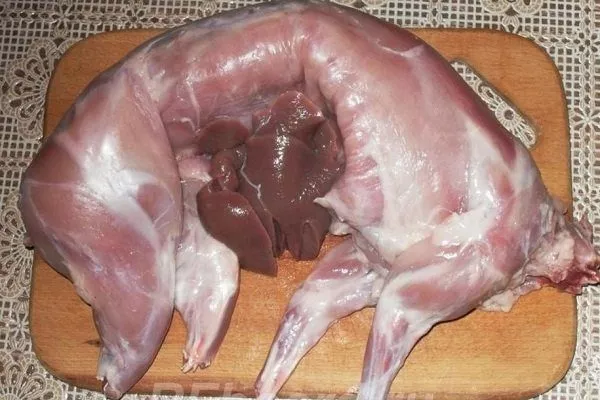
- the shape of the carcass resembles a rabbit;
- the external similarity of meat to other types of product - to beef or turkey;
- to taste - between rabbit and chicken;
- texture - marbled (muscle fibers and fatty tissues are present, evenly distributed);
- the structure is tender and juicy.
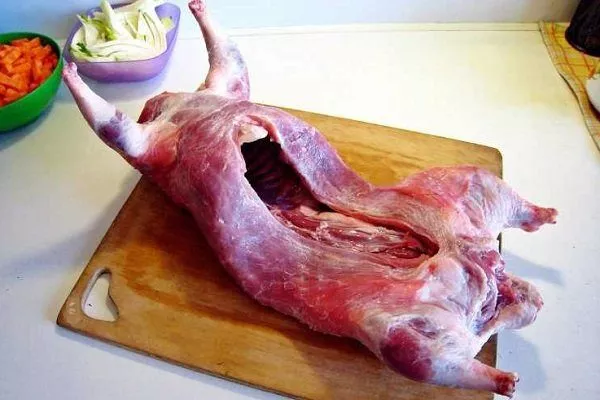
A distinctive feature: if the nutria is wild or raised in water, it will have a fishy flavor and aroma when cooked. If it's raised in a farm, there's no distinctive taste (in this case, few people can distinguish beaver meat from ungulates and birds).
Properties of nutritious meat
Water beaver meat is highly prized by nutritionists and gourmets worldwide. It has excellent taste and high nutritional value. Its unique composition makes it easily digestible and quickly metabolized by the stomach.
Caloric content
Nutritious meat is a high-protein product. In this respect, it is many times higher than beef, lamb, pork, chicken, and other meats. It contains zero carbohydrates. To compare the ratios of various parameters per 100 grams of raw meat:
| Type of meat product | Amount of water | Squirrels | Fats | Caloric content |
| Nutrients | 66–66.3 | 20.7–23.9 | 6-8.1 | 140–150 |
| Rabbit meat | 65–65.6 | 20.7–20.8 | 6.5 | 115 |
| Beef | 67–67.7 | 18.9–19 | 12.4 | 135 |
| Mutton | 57–57.6 | 16.3–16.5 | 15.3 | 174 |
| Pork | 54–54.8 | 16.4–16.6 | 27.8 | 235 |
| Chicken | 59–62.5 | 18.2–20.1 | 14.4 | 160 |
The calorie content of meat depends on the cooking method. For nutria:
- boiled - 160 kcal;
- stewed - 163 kcal;
- fried - 215 kcal.
Its balanced nutritional composition makes it suitable for dietary use—swamp beaver meat is recommended for many ailments and weight loss. It also helps build muscle.
Very rarely, it causes an allergic reaction. The product is approved for use in children. However, it should be introduced gradually. By this time, the child should have been eating cereals, vegetables, and fruits for three months.
Chemical composition and nutritional value
Meat contains a huge amount of vitamins, microelements, and other beneficial substances. The nutritional value per 100 g of meat is listed below in mg/mcg.
Vitamins:
- B2 (riboflavin) - 0.22;
- B1 (thiamine) - 0.06;
- B9 (folacin) - 12.5;
- A (retinol) - 0.06;
- H (biotin) - 0.01;
- E (tocopherol) - 0.094;
- other (in smaller quantities) vitamins - folic acid, PP, C, B12, B4.
Macronutrients:
- magnesium - 24.8;
- phosphorus - 236.8;
- potassium - 347.7;
- sodium - 50.8;
- calcium - 14.9.
Microelements:
- zinc - 2.6;
- fluorine - 103.4;
- iodine - 5.3;
- selenium - 26.6;
- cobalt - 15.0;
- iron - 6.9;
- copper - 151.1;
- manganese - 26.0.
Product benefits
Meat has many beneficial properties. It is especially valued for its sodium-free, high iodine content. Meat is an indispensable product for the following health conditions:
- abnormalities in the nervous system;
- inflammation of the thyroid gland;
- atherosclerosis, hypertension and other diseases of the cardiovascular system;
- damage to the gastrointestinal tract;
- kidney and liver pathologies;
- diabetes mellitus;
- obesity;
- weakened immunity;
- diseases of the musculoskeletal system.
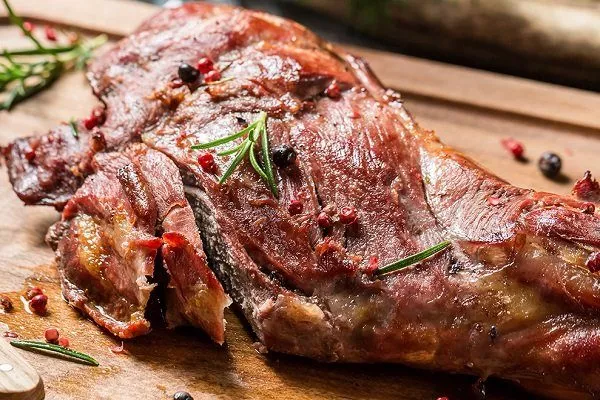
As a supplement to the treatment of the above mentioned diseases, nutria meat helps to:
- strengthening the immune system due to the optimized amino acid structure;
- increasing hemoglobin levels;
- activation of phagocytes;
- beneficial effect on the nervous system, especially during its formation in the child in the womb;
- restoration of digestion;
- acceleration of metabolic processes;
- stimulation of the functioning of internal organs;
- strengthening the walls of the circulatory system and accelerating blood circulation;
- removal of cholesterol from the body - complete cleansing of blood vessels;
- lowering blood pressure;
- normalization of the psycho-emotional background;
- restoration of acidity (at low levels);
- strengthening the heart muscle.
Possible harm
Not everyone is allowed to consume swamp beaver meat. Direct contraindications:
- individual intolerance (may cause allergic reactions);
- gastritis developed against the background of increased acidity.
Excessive consumption of this product can lead to complications, including the development of gout. There are other risk factors, too. If food is not cooked properly, there is a high risk of contracting giardiasis, trichinosis, and other parasites.
Is nutria fat healthy or not?
Unlike any other animal fat, nutria fat is characterized by a high concentration of linoleic acid. It is quickly absorbed (92%) and digested. Nutria fat is permitted even during a weight-loss diet. It is white with a slight creamy tint.
Visceral fat melts at a temperature of 25–30°C (compared to 50–60°C for pork fat). This allows for the most harmless product possible.
It is recommended for heart and vascular diseases and high blood pressure. It has beneficial properties:
- strengthens blood vessels;
- removes cholesterol and other harmful elements;
- accelerates blood circulation;
- liquefies and removes phlegm (in the respiratory tract);
- regenerates damaged tissues and cells;
- strengthens the body's defenses.
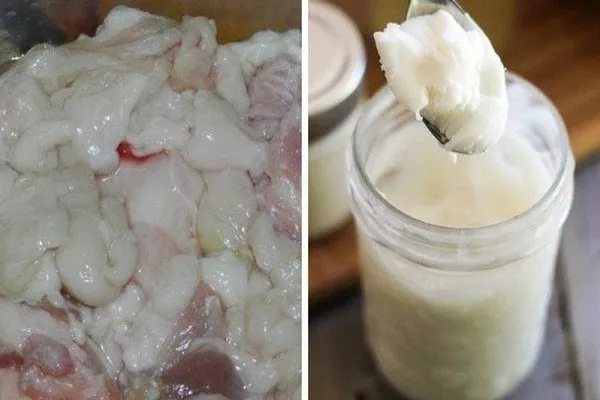
Application in some cases for treatment:
- Cough. Heat the fat in a double boiler and massage it into the chest, back, and heels. Slight redness is normal. Treatment lasts 5–7 days.
- Runny nose and sinusitis. Make cotton balls large enough to fit into your nostril. Melt the fat, soak the ball, and insert it into your nose for 25–30 minutes. For sinusitis, apply the warm product to your forehead and the bridge of your nose.
- Sore throat. Soak a piece of gauze in melted lard and place it on the throat. Cover with plastic wrap and tie it with a wool scarf.
Product demand
Nutria meat and fur are in demand worldwide. Russia has created special incentive programs for aspiring entrepreneurs who have invested in nutria farming.
The main advantages as a business or for personal breeding:
- there is virtually no competition in the market (the sales market is open);
- high level of profitability - rodents reproduce quickly and produce about 10 puppies per litter;
- At the same time, the farmer receives 3 valuable goods - meat, fat, skin;
- easy to care for - no need for special equipment, dietary food, etc.;
- saving on food - it is inexpensive, and in the summer season they are fed fruits, vegetables and even grass;
- few health problems - nutrias get sick extremely rarely (they have a well-developed immune system);
- small initial investment;
- the demand for meat - dietary meat is recommended by many nutritionists;
- demand for skins - fur items made from nutria, compared to mink and other furs, are affordable for the average consumer;
- Efficiency of rearing - animals quickly gain weight and are ready for slaughter in 6–8 months.
Helpful tips from experienced nutria breeders:
- Initially, you should purchase individuals of the same color, since the same type of skins are needed to sew a fur coat;
- Healthy and high-quality animals are not sold at the market from hand to hand (they are raised in private nurseries or on specialized farms, and the sellers have a good reputation).
The sale of meat and skin occurs through:
- market;
- Internet;
- farms;
- fur factories and meat processing plants (mostly private);
- procurement offices (cooperation with government agencies allows you to receive tax benefits).
What expenses are expected at the initial stage:
- to purchase 1 male and 5 females it will cost about 20,000 rubles;
- for cells and their equipment - 50,000–70,000 rubles;
- for feed - 18,000–22,000 rubles.
The price of meat ranges from 500 to 900 rubles per kg, and one skin costs 300–500 rubles. Calculating the profit from 10 animals, the sum is impressive. For a small-scale independent operation, the investment will pay for itself within one year.
When starting a large-scale nutria breeding business, you'll need to hire staff and pay salaries. In this case, the farm will fully break even within two years.
How is an individual selected for slaughter?
The maturity of nutria meat and fur depends on its age. Optimally, it's 9 to 10 months old, but it can be slaughtered earlier. Slaughtering later is not recommended, as the meat will become tough.
Experienced farmers also pay attention to the time of year and climate conditions, as during certain periods the animal's fur becomes softer/coarser, thicker/thinner. Slaughter time, depending on the region:
- from the beginning of December to the beginning of March - in the South;
- from the beginning of November to mid-March - in the Northern latitudes;
- from mid-November to early March - in the Central part.
It's crucial to select the right animals to ensure their meat and fur meet all requirements. Animals with the following characteristics are suitable for slaughter:
- the length of the fur on the back area is 12–14 cm;
- wool quality - there is shine and thickness;
- the pile size in the groin area is 10–11 cm, the coating is even;
- in the lower part of the abdomen there are covering hairs;
- there are no tangles on the spine and belly (but if there are, it is necessary to wash and comb the still living nutria);
- weight - the minimum is 3 kg.
- ✓ Check the thickness and shine of the fur, especially in the groin area.
- ✓ Make sure there are no tangles along the spine and belly.
- ✓ Estimate the length of the fur on the back - it should be 12-14 cm.
There are two ways to kill swamp beavers:
- Manually. To do this, the farmer hits the rodent on the forehead or back of the head with one sharp motion. A wooden stick wrapped in cloth or rubber is used.
- Electric current. Equipment with a voltage of 220 V is required. Death occurs within 3 seconds.
What to do next:
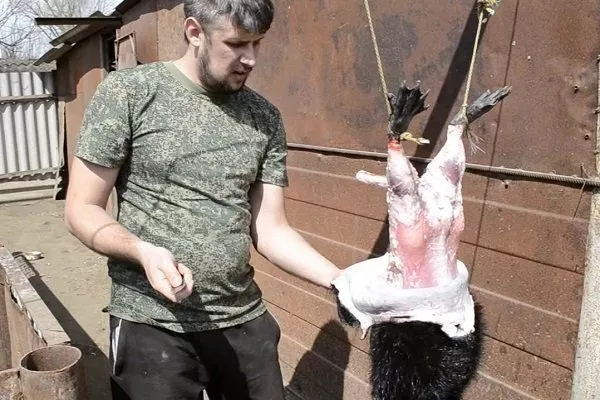
- After killing, the nutria is hung upside down;
- they cut the throat and leave it to drain the blood;
- They remove the skin and process it.
How to choose the right meat?
Not all nutria meat meets sanitary and hygienic requirements. When choosing a seller, pay attention to quality certificates, laboratory reports, and similar documentation.
But this isn't the only risk. Unscrupulous sellers sell counterfeit nutria, meaning meat from other animals. Follow these guidelines when choosing nutria meat:
- Do not buy at spontaneous markets - there are no laboratory tests for product quality and purity, and there may be infected individuals;
- carefully examine the carcass - study in advance what exactly a dressed swamp beaver should look like;
- check for freshness - poke your finger into the pulp (if the shape returns within 1-3 seconds, then buy it without hesitation);
- fat deposits are located only on the withers, in the abdominal area and under the tail;
- The average weight of a nutria puppy varies from 2 to 3 kg, an adult - up to 6, but there are breeds up to 12 kg.
How to properly cut up and process a carcass?
The nutria carcass should be butchered no later than 2 hours after slaughter (at home). You will need the following tools:
- sharp knife;
- cutting board;
- axe;
- scissors.
The processing process after skinning looks like this:
- If there are any paws and tail left, chop them off with an axe.
- Using a knife, cut the belly lengthwise.
- Remove the entrails. This is crucial, as rupturing the gallbladder and bladder spoils the meat, causing it to taste very unpleasant and bitter. Discard the gallbladders, intestines, and lungs. Keep the liver, heart, and kidneys. They are safe to eat.
- Rinse the entrails and the carcass thoroughly in 2-3 waters.
- Transfer the meat to a cool place. Keep for 12–14 hours.
- Store fresh nutria carcasses in the refrigerator for no more than 3 days. Frozen meat has a longer shelf life—90 days.
If you need to cut the carcass into portions, follow the instructions shown in the video:
Tips for preparation and consumption
The maximum consumption rate for an adult is 220–250 g of pulp, for a child – 100 g. Be sure to follow the cooking instructions:
- Do not eat it raw or even try it (usually housewives do this with minced meat), as there is a risk of infection;
- the meat has a specific aroma and taste - get rid of it by pre-soaking: first in cold water for 1-2 hours, then in milk for 12-14 hours (the dairy product must be natural homemade);
- You cannot eat fried nutria meat - the exception is when making shashlik, since the heat treatment takes a long time.
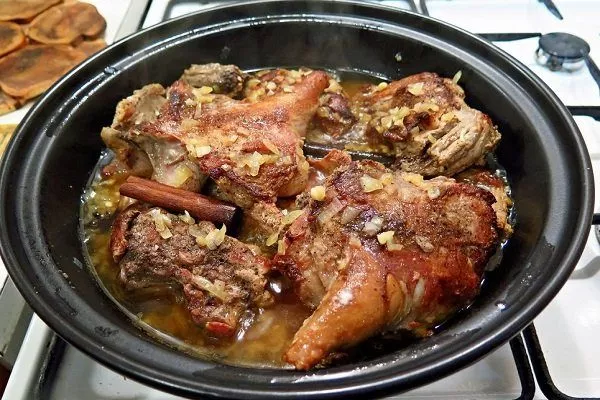
Nutria meat can be used to prepare any dish—soup, pilaf, added to gravy, etc. But it's important to adhere to specific requirements for different methods:
- How to boil. Cook as you would regular meat until fully cooked (the time depends on the age of the animal). Afterward, be sure to discard the skin and cartilage. Use the meat according to the recipe.
- How to extinguish. First, brown the meat in a frying pan, add vegetables (onions, carrots, and other ingredients to taste), and pour in broth, cream, or sour cream. Simmer for at least 55 minutes (a must), but 60–85 minutes is optimal.
- In a multicooker. Cooked in broth or other liquid ingredients. Cooking time is at least 4–5 hours.
To make a cold appetizer, marinate the entrails. How to do it:
- Boil for 60-90 minutes in salted water (the younger the nutria, the less time).
- Let it cool.
- Add mayonnaise, lemon juice, mustard, wine and herbs to the cut pieces.
- Mix thoroughly and let sit for 30–40 minutes.
- Place in the refrigerator.
Nutria meat isn't popular in all social circles. It's mostly sought after by gourmets and those seeking a "tasty" diet. Ordinary people consume the meat and use the fat when needed for medicinal purposes, often on the advice of nutritionists and doctors. Demand for these categories of products allows farmers to raise rodents for profitable sale with minimal investment.