
In the fashion world, fur is one of the most sought-after materials. It adds a special charm and chic to any outfit, providing warmth and comfort during the cold season. One of the most popular types of fur is nutria fur. In this article, we'll explore its characteristics, properties, processing methods, and care, as well as the different species of nutria and the market value of their pelts.
History of the use of nutria fur
Nutria are North American aquatic rodents found in many countries.
Nutria fur is one of the most popular types of fur. The history of using their pelts dates back to ancient times, when people began using fur for protection from the cold. The fashion for nutria fur began relatively recently, in the 19th century.
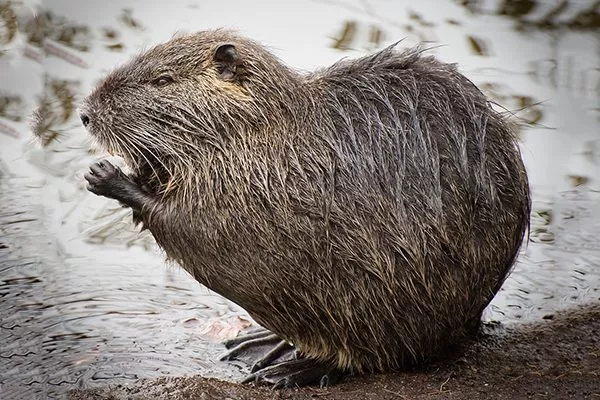
Their soft, fluffy fur became popular among nobles and aristocrats. Initially, it was only available to the wealthy, as hunting nutria was difficult. As industry and trade developed, nutria began to be bred on special farms, making them more affordable.
In the 20th century, the popularity of nutria fur declined due to growing animal welfare concerns and changing fashion trends. In recent decades, interest in products made from this animal's fur has increased, and, at the same time, ideas and technologies have emerged for creating synthetic fur for those who prefer not to use natural fur.
Features of nutria fur
Nutria come in a variety of colors, including brown, white, beige, golden, and black. Their fur is durable, warm, and beautiful, with a luster and longer guard hairs than the undercoat.
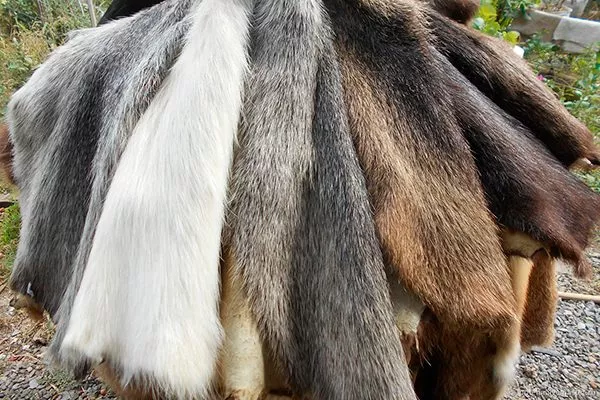
It is used to make fur coats, collars, hats, and mantles. High-quality plucked nutria fur, with the guard hairs removed, resembles mink and is often used to imitate it.
The structure of nutria fur
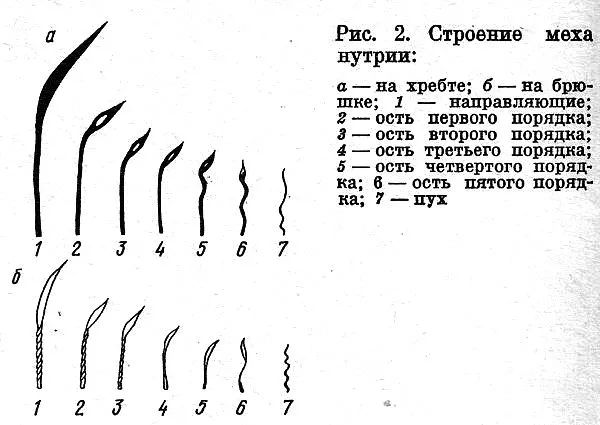
Nutria fur has excellent thermal insulation properties due to its special structure.
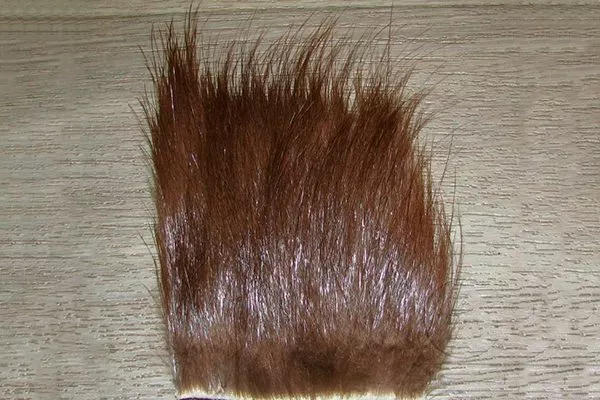
It consists of two layers:
- Upper rough layer – it has protective properties and prevents freezing.
- Thick wavy undercoat (down) — is a dense, downy layer composed of fine hairs, adding extra softness and volume to the garment. It has unique insulating properties, allowing the animal to stay warm even in cold water.
Properties and characteristics of nutria fur
Nutria fur is characterized by its high softness, elasticity, and durability, which allows it to be used to create a variety of products: coats, hats, gloves, and accessories.
It has excellent thermoregulatory properties. Its fluffiness allows it to trap warm air, which acts as natural insulation against the cold, maintaining and providing comfort even in low temperatures, making it ideal for winter clothing.
It is very strong and durable and with proper care can maintain its appearance for a long time.
Pros and cons of nutria fur
Using nutria fur in the manufacture of clothing and accessories has its advantages and disadvantages, which should be taken into account when choosing it.
Types of nutria fur
There are several different types of nutria fur on the market, each with its own characteristics.
The nutria family includes more than 15 breeds, which can be divided into two categories depending on their color: standard and colored.
- Standard nutria. They share a similar coloration, body shape, and fur density to their wild relatives. They have good eyesight, a well-developed sense of smell, and hearing. The coat of these rodents varies from brown on the belly to dark brown or even almost black on the back. Their guard hairs vary in length—shorter on the belly and significantly longer on the back.

Standard nutria breeds typically have high fertility and less demanding husbandry requirements, making them often the first choice for nutria breeders. However, the fur of standard breeds is always lower in value than that of colored breeds. - Colored breeds of nutria. They were created through long and targeted breeding, the consolidation of specific mutations, and careful selection of offspring for breeding. Colored nutrias are generally less fertile, and some require special housing conditions. For example, cream and silver nutrias are less tolerant of cold temperatures, while white nutrias are very demanding regarding the quality of their feed.
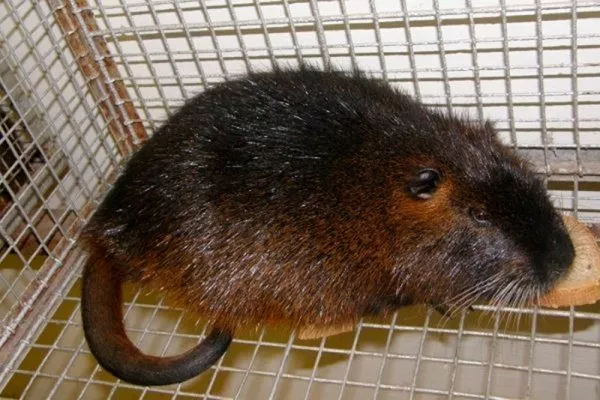
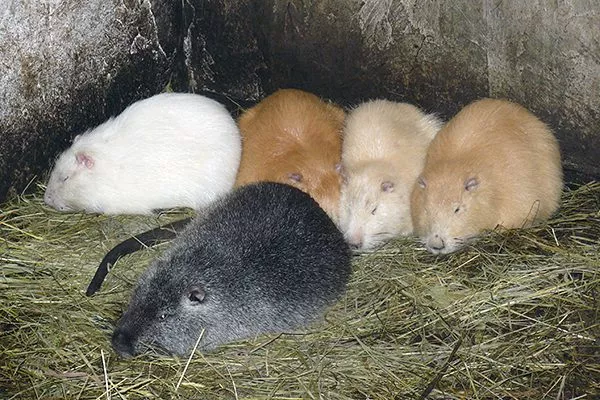
| Name | Fur color | Breeding Features | Cold resistance |
|---|---|---|---|
| Classic | Brown with a golden tint | Unpretentious | High |
| White nutria | White or silver | Demanding of food | Low |
| Black nutria | Black or dark brown | Similar to standard ones | High |
Classic
Classic is the most common and popular type of nutria fur. It has a natural color that can range from light to dark brown.
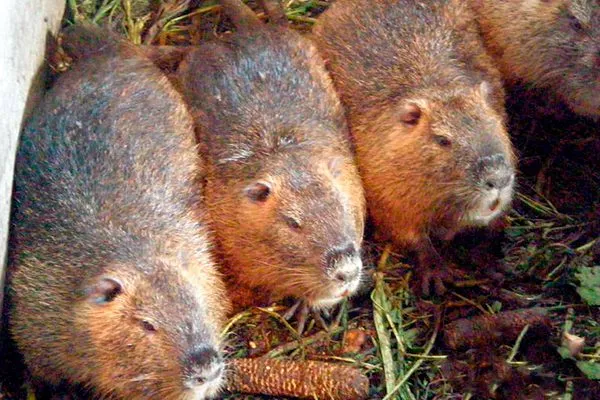
The standard, or classic (also known as the water rat) nutria is the common representative of this species found in the wild. Its appearance resembles that of wild nutrias, with a brown coat. These breeds are relatively easy to breed, easy to maintain, and have a low diet and low maintenance requirements.
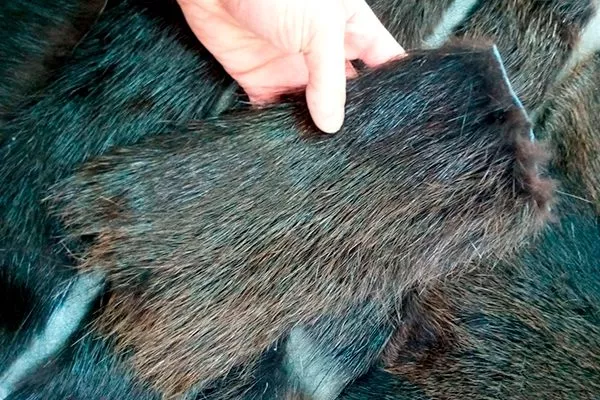
Features of fur Nutria fur is a natural brown color with a golden sheen. It is very fluffy, dense, and soft.
Properties of fur – has excellent thermal insulation properties. The fur is very lightweight, so clothing made from it won't feel heavy. Classic nutria is also highly durable and long-lasting, and its fur is resistant to fraying.
- ✓ Nutria fur is waterproof due to its natural fatty impregnation.
- ✓ The nutria's undercoat has a unique ability to self-cleanse from dirt and dust.
White nutria
White nutria fur is particularly attractive and highly sought after. It has a beautiful sheen and impeccable whiteness, giving fur products a luxurious and elegant appearance.
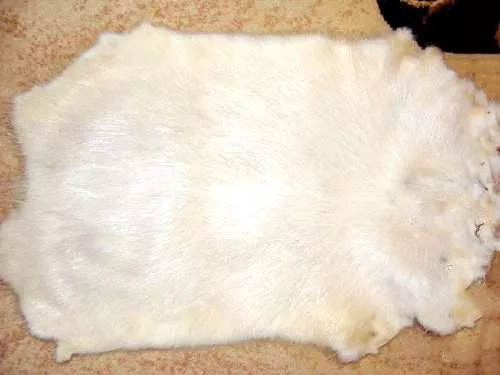
Among the breeds from which white nutria skins can be obtained, the following stand out:
Italian white
It is often confused with the white nutria from Azerbaijan. However, they are easily distinguished by their cream-colored fur. This breed was imported to the USSR from Italy in 1958. When these nutrias were first bred, they were given various names: "albino," "ivory," and "melted snow." Later, the name "White Italian" became established.
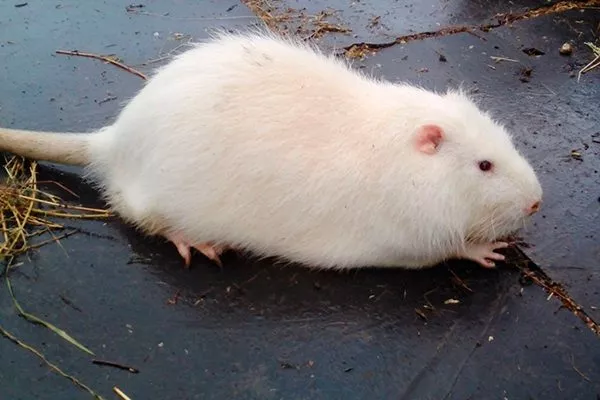
Their coat is white, with a cream-colored undercoat. Their skin is pink, their eyes are dark brown, and their whiskers are white.
In terms of fertility, the Italian nutria breed is similar to the standard breed; their litter size consists of five puppies. If white nutrias are bred, all offspring will be white. However, if standard nutrias are bred with white nutrias, the resulting offspring will be silver.
Snowy
This breed attracts attention with its beautiful fur. Snow nutrias were developed by crossing golden and silver nutrias.
They have a bright white coat and a pink nose. Their cheeks are covered with long, stiff white hairs called whiskers. Their eyes are light brown. They are distinguished by a squat, slightly elongated body and a large head. Adults weigh up to 10 kg. Females are 50–60 cm long, while males are 70–80 cm. The average litter size is 4–5 cubs.
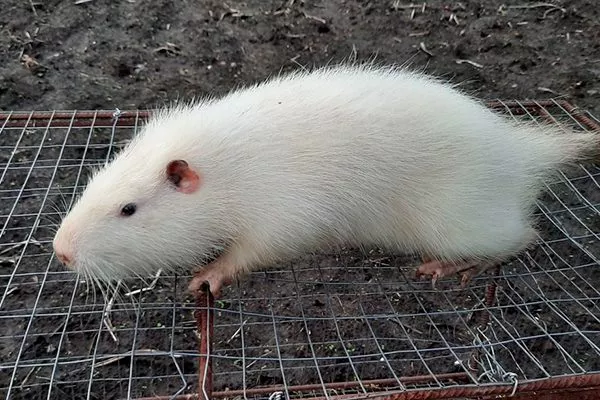
Snow nutria fur is luxurious and highly sought after by fur lovers. Its quality rivals that of classic mink. The fur's hairs are pure white, without any pigmentation. Snow nutria meat is a delicacy, comparable in flavor to rabbit or chicken.
To obtain healthy offspring, it is recommended to crossbreed snow nutrias with other breeds. When crossing two snow nutrias, the litter size will be small. It is preferable to cross them with white pearl or beige nutrias.
Azerbaijani white
The nutria was bred in the USSR. Breeders sought to create animals with white fur, but the first results were albinos and incapable of reproduction. Subsequently, nutrias with white spots on their heads were bred, but true white nutrias were bred in Azerbaijan in 1956.
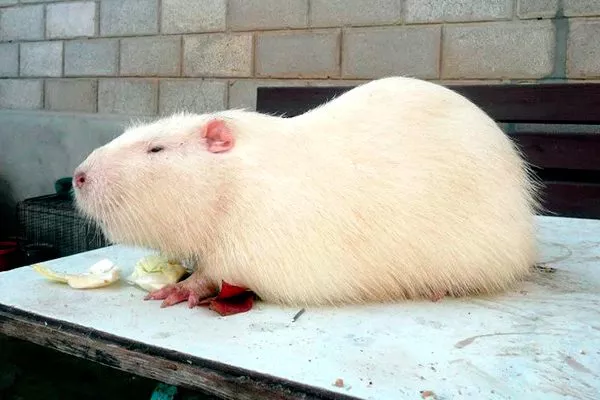
They have snow-white fur, including guard hairs and undercoat. These animals have a compact build, a thick neck, and a smooth transition from the neck to the body. The eyes, mouth, and ears have edgings slightly darker than the base color.
One of the breed's advantages is the uniform texture of its fur and topcoat, making Azerbaijani nutrias particularly valuable. A typical weight is 5-7 kg, and the average fertility rate is 4 to 5 pups per litter. When two Azerbaijani nutrias mate, the offspring can be either white or standard-colored, but white animals predominate.
The meat of this breed is distinguished by its high taste characteristics; it is nutritious, like rabbit meat, but has a more pleasant taste.
Features of fur The white nutria's fur is pure white or silver. It is thick and incredibly soft to the touch.
Properties of fur The white nutria also has excellent thermal insulation properties and retains heat well. Its fur appears even fluffier and plumper than that of the classic nutria.
Black nutria
Black nutria is an exotic and rare fur. Its elegant luster and deep black hue give the garment a luxurious look.
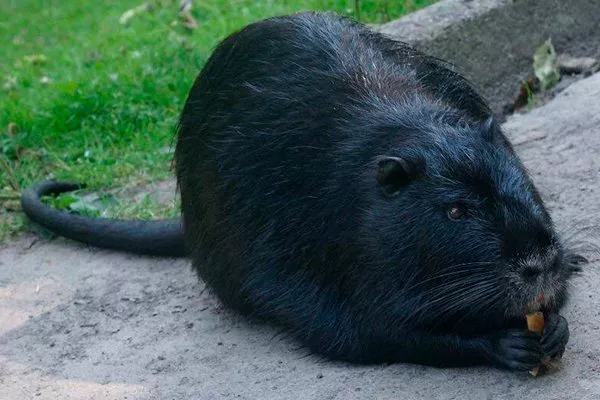
This species of nutria was bred in Argentina. In its structure and reproductive ability, it is virtually identical to the standard nutria.
Exterior and breeding nuances:
- Purebred black nutrias have a uniform black coat with a dark gray undercoat. Occasionally, zonal hair coloring can be observed, appearing as small tufts behind the ears.
- If black nutrias are bred, their offspring will be black, although puppies with a standard coloration may occasionally be produced. These puppies are distinguished from other nutrias by the presence of zonal colored hair. However, when such a pup becomes an adult nutria, its coloring becomes darker than that of standard nutrias.
- When black nutrias are bred with standard nutrias, the resulting puppies have a uniform coloration: either completely black or dark brown. They lack zonal coloration on their backs and sides, but with age, the coloration on their heads and sides may still develop zonal markings. These nutrias are called black zonal.
- When crossing black nutrias with standard ones, the puppies are distributed equally by color: 50% standard color and 50% black, that is, in a ratio of 1:1.
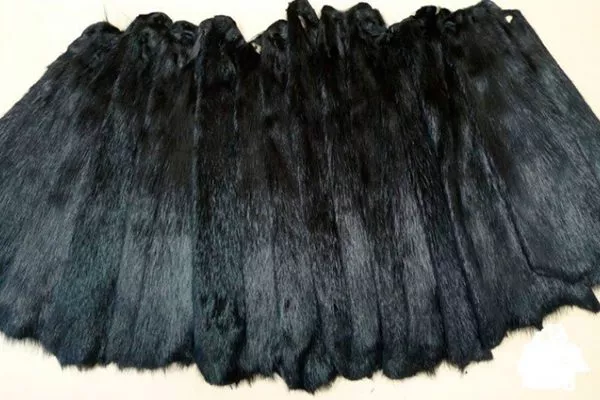
Features of fur The fur is black or dark brown. It has dark guard hairs and dark gray down, sometimes with a brown tint on the tips. It is very dense, smooth, and shiny.
Properties of fur – the fur of the black nutria has excellent thermal insulation properties, but it is denser and less fluffy compared to the classic and white nutria, and has a more elegant and glossy appearance.
Comparison of nutria and muskrat skins
Nutria and muskrat skins are among the most popular materials for clothing and accessories. However, they have some differences.
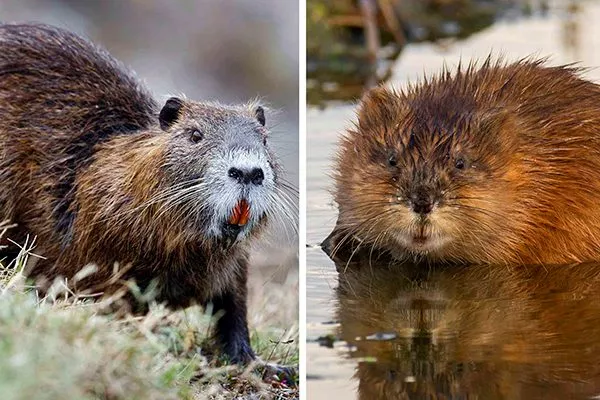
Comparison of muskrat and nutria fur:
- Finishing: Nutria hide has a denser, thicker coating than muskrat hide. This gives it a more luxurious appearance and makes it more appealing to fashion designers.
- Warm: Nutria fur has superior thermal insulation properties compared to muskrat fur. It retains heat more effectively and prevents freezing.
- Price: Nutria hides typically command a higher price than muskrat hides. This is due to their durability, exclusivity, and high market demand.
- Fur:
- Muskrat fur is coarser and stiffer. It can appear shinier and smoother than nutria fur. Muskrats have shorter hairs and a less fluffy texture.
- Nutria fur has a fluffier and denser texture than muskrat skin. It is also softer to the touch and has better thermal insulation properties.
- Strength: Muskrat skin is a more durable material, providing good protection from the cold. However, it's important to note that muskrat fur has a relatively short lifespan and wears out more quickly due to its weak undercoat.
Dressing of skins
Dressing nutria skins is the process of removing fats and other organic substances from the skin in order to prevent its decomposition and give it strength, elasticity and resistance to various external influences.
The finishing process includes several stages:
- Soaking: Soaking raw nutria hides in special solutions, such as water-salt solutions or enzyme preparations. The purpose of soaking is to soften the hide, break down disulfide bonds, and remove natural contaminants and meat residue. The hides are left in the soaking solution for several days or weeks until they are completely saturated.
- Fleshing: After soaking, nutria skins undergo a mechanical hair or fur removal process. A special tool, called a fleshing tool, removes the hair from the skin. Fleshing is performed carefully and gently to avoid damaging the skin.
- Degreasing: Degreasing nutria hides removes any residual fat and pulp that may remain after fleshing. This is done using chemical solutions or specialized degreasing agents. Degreasing helps ensure the hide's cleanliness and flexibility, and also improves its ability to absorb dyes.
- Pickling: Nutria hides are exposed to a pickling solution containing salt and acid. Pickling helps stabilize the hide, protecting it from decay and bacterial activity. It also improves dye penetration and strengthens the hide's structure.
- Tanning: Tanning is a subsequent process that gives nutria hides flexibility and strength. To achieve this, the hides are treated with special tanning agents, such as tannin, which penetrate the leather and bind to its fibers. This makes the hide flexible, water-resistant, and allows it to retain its shape.
- Fattening: After tanning, nutria hides are often fatliquoring. During fatliquoring, fats or oils are applied to the hide. This provides excellent nourishment and hydration, softening it and imparting a shine. Fatliquoring also makes the hide more flexible and resistant to external influences.
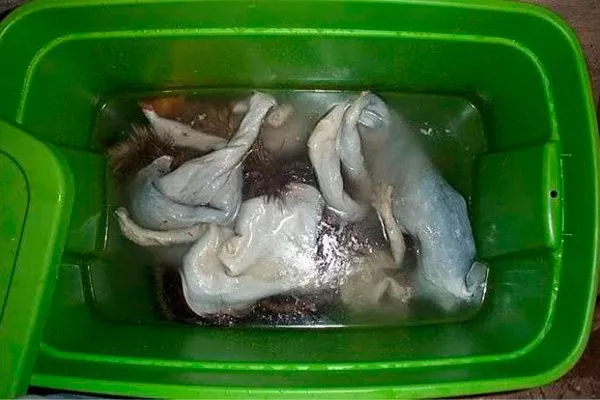
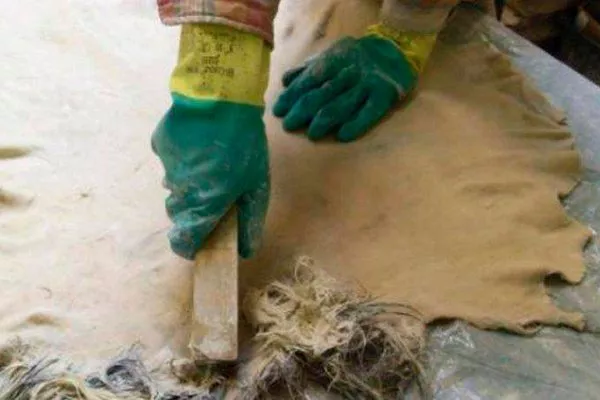
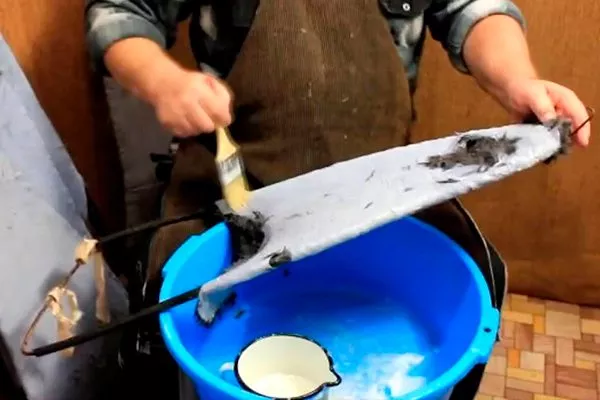
Dressing nutria skins is a meticulous process that requires experience and skill. Understanding the sequence of steps and specific features will help create a high-quality material that will find application in various areas of fashion and design.
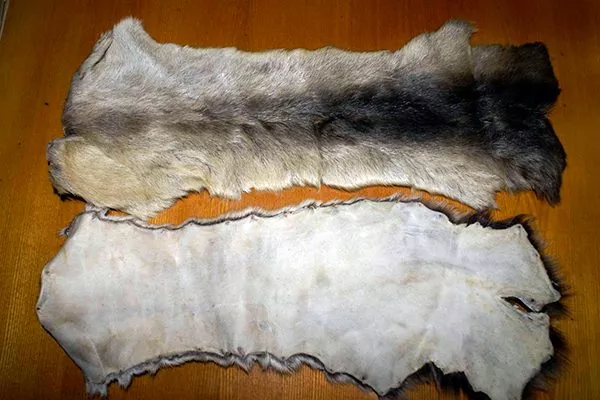
There are various ways to process nutria fur.
- Haircut – is carried out to create a more uniform and neat appearance of the fur product.
- Plucking whiskers – allows you to remove coarser hairs on the fur, which improves its appearance and softness.
Usually a combination of both methods is used to achieve the best result.
Caring for Nutria Fur
To keep nutria fur in perfect condition and extend its lifespan, care and proper maintenance are essential.
Here are some recommendations:
- Store nutria fur products in a cool, dry, ventilated place, away from direct sunlight and heat sources, in special covers or on hangers to avoid deformation.
- Clean the fur with a soft brush or a special fur brush to remove dust and dirt. Avoid using harsh chemicals. For heavily soiled fur, it's recommended to contact a professional who specializes in cleaning and delicate care of fur products.
- Avoid allowing nutria fur to become wet, as this can damage its structure and properties. If water gets on it, gently wipe it with a dry cloth.
Cost and sales
The price of nutria fur depends on factors such as the quality of the pelt, the rarity of the breed, the model, the size and color, market demand, and the brand. The average price can range from 5,000 to 15,000 rubles per piece.
Nutria fur is a rather expensive product, as it requires significant investment in breeding and raising nutria, but the investment is well worth it thanks to its durability and luxurious appearance.
Nutria fur is sold through fur salons, fashion boutiques, and online stores, as well as at specialized markets and fur auctions. Its popularity is growing every year, as it is one of the most sought-after and prestigious furs in the international fashion market.
Nutria fur is a unique material with a long history of use. Its properties make it a popular choice for fashion clothing and accessories. Nutria fur comes in various varieties, including classic, white, and black, allowing you to choose the perfect option to suit your individual preferences.