
The nutria is an aquatic rodent with valuable fur and dietary meat. Nutria farming is a profitable business that any beginner can master. This article introduces popular nutria breeds suitable for both home and commercial farming.
Classification of breeds
Nutria breeders have divided them into three groups:
- Standard breeds. These nutria are almost identical to the animals living in the wild – in color and size.
- Colored rocksThey are divided into two subgroups. The division is based on the ability of animals mated with "standards" to produce offspring. Two breed types are distinguished:
- Dominant. These include the golden, black, and Azerbaijani breeds. By crossing a dominant specimen with a standard one, the result is offspring with a unique coloring.
- Recessive. These include the pearl, Italian, smoky, white, and beige nutria breeds. If they are crossed with the standard, the offspring will have a predominantly brown fur color.
Colored nutria weigh 5-7 kg and are 45-60 cm long.
- Large breeds. Feeding nutrias with especially nutritious feed can produce larger-than-average carcasses. However, some breeds are naturally gigantic, including:
- black nutria;
- Azerbaijani whites.
While a typical specimen weighs 5-7 kg, representatives of the large breeds can reach up to 15 kg. Males are especially large. The value of these breeds lies in their high meat yield and large pelt surface area.
The fewer pelts used to make a fur garment, the higher its value. Therefore, the fur of large breeds is considered particularly valuable.
| Name | Weight of an adult (kg) | Body length (cm) | Fur color |
|---|---|---|---|
| Standard nutria | 5-7 | 45-60 | Brown |
| Black nutria | 6-8 | 65 | Black |
| Italian white nutria | 5-7 | 45-60 | White |
| Azerbaijani white nutria | 5-7 | 45-60 | White |
| Silver nutria | 6-8 | 48-62 | Silver |
| Snow nutria | 10 | 50-80 | White |
| Golden nutria | 6-8 | 60 | Golden |
| Mother-of-pearl nutria | 5-7 | 60 | Silver-gray |
| Pastel nutria | 5-6 | 45-60 | Brown |
| Lemon nutria | 5-7 | 45-60 | Orange |
| Beige nutria | 5 | 45-60 | Beige |
| Creamy nutria | 5-7 | 45-60 | Cream |
| Clouded nutria | 5-7 | 45-60 | Smoky gray |
| Brown exotic nutria | 6-7 | 45-60 | Brown |
| Pearl nutria | 7 | 45-60 | Silvery cream |
Standard nutria
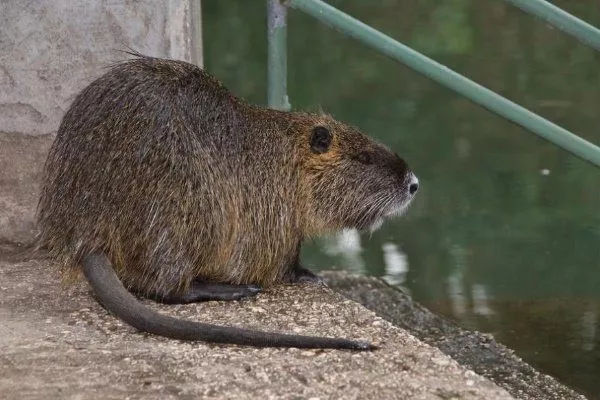
In appearance, it's a common water rat found in the wild. It has the same brown fur as its wild counterparts. Standard breeds are the easiest to breed; they are easy to feed and require little maintenance.
Description. Fur color ranges from light brown to dark brown, almost black. Breed characteristics:
- dark brown eyes;
- the hairs on the belly are always lighter;
- the hairs are lighter at the ends.
Productivity and properties of fur. Six rodents are born per litter. The maximum weight of an adult is 7 kg. The minimum is 5 kg. Some specimens can reach 12 kg. Length ranges from 45 to 60 cm. The fur, thanks to strong, long guard hairs that lie tightly together, does not get wet.
If you get caught in the rain while wearing a nutria fur coat, it won't get wet—all the water runs off the hairs, not onto the fluffy undercoat. That's why nutria fur is so prized in rainy regions.
Breed characteristics. They have strong immune systems. They are easy to care for and undemanding in terms of feeding. A drawback is that their fur is prone to matting. They have good reproductive abilities and a well-developed maternal instinct. They love aquatic environments. When kept in enclosures, it is important to provide them with access to water; artificial ponds are often used.
The standard nutria menu consists of:
- herbs;
- tree shoots - poplar, willow, birch;
- grain crops;
- beets, carrots, cucumbers, zucchini, cabbage;
- hay and dried brooms with leaves.
To prevent bloating, the feed is washed before feeding. For better digestibility, the grain is steamed.
Black
This variety was bred in the homeland of nutria farming – Argentina.
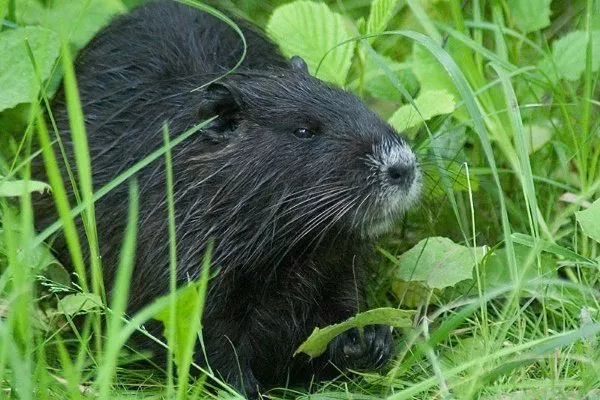
Description. Pure black, uniform color. There are zonal tufts of hair behind the ears. Individuals reach 65 cm in length. Eye color is brown or black.
Productivity and properties of fur. When black females and males are bred, the offspring are black. However, occasionally, offspring of the standard brown color are born. Females have a litter size of five. Individuals weigh 6-8 kg. The fur of the black nutria is exceptionally luxurious. The hairs are pigmented with equal intensity along their entire length. The underfur is dark gray.
Black nutria fur coats are all the rage and are enjoying overwhelming popularity on the market.
Breed characteristics. If you mate "blackies" with "standards," the result will be 50% black and 50% standard offspring. The advantage is good offspring production, just like with regular nutria.
More advantages of the black breed:
- thick wool;
- the wool coat practically does not mat;
- unpretentious in nutrition;
- fertile.
Italian white
White Italian nutrias are often confused with white Azerbaijani nutrias. However, they are easily distinguished by the creamy white undercoat. This breed was brought to the USSR from Italy in 1958. When they were first bred, they were given various names—"albina," "ivory," and "melting snow." Later, the name "white Italian" became established.
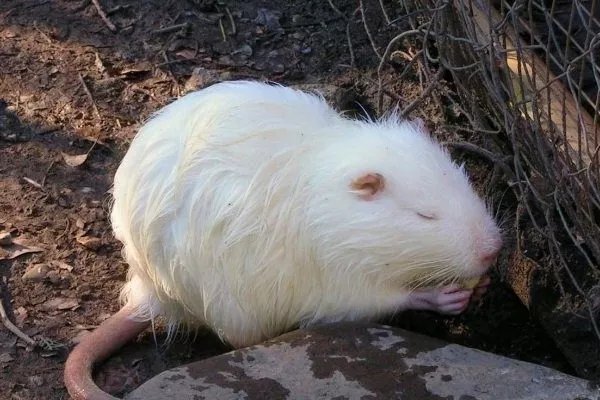
Description. The coat is white, with a cream undercoat. The skin is pink. The eyes are the color of dark chocolate. The whiskers—the tactile hairs on the head—are white.
Productivity And properties of fur. Fertility is similar to the standard breed—5 puppies. When white nutrias are bred, all the pups are white. When standard nutrias are bred with white ones, the pups are silver. They are known for their delicious meat—it's tender and nutritious. Their fur is valued significantly higher than that of other breeds.
Breed characteristics. Unlike many artificially bred breeds, white nutrias are just as prolific as standard nutrias and have a very presentable appearance.
Azerbaijani white
In the USSR, breeders, having obtained nutria in the 1930s, immediately began to develop animals with white fur. However, all the animals they produced were albinos, unable to produce viable offspring. Breeding resumed in the mid-20th century, and they succeeded in developing nutria with white spots on their heads. However, true white nutrias were developed in Azerbaijan in 1956. This breed had white fur throughout—from the guard hairs to the underfur.
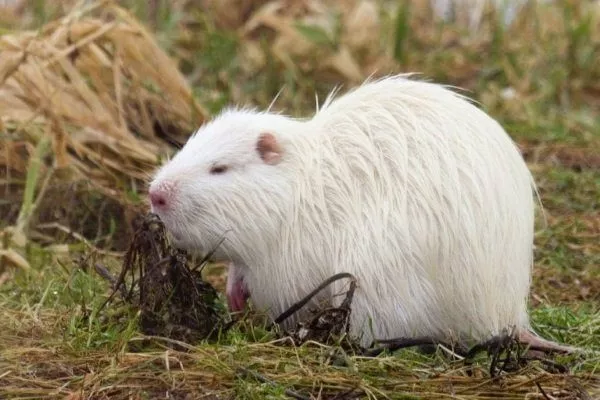
Description. White animals have a stocky build. They have a thick neck that blends smoothly into their body. Around the eyes, mouth, and ears is a rim that is slightly darker than the rest of their color. Their webbed feet are pinkish. Their eyes are the color of coffee.
Productivity and properties of fur. The average weight is 5-7 kg. Fertility is average, with 4 to 5 young per litter. When two Azerbaijani nutrias are mated, the litter may include both white and standard-colored animals, but white ones are more prevalent. This breed is known for its exceptionally tasty meat—it's as nutritious as rabbit meat, but tastier.
Breed characteristics. The natural coloring is transmitted by dominant genes. The advantage of this breed is the identical structure of the down and topcoat. This makes the hair and undercoat indistinguishable, making the fur of Azerbaijani nutrias particularly prized.
The quality of the fur depends on the nutritional quality and living conditions. These animals require an artificial pond with lush grass. Fur quality will be poor if they are either underfed or overfed.
Argent
The breed was obtained by crossing Italian and beige nutria.
Description. Characterized by its unusual fur coloring, it ranges from light to dark silver. It has a dense, dark undercoat, and a dark gray or almost black topcoat, with silver tips. The fur has a glossy appearance. A distinctive feature of the breed is a silver stripe running along the spine. Its eyes are red.
Productivity and properties of fur. When well-fed, males can reach 12 kg. The average weight is 6-8 kg. The body length is 48-62 cm. Their fur is extremely luxurious and is used to make coats, jackets, and hats. The fur with a bluish underfur is especially prized. The meat yield is 53%. It is distinguished by its pleasant taste and juiciness.
Breed characteristics. The breed is distinguished by its robust constitution, but they are raised primarily for their pelts rather than for meat. Silver nutrias can be mated with other breeds, producing offspring that are 50% silver and 50% of another shade.
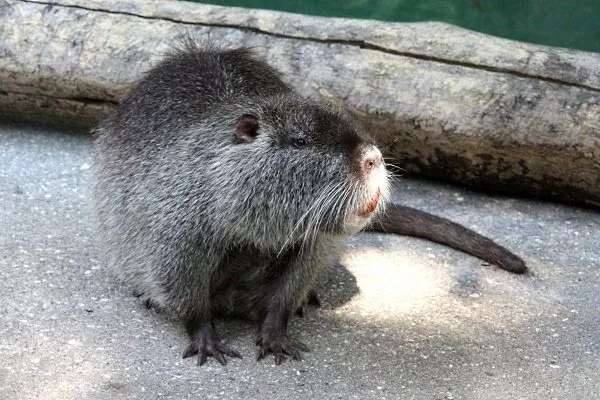
Snowy
This breed has a very beautiful fur, attracting both breeders and consumers. The breed was developed by crossing golden and silver nutria.
Description. The coat is snow-white, with pink paws, tail, and nose. The lips and cheeks are covered with whiskers—long, stiff white hairs. The eyes are light brown. The body is squat and slightly elongated. The head is large, with eyes positioned high on the top for comfortable viewing while swimming. The ears are almost hairless on the outside, but covered with fur on the inside.
Productivity and properties of fur. When well-fed, adults can reach 10 kg. Females are 50-60 cm long, while males are 70-80 cm. When crossed with other breeds, litters can be up to 6 pups. Average fertility is 4-5 pups. Their fur is luxurious and sought after by fur coat lovers. It is also used to make coats, jackets, and hats. Its quality is comparable to classic mink. The hairs are pure white, without any pigmentation. The meat is a delicacy, comparable to rabbit and chicken.
Breed characteristics. To ensure good offspring, snow-white nutrias are mated with other breeds. When two snow-white individuals mate, the litter is very small. It's better to mate a pearl-colored or beige nutria with a snow-white one. There are three varieties of this breed, but they are so similar that only a nutria breeder can distinguish them.
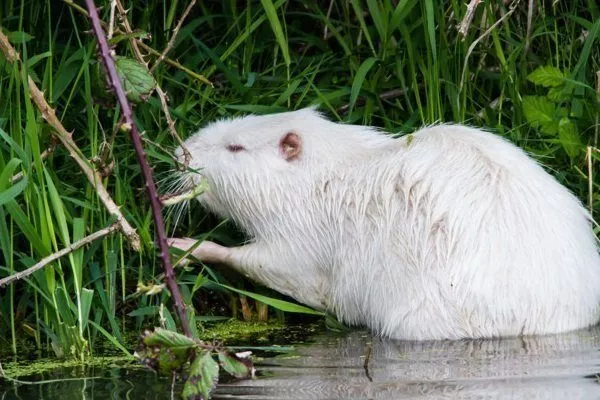
Golden
Golden nutrias were brought to the USSR from abroad in the 1960s.
Description. They correspond to the "standard" in weight and size. Their coloring is an intense golden hue. The belly is somewhat lighter than other parts of the body. The underfur on the back and belly has a pinkish tint, giving the pelt a distinctive creamy color. The guard hairs have a distinct, elegant sheen. The eyes are brownish. The animal's length is up to 60 cm.
Productivity and properties of fur. Weight: 6-8 kg. Mating two goldens doesn't produce much profit—only 3-4 puppies. The underfur is soft and silky to the touch. The fur is in demand.
Breed characteristics. To ensure their fur shines, the animals must be well-fed and kept in good conditions. To increase fertility, golden nutrias are bred with other breeds. Then, 50% of the offspring are golden. The average litter size is five.
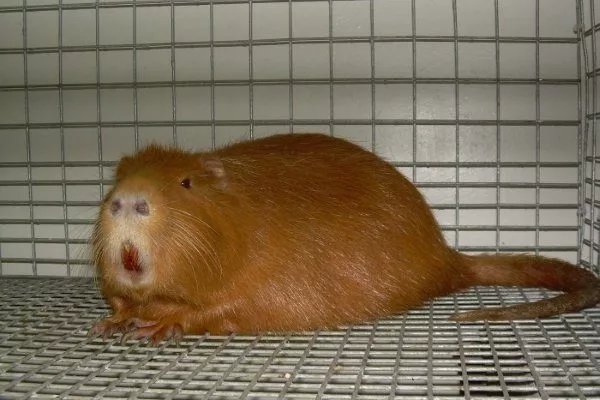
Mother of pearl
This breed was obtained by crossing white Italian and beige nutria.
Description. The coat is unevenly colored. The skin is silvery-gray with a creamy tint. The guard hairs have different shades in different parts of the body—beige, pink, and bluish. This coloration is also called zonal.
Productivity and properties of fur. The standard weight is 5-7 kg. Length is up to 60 cm. If the pearl nutria's fur is dominated by gray guard hairs, this is considered a defect. Pearl nutria fur is highly prized and is used to create luxurious coats that are as aesthetically pleasing as mink. The fur is extremely durable. The meat is tasty and nutritious.
Breed characteristics. The coloring of pearlescent nutria puppies can vary greatly—it's impossible to predict. To ensure their beautiful fur, they require excellent nutrition and care. A mini-pool for grooming is essential. Improper care can permanently damage their pearlescent coats.
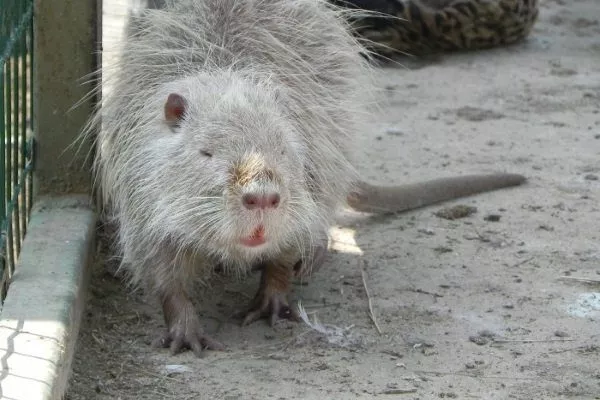
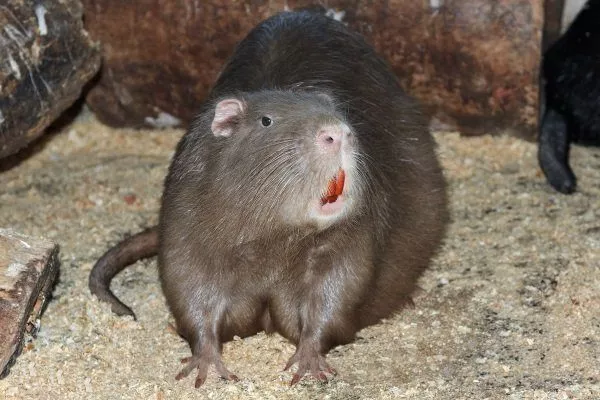
Pastel
Pastel nutrias are bred by directly crossing golden and black nutrias. The same color is achieved by crossing straw and pearl breeds.
Description. The coat is brown. The shade may be lighter or darker. Some individuals have coats the color of ripe chestnuts. The down is brownish or lighter. The eyes are a pleasant brown.
Productivity and properties of fur. Individuals weigh 5-6 kg. There are 4 puppies per litter. The fur of pastel nutrias is extremely beautiful. It is used to make fur products, such as coats, hats, and so on. The coloring of the fur is similar to that of pastel mink.
Breed characteristics. Pastel nutrias are bred primarily for their beautiful fur, with meat being a secondary consideration. They are also used to breed other breeds. Pastel nutrias are highly reproductive. Crossing pastel nutrias with lemon or snow nutrias produces pearl-colored animals. To ensure fertility and good fur, these animals must be provided with adequate nutrition and good living conditions.
Lemon
The breed was obtained by crossing beige and Italian nutrias.
Description. Although the breed is called lemon, its coat color is more of a warm orange. The coloring is almost the same as that of golden nutrias, but somewhat lighter.
Productivity and properties of fur. Lemon nutria fur is particularly sought after for its clear color and high-quality pelt. It weighs 5-7 kg.
Breed characteristics. Females are known for their fertility, with litters of 5-6 puppies. The pups can vary in color, but all have lemon hues. Mating a lemon nutria with a snow-white nutria produces lemon, white, and silver colored puppies.
- ✓ Ensure the room temperature is not lower than +15°C for comfortable keeping of nutria.
- ✓ Keep cages clean and change pool water regularly to prevent diseases.
- ✓ Provide a balanced diet including vegetables, fruits and vitamin supplements to maintain the health and quality of the fur.
To ensure their fur meets quality standards, the animals need adequate nutrition. The optimal temperature is 15-20°C. Nutria do not tolerate cold temperatures; they are extremely heat-loving animals. Keep their enclosures clean. A clean, freely accessible pool is essential. Their diet consists primarily of plant foods, but fruits and vegetables are also essential. Food with vitamin and mineral supplements is essential.
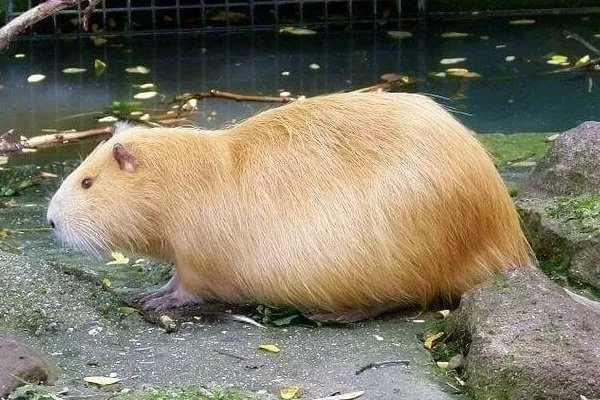
Beige (sabiya)
This is one of the most sought-after breeds among breeders. It is bred both by hobbyists and commercially. The breed was brought to the USSR from Italy in 1958, along with the silver and pink nutrias.
Description. Beige nutrias have brownish tones with a grayish and beige tint. Color saturation can vary, with light, medium, and dark colors being distinguished. Their color ranges from beige-gray to dark with silver. Their underfur ranges from light beige to dark chestnut. Their eyes are dark brown.
Productivity and properties of fur. The fur has a noble appearance and is suitable for making luxurious coats, hats, and other items. The fur is highly durable, stain-resistant, and pleasant to the touch, as well as beautiful in appearance. Fertility is normal—5-6 puppies. Individuals weigh the same as standard breeds, starting at 5 kg. The meat is excellent in flavor and highly nutritious.
Breed characteristics. They reproduce actively and are very fertile. They have 2-3 litters of 5 puppies per year. The pups are viable and gain weight quickly. Mortality is low. Beige nutrias are a recessive type of the multicolored breeds, so they are inferior to dominant breeds when crossed. For example, mating a beige male with a standard female produces silvery offspring.
Creamy
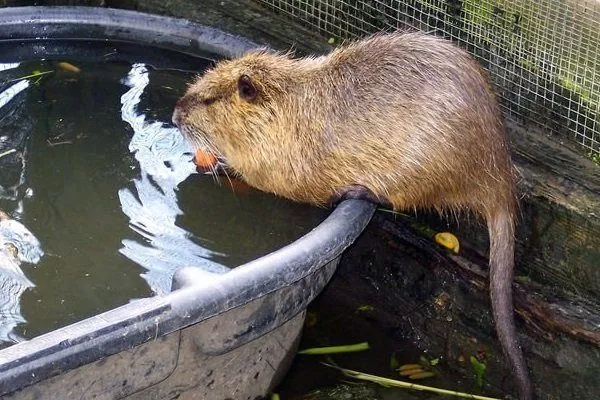
These animals were singled out as a separate group due to their unique coloring.
Description. The fur color is uneven. The back is beige or brown. The belly is lighter, with soft beige tones. The nose leather is brown, and the paws are bluish-pink.
Productivity and properties of fur. The fur of six-month-old puppies is prized. If the fur ages, it becomes coated with a yellow or brownish tinge and is of no value. A litter consists of 4-5 puppies.
Breed characteristics. The animal's coat reaches its most beautiful color at four to five months of age. After that, the fur darkens or becomes yellowish. To produce cream-colored pups, you need to cross-breed cream-colored individuals with each other. If you cross a beige animal with a standard, the offspring will be brown.
Smoky
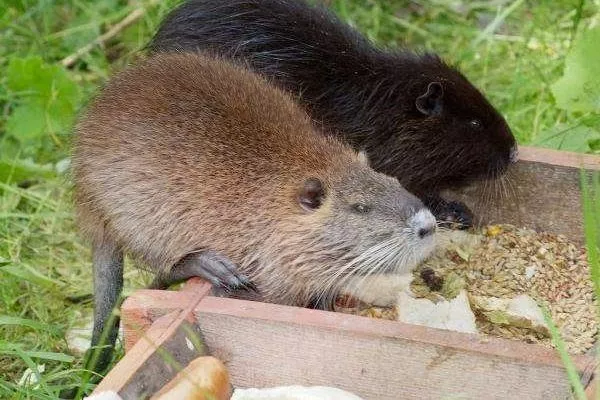
In appearance, representatives of the smoky breed are similar to ordinary, standard nutria, but they do not have a brown tint.
Description. The coat is smoky gray. The undercoat is a uniform gray. The eyes are gray.
Productivity and properties of fur. A female gives birth to up to five puppies in a litter. Adults weigh 5-7 kg. They are kept for their fur and meat.
Breed characteristics. They are easy-to-care-for and require little maintenance. They reproduce well. When crossed with the standard, they will not produce a smoky coat.
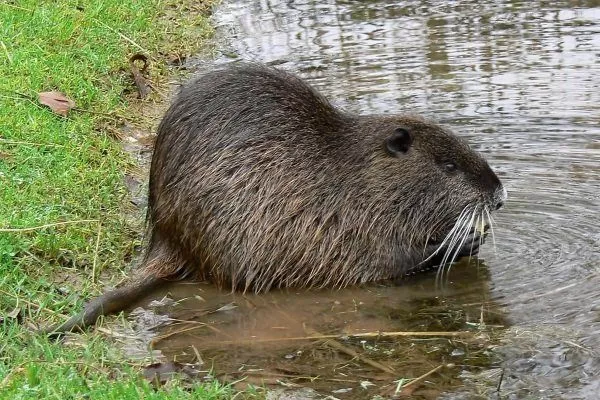
Brown exotic nutria
The brown exotic breed was developed during the Soviet era in the Krasnodar region. Breeders crossed golden and black nutrias.
Description. The fur color is a rich brown, gradually fading to a lighter shade on the belly. The undercoat is gray-brown. The muzzle, paws, and tail are darker than the rest of the body.
Productivity and properties of fur. The fur, shimmering in the sun, has a luxurious appearance. A shimmering halo seems to hover around the pelt, giving the fur a rich and distinguished appearance. Brown exotic nutria fur lasts 12-15 years. These animals weigh 6-7 kg. The meat is nutritious, tasty, and relatively inexpensive.
Breed characteristics. Cubs are born with dark fur, and as they mature, the intensity of the tone fades, resulting in a lighter fur. This breed is fertile; the cubs are born viable and grow quickly. The fur lightens as they shed. When brown exotic nutria are bred with each other or with standard breeds, the offspring are black, golden, brown exotic, or standard.
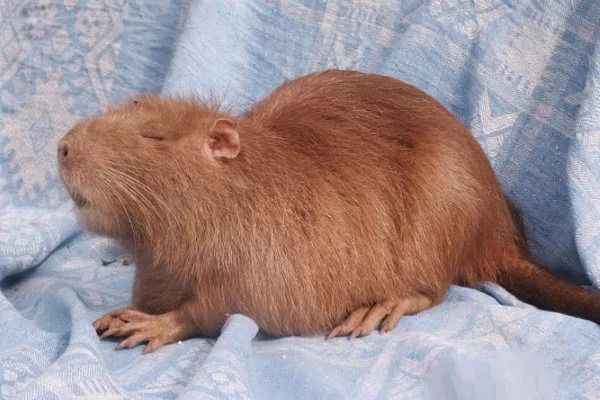
Pearl
This breed is obtained by crossing lemon and snow nutrias with pastel nutrias. It is a very rare and valuable breed.
Description. The upper hairs are light grayish, even slightly ash-gray. The underfur ranges from rich silvery-cream shades on the back to sandy on the belly.
Productivity and properties of fur. They weigh the same as standard breeds – up to 7 kg. They give birth to 5-6 cubs. Their fur is very valuable and beautiful.
Breed characteristics. Puppies have a darker coat and acquire their pearly white color by six months of age. Fertility decreases with in-breeding. To achieve the pearly white color, it is recommended to cross females with pastel or standard males. They are very demanding in terms of maintenance. They require a spacious pool, a place to run, and a comfortable home.
- ✓ Consider the climatic conditions of your region to ensure comfortable maintenance of nutria.
- ✓ Assess your ability to set up an artificial pond, as access to water is critical for the health and quality of nutria fur.
- ✓ Decide on the purpose of breeding: meat, fur, or both, to choose the appropriate breed.
When choosing a nutria breed for breeding, it's important to consider your capabilities—whether you can provide these aquatic rodents with optimal living conditions. Poor living conditions will immediately affect the quality of the fur of any breed.