
Domestic nutria are raised in a variety of settings—on farms for personal use, as a business for profit, and as pets in apartments. Despite being a water rat, it is popular— meat They are eaten, their fur is used to make fur coats and hats, and they are kept at home because of their affectionate nature.
Description of the species
Domestic nutrias are virtually indistinguishable from wild ones living in the wild. However, they are easily tamed, although they are susceptible to bites. They prefer to live on land but cannot survive without water. They are classified into different species and breeds.
- ✓ The optimal water temperature for bathing nutria should not be lower than +15°C to avoid hypothermia and illness.
- ✓ To prevent stress in nutria, it is necessary to ensure a minimum noise level, especially at night.
Appearance
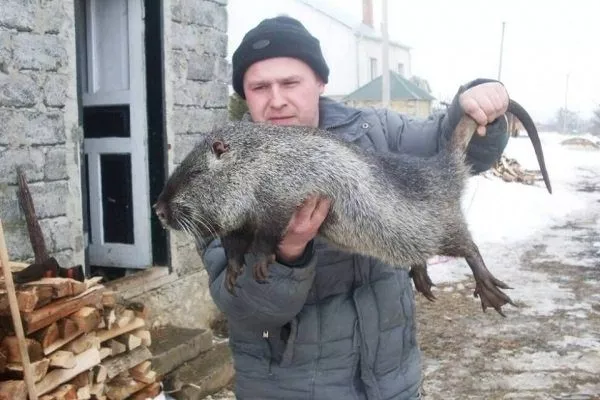
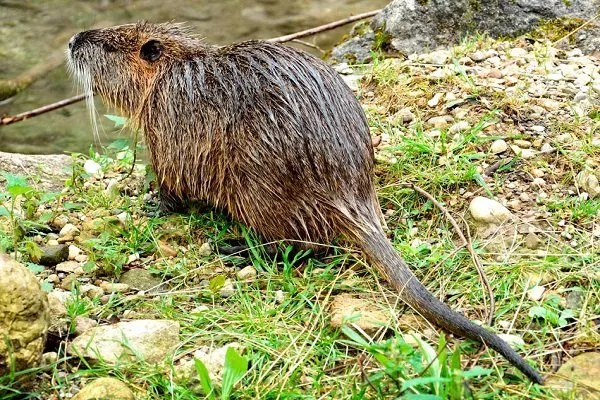
The nutria owes its unusual body structure to its need to live near water. The animal looks like this:
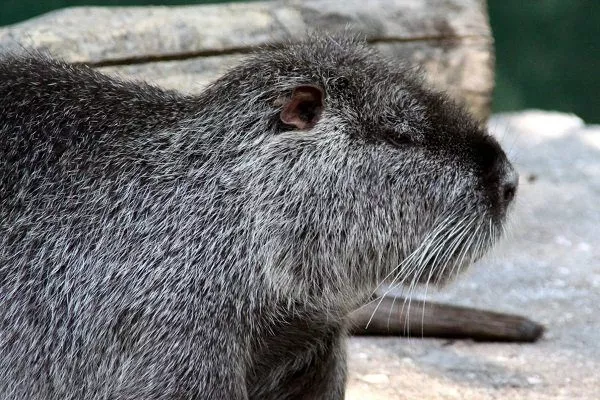
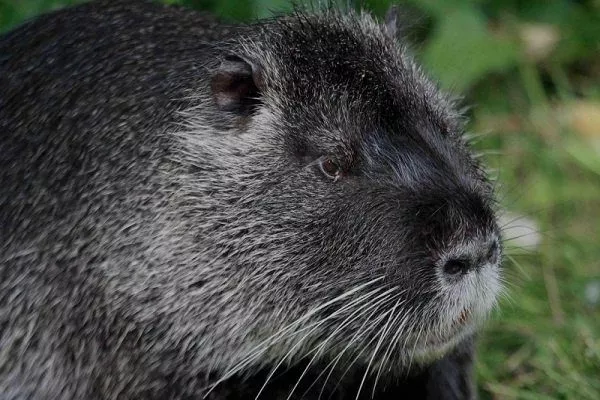
- Ears. They have dense fur to prevent water from getting in. The ears are small and have a neat, compact appearance.

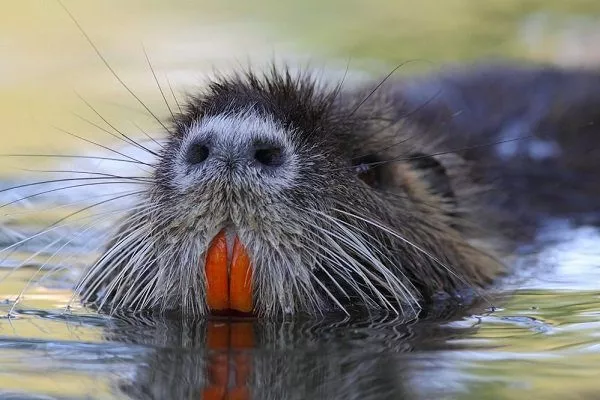
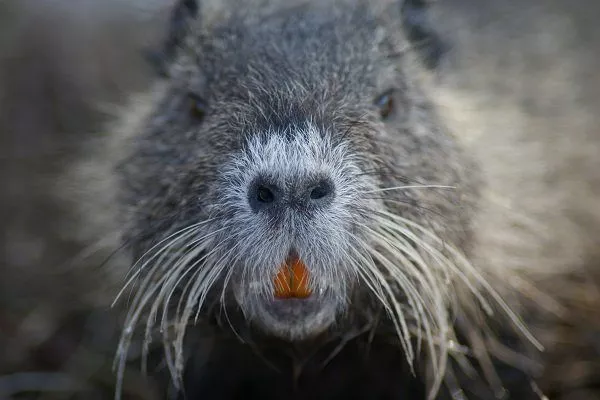
- Nose. When the rodent dives, its nostrils close.
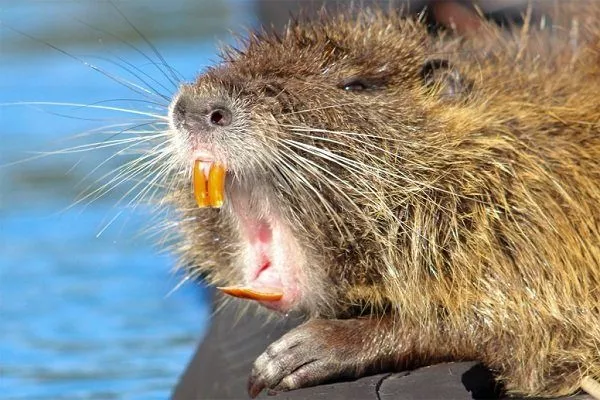
- Teeth. They have an unusual hue (bright orange). When the color loses its saturation and black spots form, it's clear that the animal is sick.
- Mouth. Its front part is divided, and the lips can only meet behind the teeth.
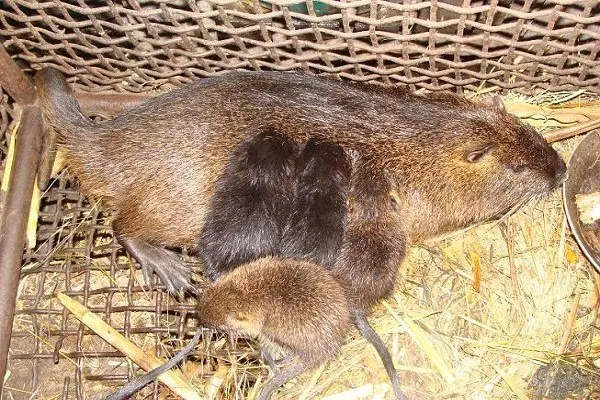
- Nipples. They are located too high for the female to feed her young, even while underwater.
- Mustache. Very sensitive and long.
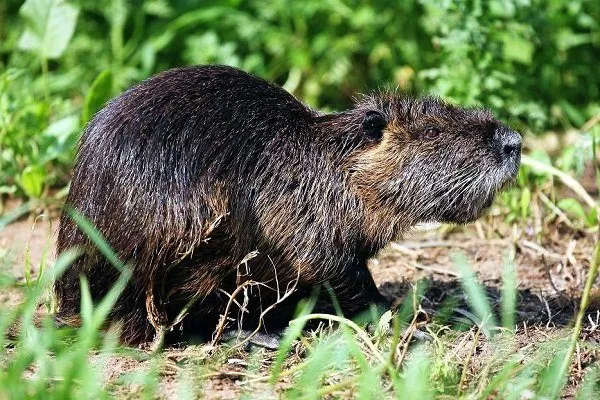
- Weight / size. The nutria's length, excluding the tail, can reach 60-70 cm, and its body weight can reach 10-12 kg. The average is 40-50 cm and 5-7 kg.
- Wool. The coat is long, shiny, waterproof (even if the nutria swims for a long time, it remains dry after leaving the water), and thick. Many breeds have light-colored tips. The coat consists of an undercoat and guard hairs.
- Physique. Strong with a powerful skeleton.
- Head. Massive with a slightly blunt muzzle and small, shiny eyes.
- Tail. Unusually long, sometimes reaching 40-50 cm. It has no hair and functions as a steering “steering wheel”.
- Paws. Shortened, with a thin coat of fur. The hind legs are webbed to facilitate swimming.
Character
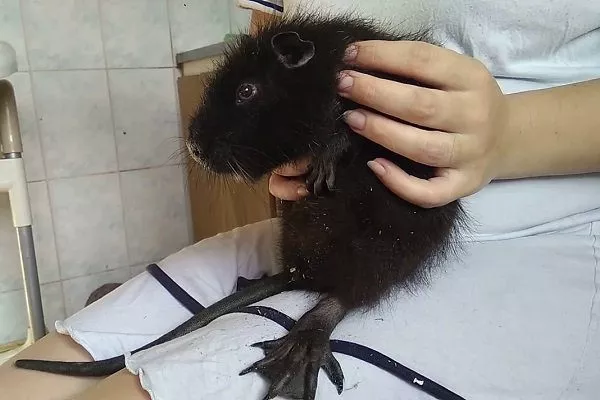
Nutria are friendly little creatures that can easily replace a cat in the home. They love to play, cuddle, and even climb into people's arms. They are often trusting when in frequent contact with people. They prefer to rest in a nest, which they build right under the blanket.
A special feature is that if you give the animal a treat, it will begin to stretch out its paws, begging for another portion.
Other personality traits:
- Bites a person because of the instinct of self-preservation.
- If he cannot cope with fear, he dies.
- Loves having his belly stroked.
- Males are usually solitary, females require increased attention and company, otherwise they begin to scream.
- He loves to sharpen his teeth on wooden objects. It's better to provide him with pieces of wood than to let him chew on furniture.
- Males are used to marking their territory, females are not.
- Nutria have very smelly urine, but this problem is easily solved - put a litter box with filler and train it to use it (like a cat).
- They are partial to music and toys.
- A mandatory requirement is the availability of water in large volumes (so that animals can bathe).
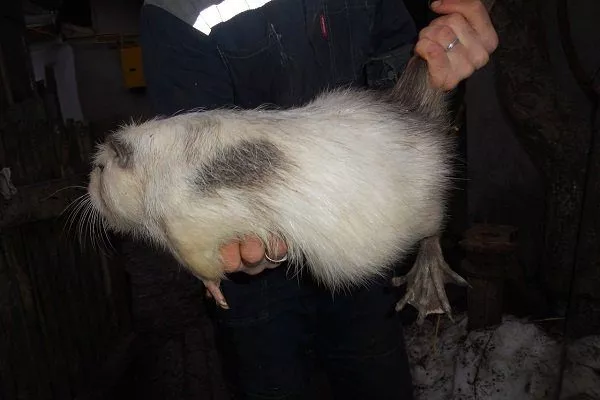
Nutria tolerate being grabbed by the tail, but not all individuals are this way. Some are aggressive and may bite. This is especially true for females when they reach sexual maturity.
Life expectancy
In the wild and captivity, nutrias can live up to 6-8 years. They grow for up to 2 years, with sexual maturity occurring as early as 3 months. Other characteristics:
- the rodent puppy is born small - about 200 g;
- increases weight by 2-3 times in 2 weeks;
- the female feeds her offspring for 2 months, but it is better to wean the babies on the 50th day;
- Puppies need adult food after 5-7 days (they require supplementary feeding).
Is domestic nutria suitable for farm breeding?
Domestic nutria breeds are ideal for any type of farming—whether bred on a large farm or domesticated in an apartment. However, these animals behave differently: they become affectionate pets at home, but can be aggressive in a cage.
The approach to keeping them is also different: if the nutria is raised for meat and fur, stick to a special diet; if for entertainment, it is enough to feed them leftovers from their own food.
Breeds and types
| Name | Coat color | Average weight (kg) | Peculiarities |
|---|---|---|---|
| Standard | Brownish-brown | 5-7 | The main color, differs in shades |
| Colored | Diverse | 5-7 | It can have any shades and colors, and combine several tones. |
Nutria have existed worldwide for many millennia, first appearing in Russia in 1930. Their native land is considered to be South America, as these rodents prefer warm climates. Over the course of their existence, a wide variety of species and breeds have emerged, in part through selective breeding.
There are two groups of nutria, which include different breeds:
- Standard. The main color is brownish-brown, the breeds differ in shades.
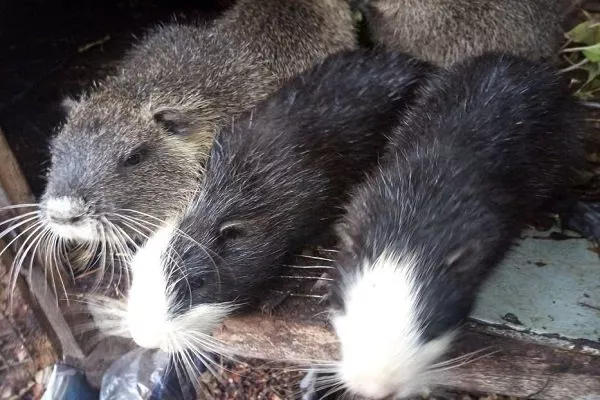
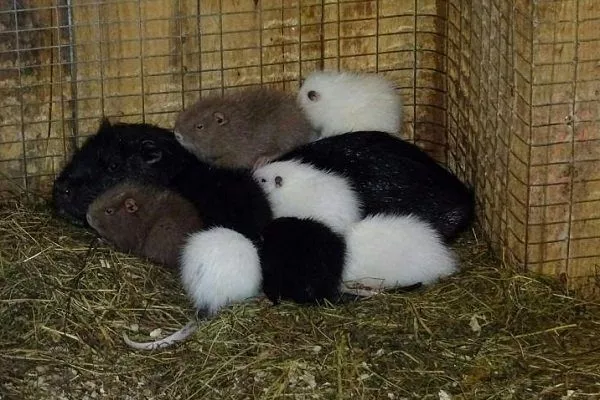
- Colored. The fur of this type of nutria is extremely diverse – it can have any shade and color, even combining several tones. These include white, black, gold, mother-of-pearl, smoky, pearl, lemon, and more.

Advantages and disadvantages of breeding nutria at home
When using domestic nutria as a business, a number of advantages are noted:
- the animals have strong immunity and rarely get sick (when there is no proper care);
- They are clean, and only their feces need to be cleaned up after them (they put food in their mouths with their paws, leaving no crumbs);
- food is inexpensive, costs are minimal (except for store-bought food, they eat almost everything);
- excellent character, breeders usually don't have any problems;
- demand for meat and fur – the cost of products is quite high;
- minimum competition – only a few people raise nutria, and you can easily find sales points;
- You can take advantage of a preferential tax program, which reduces costs (the authorities provide this opportunity for new entrepreneurs in nutria farming);
- profitability is high – nutria reproduce quickly (one female gives birth to about 9-11 puppies at a time);
- rapid growth (time from birth to slaughter – at least 6 months);
- In addition to meat and fur, visceral fat is also valued and is in demand on the market;
- small initial investment – you can initially purchase a dozen animals;
- there is a high demand for fur – since arctic fox, mink, and other furs are expensive, interior skins are in high demand;
- There are many places to sell – fur factories, meat processing plants, restaurants, procurement offices, markets, the Internet, etc.
There are also disadvantages to breeding nutria:
- full payback occurs in 1-2 years;
- When purchasing a large number of puppies, you need to inspect each one, as not all farmers are reputable;
- It requires a lot of water for maintenance, which means additional costs.
Breeding Features
Caring for and keeping pet nutrias doesn't present any additional challenges, as these rodents are considered undemanding. However, be aware of the special care requirements during summer and winter.
Nutrition
In the wild, nutrias' primary diet consists of plant matter. It's acceptable to feed them the same way on a farm. If there's a pond on the property, feed them reeds and cattails (their favorite foods in the wild).
Feeding guidelines for rapid growth, good quality wool and meat:
- per day, give one individual 900-1000 g of grass (alfalfa, clover, etc.), 120-150 g of compound feed (replaced with food grain concentrates), 2 tsp. of salt, 50 g of fish (or bone) meal and chalk;
- If there is no fresh grass, add hay;
- It is useful to introduce algae into the diet in small quantities (150-200 g);
- let's gnaw on branches from bushes and trees - this way animals sharpen their teeth and get additional useful elements;
- feed at a certain time twice a day - 40% in the morning, 60% in the evening of the daily requirement;
- do not give coarse grass, only young;
- grain crops - finely ground or steamed.
Healthy food:
- Fruits, vegetables, root vegetables. Daily intake: 200 g. What to give:
- boiled potatoes and pumpkin;
- carrots and beets - raw;
- apples and tomatoes;
- zucchini and cabbage;
- melons and watermelons;
- Jerusalem artichoke and turnip.
- Green fodder. Daily dosage: minimum 800 g, maximum 1000 g (for an adult). What's best for nutria:
- tops of cereals and beans;
- cattail and reed;
- reeds and quinoa;
- water rice and sweet clover;
- sow thistle and plantain;
- sorrel and lettuce;
- clover and coltsfoot;
- cinquefoil and buckwheat;
- bladderwort and dandelion;
- seaweed and fireweed.
- Cereals. The daily norm is from 100 to 150 g. Give preference to the following grain crops:
- barley and oats;
- rye and millet;
- wheat and corn;
- sunflower and sprouted grain.
- Dry food. Dosage: 50-150 g. Permitted:
- bark and branches;
- straw and hay;
- pine needles and bagasse;
- dried cake.
Conditions of detention
To ensure that your nutria feel comfortable and don't become stressed, provide them with the following living conditions:
- 24/7 access to water not only for drinking but also for bathing. Otherwise, the animals' fur will be damaged.
- Silence. Eliminate any noise, otherwise the animals will become nervous.
- Monitor the temperature. The ideal temperature range is between 15 and 20°C. In winter, be sure to insulate their premises (the minimum acceptable temperature at this time of year is 8-10°C).
- Avoid exposure to direct sunlight - nutria prefer shade (their fur is too warm, so they get hot).
House
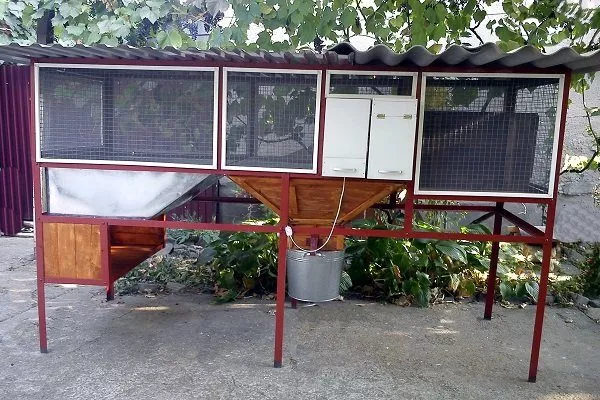
Be sure to provide housing. Fence off the common area where the nutria are kept with chain-link fencing, which will prevent them from chewing through. If you keep them in large enclosures, buy or make houses yourself. Basic rules:
- Avoid making houses out of wood, as nutria will quickly make holes in the walls.
- Do not use plastic - it cuts easily.
- Use metal, slate, concrete.
- Each cage should contain four females and only one male. If two males are introduced, fighting (sometimes resulting in death or injury) over the females will occur.
- In a cage Make a window that should always be open. It should lead to the walking area.
- Divide the winter houses into 2 parts - the rodents eat in one, and sleep in the other.
- Adhere to the cage size requirements. Standard:
- facade part – 70-90 cm;
- width – 80-90 cm;
- length – 100-120 cm;
- back wall – 50-60 cm.
- Walking area parameters:
- length – 210-220 cm;
- width – 110-120 cm.
- A roof is essential for the enclosure, as nutria are susceptible to attacks from wild birds. A mesh roof is recommended to allow the animals access to the open air.
- A separate insulated house is required for pregnant females and subsequently mothers with cubs.
Water treatments
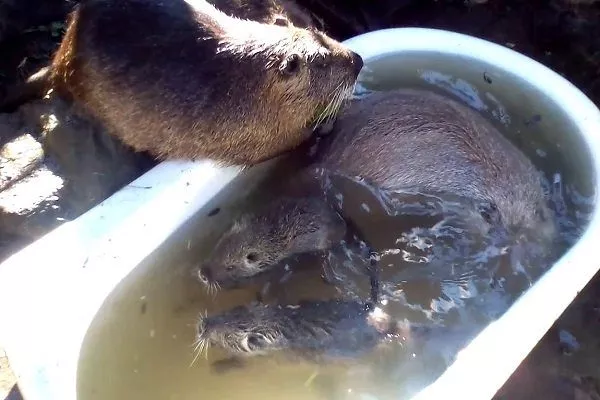
Water is vital for nutrias—they clean their fur in it (rodents are considered very clean). It's best to set up their enclosures near open water. If this isn't possible, provide a swimming pool in the exercise area.
Main conditions:
- width – not less than 60 cm;
- length – about 200 cm;
- depth – minimum 30 cm;
- the presence of a gentle slope;
- water purity (change it as it gets dirty – usually 1-2 times a day).
When building a mini-pool, a drainage hole is made in the bottom to drain the water, and a hose or pipes from the water supply are connected to the top.
If constructing such a structure is problematic, use portable bathtubs or large troughs. In this case, it's important to reinforce the structure to prevent the "vessel" from tipping over.
Summer care
Nutria are accustomed to living outdoors. As soon as the temperature stabilizes (at least 8°C), the animals are released into the yard (enclosure) for exercise. In the summer, they can be outside 24 hours a day.
Experienced farmers recommend digging a small pond in the fall and sowing various plants in it. Once the snow melts, they'll grow, giving the nutria something to eat.
Winter care
Maintaining the correct temperature is crucial in winter. During this time of year, nutrias are confined to the outdoors, so they lack adequate light. To improve conditions, consider making the house's roof glass to allow sunlight to penetrate during the day.
Since rodents don't roam freely, they need plenty of space to move around. Create a mini-yard right inside the insulated cage. A minimum of 0.5 square meters is required per rodent.
Hand training
A nutria bite is potentially dangerous, as their strong teeth and jaws are capable of biting off a human finger. To prevent this, accustom the animals to being handled immediately after acquiring them or after the puppies are born. They are very friendly and willing to do so.
How to proceed for the first time:
- At first, feed carefully by hand;
- then try to pick up:
- If there is aggression, take the animal by the tail and hind legs, and hold its muzzle with a shovel;
- If the animal is calm, grasp the middle part of the tail and under the chest.
- be around them more often;
- stroke the belly and under no circumstances the back (this is unacceptable for them);
- When you feel that the nutria is behaving calmly in your hands, feel free to sit it on your lap, making sure to stroke the belly area;
- Give your water rats names, call them and talk to them, and soon they will start asking to be picked up.
Breeding domestic nutria
Each nutria develops at its own pace. Some individuals reach sexual maturity at 3 months, while others don't reach it until 4-5 months. However, mating them during this period is undesirable, as the offspring won't be healthy and well-developed, and the females have a higher risk of miscarriage.
Seasonal mating
Seasonal nutria breeding involves having offspring at a specific time of year. Farmers calculate this individually, but experts recommend scheduling the birth of puppies for the first six months of the year.
In the fall, the puppies' fur quality is at its best for sale. It's important to remember that during the mating season, males and females should not be kept together.
Manual mating
If a nutria breeder has breeding stock and wants to produce similarly high-quality offspring, hand mating is used. This involves placing a specific male with a specific female. They are kept there for about 6-8 days, after which the "girls" are returned to their cages.
The main advantage is maintaining the purity of the breed.
Family mating
This is the most commonly used mating method, characterized by its simplicity and ease—simply four females and one male are kept in the same enclosure at all times. A unique feature is that even after birth, all individuals remain together.
Year-round mating
Nutria are animals that can reproduce at any time of year. If the farmer has no specific plans for the birthing time, mating is permitted year-round. A male is kept with the females at all times (he is not separated, as with seasonal breeding).
School mating
This method is ideal for crossing young animals – individuals select females for themselves, and the most active males can fertilize several at once.
You can also learn about the various nuances of nutria reproduction in the following video:
Diseases and their prevention
In very rare cases, domestic nutrias may experience diseasesThis is most often due to improper care, with the owner rarely changing the water in the pool or cleaning the enclosures. Sometimes diseases are introduced only by newly arrived specimens.
Salmonellosis
The causative agent is salmonella, which is transmitted through water, food, birds, and insects. Hot weather is the main trigger for the disease, so it is more common in summer.
How to recognize salmonellosis:
- lethargy, refusal to eat and sudden weight loss in animals;
- bloating;
- increased lacrimation;
- diarrhea.
Paratyphoid fever (also known as paratyphoid fever) causes a fever, followed by a sharp drop in body temperature. If left untreated, the nutria dies within two days. Antibiotics such as furazolidone, biomycin, and chloramphenicol are used to kill salmonella.
Helminthiasis
Helminths are primarily caused by feeding low-quality food and dirty water. These include roundworms, flatworms, and tapeworms, which cause the following symptoms:
- depression of state;
- loss of appetite;
- weight loss;
- presence of helminths in feces.
Treatment involves the use of anthelmintic medications. A specific medication is prescribed only after receiving test results, as treatment depends on the type of worm.
Ringworm
This is a dermatomycosis (subtypes of the disease include microsporia and trichophytosis). It is transmitted by insects, pests, and other rodents. Sometimes, simply laying down sawdust that has been infected is enough.
Young animals are most often affected in the spring or winter. The fungi usually develop on the neck and head, sometimes appearing on the sides and back.
Symptoms:
- formation of white-gray spots of a round shape (minimum diameter - 1 cm), but sometimes several times larger;
- inflammation of the skin;
- formation of blisters, scales, scabs;
- hair loss.
For treatment, external and oral agents are used:
- Juglone ointment (1%) – applied 2 times a day;
- alcohol solutions based on salicylic acid, creolin or lysol (10%) – lubricate the affected areas after shaving the fur;
- the drug Griseofulvin – 15 mg per 1 kg of weight.
Pasteurellosis
Young animals are most susceptible to the disease. Pasteurellosis is considered dangerous because it can be fatal. Symptoms include:
- animals become sleepy and stagger when walking;
- eyes are watery;
- mucous and bloody exudate is released from the nasal sinuses;
- nutria completely refuse to eat;
- breathing is impaired;
- convulsions are detected, ending in paralysis.
Rodents are treated with Penicillin, Ionomycin, Streptomycin or Oxytetracycline - 30-50 thousand units are administered intramuscularly per 1 kg of weight.
You can learn more about the disease in the following video:
Tuberculosis
When Koch's bacillus appears, two types of the disease are detected: bovine and human. The latter is most often chronic and localizes in the respiratory system, less commonly in the intestines and other organs.
Infection occurs through contact with sick animals and after feeding nutria with natural cow's milk (the cow must be infected).
Signs:
- low mobility, apathy;
- loss of appetite, sudden weight loss;
- shortness of breath, cough.
Colibacillosis
The disease is caused by E. coli, a bacteria that attacks the gastrointestinal tract. The pathogen can appear anywhere—in food, on surfaces, etc.
The main symptom is digestive problems. Severe diarrhea is observed (the stools have a strong, unpleasant odor).
For therapy, calf serum against bacteriosis is used - from 5 to 10 ml per head.
Streptococcosis
It's less common than other pathologies. The main cause is poor hygiene and sanitary practices. How to recognize it:
- at the initial stage, appetite disappears, nutria constantly lie down;
- then the joints are affected;
- Later, purulent mucus is released from the nose and the rat has severe diarrhea.
Antibacterial agents are used for treatment and are prescribed on an individual basis.
Listeriosis
Listeria is a rare pathogen in nutria. It is transmitted by birds, insects, and rodents. Symptoms depend on the form of the disease:
- in acute - increased temperature, apathy, refusal to eat, unsteadiness of gait, and if the female is pregnant, a miscarriage or mummification of the fetus occurs);
- in chronic – coordination of movements is impaired, blood composition changes.
There is no cure for listeriosis. All infected individuals are euthanized and incinerated to prevent the spread of the disease.
General rules of prevention
To prevent infection, follow general preventative measures:
- clean the enclosures and houses daily;
- change the water in the pool twice a day;
- Boil milk before drinking;
- disinfect the premises where nutria are kept (at least 2-3 times a year);
- prevent the spread of mice and common rats, which are a direct source of many pathogens;
- carry out vaccinations;
- After purchasing new “tenants,” quarantine them in another room (for 28-30 days).
How to buy domestic nutria?
To ensure your future pets don't cause problems (mainly due to infection), learn the rules for acquiring them:
- Please note the optimal age is from 2 to 3 months;
- carefully examine the animals for wounds and other injuries, signs of disease;
- Buy only from trusted breeders or those with a good reputation (ask your friends, read reviews, etc.);
- If you are selling females that are older than 5 months, take them together with the individuals with whom they lived (otherwise they may not get along with new neighbors);
- inspect the incisors - they should be strong and a rich orange color;
- take into account the time of purchase - it is best to do this in the spring-summer (for the animals to adapt);
- Do not put more than 3 individuals in a bag;
- Adult males and pregnant females are transported only in a specialized cage.
Before purchasing, create the necessary conditions, purchase houses, drinking bowls, feeders, and baths.
Before bringing nutria into your home or breeding it on a farm, be sure to research their behavior, diet, living conditions, and other details. After purchasing your pets, be sure to take them to a veterinarian to ensure they are healthy.