
Nutria are used in a variety of ways, from farming for personal consumption to commercial use. Despite their origins as aquatic rodents, nutrias are quite popular for their meat and the use of their fur in fur coats and hats. Italian white nutrias are particularly popular.
The history of the Italian white nutria
This breed was imported to the USSR from Italy in 1958. Initially, nutrias were given various names, including "albino," "ivory," and "melted snow." Later, the name "White Italian" became established.
Description and breed standard
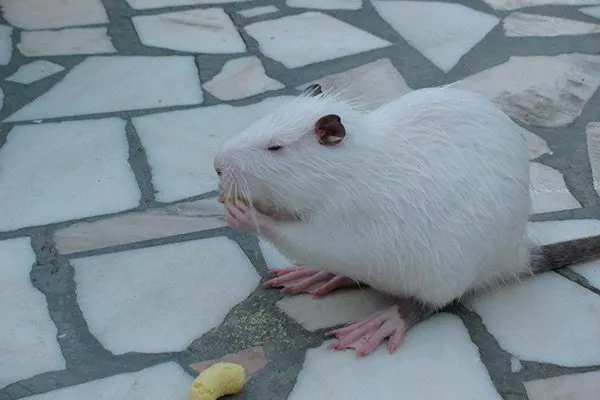
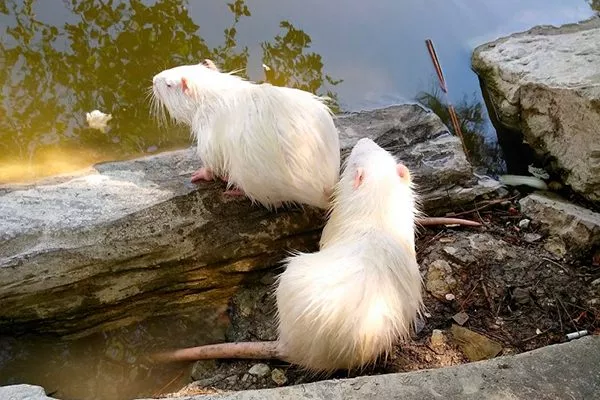
White Italian nutrias have a beautiful white coat with distinct creamy tones, which distinguishes them from other white-coated breeds. Their whiskers—the hairs on their heads—are white. These animals have expressive expressions and large, dark brown eyes.
Differences from the white Azerbaijani nutria
| Name | Coat color | Eye color | Genetic features |
|---|---|---|---|
| White Italian nutria | White with cream tones | Dark brown | The offspring are snow-white with cream shades |
| White Azerbaijani nutria | White without cream shades | Various | The offspring can be diverse |
White Italian nutrias and their Azerbaijani counterparts, while potentially confusing due to their shared white coloring, do differ in a number of characteristics. Let's take a closer look:
- Color and shades of wool. White Italian nutrias have a beautiful white coat with distinct creamy tones, making them instantly recognizable. A distinctive feature is the distinct creamy shimmer on their white coat.
The fur of white Azerbaijani nutrias is also predominantly white, but lacks the creamy tones that are characteristic of white Italian nutrias. - Exterior and physical features. White Italian nutrias typically have a distinctive expression, with large, dark brown eyes and an attractive appearance. White Azerbaijani nutrias can vary in appearance, but their overall appearance is not always so distinctive.
- Genetics and offspring. When purebred white Italian nutrias are crossed, the offspring will be snow-white with creamy shades of fur. The offspring of white Azerbaijani nutrias crossed with other breeds can be varied.
Economic characteristics
The fertility of the Italian nutria breed is comparable to that of the standard breed, with a maximum of five offspring. When crossing white nutrias, all the young are white. Crossing standard nutrias with white nutrias produces silver-colored offspring.
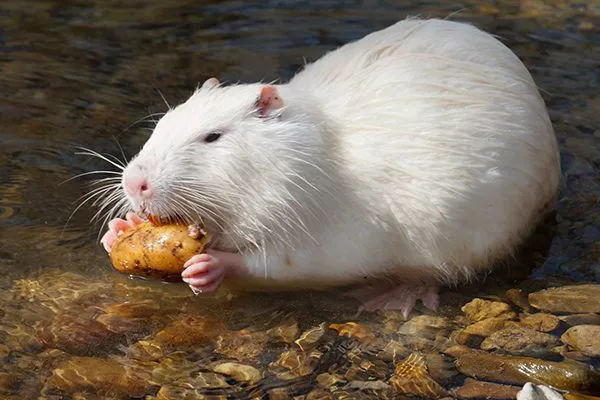
These individuals are distinguished by the excellent taste of their meat, which is tender and rich in nutrients. The fur of white nutrias is much more valuable than that of other breeds.
Unlike many artificially bred breeds, white nutrias maintain the same high fertility rates as standard nutrias. They are attractive in appearance and represent a valuable and sustainable species.
Rules for keeping and caring for white nutrias
Caring for domesticated rodents doesn't present any significant difficulties, as these rodents are not particularly demanding. It's important to consider all aspects and nuances of care throughout the different seasons.
Diet
In the wild, nutria's primary diet consists of plant matter, and they can be fed the same on the farm. If a pond is available on the farm, nutrias readily consume cattails and reeds, which are their favorite delicacies.
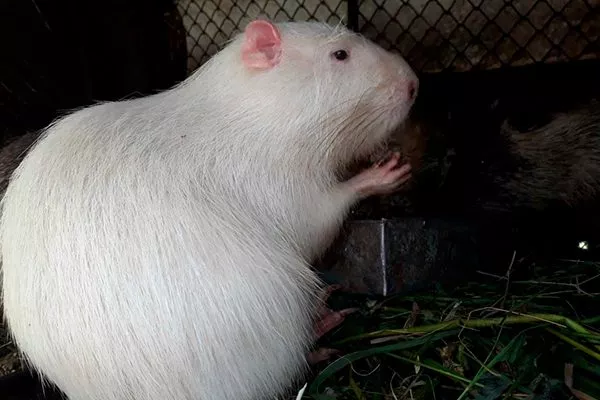
Feeding tips for faster development and impeccable fur and meat quality:
- Daily norm for one nutria: it is recommended to provide 1 kg of grass, about 150 g of compound feed mixture, 10 g of salt, 40-50 g of fish bone meal and chalk.
- If there is no freshly picked grass, you can use hay feed.
- It is advisable to include algae plants in the menu in small quantities.
- Throw branches from bushes and trees into the cage to sharpen teeth and obtain additional useful elements.
- It is recommended to feed twice a day – in the morning and evening (40%/60%).
- Avoid coarse herbs and provide only young and juicy ones.
- It is preferable to give grain food in a minimally crushed or steamed form.
Conditions of detention
To ensure comfort and prevent stress in nutria, it's important to provide certain living conditions. Here are the main ones:
- 24-hour access to water, not only for drinking but also for bathing, to avoid damage to the coat.
- Ensuring silence, eliminating any noise that could cause nervousness in the animals.
- Maintaining an optimal temperature regime from +15 to +20°C, with mandatory insulation of premises in winter (at a minimum permissible temperature of +8-10°C).
It is equally important to avoid exposure to direct sunlight, as nutrias prefer shade due to their warm fur, which can cause overheating.
Bathing
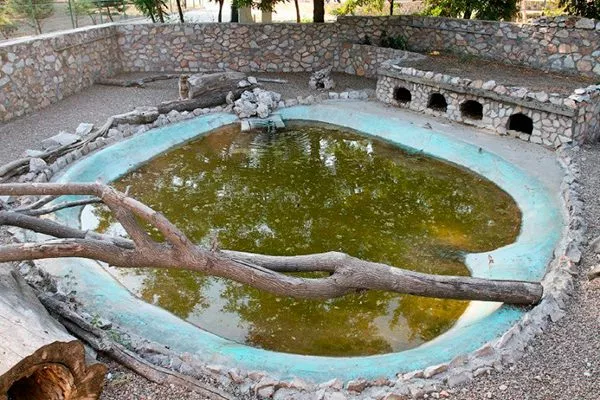
Nutria need access to water, as they use it to clean their fur, and these rodents are renowned for their cleanliness. Ideally, their enclosures should be located near open water, but if this is not possible, create an exercise area with a pool.
Basic requirements for the pool:
- Width not less than 60 cm.
- Length about 200 cm.
- Depth minimum 30 cm.
- The presence of a gentle slope.
- Maintaining clean water, replacing it as it becomes dirty, usually 1-2 times a day.
When building a mini-pool, provide a drainage hole in the bottom and connect a hose or water supply pipes to the top. If building a pool is difficult, use portable bathtubs or large troughs. Ensure the structure is securely anchored to prevent it from tipping over.
Care in winter and summer
Nutria prefer the outdoors. When the temperature stabilizes (at least 8°C), the animals are released outside or into an enclosure for exercise. In summer, they can be outside 24 hours a day. In the fall, create a small pond and plant various plants around it. This will provide the nutria with additional nutrition.
| Parameter | Summer | Winter |
|---|---|---|
| Temperature | +15 to +20°C | Not below +8°C |
| Walks | 24/7 | Limited |
| Water | Required | Not required |
Maintain a consistent temperature during winter, when the nutria are confined to the outdoors and lack natural light. To improve winter conditions, install a glass roof on the enclosure to provide daytime sunlight.
- ✓ The minimum area per individual during the winter period should be at least 0.5 square meters to ensure sufficient space for movement.
- ✓ The room temperature in winter should not fall below +8°C to avoid stress and illness.
Since rodents don't go outside in winter, they need plenty of space to move around. Creating a mini-yard in an insulated cage with at least 0.5 square meters of space per rodent will ensure their comfort.
Reproduction
Each nutria undergoes its own unique development process. Some individuals reach sexual maturity at 3 months, while others don't reach it until 4-5 months.
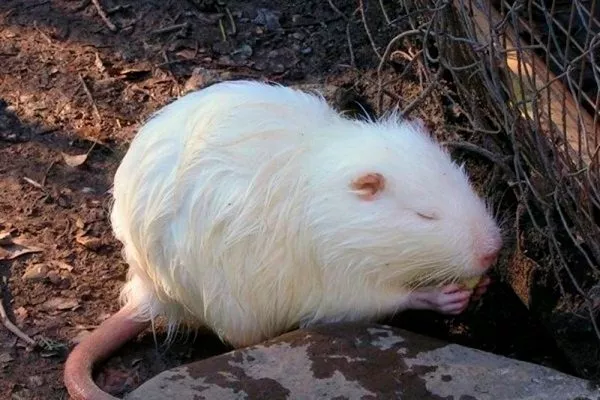
Mating is not recommended between 4 and 5 months of age, as it can result in defective offspring and an increased risk of miscarriage in females. The optimal time for mating nutria is between 6 and 8 months of age.
Maintaining a minimum weight of 5 kg is essential. Nutria gestation lasts approximately 130 days. Newborns are born ready for independent life—with open eyes and the ability to move on land and swim in water.
Advantages and disadvantages of breeding the breed
Many farmers choose Italian white nutria for their business. They highlight several advantages:
- Nutria animals have excellent immunity, so they rarely get sick, but only if they are properly cared for.
- These rodents remain clean; only their feces need to be removed, as they feed exclusively with their paws and do not leave crumbs or other waste.
- Feeding costs are minimal because, with the exception of store-bought food, nutria eat almost everything.
- Nutria have a pleasant character, which usually does not cause difficulties for breeders.
- The meat and fur of nutria are highly valuable, which contributes to the demand for the products.
- Nutria farming is practiced by a small number of farmers, which makes it easier to find sales outlets.
- Nutria reproduce quickly, ensuring high profitability.
- Nutria grow quickly, and their fat is also in demand on the market.
- Possibility to start with a small number of animals.
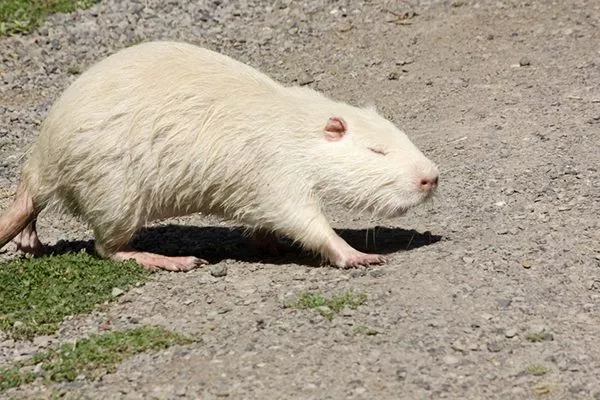
The breed represents a unique combination of beautiful coloring and outstanding breeding characteristics. Thanks to their high fertility, tasty meat, and valuable fur, White Italian Nutria are becoming a valuable asset on farms. Their attractive appearance and resilience to various climatic conditions make them a preferred choice for farmers.