
Before getting nutria, you should consider how and where you'll keep them. Store-bought or homemade cages are ideal. Nutria aren't fussy, but choosing or constructing the wrong cage can be detrimental to their health.
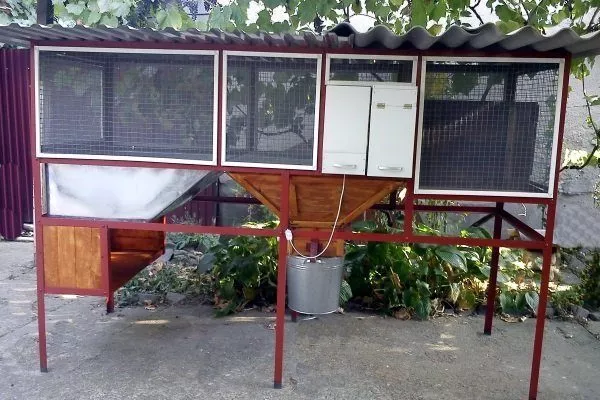
Basic requirements
Nutria are rodents that chew everything in their path, including cages made of wood. Keeping a nutria in a wooden cage risks losing it, as it will simply escape through the hole it chews. Therefore, these animals should only be kept in cages made of metal bars.
The cage for keeping nutria must meet the following requirements:
- The cage walls should be made of wire mesh or fine-mesh grating. This will provide the nutria with sufficient oxygen and allow the breeder to observe them.
- The cage base can be either solid or wired. If choosing the latter, ensure that the animals are protected from injury.
- When letting your animals out for a walk, ensure there are no escape routes. This can be achieved by fencing the area.
- The length of the cage should not be less than 250 cm.
- During cold weather, the cage should be insulated. It's best if it can be disassembled so you can easily move it to a warmer location.
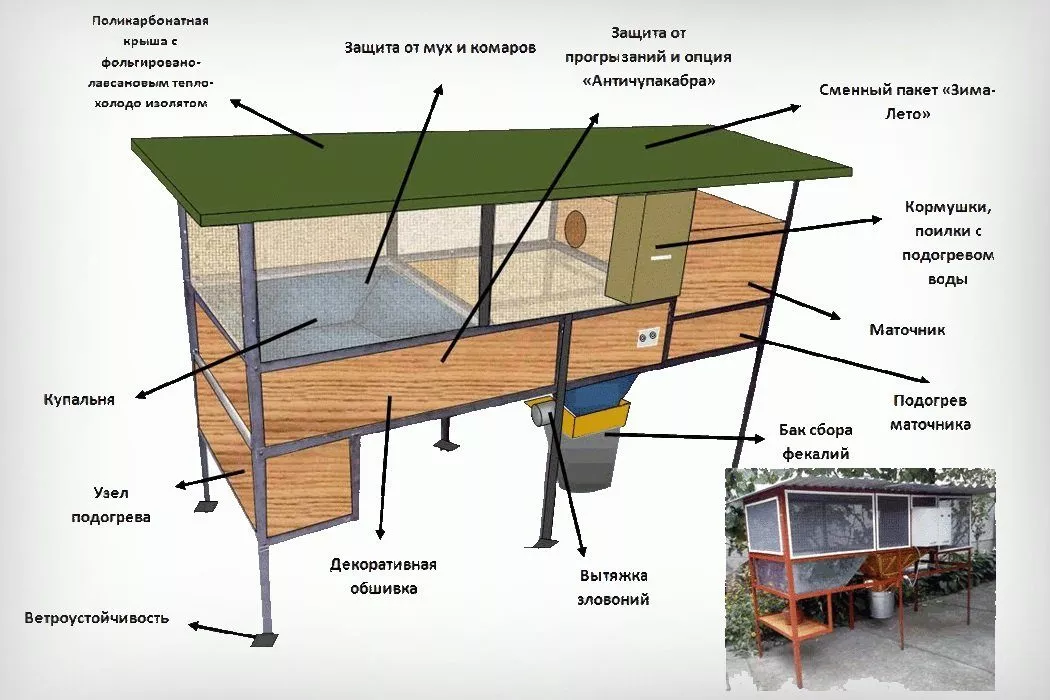
- The cage must contain a pool, which is necessary for the health of the nutria and high-quality fur.
If the animal successfully escapes, remember to look for it near the nearest body of water. Don't forget to bring juicy fruit as bait.
Types and characteristics of cells
Animals are kept in various climates, which determine the choice of material for their cages or houses. In the southern regions of the country, brick houses are popular.
Cages for nutria are made from wood, metal, slate, stone and metal barrels.
Cage for summer keeping
In the summer, nutria cages can be made of brick, metal mesh, or grating. They require no insulation and are left outside overnight. It's worth noting that in the northern parts of the country, nights are quite cool, so nutria are kept indoors year-round.
- ✓ The minimum depth of the pool for nutria should be at least 40 cm.
- ✓ Frequency of water procedures in the absence of a pool - at least 2 times a day for 15-30 minutes.
Animal cages are placed in a barn or other utility room. Wood reinforced with wire mesh is an excellent material for this purpose.
During hot and warm periods, nutria should have access to an artificial pond. For this purpose, cages are equipped with small pools. When installing a pool inside the enclosure is not feasible, for example, in a brick house, containers filled with liquid are placed in the run area.
An alternative to pools is a shower, which you can provide for your animals yourself, but at least twice a day. Each shower lasts from a quarter to half an hour.
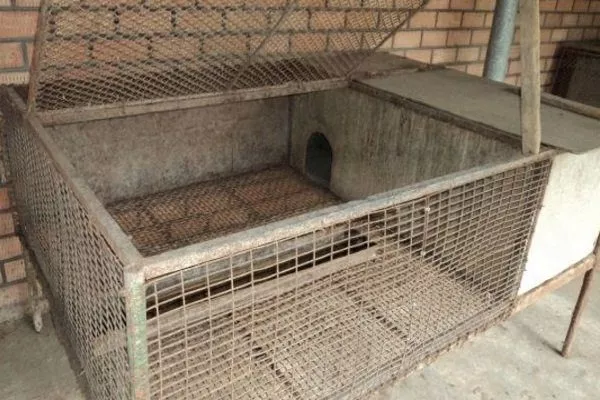
metal cage for summer keeping of nutria
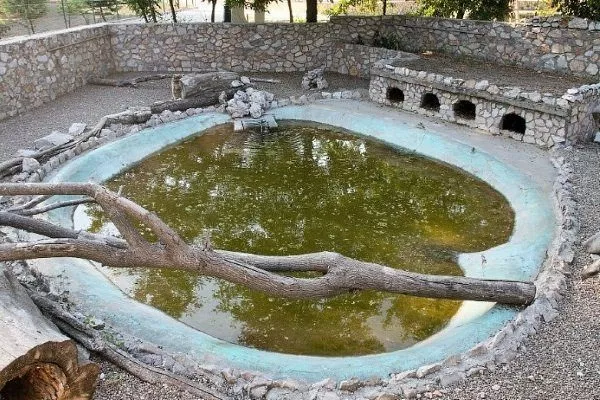
brick house for nutria with a pool
Summer enclosures for nutria
Aviaries are the most convenient way to keep and nutria breeding, as the animals have sufficient space to roam and move freely. Furthermore, keeping the animals in enclosures does not require any special care. However, to separate individuals who are just about to mate from pregnant females, as well as from young nutria, at least three enclosures should be set up.
The enclosure's base is often concreted and then covered with bedding for insulation and comfort for the nutria. Wire mesh is considered the best option for enclosure walls, although sometimes they are constructed from slate or metal sheets.
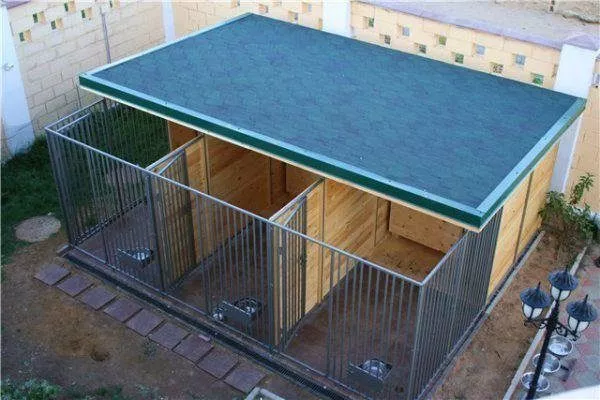
Houses are placed on the enclosure's territory where the rodents can hide in bad weather or heat.
Permanent cages for nutria
In warm climates, above-ground cages are used for permanent housing of the animals. These permanent structures are usually made of brick or stone.
The walking area is enclosed with a metal mesh fence, securely anchored into the ground or a concrete foundation. The house itself can be made of mesh, insulated with wood or slate.
The house must have a lid that opens at the top. This will allow for cleaning, observation of the animals, and movement of them from one compartment to another during breeding season.
In the video below, the breeder demonstrates a stone dwelling for his nutria:
Possible design options
It's important to know the different types of enclosures available to determine which one is right for you. We'll cover them in detail below.
Ground construction
The most suitable home for a whole family of nutria is an above-ground structure, which can be made of brick, block, or stone. Stone structures require an interior covering of wire mesh. This is where the female and male, along with their young, should be housed.
The house should be connected to a wire run with a slope leading to a pool. The pool depth should be at least 0.4 m. The recommended height of the fence around the run area should be 0.5 m.
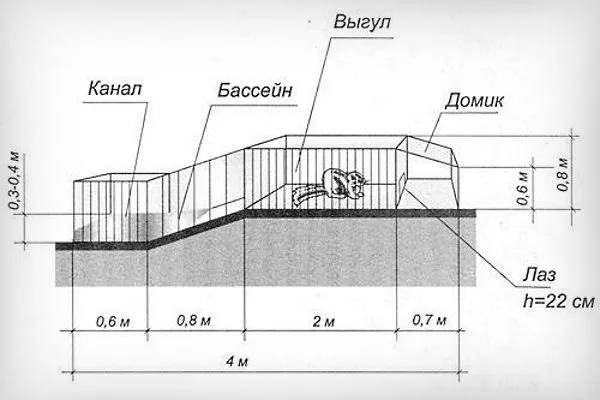
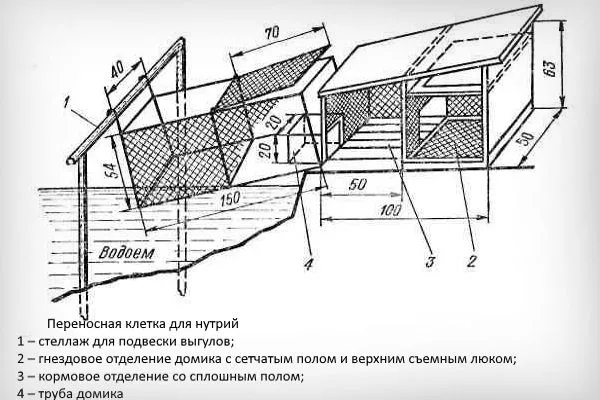
Wooden portable house
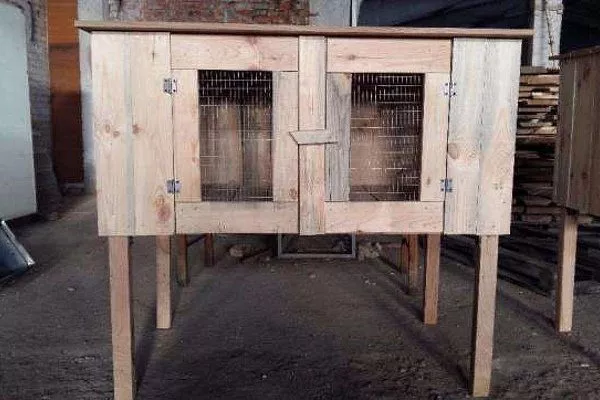
These houses are made of highly durable boards. The habitat consists of two sections: the first section is used for feeding, and the second is where the nutria live. The enclosure is made of mesh, which is buried 0.3 m into the ground to prevent escape.
Combined with a barn structure
This housing design is suitable for nutria breeders in northern regions, and especially for those with limited space available for nutria. In northern regions, nutria cages are installed in barns.
A hole is made in the wall of the barn through which the animals can go for a walk. The area designated for walking is fenced with mesh and equipped with a water tank for bathing. During the winter, the door leading to the walking area is closed.
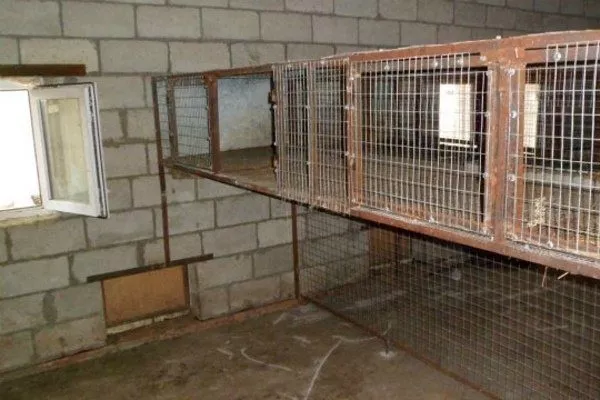
nutria cages installed in barns
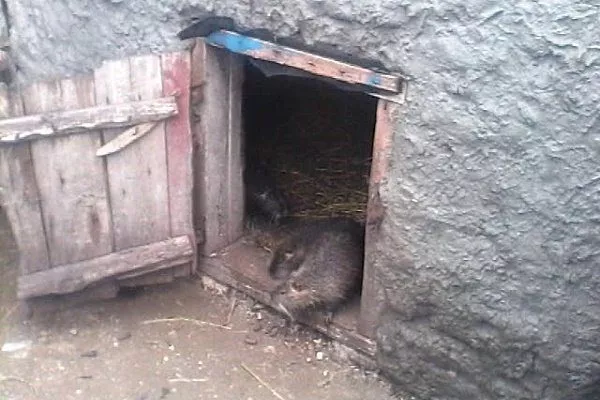
a hole through which animals go out for a walk
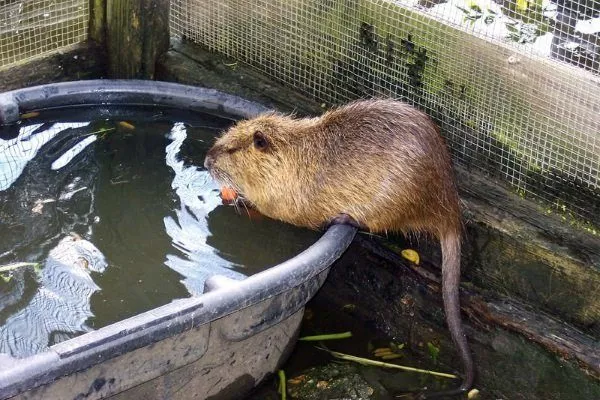
nutria walking area with water
Multi-tiered structures
Multi-tiered cages are most often used for housing young animals, equipped with two waterers and feeders in the walking areas per tier. The frame is made of wood, and the fencing is galvanized wire mesh. These cages significantly save space.
Watch the video review of the multi-tiered structure for keeping nutria below:
Corral for young animals
It's common practice to house young nutria in enclosures with a canopy. For this purpose, the enclosure's foundation is poured with concrete and covered with sand. The enclosure consists of two parts—a living area and a basking area—separated by a closing door.
Other budget options
Sometimes, fox or arctic fox cages, sold at fur farms, are used as housing for nutria. The simplest cages are made of wire mesh and consist of two interconnected sections. They are easily transported from indoors to outdoors and back again.
Building a nutria home is fairly simple. When building, consider the climate, the number of nutria that will be living in the home or cage, and the durability and suitability of the materials.
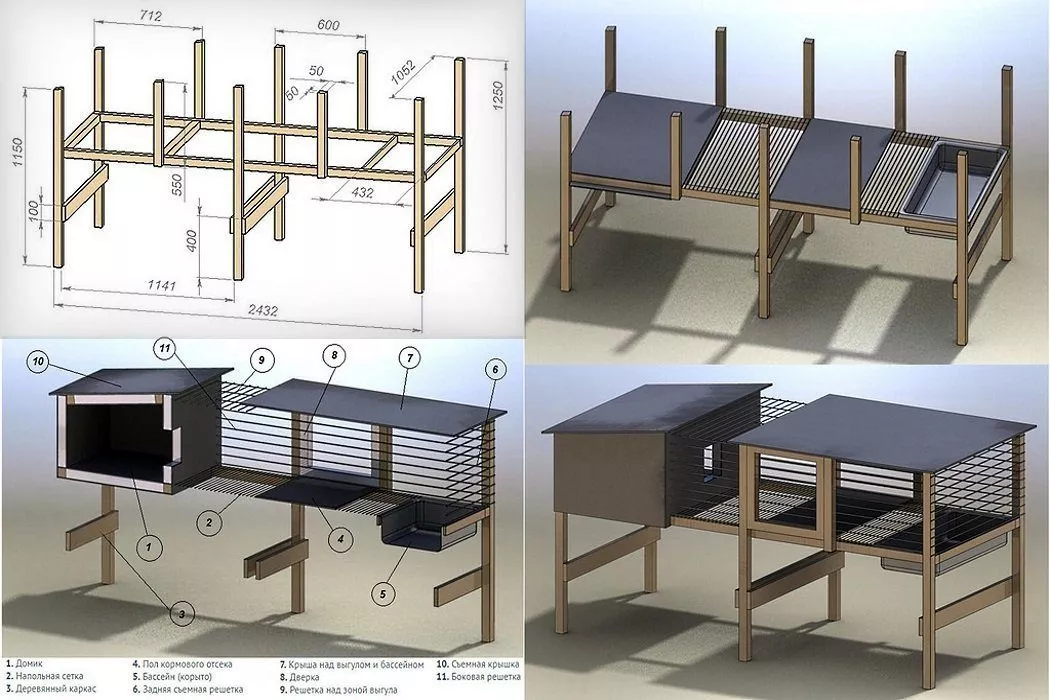
Step-by-step instructions for making a nutria cage yourself
Despite the complexity of the manufacturing process, you will be able to:
- Save 2/3 of the budget allocated for the purchase of a ready-made cage.
- Design a cage according to your specific requirements: size, material, insulation, shape, number of feeders, access doors for the rodents to go outside, etc.
Tools and materials
To make a stationary cage for ten nutria, you will need the following tools and materials:
- concrete pipes – 4 pcs;
- metal pipes – 5 m;
- mesh for making the base of the cage;
- flat slate or strong boards;
- cement and sand – 1 bag;
- plywood;
- hammer;
- nails for fixing slate;
- Bulgarian;
- welding machine, electrodes;
- nippers;
- galvanized metal sheet;
- screwdriver.
Preparing the frame
Prepare the frame according to the following scheme:
- Make a drawing with the dimensions of all the components, down to the smallest details.
- Nail several boards together and screw them together. For this structure, 16 boards are sufficient – 2 horizontal and 2 vertical for each side.
- Secure the concrete pipes into the ground, making each hole 1 m deep. Place one pipe in each hole and then fill it with a cement-sand mixture. Allow the mixture to dry completely.
Installation of the mesh
Install the mesh as follows:
- Weld several metal pipes to the supports, then lay the mesh on them and secure the structure with welds. For stability, weld a couple of diagonal braces.
- Attach the cage frame to the metal structure using screws.
- Install the mesh on the inside of the cage using wire cutters and a welding machine. Don't forget to make the doors.
In the video below, the breeder explains how to install cage mesh himself:
Plywood layer
To cover the cage you will need plywood, therefore:
- Prepare three pieces of wood in advance, each the right size for the cage, between the frame slats – two side pieces and one back piece. Install them, pressing them tightly against the wire mesh.
- To insulate the cage, a layer of polystyrene foam is first placed on top of the plywood, then sheets of galvanized metal are laid, and the whole thing is secured.
Instead of a sheet of metal, you can use another layer of plywood.
Ceiling
Don't forget about the ceiling. Do it according to this scheme:
- Make the ceiling from mesh and secure it using a welding machine.
- If the stationary cage is high, it can be covered from above with sheets of slate or iron.
The animal can live in a finished cage year-round, provided you live in southern Russia or at least in the central part of the country. In the summer, a pool can be placed in the cage for the water activities that nutrias so love. In this case, it's best to make the ceiling solid so the animals have shade and don't suffer from the heat.
A properly constructed cage will delight its inhabitants and ensure healthy, well-developed, and large offspring from your nutria. If you're a nutria breeder, with proper housing, feeding, bathing, and exercise, you'll be able to enjoy healthy offspring, including high-quality, in-demand meat and luxurious fur. If you're keeping nutria as a pet, a smaller cage is fine.