
When starting to breed nutria, many breeders prefer to purchase ready-made feeders from stores. However, not all models available on the market meet these high standards. Creating your own designs is the preferred option.
Requirements for nutria feeders
When selecting or constructing feeders for nutria, it's important to carefully consider the basic requirements for such devices. Key aspects in this context include:
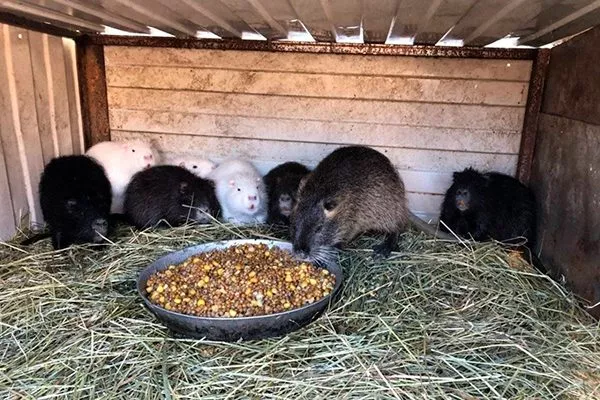
- Size compliance. The feeder must be of the appropriate size to ensure all nutria have free access to food. Failure to access food simultaneously can lead to aggressive behavior and fighting over food, which often results in serious injuries.
- Durability. Nutria are rodents, so it's important to choose wear-resistant materials. Aluminum constructions are preferred, although clay and ceramic options are equally popular.
- Saving feed. Choose models with food stoppers that prevent food from scattering. This not only saves feed but also keeps animals healthy by preventing food from mixing with dirt and feces.
- Ease of maintenance. The design of the feeder should provide easy access to all parts for cleaning.
- Reliable fasteners. Feeders must be securely fixed in the enclosures, and if fastenings are provided, they must be strong.
- ✓ Aluminum is preferred due to its corrosion resistance and light weight.
- ✓ Galvanized iron is recommended for durability, but must be checked for sharp edges.
- ✓ Avoid plastic and wood, as nutria can chew through them.
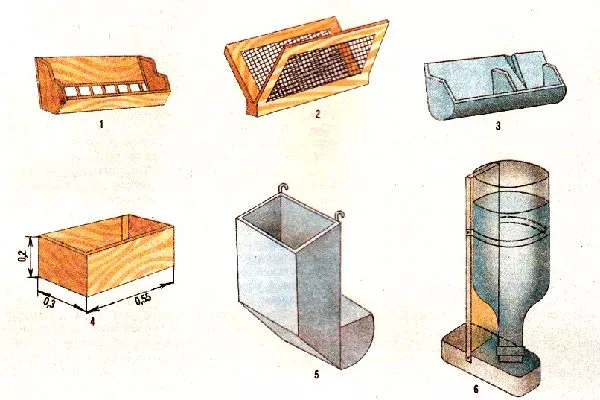
Types of bird feeders: DIY
There are several variations of nutria feeders, each designed for a specific type of food. When choosing and constructing a suitable device, it's important to consider not only the enclosure size but also ease of use and maintenance.
Nursery
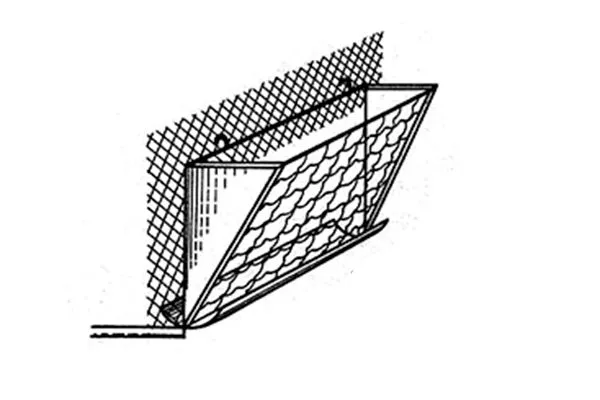
This type comes in several variations, the most convenient of which is a model with a vertical compartment framed by high sides and a lower horizontal feeding compartment. The lower compartment is equipped with a grate with openings that accommodate the animal's head.
Advantages:
- The model with a vertical compartment and a horizontal section provides convenient access to feed for nutria, allowing them to effectively grab the required amount of hay or greens.
- The high sides and the lower compartment's grate serve as food stoppers, preventing food from falling out of the feeder. This helps conserve food and keeps the enclosure clean.
- The size of the holes in the grate takes into account the dimensions of the nutria's head, ensuring comfortable feeding and preventing possible injuries.
Flaws:
- This type of feeder is optimal for hay and greens, but may be ineffective for other types of feed. Additional equipment may be required if a variety of foods is required.
- Creating feeders with these features may require specialized skills and materials, which may impact their cost and availability.
- Maintaining hygienic conditions in the enclosure requires regular cleaning of the feeders, especially the grates and compartments, which can take time and effort.
With a grid
This type of feeder operates on the same principle as a manger, but is simpler to manufacture. This design consists of a standard, elongated trough, the top of which is covered with mesh. Animals can freely reach through the mesh to reach for food.
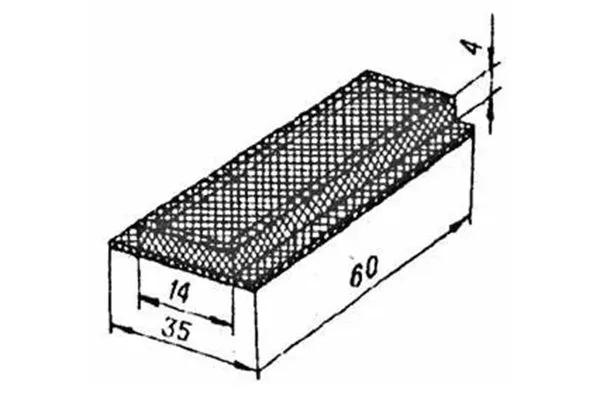
These mesh troughs are most often used to provide dry pelleted feed. Their advantages include:
- easy to clean;
- feed saving;
- ease of assembly.
Retractable
This type of feeder stands out for its functionality and is designed for dispensing loose feed to animals kept in cages. It consists of a long box with sides 2-2.5 cm high. It is installed in a specially prepared opening in the enclosure, corresponding to the dimensions of the box.
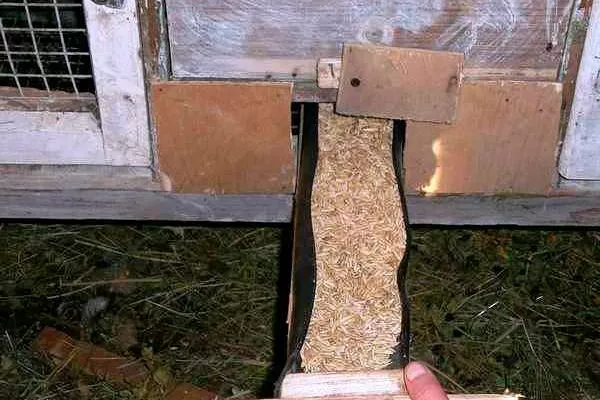
Advantages:
- Provides easy access for refilling and cleaning without having to open the cage, reducing stress for animals and making care easier.
- Prevents loose feed from spilling outside the feeder, which helps save food and keeps the enclosure clean.
- It is suitable for distributing bulk feed and can also be adapted for various types of feeding, which makes it universal.
- The ability to slide the feeder in and out without having to open the cage allows you to maintain peace and quiet for your pets.
Flaws:
- Suitable primarily for bulk feeds, which may limit the variety of animals' diets.
- A specially prepared hole in the enclosure is required to install the feeder, which may require additional work during its installation.
- Suitable for caged animals only and not suitable for other forms of animal housing.
Automatic
The use of automatic feeders is justified when raising large herds of nutria and is typically used to provide them with pelleted feed. The design consists of a tall vertical tube into which the feed is loaded.
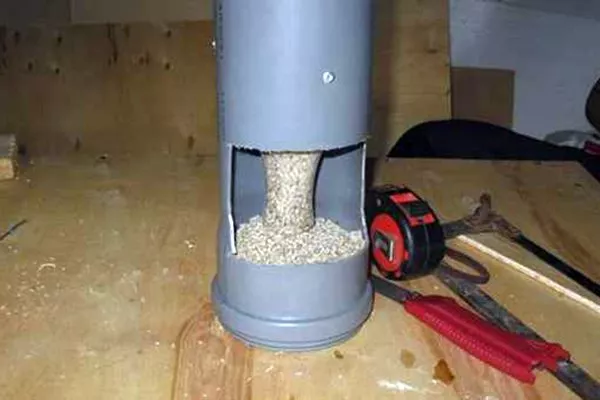
A horizontal feeder is located beneath the pipe, and feed is automatically forced into the lower container by pressure from above. As the animals consume the contents of the feeder, a new portion of food is dispensed automatically.
Advantages:
- They provide an automated feed delivery process, which reduces labor costs and increases the efficiency of caring for large herds of nutria.
- Thanks to the automatic feed dosing system, nutria receive regulated portions, which contributes to uniform and balanced nutrition.
- Accurate feed dosing reduces potential losses, saving feed and reducing animal maintenance costs.
- Constant access to fresh food, without human intervention, reduces stress for nutria and creates more comfortable living conditions.
Flaws:
- Purchasing and installing automatic feeders can require a significant financial investment, which may be out of reach for small farms.
- Automatic mechanisms are subject to wear and tear and may require regular maintenance, which increases costs.
- Such systems may be optimized for specific feed types, which may limit the diversity of nutria diets.
Bunker
This type of feeder is similar to automatic designs. It includes a hopper section for storing feed reserves and a feeding section into which food flows from the hopper as it empties, ensuring constant access to food.
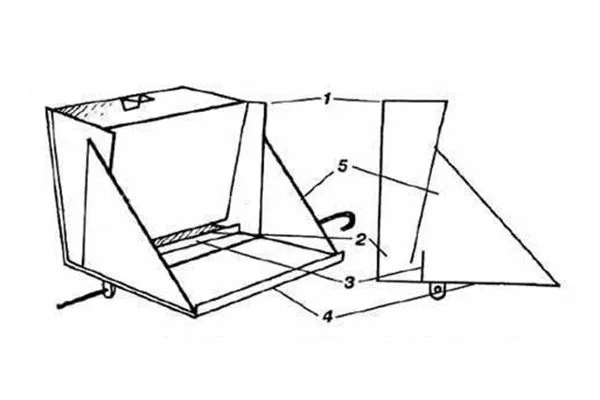
A distinctive feature is the high sides at the bottom of the feed section. They prevent food from spilling.
Advantages:
- Provides continuous access to feed for nutria, which can have a positive effect on their health. Allows the breeder to regulate feed supplies and dose it less frequently, which saves time when caring for the herd.
- The presence of high sides in the lower feed section prevents feed from spilling, reducing losses and ensuring efficient use.
- Having food available in the feed area at all times can reduce stress for animals by providing them with a stable diet.
Flaws:
- Feeders may be adjusted to specific food types, which may limit dietary variety.
- Mechanisms are subject to wear and tear, require maintenance and can fail.
- Purchasing and installation may require a significant financial investment.
- The installation requires adequate space in the enclosure, which may be a limiting factor for some farms.
To create a tilting structure, it is recommended to use materials made of aluminum or galvanized iron, since animals can chew through plastic and wood.
The manufacturing process includes the following steps:
- Cut out the following elements from metal sheets: hopper, tray, limiter, pallet, cheek.
- For three sides, make sides up to 3 cm high, which will be the side walls of the hopper and cheeks.
- Equip the back wall with stops at the top and bottom.
- Assemble the structure and connect the joints with rivets.
- Attach a fastener to the back wall, with which the feeder will be suspended from the front of the cage.
A properly selected feeder plays a key role in successful nutria breeding. An optimal feeder design not only facilitates efficient feed utilization and saves the breeder's time, but also maintains the health and comfort of the animals.