
Horses require care, which requires significant investment and dedication from their owners. Keeping horses—whether for hobby, business, or as farmhands—requires daily care. To ensure their health, ability to perform their duties, and successful reproduction, horses require adequate nutrition, plenty of water, and a comfortable stable.
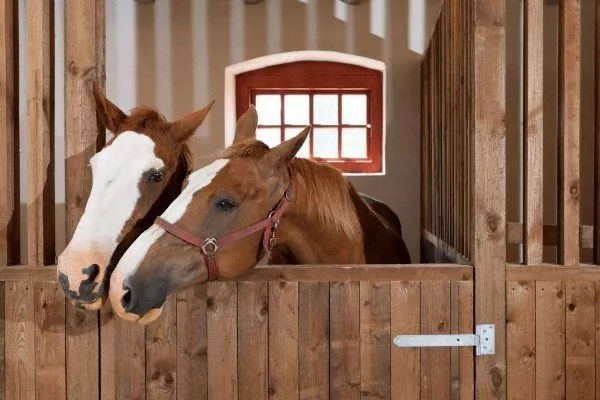
Horse keeping
Horse management methods are selected based on the terrain, climate, availability of pasture, and other factors. There are three horse management systems:
- Herd system. This method of housing was used by nomads who couldn't afford stables for their horses. This method is also called natural, as it's as close to the natural environment as possible. Horses are fed only natural food, without chemicals. This method is environmentally friendly and inexpensive. There are also improved herd and cultural herd housing methods. Sheds are set up for feeding, under which feed is stored.
- Stable system. Horses live in special buildings called stables. They are periodically released for exercise in special fenced areas. The standard area for a stallion is 200 square meters, for young horses – 400 square meters, and for breeding horses – 600 square meters.
- Herd-pasture. Suitable for areas with cold winters. Horses are kept free-range in the summer and stabled in the winter.
On large farms, horses are typically kept in stalls, with 20-100 animals per stall. With the stable-and-pasture method used by such farms, horses are divided into groups by age, sex, and purpose.
What should a stable be like?
It's best to set up a stable near a body of water. A nearby water source is a great convenience for keeping horses. In the summer, a covered enclosure can serve as a stable, but for the winter, a dedicated building is essential.
Requirements for the stable:
- Material. Eco-friendly building materials are used, safe for animal health. The best option is timber treated with an antiseptic. The building can be constructed entirely of wood, with a brick exterior. The brickwork provides protection from the elements and strengthens the walls.
- Size. The optimal area for keeping one horse is 16 square meters. Height – 3-4 m.
- Partitions. A stable designed for several animals should be divided by partitions made of wooden beams or metal sheets.
- Coating. Stable floors are made of clay, concrete, or rubber. Rubber flooring is especially convenient – it doesn't rot, isn't slippery, and lasts for decades.
- Stall. Horses are typically kept in stalls. A stall for one animal measures 3 x 3 meters. However, this is the minimum size; a stall of 4 x 4 meters is ideal, so the horse can not only stand but also lie down comfortably. The stall is equipped with locks and gates to prevent animals from leaving.
- Bedding. Firstly, it's needed for the horse's comfort when it decides to lie down. Secondly, sawdust or straw bedding is needed to absorb waste. To keep the stall clean, the bedding should be changed daily. Material requirements for one adult horse: sawdust – 15 kg, straw – 4 kg.
- Doors. They must be wide enough for the animal to pass through without risk of injury. The minimum opening width is 1.5 m. The jambs must be rounded. The door is installed so that the leaves open outward.
- Drinking bowls and feeders. For feeding, it's best to use a rectangular trough—one that's deeper and roomier. Place it near a source of natural light. It should be 70 cm above the floor and 50 cm from the wall.
Each horse should have its own feeding trough. To prevent injury, the edges of the troughs should be rounded. It's best to divide the trough in half—one half for hay and grass, the other for oats and concentrates. Horses are watered from regular buckets. Automatic waterers are another option. Each animal should have a water supply of 50 liters.
Stables are often built with two stories. The second floor is used for hay storage. A gap is left between the walls and the roof to improve ventilation. This method helps prevent drafts, which horses dislike. If budget allows, a powerful exhaust fan can be installed. The optimal roofing material is slate or tile.
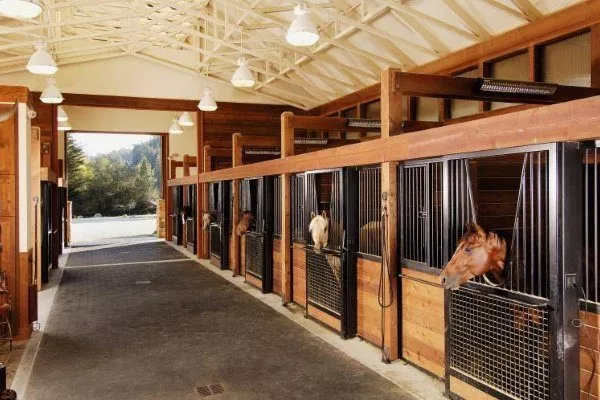
Microclimate in the stable
A horse's home should be warm, dry, and comfortable. The owner's job is to create a favorable indoor climate:
- Temperature. The optimal temperature is from +15 to +18°C.
- Humidity. In the range of 60-75%.
- Lighting. The lighting isn't particularly bright, but dim lighting isn't suitable either—something in between is needed. When arranging lighting in the stable, the following calculation is used: the ratio of window area to room area should be 1:15. The window height should be 180 cm from the floor.
- Ventilation. Horses dislike drafts, but stagnant air also negatively impacts their health. To ensure effective ventilation, doors and windows alone are not enough; specialized ventilation is required. Ventilation openings should be located at least 2.5 meters above the floor.
- ✓ The optimal concentration of ammonia in the air should not exceed 0.0025 mg/l.
- ✓ Carbon dioxide level should be below 0.15%.
Horses feel unwell in poor lighting. A lack of light negatively impacts their appearance, making them appear depressed and their performance diminished.
Rules for "machine" maintenance
There are three options for keeping horses:
- In the stall. This is the most convenient and widespread option.
- In the stall. This is a separate, spacious room. It's easier to clean here, and the horses are more comfortable.
- Group. Working horses are kept in groups. They must be the same age. Each group contains 20-200 animals. The animals are allowed to move around within a fenced area. This is typically how lower-value horses are kept.
If the stall does not have bars or windows and the horse is isolated, it will become aggressive or apathetic and may refuse food and water.
Benefits of keeping horses in a stall:
- It costs less than in stalls.
- Animals do not feel isolated, so they behave more calmly.
- Space is saved.
Keeping animals in a stall saves space, but this type of housing system also requires adherence to certain rules and regulations:
- Stall area from 5 sq. m.
- The length and width of the stall are determined by the size of the individual horse. For small workhorses, a stall length of 2.9 m and a width of 1.6 m are sufficient. For larger horses, a stall length of 3.1 m and a width of 11.8 m are sufficient, respectively.
- Feeders are selected according to the width of the stall.
The disadvantage of keeping animals in a stall is the difficulty of cleaning.
Grazing and walking
A horse can be kept in a stall, a stall, or some other form of housing, but it must be given time outdoors. These animals don't thrive if they're restricted in their exercise. The specifics of their exercise depend on the horse's intended purpose. For example, if the animal is intended for farm work or hunting, it should be exercised more frequently, without overexerting it with strenuous exercise.
Horse walking rules:
- The horse must get used to the ambient temperature before starting work, running, etc. You need to give it a few minutes to adapt, otherwise, like a person, it can catch a cold.
- Before starting work, the animal must warm up and stretch.
- It is not recommended to walk horses at temperatures below minus 20°C.
- To avoid muscle atrophy, walks in the fresh air are necessary at least three times a week.
Horses require at least two hours of daily walks. After walks, horses are groomed, their hooves are checked, and their legs are inspected for wounds and abrasions.
The ideal grazing spot is one with abundant, lush grass, free of weeds and tough brush. The condition of pastures depends on their maintenance. A good pasture not only provides horses with exercise but also provides them with a certain amount of nutrition. Grass is the ideal feed for horses.
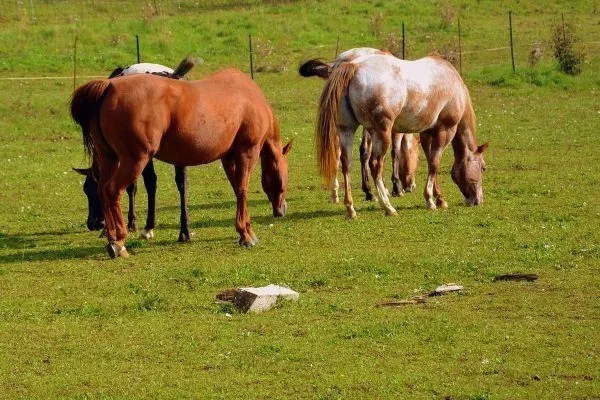
The dependence of grass consumption on the time of horse grazing is shown in Table 1.
Table 1
| Grazing time | Average grass consumption | What else is worth considering? |
| One hour | about 10 kg of grass | quality of grass |
| Day or night | 50-60% of the daily diet | If the grass is of poor quality - eaten away or short, it does not have enough nutrients |
| 24/7 | 100% of the daily diet | similarly |
Spring grass is particularly nutritious—it contains 28% protein, making it ideal for meeting the needs of performance horses. Spring grass contains over 5% sugar, the main source of energy. In depleted pastures, one cannot count on good nutritional value.
Grass grows faster in spring, growing five times faster in May than in September. However, overeating spring grass can trigger weight gain and the development of laminitis (a hoof disease that causes lameness).
Pasture needs care:
- restoration of soil damaged by hooves;
- cutting grass – up to 7-8 cm;
- removing manure – it has a negative effect on grass growth;
- destruction of weeds.
Manure removal
Removing horse manure daily is a routine part of horse owner chores. Without this hygienic procedure, stalls quickly become dirty. Dirt in the stable increases the risk of disease and causes discomfort to the animals.
Cleaning doesn't take much time or effort if you use the right equipment. To remove manure, you'll need the following:
- pitchfork;
- brush;
- scoop shovel;
- wheelbarrow or stretcher.
It's recommended to remove horses from the premises before cleaning. They don't like having pitchforks and shovels waved around them. It's also a good idea to remove feeders and buckets beforehand to avoid accidental knockovers.
Manure removal is carried out in the following sequence:
- They collect manure with a shovel. They take it to a storage location.
- Separate the wet bedding from the dry one. When using straw for bedding, it's best to separate it with a two-pronged pitchfork. The dry portion is retained and the wet portion is removed. A regular pitchfork is used to stack the damp bedding.
- They sweep the floor with a hard brush. Add the missing amount of bedding.
Feeding horses and their detailed diet
Horse feeding guidelines:
- Animals should be fed at the same time each day. Hay is given 4-5 times per day. Concentrates are given 3 times per day. Animals that work hard should be fed at two-hour intervals. It's important to leave at least an hour between consuming concentrates and oats.
- The diet is formulated based on the body's needs. In addition to grass and hay, horses require a balanced diet.
- The diet is adjusted depending on the season. The animals' gender and age are also taken into account when creating the menu.
Horses are strictly forbidden from being fed regular food, such as scraps and leftovers. This can harm their digestive system. Horse food:
- Hay. The daily norm is 10-15 kg. High-quality hay consists of a rich, varied herbage. This hay has a pleasant aroma, is bright yellow, and is free of weeds. Hay makes up 40% of a horse's diet. Hay is fed dried.
- Corn. Mainly oats and corn. Do not exceed the recommended dosage, as overfeeding can cause obesity, stomach problems, and dental problems in horses.
- Supplementary feeding from concentrated feed. The supplement contains grain, bran, vitamins, and minerals. It is especially important to include this feed in the diet of lactating mares, weakened mares, and heavily worked horses.
- Bran. This food is needed to normalize the functioning of the gastrointestinal tract.
- Licks. Salt blocks.
- Vegetables and fruits. The main sources of vitamins and minerals. Carrots, which are rich in vitamin A, are especially important.
- Fresh tree branches. Birch, aspen, or spruce branches are recommended. This is one of the horses' favorite treats.
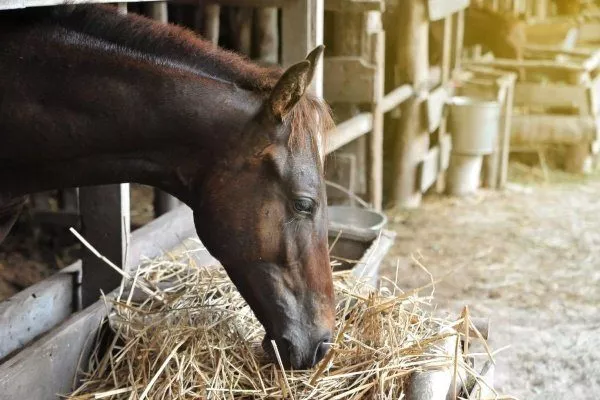
The diet should be tailored to the horse's breed and intended use. To assess the nutritional value of feed and its health benefits, a unit of measurement equal to 1414 kcal or 1 kg of oatmeal is used. This unit allows for calculating the daily requirement for any type of feed. When calculating the feed requirement, the horse's size, weight, and age are taken into account. As a rule, 5 kg of feed is required for every 100 kg of body weight. The daily ration for an adult horse is shown in Table 2.
Table 2
| Feed | Weight, kg |
| Oats | 5-6 |
| Hay (legume-cereal and meadow) | 8-12 |
| Bran | 1-1.5 |
| Carrot | 2-3 |
| Beet | 2 |
| Apples | 2 |
The horse should have access to salt every day—a salt lick is attached near the feeder. The animal will take as much salt as its body needs.
Feeding horses poor-quality feed can cause illness. Feed should be checked for mold and rot. Hay is given 4-5 times a day, and concentrated feed is given 3 times a day. Horses are given water before feeding.
During the summer, horses grazing on pastures have sufficient grass to eat. The transition to pasture should be gradual to avoid digestive problems. Horses that have overfed alfalfa or clover often experience colic. Pastures rich in legumes should be avoided.
How to organize watering of an animal?
Horses need to be given water in a timely manner so that the animal can quench its thirst and its digestive tract can successfully digest dry food.
Watering rules:
- The daily water requirement, depending on the breed, weight, size and type of activity of the animal, is 60-80 liters.
- Horses should be watered before feeding. The second option is to give half the water before feeding and half after.
- In cold weather, horses require more water than usual, as dry food begins to predominate in their diet.
- An animal that refuses water must be shown to a veterinarian.
- Horses should be watered three times a day. During summer and heavy work, horses should be watered five to six times.
- If the animal is hot and sweaty, don't give it cold water—it can trigger colic or hoof rheumatism. Wait until the horse cools down, and its pulse and breathing return to normal. An hour after work, you can give the horse half a bucket of water. But don't let it be cold. After half an hour, you can give the animal as much water as it wants.
- If a horse is given cold water, it's important to ensure it drinks more slowly. To achieve this, sprinkle hay into the water. Another option is to leave the horse unbridled.
- It's recommended to water horses 30-40 minutes before finishing work. This way, they'll be more willing to eat after finishing their work.
- Horses are especially thirsty in the evenings, after feeding. During this time, they need to be given plenty of water to ensure they drink to their heart's content.
Horse care
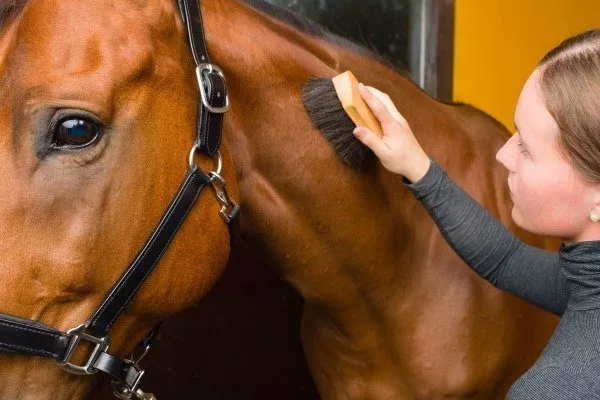
Horse care goes beyond a comfortable stable and nutritious diet—they require individualized care, including grooming, bathing, and veterinary care. With proper and regular care, horses maintain good health, performance, stamina, and a positive attitude.
Veterinary treatments
Without proper care, they can become ill. They suffer from skin, infectious, parasitic, and other diseases—just like people.
They may get sick:
- tuberculosis;
- leptospirosis;
- anthrax;
- rabies;
- tetanus;
- sap.
These are the most dangerous diseases—they can lead to death. To prevent these diseases, animals are vaccinated. Helminthiasis prophylaxis is mandatory, administered twice a year. Horse diseases and vaccination frequencies are listed in Table 3.
- Test for leptospirosis before the first vaccination.
- Vaccinate against influenza annually, taking into account current strains.
- Repeat tetanus vaccination every 2-3 years depending on the type of vaccine.
Table 3
| Disease | Vaccination frequency | Note |
| Anthrax | annually | there is no vaccine freely available |
| Leptospirosis | twice a year | they do preliminary blood tests |
| Flu | annually | There are many vaccines for different strains |
| Dermatophytosis | annually | The vaccination is done after the primary treatment, which is carried out at intervals of two weeks |
| Rhinopneumonia | depending on the region - mandatory annually or at the owner's discretion | rhinopneumonia is a common cause of miscarriages |
| Tetanus | once every 2-3 years (imported vaccine) or once every 3-5 years (domestic vaccine) | Vaccination is mandatory in all regions |
| Rabies | annually | not mandatory, but recommended |
Horses are also tested once a year for FAP and mating disease, and IAN – these are dangerous infectious diseases.
Cleaning and bathing
It's best to groom horses outdoors. The animal should be tethered. The grooming procedure looks something like this:
- The cleansing begins on the left and at the top. They begin with the head and finish with the feet.
- Move to the right side.
- When grooming the horse's head, stand so the horse can see the owner. First, groom against the grain, then with the grain.
- After finishing work with scrapers and brushes, the horse is wiped with a damp cloth to remove hair and dirt.
- Wipe with a dry cloth.
Horses should be bathed in the summer, when the water is warm enough. The animal should be willing to bathe; don't force it. If the horse is afraid of water, it's best to wash it with a hose—first with a gentle pressure, then with a stronger pressure. Use special horse "cosmetics" during bathing.
Bathing procedure:
- Lathering the mane, tail, and entire coat.
- Brushing – removes parasites and hair pellets.
- Rinse with warm water, rinsing off the foam. Rinse thoroughly to ensure no traces of detergent remain. Otherwise, an allergic reaction or irritation may occur.
- Dry the horse, preferably with a terry towel.
When cleaning and bathing, you need to act confidently; your movements should be strong and at the same time unhurried and stroking.
Oral care
Dental checkups are performed by a specialist, who is called in every six months to a year. The following symptoms warn of dental problems:
- food does not stay in the mouth;
- the animal chews food slowly or refuses to eat at all;
- the horse bites or chews the bit;
- The animal's back is tense.
It is impossible to cope with dental diseases on your own – you should not try to fix anything, otherwise you can harm the animal.
Mane care
A horse's mane is a beautiful accessory. But to ensure it becomes an adornment and not a source of problems, it requires careful maintenance.
Features of mane care:
- Bathe as needed. Bathing frequency depends on the individual needs of the animal.
- The mane and tail are washed with special shampoos and conditioners.
- The procedure is similar to washing human hair. The main thing is to avoid getting shampoo in your eyes.
- After washing, comb your hair and let it dry. If desired, the mane can be braided. The most popular styles include hunter braids, Western braids, and continental braids.
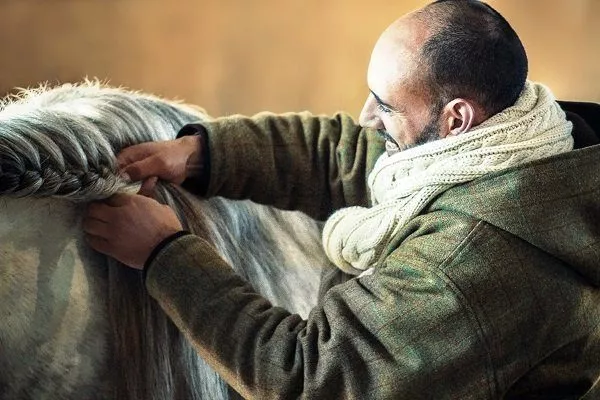
To prevent horses from chewing each other's manes—which does happen—their hair is treated with special aerosols containing repellent odors.
Shoeing and hoof care
Hooves should be inspected daily, after work or sports training. Hoof care routine:
- It is recommended to pour cool water on the animal’s legs to relieve fatigue, and then lubricate them with a fat-containing product.
- Clean the hooves of manure, soil, and other debris. Use a hoof pick, but be careful not to touch the frog—this area should be brushed first.
- Every 1-1.5 months it is necessary to remove the overgrown horny layer from the hooves.
- If necessary, horses are shod.
Hoof shoeing is entrusted to a professional – they will select the right shoes and not harm the animal. Unprofessional practices can injure the horse, or even render it immobile.
Horses need to be shoed if:
- they work on solid ground;
- they transport cargo;
- there are hoof diseases.
Horses are typically shod at three years of age, provided there are no hoof problems. If there are any hoof problems, it is recommended to shoe them at one and a half years of age.
Features of winter horse keeping
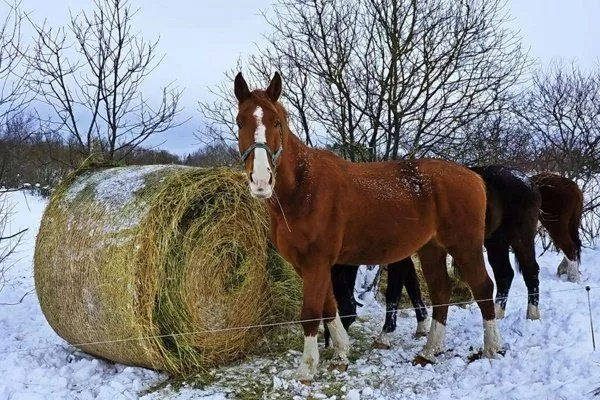
In winter, it is advisable to keep horses in a stall - it has enough space, is easier to clean, and additional partitions between sections will prevent the spread of infection, if one occurs.
In winter, horses have to spend a lot of time in the stable, so it needs to be carefully prepared for "wintering":
- provide warmth and good ventilation;
- remove all sharp corners and dangerous objects.
In winter, it is especially important to change the bedding daily – old hay causes respiratory diseases.
Features of winter maintenance:
- In cold weather, the horse should walk at least 6 hours a week.
- If it gets very cold, the animals are covered with blankets.
- Regularly comb the fur - this helps the animals keep warm.
- Food and water are changed every day.
- Hay is added daily, and preferably more often.
If a walk is not possible, you need to entertain the horse somehow – give him attention, play with him, give him a treat.
In winter, the diet is adjusted to replenish the energy expended on keeping warm. A winter diet should definitely include:
- Hay. There should be plenty of it—unlimited access. The horse should eat whenever it wants. Food warms and entertains at the same time. It's advisable to add some barley or oat straw.
- Fresh vegetables. Beets and carrots are given daily—they are washed and diced. They are given 5-7 kg per day.
- Cereals. They will saturate the body with energy and warm it up.
- Vitamins. In winter, fish oil and yeast are added to the feed.
In winter, a horse weighing 500 kg – an average-sized individual – should receive during the day:
- hay – 10-15 kg;
- vegetables – 7 kg;
- grain – 4 kg;
- vitamins;
- three times water – 20-40 l.
Horses should be given clean water to drink. Its temperature should be between 8-15°C. Since the animal eats a lot of dry food, it is advisable to provide it with free access to water. It is also recommended to provide water with mineral supplements to replenish energy expenditure.
Sometimes horses get the winter blues:
- they start gnawing at the stall;
- kick with their hooves;
- swallow air through the larynx.
This is all due to boredom and cramped quarters; the horse has nowhere to expend its energy. The blues can lead to colic and toothache. How to get rid of the blues:
- increase the walking time;
- give more hay;
- bring special toys to the stable;
- spend more time with the animal - petting, combing, talking.
Mating, pregnancy and foaling of mares
For mating, healthy, sexually mature individuals are needed. To breed horses, you must have at least two studs. What you need to know about horse breeding:
- Horses become sexually mature at the age of 1-2 years.
- To ensure healthy offspring, mares under three years of age should not be bred. Some individuals mature even later, at four or five years of age.
- Trotters are bred from the age of three. A good sire can be used for 15-16 years.
- The ideal time for mating is early spring to mid-summer.
- When choosing parents, pay attention to their physical fitness, age, structure, and other characteristics.
Mares carry their fetus for 11 months. A pregnant mare requires special care, including:
- get moderate physical activity;
- special nutrition, vitamins and roughage are introduced into the diet;
- one month before the foal's birth - tetanus vaccination.
Labor lasts approximately 30-45 minutes. Unless there are any abnormalities, the mare requires no assistance. Assistance to the foal in getting up is prohibited. Assistance is only available to help it find the mare's udder. For two hours, the mare and foal should be left alone—the mother will care for the foal.
Before foaling, the mare should be provided with clean bedding. You can look at the animal, but it's best not to show yourself. When foaling is complete, the mare stands up—the umbilical cord breaks naturally. The mother licks the newborn to remove mucus from its nostrils and mouth. Once dry, the foal begins to feed.
For a month, the newborn is fed exclusively with milk. On the second day, it should be supplemented with crushed oats to promote active development. Initially, 100 g of oats are given, and gradually increased to 2 kg.
Planned maintenance costs
Horse ownership requires considerable investment. The monthly costs of maintaining one horse at home are shown in Table 4.
Table 4
| Feed | Quantity per month | Cost, rubles |
| oats | 90 kg | 500 |
| bran | bag | 400 |
| hay | 350 kg | 350 |
| vitamin supplementation | by dosage | about 1500 |
| straw for bedding | as needed | about 3000 |
Rough estimates put the cost of keeping and feeding one horse in a stable at 10,000-11,000 rubles. This doesn't even include vaccinations, veterinary services, or medications.
Before owning horses, you need to not only assess your financial capabilities but also your ability to provide the animal with proper care. To reap the benefits of horses—hardy and capable—you need to invest time, effort, and money in them daily.