
Since ancient times, people have used horses as farmhands and as a means of transportation. To protect the steed from inclement weather, they were covered with various capes, blankets, or quilts. This garment remains relevant to this day, having been modernized and is now known as a "horse blanket."
Why does a horse need a cape?
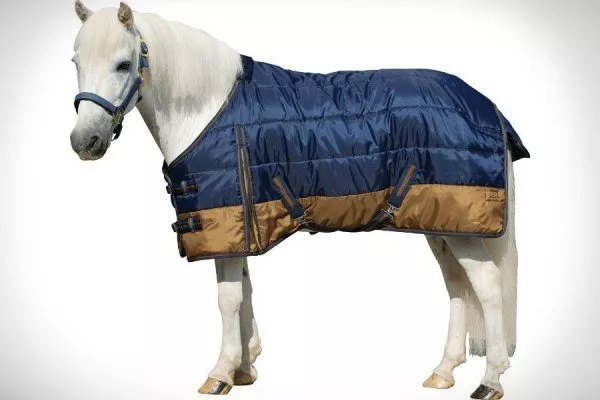
Horse blankets are a means of protecting horses while out walking in inclement, frosty weather. They protect them from hypothermia and reduce the risk of colds.
Horse blankets are used not only in the pasture, but also in the stall, for circus performances, sporting events, and when traveling. Horse blankets are most often used for the following horses:
- Sports. Since racehorses are shaved to enhance their coat's beauty, they are more likely to catch a cold. Therefore, a blanket is used whenever the horse has warmed up after exercise.
- Of advanced age. Due to their age, the skin of such pets does not warm up as intensely, so the blanket protects them from hypothermia in inclement weather.
- Horses that changed the climate. When changing residence, especially when moving from a warm to a cold climate, a blanket helps the animal to acclimatize more easily.
- Circus. A beautifully decorated blanket creates a festive effect during performances.
Often a cape is used to protect the horse's back from friction underneath it. saddles.
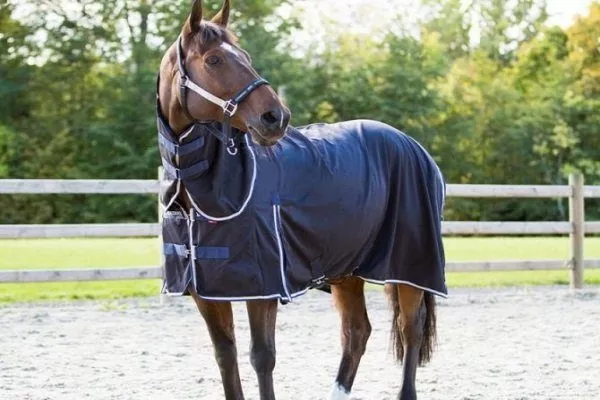
Types of blankets, their features and descriptions
| Name | Fabric type | Season of use | Protection from |
|---|---|---|---|
| Winter | Wool, synthetic padding, fleece | Winter | Frosts and winds |
| A sweat blanket or cooling cape | Moisture-absorbing textiles | After training | Overheat |
| Raincoat or walking paddock | Tarpaulin, waterproof fabric | Summer, demi-season | Wind and rain |
| Anti-mosquito | Fine mesh | Summer | Insects |
| Blanket with hood | Different fabrics | Winter, summer | Cold, insects |
| Formal and exit | Decorative fabrics | Performances | No |
| Reflective cape | Reflective fabric | Night | No |
| Training | Henrietta | Workout | No |
| Drying | Textiles, waffle fabric | After water procedures | No |
| Hot cape | Natural wool | For sick horses | Cold |
Modern racehorse breeders have clothes for all occasions in their pet's wardrobe, depending on the time of year and the ambient temperature.
There are a number of types of blankets, differing in their functionality:
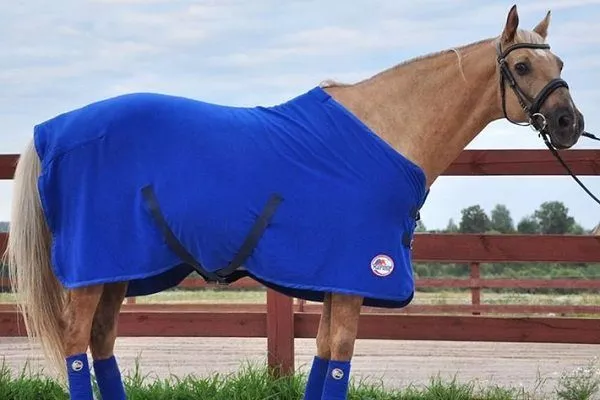
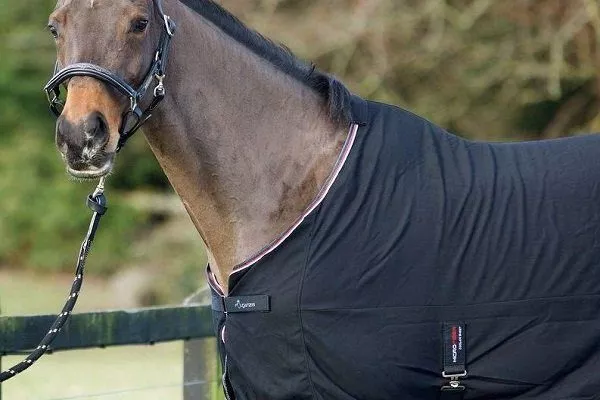
- Winter. Designed to keep animals warm from frost and wind in winter, it's made from thick wool, synthetic padding, or fleece fabrics.

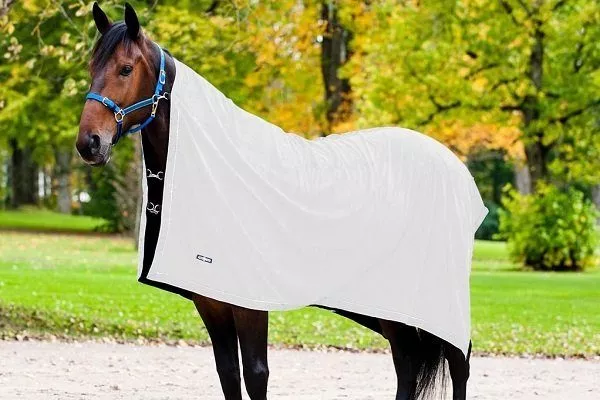
- A sweat pad or cooling cape. It is sewn from textiles that absorb moisture well, thanks to which the animal’s hot skin cools down gradually after training.
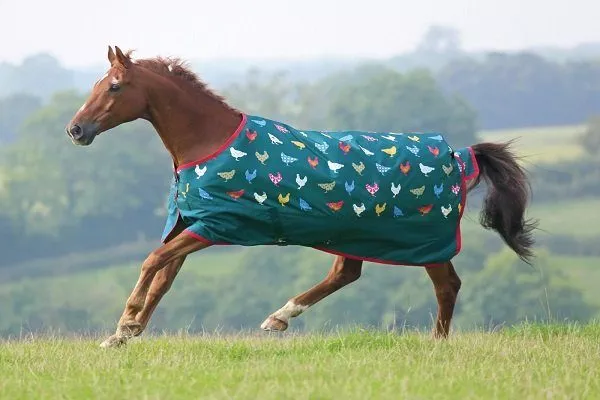
- Raincoat or walking paddock. This is an everyday blanket for summer and autumn, protecting the horse from wind and rain. It is made of canvas or waterproof fabric.
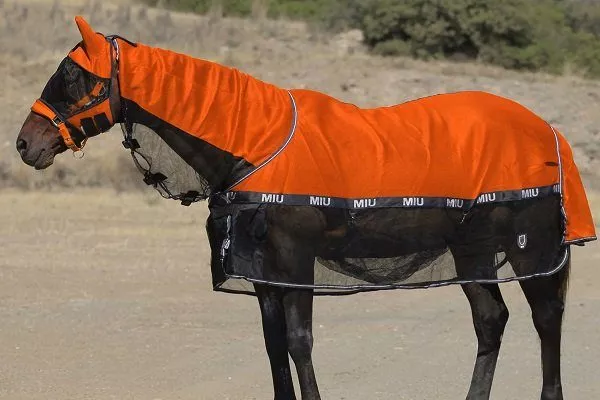
- Anti-mosquito. Protects horses from horseflies, flies, and other insects. It's made of fine mesh that can be treated with repellents.
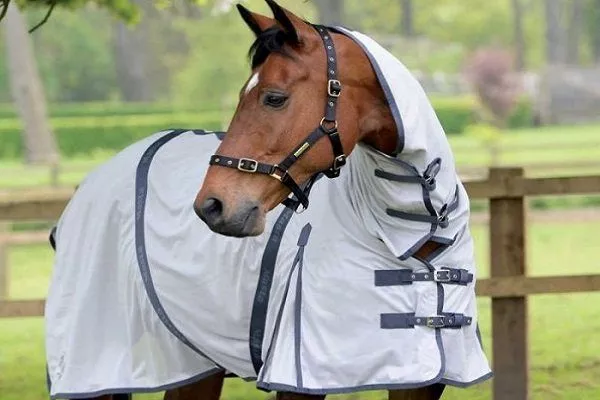
- Blanket with hood. It protects the horse's body and neck. It is made from various fabrics, suitable for both winter and summer.
- Ceremonial and exit. It covers the horse's back and serves as an additional decoration during performances in the circus arena or during exhibitions.
- Reflective cape. Essential for nighttime walks. This cape makes the rider visible from afar.
- Training. Used primarily as a saddle pad, it's made from thin wool fabric.
- Drying. Made from textile or waffle fabric, it's used after bathing and helps the horse dry faster.
- Hot cape. Designed for sick horses, it keeps them warm and protects them from colds. Made from natural wool.
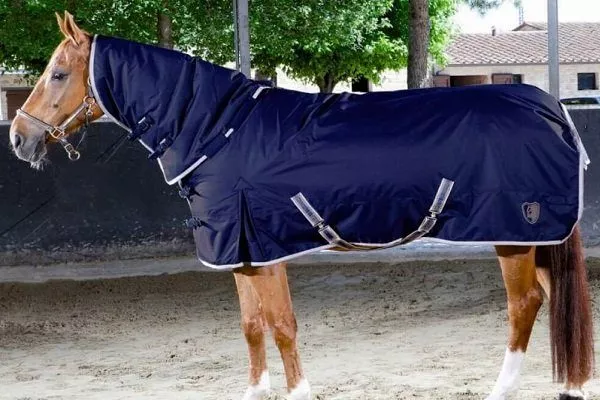
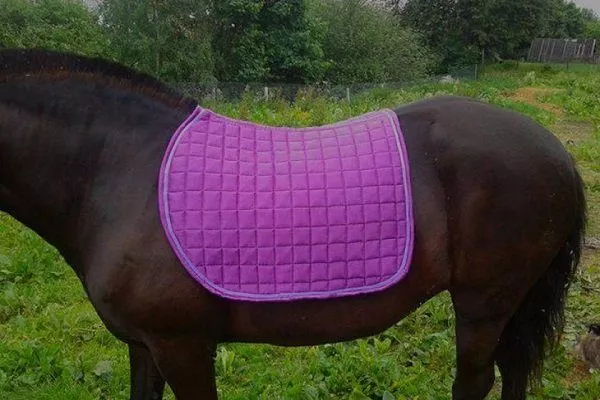
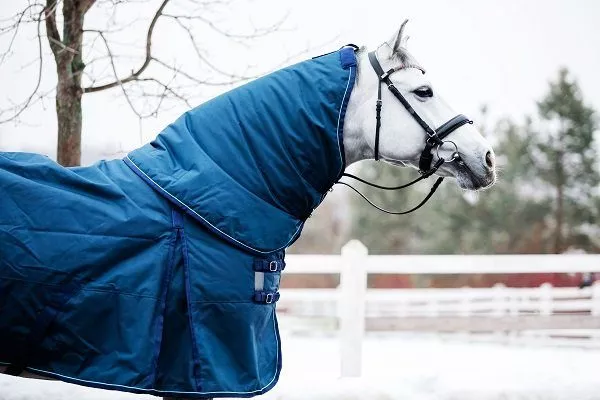
Video about blankets:
How to put a blanket on a horse?
A blanket is a fairly large garment for a horse, and in order to put it on your pet, you need to know some nuances.
First of all, the blanket should be the right size for your horse. A small blanket will fall off the horse's back and won't perform its intended function. A large blanket will hang off the horse, get tangled, and interfere with the horse's movements.
The technique for putting on a blanket is as follows:
- Fold the blanket in half so that the wrong side of the product faces out.
- Carefully approach the horse; it should see you, trust you, and not be afraid. Place the blanket on the animal's back so that the edge of the blanket is near the withers.
- Unroll the blanket to its full length over the horse's back.
- Fasten the straps of the blanket across the chest and under the animal's belly.
- Carefully fasten the back straps of the blanket.
How to choose the right ready-made blanket?
The modern market offers a wide variety of blankets, both in shape and functionality. Horse owners determine the specific application for which they will use a blanket for their pet and, based on this, choose one option over another.
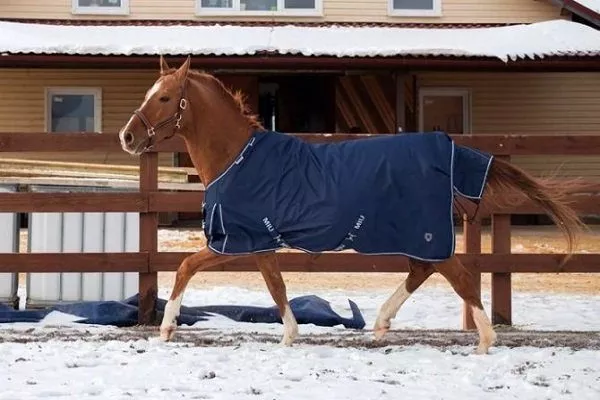
When purchasing a ready-made blanket, pay attention to the quality of the product. To do this, carefully examine the following points:
- the material from which the cape is made - it is recommended to choose products made from environmentally friendly fabrics;
- If you choose a blanket made of synthetic materials, it should be durable, strong and breathable;
- Check the quality of the straps, fasteners, and carabiners - their strength and reliability should not let you down when working with a horse;
- the blanket should fit your pet's size;
- check the quality of the threads used to stitch the product;
- The cape should be comfortable and not cause discomfort to your pet.
Let's sew a blanket with our own hands
Buying a ready-made blanket isn't always affordable. People often make their own, and buying fabric isn't necessary. You can use old blankets, throws, or bedspreads, jackets or coats, sleeping bags, and other items you no longer need. The key is to have enough fabric.
Necessary tools and materials
Sewing horse clothing yourself isn't difficult. But before you get started, you'll need a certain set of tools and materials.
Tools:
- sewing machine;
- scissors;
- threads of different shades;
- belts or straps for fastening blankets;
- carbines;
- rings;
- laces for fixing at the tail;
- decorative elements.
Materials:
- fabric size 2x3 m;
- various rags mentioned above (blanket, coat, etc.);
- wide elastic band 1.5 m long;
- thick tape at least 2 cm wide and 10 m long.
How to take measurements from a horse?
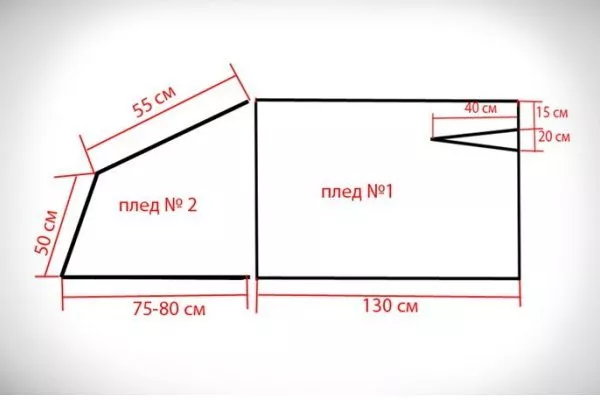
To make a robe, you need to know the horse's dimensions. To do this, take the following measurements of the animal's body:
- length from withers to tail;
- length from chest to tail;
- the length of the intended product from the front end where the clasp will be located.
- ✓ The girth of the horse's chest at its widest point.
- ✓ Distance from the withers to the base of the tail, taking into account the natural arch of the back.
Provide a small opening in the horse's neck area. This will prevent the front of the garment from bunching up on the back and making it look small. Calculate the cape's height correctly to avoid it being too short.
Transferring the pattern to the material
If you've drawn the blanket pattern on paper, it's easy to transfer it to fabric. To do this, fold the fabric in half and place the folded pattern on top. Trace all lines with chalk. Add seam allowances. Once the pattern is transferred to the fabric, cut out the pieces with scissors.
Processing the pattern
To ensure even stitching on the pattern, first mark all the stitching lines using a ruler and chalk. All seams are finished around the perimeter of the pattern on a sewing machine using a basting stitch. This strengthens the future cape and prevents the fabric from fraying.
The process of sewing a horse blanket
Once you've taken all the measurements, made the necessary calculations, and transferred them to the pattern, you can begin sewing the cape for your pet.
During the manufacturing process, please pay attention to the following:
- for fastenings on the chest or on the body, take flat straps and the same fittings, since there should not be any protrusions that can strongly tighten and rub the horse's skin;
- make darts for the shoulders, they will provide freedom of movement for the horse;
- provide artificial fur inserts in the withers area; they will allow the blanket to sit softly and tightly on the horse’s body;
- Make the leg straps elastic and with carabiners;
- make a tail cord, with its help the blanket does not rise up on the animal’s rump in strong winds;
- To prevent water and wind from getting under the blanket, make a tail valve.
Sewing technology of the product:
- Take the prepared pattern.
- Cut out the neckline.
- Leave the part near the head untouched, and round off the remaining corners with scissors.
- Finish the edges of the entire product with strong tape.
- Make a tail fastener. To do this, sew a drawstring in the desired area and then insert an elastic band into it.
Video instructions for sewing your own horse blanket:
Caring for the cape
Like any piece of horse equipment, capes require special care. Here's what you need to do regularly:
- check all fasteners and repair worn seams in a timely manner;
- After each use, the blanket must be shaken out, aired and dried;
- the product should be periodically washed with neutral powders, and then dried well;
- Jute capes must be thoroughly cleaned with a coarse brush.
If your horse has a ready-made blanket, the manufacturer always provides detailed care instructions in the description. To ensure the blanket's longevity, these instructions should be followed.
It's recommended to store blankets in dry, tightly sealed bags in a cool, well-ventilated area. This will help prevent damage from moths and rodents, and prevent them from becoming caked or damp.
What can be used instead of a blanket?
A half-blanket can replace a horse blanket. It's a shortened cape that covers a small portion of the horse's back and croup. It's attached to the saddle and has a strap under the tail. Half-blankets are available for winter or summer. Their functionality is identical to that of a horse blanket.
Can a horse do without a blanket?
For a horse that hasn't been blanketed since birth, regardless of weather conditions, a blanket will be a challenge. It's accustomed to being completely free without additional clothing, and its skin is adapted to the changing temperatures.
If your pet is healthy and accustomed to living in natural conditions, then it is quite possible to avoid using equipment such as a blanket.
If you believe your pet needs a blanket, you need to approach the matter very seriously. Getting your horse used to it should be done gradually. Give it time to get used to it.
When choosing a blanket for your pet, you need to understand the purpose and conditions under which it will be used, and then proceed from there. You can also sew the blanket yourself; the process isn't difficult. The main thing is to treat your horse with love and keep their health and comfort in mind.