
Equine shampoo is a special product for washing horses' manes and tails. It is made primarily from natural ingredients. Due to its high effectiveness, equine shampoos are sometimes even used by people who want to thicken their hair.
Horse shampoo - what is this product?
Horse shampoo is a special product. A horse's mane and tail are coarser in structure than human hair. Horses are more likely to get dirty, tangling thorns and other debris in their manes.
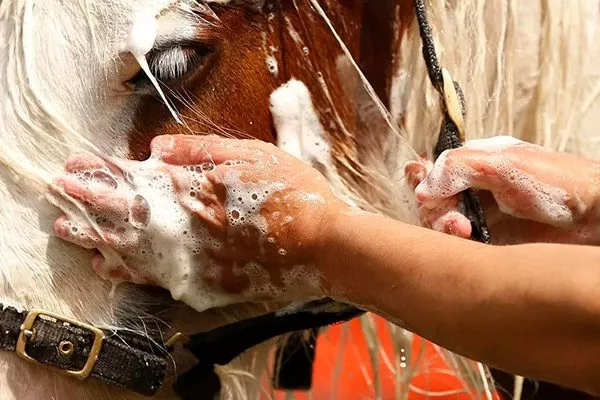
The difference between shampoo and regular washing products:
- designed for a more acidic pH (6.7–6.8) and thick horse skin;
- contains silicone, lanolin and collagen (the main reason for hair shine);
- Some brands are sulfate-free;
- in others, there is more alkali and surfactants.
A shampoo must be both a powerful cleanser and an odor-eliminator, yet also non-allergenic, non-itchy, and non-irritating. Many horse owners also value a shiny mane and coat.
Horse shampoos are sold in pet stores both online and offline. Average prices range from 250–320 rubles to 1,500–2,000 rubles. The least expensive products are those that can also be used for washing other animals—dogs, cats, etc.
Features of the composition
Shampoos often contain zinc oxide, which not only helps cleanse the tail and mane but also stimulates growth. Sulfur, sodium laureth sulfate, sodium chloride, coco-glucoside, glyceryl oleate, and other ingredients also aid in cleansing.
Silicone and collagen coat the hair, making it heavier and shinier in the sun. However, this effect is temporary. The products gradually fall out, and the hair eventually becomes thinner.
Shampoos often also contain coconut oil fatty acids, propolis, and other natural ingredients. Restorative shampoo for horses often contains tar.
What types of horse shampoos are there?
Shampoos come in a variety of forms. However, the most popular are typically standard products or combination options (shampoo and conditioner in one bottle). Types of products:
- Just shampoos. This is a liquid composition that needs to be diluted 1:5 or 1:10 in a special container. The concentrated mixture must be diluted with water. Otherwise, it may cause dermatitis, dandruff, and other problems.
- Shampoos and conditioners. This two-in-one product not only cleanses but also makes the mane easier to comb and adds shine. The conditioner prevents breakouts and other problems. The conditioner softens the harsh effects of shampoo and protects the skin.
- Shampoo sprays for different hair types. White, gray, and rare dapple-colored horses require products that enhance their beauty. For this purpose, sprays are available for different colors.
When using the composition, the mane becomes more gray, white, etc. Plus, the horse's coat receives protection from ultraviolet rays. - Products for brightening the mane. These are special shampoos. They are mainly purchased by people who professionally care for horses. The product not only cleanses the mane but also makes it brighter and shinier simply by attracting light rays.
- For dry cleaning. Dry cleaning shampoos for horses effectively remove dirt, dust, and grease from the mane and tail. This product is unique in that it forms a foam that is applied to the coat and then rinsed off after a few minutes. No hosing is required.
Uninformed breeders also believe that "Horsepower"-style shampoo is a cleaning product for animals. However, this is a misconception. Horsepower cleansing liquid is intended for human hair and is sold in pharmacies.
These shampoos contain keratin and other ingredients that promote shine and hair growth. They are sulfate-free. The "horse" theme in the name is a marketing ploy.
But if you want, you can wash your horse with this shampoo. The effect will be the same as with a regular detergent. The mane may become softer and fluffier.
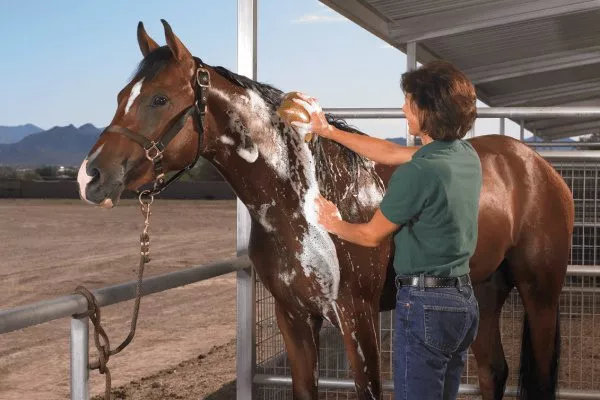
How to use it correctly?
Wash the horse on a warm, sunny day or indoors. Dilute the shampoo with water. If the animal is very dirty, repeat the procedure.
Directions for use:
- Dilute shampoo 1:10 with warm water
- Achieve foam.
- Apply foam and water to the horse's mane and tail (be careful not to get it into the eyes).
- Wash the horse with a brush, spreading the foam along the entire length and scraping it off.
- Rinse off any remaining foam with warm water.
After washing the horse, it should be brushed to remove tangles and mats. It's best to use a basin or bucket for washing, where you can mix the shampoo and work it into a lather. One horse may need up to a third to half a bottle, depending on how dirty it is.
Criteria for product selection
When choosing a shampoo, pay attention to the product's ingredients, the manufacturer's reputation, and customer reviews. Sometimes the horse's color also plays a role—there are separate shampoos for gray or white horses.
Selection criteria:
- shampoo should protect the natural shell of the hair shaft;
- comfortable pH level (the same as that of horse skin);
- hypoallergenic and pleasant smell;
- The product should facilitate easy combing of the mane and tail.
- ✓ Contains natural anti-inflammatory ingredients such as aloe vera or propolis.
- ✓ Absence of aggressive surfactants that can worsen the skin condition.
- ✓ Hypoallergenic formula, especially for horses with a history of allergic reactions.
In winter, dry formulas can be used. If your horse suffers from skin conditions or mane loss, special products recommended by a veterinarian will be needed.
Popular brands
The market offers a wide variety of options, including products from domestic manufacturers and international brands. The table clearly outlines the advantages and disadvantages of popular products.
| Name | Product type | Volume (in ml) | Characteristic | Pros | Cons | Average cost (in rubles) |
| Zoovip
| Thick shampoo for washing horses' manes and hair. | 500 | Contains collagen and lanolin.
It has a pleasant smell. The consistency is transparent.
| Thickens horsehair, adds shine, lathers and rinses off well, lanolin protects the animal's skin. | Makes hair heavy, there is an individual intolerance to certain components. | 320 |
| Over Horse "Clean White" | Dry shampoo for cleaning horses. | 400 | It is a foam with a pleasant smell.
Contains silk proteins. Suitable for horses of grey and other light colours. | Convenient dispenser, just leave it on for one minute and you can clean it off, no need for water | High cost, High consumption per cleaning. | 1,580 |
| Jockey | Shampoo-conditioner for washing horse mane. | 200 | Suitable even for the skin and fur of sick animals whose fur has lost its former beauty.
Contains natural ingredients: propolis extract, aloe, birch tar. Contains collagen hydrolysate. | It has a gentle but strong cleansing effect.
It just washes off. Gentle on the skin - ideal for animals with sensitive skin. | Small bottle, high consumption. | 241 |
| Fouganza | Shampoo with fruity aroma. | 500 | French brand with neutral pH.
Contains silk proteins.
| Large volume, convenient dispenser.
You don't need water to wash a horse. One minute is enough for cleaning. | High cost, high consumption. | 834 |
| Alezan | Shampoo-conditioner (concentrated mixture) | 500 | The composition includes D-panthenol, as well as extracts of chamomile, ginger root and saffron flowers.
It has anti-dandruff properties. It has an antifungal effect. | This professional product not only cleans, but also protects from sun rays and makes the mane brighter.
Large volume of working fluid (dilution 1:10).
| No defects were found. | 377 |
Russian manufacturer Alezan shampoo can be used every few days. Its formula is gentle on pets' skin and doesn't cause dermatitis, inflammation, or allergic reactions. In addition to shampoo, the manufacturer also offers joint gels, ointments, and other products.
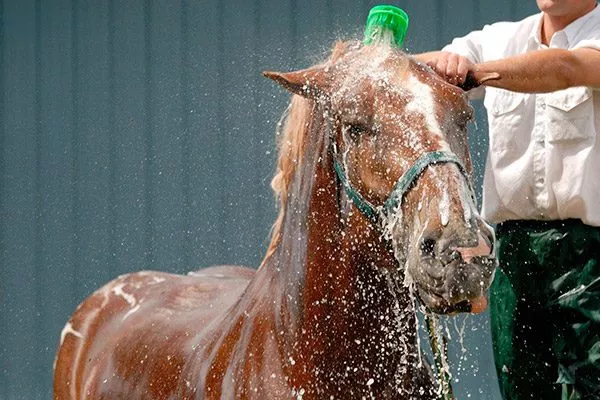
Can horse shampoo be used on humans?
Some people believe that pet shampoos, particularly horse shampoos, can be used on humans. It's believed that they make hair thicker and stronger.
This assumption isn't entirely correct. There's no categorical ban on the use of equine cosmetics by humans. However, animal shampoos are designed for a different hair structure and may be too harsh for humans.
Reviews
Horse breeders and animal lovers alike are eager to share their opinions on pet care products. Shampoos are no exception.
Anna Timoshevskaya, 23 years old, Barnaul: I tried "Horsepower" on my horse. I'll say this: "human" shampoo isn't meant for horses. Yes, I did get a clean effect, but I had to wash out almost the entire bottle in one go. And my fur didn't feel any softer.
Ivan P., 56 years old, Novy Urengoy: I think it's crazy to use horse shampoos on people. Don't you have anything to wash yourself with? I have two horses that I care for. I constantly use alkaline shampoo. Even just getting it on my hands makes me feel uncomfortable. My palms are constantly dry.
Alevtina Petrova, 29 years old, Yaroslavl: Horse shampoos are the best. They have some shine-enhancing ingredients added to them. This makes your hair shiny and strong. They contain more beneficial substances, particularly collagen. But I don't think these products should be used by humans.
Equine shampoos are expensive products for washing coarse horse hair. There's a wide selection of these products on the market. You can choose the most suitable option for your pet—a highly effective one with collagen and lanolin, a lighter, restorative one with tar and propolis extract, a dry mixture, and others.