
Historically, horses are wild animals. They have survived in the cold for long periods and are resilient to low temperatures. Despite this, there are certain characteristics and rules that help even-toed ungulates cope with cold weather.
Features of thermoregulation in horses
For the survival of ungulates, it is important to maintain their body temperature within a small range. When the temperature exceeds the optimal value, chemical reactions in the animal's body proceed slowly or stop altogether, which leads to many diseases or death.
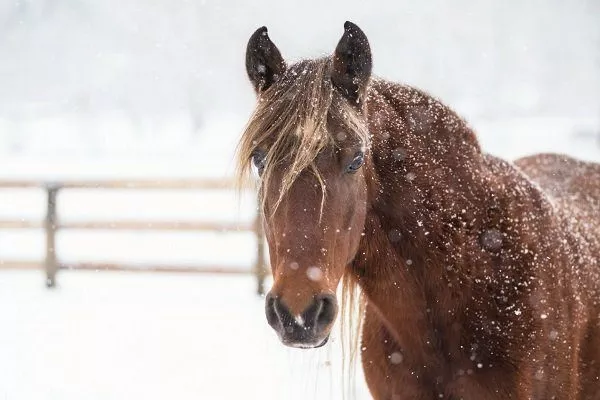
An adult horse's temperature is approximately 38 degrees Celsius (100.4 degrees Fahrenheit). Pregnant and lactating mares and foals have higher temperatures. Temperatures also fluctuate depending on the horse's activity:
| The horse's condition | Body temperature, degrees |
| At rest | 37.5-38.4 |
| Immediately after moderate exercise | 38.9-39.5 |
| An hour after the same load | 37.7-38.5 |
| Immediately after intense exercise | 39.5-40.5 |
| An hour after the same load | 38.0-38.6 |
A byproduct of metabolism is heat. Thanks to complex physiological, anatomical, and ethological mechanisms developed during evolution, a healthy animal possesses enormous heat resources.
To ensure that your domesticated horse exhibits natural behavior similar to its wild counterparts and is healthy, ensure that its needs are met.
Horse's living conditions and needs
Like any animal, a horse needs to be cared for. Pay special attention to this during winter to ensure your domesticated animal feels comfortable.
The following points relate to the animal's basic needs. If you want to have a healthy horse, strictly adhere to the following rules:
- Free access to pasture. The excretory function of the horse's body is that the digestive organs continuously secrete acid, which must be neutralized by the presence of food in the stomach.
- Free movement. The health of a horse's hooves, metabolic rate, and overall health depend on how active it is.
- Life in society. The horse is a herd animal. Since this lifestyle has historically developed among even-toed ungulates and has led to the species' survival and prosperity, a domesticated mare should not be deprived of her herd.
- Shelter. The horse must have access to artificial or natural shelter from wind and rain.
Natural adaptation of horses to cold weather
The mechanisms involved in thermoregulation in horses consist of 4 systems:
- Wool. Horses' coats change twice a year, adapting them to seasonal temperature changes. At the end of June, horses begin to grow thicker, longer coats, adapted to winter. After the winter solstice, on the contrary, the hairs become thinner and sparser.
But it's not only adult horses that prepare for winter with their coat—newborn foals have a mechanism for controlling it. Foals born in the spring have denser hair than those born in the summer. The animal can control each hair on its body, regulating the thickness of the insulating layer.
The special oils that coat the hairs play a significant role. They prevent moisture from penetrating the skin during inclement weather. Water runs off the fur, leaving the animal's skin dry. - Leather. Thanks to the subcutaneous fat tissue that is part of the skin, the skin is an independent insulating layer.
- Sweat glands. Horses use sweat not only to cool themselves, but also in winter, when their core body temperature becomes excessively high. Sweat production ceases when the animal's core body temperature returns to normal.
- Arteries. Thanks to their special structure, they are able to regulate their lumen, changing the amount of blood reaching the skin. Constriction of the vessels reduces blood flow to the skin, thereby reducing heat loss. Dilation increases heat release.
The mechanisms listed above are not the only means of thermoregulation in horses. Let's consider others:
- Fat reserves. The most obvious mechanism. Fat acts as an insulating layer in the animal's body. It's important for the horse to gain weight before the cold weather sets in. A mare that has accumulated sufficient fat tissue doesn't grow long hair.
- Dimensions and volume of the body. Heat distribution varies between large and small horses. Larger animals have an advantage in the cold because they have a smaller surface area for heat exchange and produce less heat in winter. Smaller horses generate more heat and become cold faster.
- Lungs. Like dogs, even-toed ungulates use rapid panting to cool themselves, exhaling moist, warm air.
- Increasing the amount of food. The dependence of feed consumption on the season is as follows: the lower the air temperature, the more food the animal needs, since heat is released during the process of digesting hay.
Signs of freezing in horses
Despite their thick skin and coat, horses can still get cold. Signs that a horse is cold include:
- Unusual behavior. The horse may become more active for a short period, or, conversely, slow down and be reluctant to respond to commands. Animals may huddle together, reducing heat loss.
Horses can also roll around in a snowdrift to create a protective layer of snow on their backs. - Tail tucked. When freezing, a horse tucks its tail close to its body and turns toward the wind. It lowers its head. This is necessary to protect the neck, ears, and lower abdomen from wind and rain.
- Shiver – the body's response to the unexpected onset of cold. Occurs in extreme weather conditions.
- Covered with frost. At temperatures below -15 degrees Celsius, horses can become covered in frost, especially if the animal has been wet beforehand.
Horses of the same breed can perceive ambient temperature differently. It's important to observe each individual horse individually. An example of this situation can be seen in the following video:
Be sure to warm up your horse if you notice signs of cold.
How to warm a horse?
Do not allow your horse to freeze and take timely measures to warm it up:
- If the horse is cold, throw a blanket over it.
- Feed the animal.
A clear example of what to do if your horse freezes:
A blanket is a simple device for covering horses, but use it wisely. Situations in which a blanket is necessary:
- If the animal's fur is trimmed.
- If the horse is underweight.
- When there are natural characteristics associated with low body temperature.
- If the mare lives on the street.
- When it rains. Damp cold is much more dangerous than dry cold. A blanket helps prevent the animal from getting wet.
Stables in winter
It is very important to prepare the stable for the winter period:
- Windows. Seal the cracks in the windows and cover the openings with 3-4-layer polyethylene film.
- Floor. Seal the gaps in the floor.
- Ceiling. For insulation, use 50 mm thick boards. Coat them with a clay-sand mixture on top. On the attic side, sprinkle sawdust on top of the boards and a 50 mm layer of soil.
- Walls. Check the walls for cracks. If any are present, seal them. Also, check the joints between the door and the wall. They should fit tightly.
- ✓ The temperature in the stable should be maintained between +5 and +15 degrees Celsius for the comfort of the horses.
- ✓ Air humidity should not exceed 60% to prevent respiratory diseases.
For an example of how to equip a stable for the winter, watch the video:
Frostbite
Frostbite is common not only in humans but also in horses. The most commonly affected body parts are the penis, perineum, the base of the skin around the ribs and coronet, the heels, and the lower lip.
There are several degrees of frostbite:
- First one. It manifests itself as paleness of the skin, loss of sensitivity, pain, slight thickening of the skin and swelling.
- Second. It is accompanied by spasms of blood vessels, the formation of blisters, and the skin takes on a pinkish-purple hue.
- Third. The skin is painless, cold, and hard. After warming, it takes on a purple or black hue. This is followed by the sloughing of dead tissue.
If your animal shows signs of frostbite, take it to a warm room and take measures to improve blood circulation – rub it with a cloth soaked in warm water or camphor alcohol, and massage.
Winter diseases of horses
In winter, horses are more susceptible to various illnesses than ever before. Let's look at the classification of diseases and identify their causes:
- Respiratory diseases. Dust, mold, and bacteria spreading in damp environments can cause various respiratory illnesses. To prevent this, regularly ventilate and clean the stable, perform wet cleaning, and allow your horse to get fresh air.
- Dermatological diseases. Lice, ringworm, festering small wounds, and dermatophytosis are all diseases that arise from improper care. If you notice any signs of illness in your pet, call your veterinarian.
Hardening
The best solution for maintaining the health of horses is hardening – bathing the animals, pouring warm water from a bucket or hose.
Bathing rules:
- gradually introduce the animal into the water from a gentle bank to avoid sudden temperature changes and fright;
- When entering the water, the horse should not be hot or sweaty.
Exposing a horse to fresh air is a good way to harden it. The animal's body adapts to a certain range of temperatures and humidity. A gentle breeze while running in a paddock or pasture increases sweating, cleanses the skin, and eliminates harmful metabolic waste.
Features of winter horse keeping
Features of keeping horses in winter:
- Sprinkle sand on carpets, yard, trailer, and barn entrance thresholds to prevent icing;
- During the winter period, introduce more food into the animal’s diet to balance it and maintain metabolism;
- remove hair from behind the mare's hooves to avoid accumulation of snow and dirt on them;
- Before going outside in cold weather, put a vest on your animal to avoid hypothermia;
- When the mare has not gained enough fat mass before the cold weather, include feed containing fiber in her diet;
- To keep your horse's hooves clean and to prevent the animal from freezing, consider purchasing some boots;
- In cold weather, use vegetable oil to keep the outer surface of the hooves moist.
Caring for horses is not easy, especially in cold weather. But if you learn how, your horse will become your companion and will be eternally grateful for your thoughtful approach to its needs. Also, be sure to learn what to do if your horse gets cold.