
If you care about your horse's health, you've heard of hoof boots. Let's explore why your horse needs them and the different types available.
What are horse shoes?
Horse boots are an essential part of a horse's wardrobe, helping to maintain healthy hooves. They also serve other functions. The purpose of horse boots:
- protection of hooves when working on rough ground;
- reducing the risk of hoof nicks;
- Boots with spikes prevent slipping in winter;
- Therapeutic boots restore the hoof after injury.
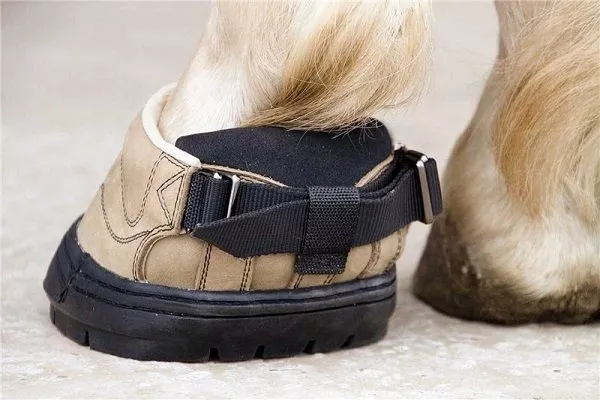
Horse hoof footwear comes in a variety of styles, with a specific type suited to each task.
Casual shoes
Everyday horse shoes can be compared to a glove. They completely fit the horse's hoof and, thanks to their strong tread, facilitate the animal's movement over difficult terrain. Wearing everyday shoes also helps alleviate the problem of nicks in the front pair of hooves.
Horse shoes in the warm season are slightly more open compared to the winter version.
Installing horse hoof shoes:
Casual winter shoes
Like tires on a car, horse boots are replaced with the onset of winter. Wearing winter boots can prevent a wide range of problems, from slipping to illness.
The tread thickness doesn't change depending on the season. However, when icy conditions arrive, special studs are screwed into the soles of the boots to prevent the horse's hooves from slipping. These can be screwed into the tread with a hex screwdriver.
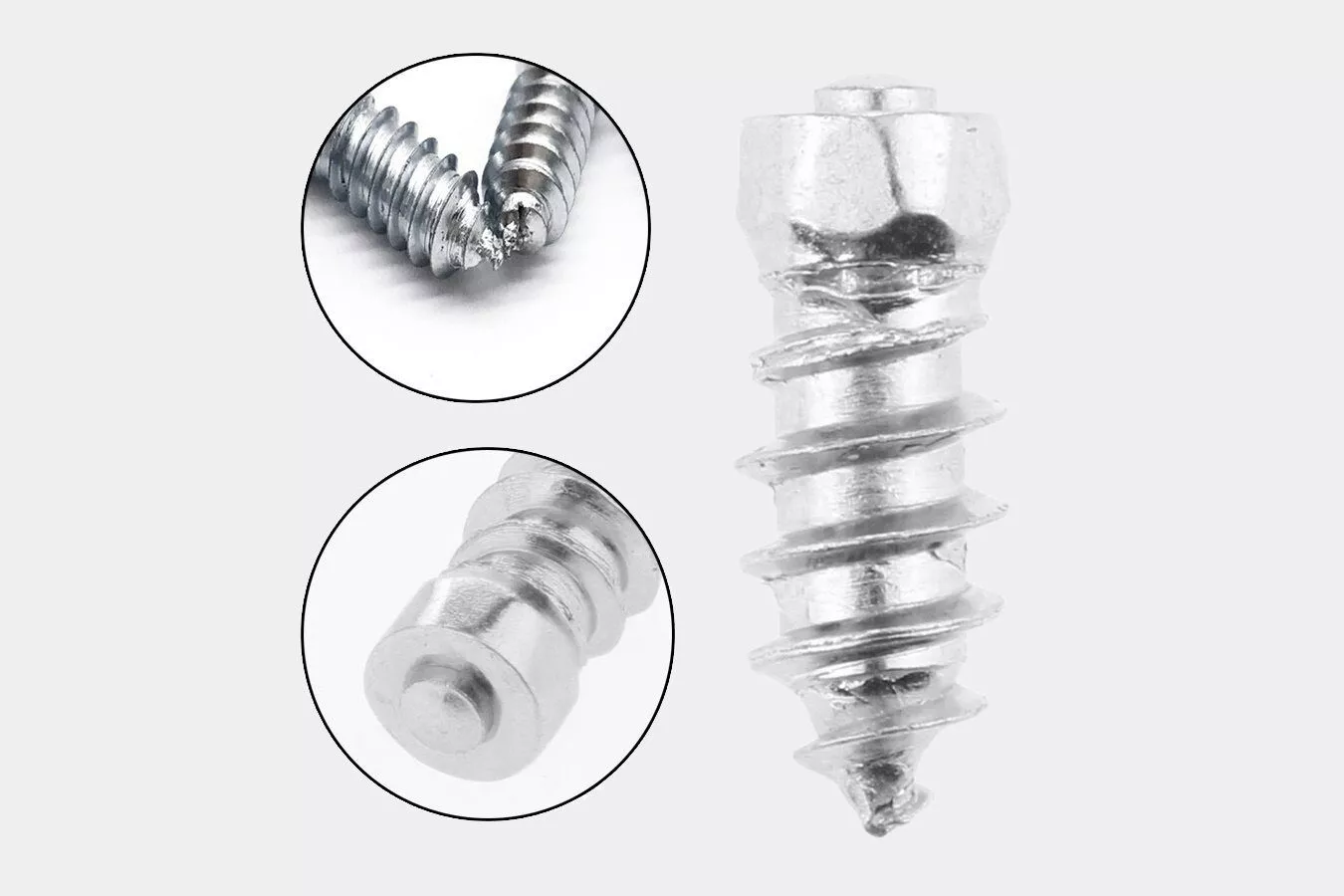
A distinctive feature of winter footwear is its height. Winter boots are significantly taller than summer ones.
The shoe's shape helps prevent diseases like rhinorrhea, caused by damaged skin or long walks on wet soil. The shoe's height also provides reliable protection against crusting.
Horse Shoe Review:
Therapeutic shoes
Therapeutic footwear has its own varieties and areas of application.
Bath boots
When horses need a hoof bath, a bucket isn't the best option, as the horse might tip it over. For such cases, there's a special device called a hoof bath boot.
"EasySoaker" is a unique model of bath footwear. Various manufacturers create it using identical technology. You'll always be able to distinguish it from other types and purposes.
Advantages of the device:
- Low consumption of the medicine, since the dose is calculated based on the volume of water.
- Sealed. The horse can't tip the container over or spill the water.
The downside of boots is their limited range of action, meaning they can only be used for their intended purpose, on the sidewalk. Wearing such boots for long periods of time can be detrimental to the hoof.
Using the EasySoaker:
- Water with the medicine is poured into the boot, which is tightly fixed to the horse's leg using a tightening strap.
- After the procedure has completed, the shoes are unfastened and carefully removed from the animal.
During the procedure, the horse must stand on the bridles and remain motionless.
Shoes for horses with problem hooves
Shoes of this format are suitable for horses with ordinary injuries, as well as with laminitis, chronic diseases and problems with the shuttle, that is, with diseases that require the presence of specialized soil.
- ✓ The presence of an insole with shock-absorbing properties to reduce the load on the injured hoof.
- ✓ Sealed design to prevent moisture and dirt from entering the wounds.
Let's look at some of the most popular models:
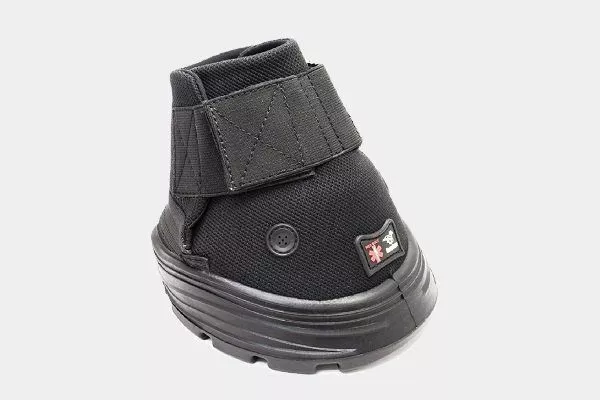
- EasyBoot RX. These boots are only suitable for horses at rest, such as walking, pacing, or standing in a stall. They are also used for transporting the animal, especially over long distances. They are also suitable for recovery after long workouts.
Shoes provide relief to horses with chronic pain or lameness, reducing the healing time of injuries.

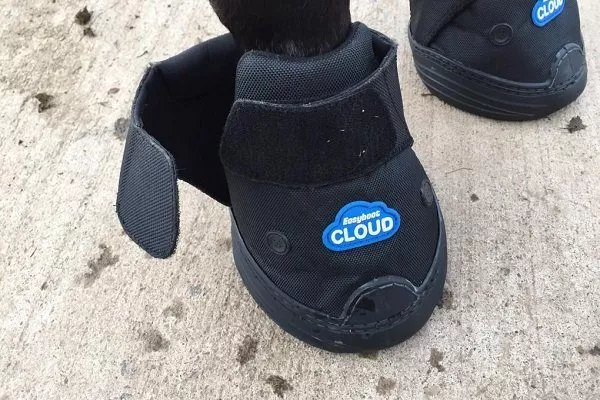
- Easyboot Cloud. This model has the same features as the previous one and includes an insole.
- EasyBoot Transition. The main advantage of boots is that the horse can lead a normal life and work.
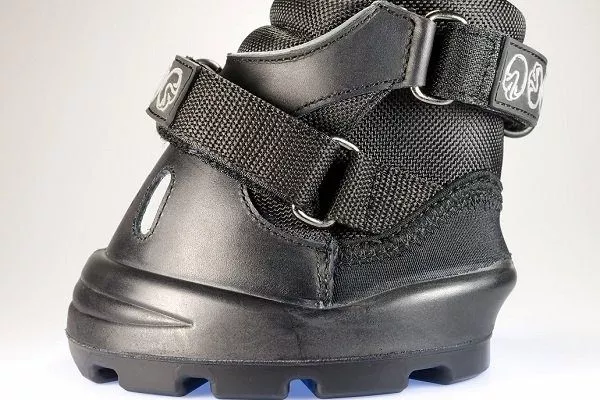
Insoles
Insoles are an essential accessory for boots. The standard range includes two different thicknesses (6 and 12 mm) and three different densities (soft, medium, and firm).
These insoles are designed for use with therapeutic footwear, but in rare cases they are used for everyday wear. These include minor hoof injuries or the rehabilitation period after an illness.
Purpose of insoles by their types:
- Thin and soft ones are used to relieve acute conditions. They wear out quickly and require frequent replacement.
- For a large or recovering horse, a medium or dense insole is appropriate. It provides resilient support for the hoof.
The owner can also make the insole themselves, specifying the desired size and shape. To do this, trace the horse's hoof onto the material.
If you have chosen high-density and thick insoles for your pet, the boots should be 1-2 sizes larger than the pet's usual size to ensure comfort.
How to choose the right size boots?
Choosing the right size is an important and responsible task for a horse owner. We all know what happens to our feet if shoes are the wrong size. A horse can face similar problems.
To get boot measurements, measure the length and width of your hoof. Width is measured from edge to edge, at its widest point. Length is measured from the toe to a line running through the bars.
See what horse sandals look like in the video:
How to put boots on a horse?
There are two ways to put boots on a horse. The first method is to put the boot on from the toe down, the second from the heel down. The main criterion is the horse's comfort during the process.
To ensure the procedure is performed safely, position yourself to the side of the horse to avoid being hit when bending the limb. The horse should be calm while the boots are being put on.
Instructions for putting on shoes:
- Unfasten the boot in advance and bend back the rubberized sides in the heel area.
- Grasp the horse's leg firmly and insert the hoof into the shoe in one of the ways, based on the animal's comfort and behavior.
- Fasten the fasteners.
The process of putting on boots is clearly shown in the video:
Hoof care while wearing boots
Wearing boots doesn't mean you have to skip hoof care and trimming. Follow these recommendations to keep your horse healthy:
- Take off your shoes after a hard day's work and give your feet a rest.
- Wash your hooves after wearing boots. Bacteria that can cause rot can accumulate under them.
- Warn the farrier about wearing boots.
- Maintain shoe hygiene, wash and clean after each use.
DIY Everyday Horse Boots
It takes a lot of effort to make everyday horse boots.
Materials for sewing:
- protector for making the sole;
- fleece fabric for creating a heel gaiter and lining;
- dense material for the main part of the boot (for example, leather);
- Velcro fasteners and fasteners;
- twisted linen thread;
- awl for installing fasteners.
The most important thing is to make sure the boot fits your horse properly. To find the right size, follow these instructions:
- Trace the animal's hoof onto the protector, increasing the diameter by 1-2 cm for stitching and lining. Follow the standard pattern.
- Prepare other parts using the same principle.
- When the pieces are ready, join them with a basting stitch.
After preparing the parts of the product, begin sewing the boot. Then:
- Consider placing Velcro or fasteners around the perimeter of the boot to ensure the shoe is securely fastened to the horse's foot.
- Try the boot on the animal.
- Once you've made sure the garment is the correct size, stitch the seams using a sewing machine.
A homemade product does not have the same strength and durability as one made on a machine. Pay special attention to shoe care. Do not make therapeutic or winter boots yourself.
Where to buy boots?
Horse boots are a complex item to make, and materials for them are hard to find. To save time and resources, use ready-made products.
List of popular online stores:
- "Indrik". A good selection of boots and other horse accessories. The store has both online and offline platforms.
- "FLORIAN". An online store with pickup points in major Russian cities.
- "Equestrian Online Store". Here you'll find not only horse goods but also rider supplies. This store's advantage is that it has locations in five cities with populations over one million.
Speaking about pricing, everyday versions of the Easyboot model cost approximately 8-12 thousand rubles, while therapeutic versions cost from 3.5 to 9 thousand.
Boots are an essential part of a horse's wardrobe. This multifunctional item will ensure the animal's health and comfort, thereby increasing its vitality.