
Horse meat is rarely consumed in our climate, but it is always considered a delicacy. The most delicious meat comes from foals aged 9-12 months, as well as from castrated horses. This is largely due to the absence of an unpleasant odor and the tenderness of the product.
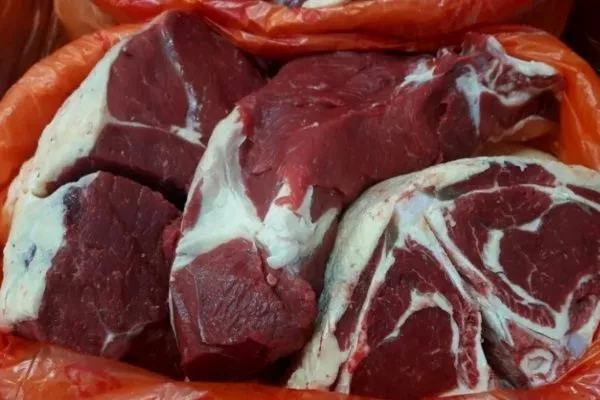
What is the difference between horse meat and beef?
Horse meat is similar to beef in many ways, but only in appearance. Horse meat is tougher and has a distinctive flavor.
Nutritional Value Comparison
| Indicator | Horse meat (per 100g) | Beef (per 100g) |
|---|---|---|
| Caloric content | 185-190 kcal | 250-280 kcal |
| Squirrels | 21.39 g | 26 g |
| Fats | 4.6 g | 15-20 g |
| Digestibility | 90% in 3 hours | 60% in 24 hours |
| Cholesterol | 50-60 mg | 70-90 mg |
| Iron | 3.5 mg | 2.7 mg |
How to distinguish horse meat from beef:
| Distinctive features | Horse meat | Beef |
| Ribs | semicircular type | flat type |
| shoulder blade | elongated, with a smooth transition into the neck | wedge-triangular |
| Meat color | darker due to the presence of a large number of blood cells, brownish shades are present | more red |
| Marbling | absent | there is such a variety |
| Structure | knocked down | slightly loose |
| Meat in section | with longitudinal there are veins, and with transverse there is only graininess | fibrous |
| Fat | soft, can melt in your palms | hard, quick-setting |
| Subcutaneous fat | There is | No |
What are the benefits of horse meat?
The nutritional value of horse meat cannot be underestimated. Horse meat can be used in dietary nutrition, as the caloric content per 100 grams is approximately 185-190 kcal. It also contains minimal carbohydrates.
Meat composition and health benefits
Horse meat contains many nutrients, including ash and vitamins B1, B2, B3, B6, B12, C, and PP. Micro- and macronutrients include phosphorus, magnesium, copper, manganese, selenium, calcium, sodium, zinc, iron, and potassium. Per 100 g of meat, there are 63.72 g of water, 21.39 g of protein, and 4.6 g of fat.
Based on its composition, horse meat is characterized by a reduced cholesterol level, therefore it does not have a negative impact on the cardiovascular system. Furthermore, its benefits include the following:
- acceleration of metabolism;
- restoration of the functionality of the gastrointestinal tract;
- normalization of microflora;
- choleretic effect;
- accelerates the absorption of sugar, therefore preventing the development of diabetes;
- improves potency and performance;
- has a beneficial effect on the nervous system;
- helps strengthen connective tissues;
- used in the treatment of the pancreas;
- helps the body resist viral infections;
- normalizes heart function and improves hematopoiesis.
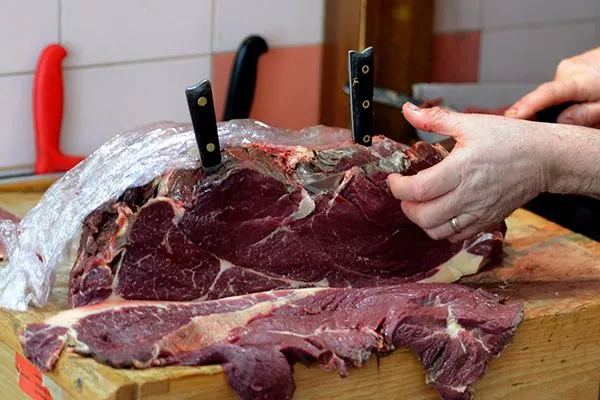
For women
Although horse meat is considered exclusively a man's meat, it also has beneficial effects on women. It turns out that horse meat improves skin texture and adds shine to hair, but most importantly for every woman: horse meat helps you lose weight and prevents excess weight gain.
For men
It's known that men who regularly consume horse meat have fewer problems with male health. Horse meat improves prostate health, increases stress resistance, and boosts energy.
During pregnancy and breastfeeding
Horse meat is considered completely hypoallergenic, so it can be consumed not only by those with allergies but also during breastfeeding and pregnancy. A woman's body is fully saturated with nutrients, as horse meat is quickly and easily digested. Thanks to its accelerated metabolism, pregnant women will not gain excess weight.
Vitamins and microelements are also absorbed into breast milk, passing through to the infant, which has a beneficial effect on development. However, horse meat should not be consumed until at least 10 days after birth, and should be consumed no more than three times a week. A nursing mother should consume 50-60 g of horse meat per serving.
For children
Horse meat can be introduced into a child's diet starting at 12-14 months. Many pediatricians even recommend this, as the protein and other beneficial elements are easily digestible. Horse meat is especially important for those with lactose intolerance, as it partially replaces milk in its properties.
When losing weight
Many nutritionists consider horse meat ideal for weight loss. It's a low-carb food that can help you lose up to 5 kg in just 14-15 days. However, to achieve this, it's important to follow one of the following diets:
- Menu No. 1. Provides the following nutrition:
- For breakfast, eat 200 g of boiled horse meat, a handful of boiled rice without salt, and drink a cup of green tea. You can use lemon;
- For lunch, we recommend 250 g of horse goulash, a vegetable salad with vegetable oil, and any 1 piece of fruit (preferably not too sweet);
- for your first dinner, boil some meat (200 g), cut 1 fresh tomato and drink tea;
- For the second dinner, only low-fat kefir is allowed.
- Menu No. 2. This option provides the following:
- breakfast – 100 g of oatmeal and the same amount of boiled horse meat, 1 apple;
- lunch – stewed meat and fruit;
- first dinner – boiled horse meat (200 g), 2 pieces of whole grain bread;
- fresh cucumber, tea;
- second dinner – low-fat cottage cheese (250 g).
Is dried horse meat healthy?
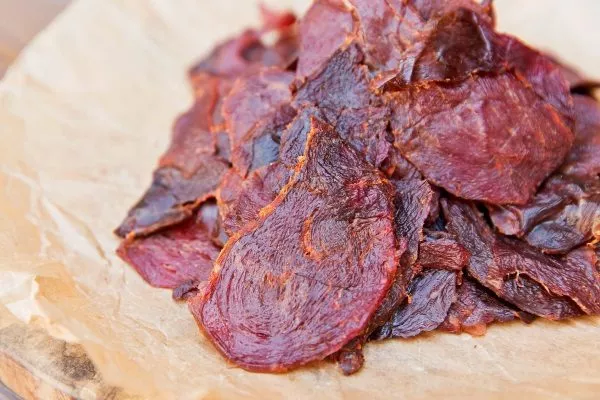
If dried without the use of chemicals, meat is a completely healthy food, with no loss of nutrients. Dried horse meat is especially beneficial for those with anemia, but is contraindicated for those with kidney failure. Excessive consumption of this product is also contraindicated.
How much meat is in a horse?
In terms of slaughter yield, a horse's slaughter yield is approximately 65%. This translates to the same amount of meat produced per live weight. The carcass itself contains approximately 80-84% lean meat. The hindquarters contain 38% prime meat.
Horse breeds for meat
Meat horses are easy to spot: they have a massive build, a broad back, and short legs. Some breeds were bred specifically for meat production. The three main ones are the Novoaltaisk, Kazakh, and Yakut.
Subsequently, the Dzhabe, Kustanai steppe, Altai, Buryat, Bashkir, Novo-Kirghiz massive, Kushum, Tuvan, Priobskaya, Narym, Minusinsk, and Khakassian breeds were bred as meat horses.
Fattening horses for meat
To help horses gain weight faster, an accelerated fattening program is used, which takes 35 to 40 days. Other fattening programs take approximately 55 to 60 days. To achieve this, follow these basic guidelines:
- feeding is carried out exclusively with natural and highly productive feeds, which are rich in carbohydrates and proteins;
- maintenance – stable, stable-pasture or pasture-grazing;
- Daily walks of 4 hours are required;
- The best feed for fattening is pulp, oats, hay, grass, silage, bran, root crops, rye, barley, corn;
- Recommended feed supplement: "Hercules" for horses;
- fattening should begin at the age of 3-6 months, immediately after weaning from the mother;
- animals must be provided with clean water and table salt;
- Food is served frequently, but the portions are small.
Be sure to create comfortable conditions for horses - cleanliness, silence, a calm atmosphere.
Don't forget to vaccinate and examine your animals for diseases.
Horse sausage: benefits and harms
Horse sausage is a favorite delicacy among gourmets—its flavor is unmatched by any other sausage product. It goes by different names in Asian countries:
- makhan – the most common sausage in Russia, consisting only of fat and meat pulp;
- kazy – made in Tajikistan and Uzbekistan, but prepared only on major holidays;
- tutyra (or sudzhuk) – lamb or beef is additionally added to the dish;
- kyzylyk (kazy) is the oldest sausage made from horse meat.
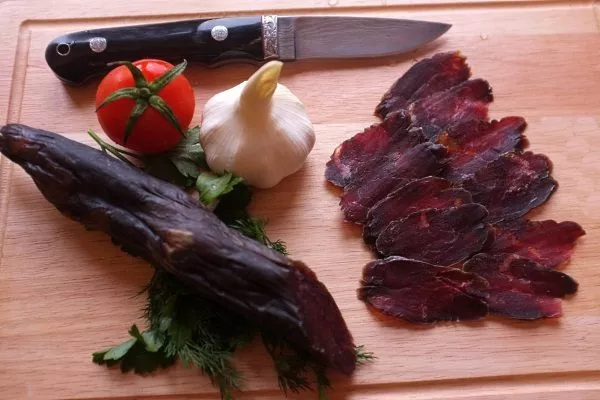
Horse sausage is quite healthy, as it retains all its nutrients.
Technological parameters of production
| Parameter | Meaning |
|---|---|
| Smoking temperature | 22-25°C |
| Drying time | 7-10 days |
| pH of the finished product | 5.3-5.8 |
| Humidity | 35-40% |
| Salt content | 3.5-4.5% |
| Shelf life | 3-6 months |
And since various herbs, spices, and garlic are added, the finished product becomes even healthier. Horse sausage is eaten as an appetizer or served with pilaf, potatoes, and other dishes.
Horse fat: benefits and uses
Horse fat deserves special attention, even though it's not found in large quantities in horses. Its formula resembles vegetable oil and has choleretic properties. Horse fat is virtually cholesterol-free and is effective in the following cases:
- Jaundice and the period after recovery:
- burns and frostbite;
- cosmetology;
- biliary dyskinesia;
- liver disease.
Horse meat in medicine
Horse meat is often recommended by doctors because it actively strengthens the immune system and promotes recovery. However, sometimes horse meat is contraindicated. When is it especially important to eat horse meat?
- For diabetes mellitus. Horse meat helps normalize blood glucose levels. Furthermore, the glycemic index of this unique meat is 0, which is why doctors recommend horse meat for diabetics. Furthermore, amino acids improve gallbladder function. Diabetics should consume horse meat boiled or baked.
- For pancreatitisHorse meat can stabilize pancreatic function, but only boiled meat is permitted for consumption.
- For gastritis. Horse products, including fat, can and should be eaten with gastritis, and even the acidity level does not matter.
- In case of increased radiation. Meat removes toxic substances from the body that arise after exposure to radiation.
- In case of cancerous neoplasms. Horse meat stops the development and growth of cancer cells, thereby reducing the risk of relapse.
Harm and contraindications
Many horse meat products are not cooked, so such products should be purchased only from reputable sellers. Otherwise, parasite infestation is inevitable.
There are also contraindications:
- gout - because it contains purines;
- individual intolerance to the product;
- increased bile production;
- high levels of uric acid in the body;
- post-stroke condition;
- bleeding in the stomach;
- cancerous tumor in the intestine.
How to choose and store?
Not every farmer wants to breed horses for valuable meat, and many simply don't have the resources, so the product is most often purchased at the market or from private farmers. To purchase high-quality meat, pay attention to the following selection guidelines:
- Carefully study the differences between horse meat and beef (see the table above), as unscrupulous sellers, taking advantage of the population’s ignorance, sell cow meat instead of horse product;
- determine the age of the animal - old horse meat has an unpleasant odor, while young horse meat has a sweetish odor;
- Check for freshness - horse meat should be firm and dense, and after pressing it should quickly return to its original state;
- pay attention to the fat - it should be exceptionally white, and when you take a piece in your hands, it should melt;
- Look at the surface of the meat – it should be slightly moist and definitely glossy.
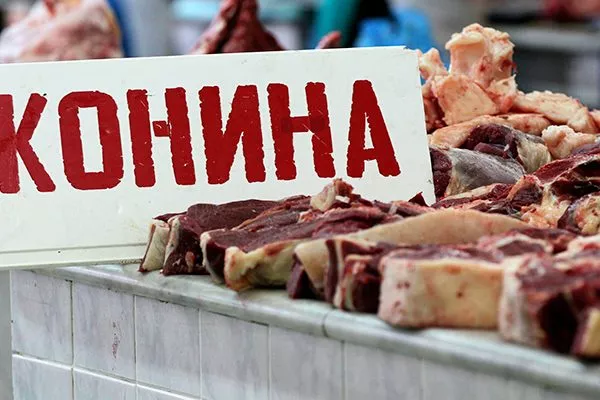
There are different ways to store horse meat, but the most commonly used are:
- Cooling. The meat should be refrigerated, but it must be cut into large pieces and packaged in a lidded container. The shelf life is a maximum of 72 hours. It's best to buy horse meat already in a container—this will help it stay fresh longer.
- Freezing. The shelf life is 4-6 months and no more. However, unlike other types of meat, there are some special considerations to keep in mind. For example, wrapping it in a regular plastic bag is not recommended; thick foil or a vacuum-sealed plastic container should be used.
Other nuances:
- It is strictly forbidden to wash meat before storing it;
- It is important to dry the entire piece with a paper towel.
Horse meat is stored in a dried, cured, and smoked state, but to properly prepare the product for this purpose, certain knowledge is required.
Horse meat recipes
There are a huge number of different horse meat dishes, many recipes unique to certain ethnic groups. For example, the Mongols and Turks prepare zhal, beshbarmak, and shuzhuk; the Japanese make sashimi; the French make sausages; the Swiss use deep fryers; and so on. Some exotic dishes have also reached our country.
Meat preparation plan
- Soak in cold water for 6-8 hours
- Removal of tendons and films
- Pickling (fermented milk products/vinegar/kiwi)
- Mechanical processing (beating)
- Heat treatment (long-term stewing)
In the oven
Oven-baked horse meat is a dish from Tatarstan, where this meat is very popular. To prepare, you'll need the following:
- meat – 1 kg;
- potatoes – 1 kg;
- carrots – 1 pc. (medium size);
- horse rib broth – 300 ml;
- onions – 2 pcs.;
- bay leaf;
- vegetable oil and any spices (khmeli-suneli is excellent).
The cooking process is simple:
- Cut the washed horse meat into strips or pieces of medium thickness.
- Heat oil in a frying pan and add meat.
- Fry until golden brown on both sides.
- Cut the potatoes and carrots into slices.
- Place the meat in clay pots (in portions – about 5-6 pieces).
- Place potatoes on top.
- Add spices, bay leaf and salt.
- Pour in the broth. The liquid should just barely cover the surface of the top potato.
- Separately, cut the onion into rings and fry in the same fat in which the meat was fried.
- Place the pots in the oven at 200 degrees, but do not cover with lids.
- Bake for 50-60 minutes.
- Remove the contents from the pot in the order in which they were placed.
- Place the potatoes on a plate, then the meat on top and the fried onions as the last layer.
- Pour the broth in which the dish was baked into bowls and serve with the main dish.
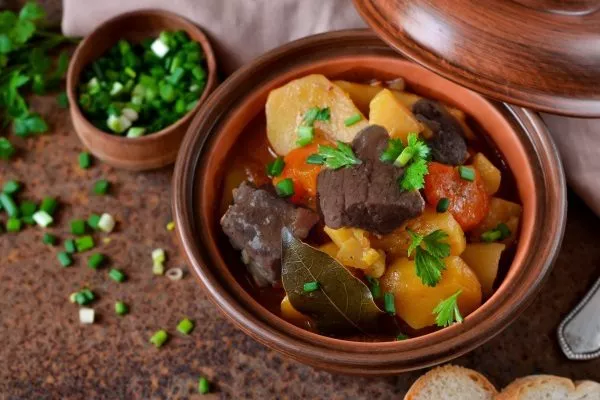
In a frying pan
Horse meat cooked in a frying pan usually turns out tough, but to avoid this, you can simply marinate the meat. What you'll need:
- horse meat – 1 kg;
- garlic – 3 cloves;
- soy sauce – 50 ml;
- olive or other oil – 150 ml;
- a seasoning made from a mixture of different peppers;
- a sprig of rosemary and thyme;
- 1 teaspoon each of salt and mustard.
Cooking process:
- Cut the meat, trimming any fat and membrane first. The pieces should be thick.
- Place in a container and pour in the marinade made from all the ingredients. Just be sure to add about 50-70 ml of vegetable oil; the rest will go for frying.
- Let it sit for 3-4 hours, but overnight is best.
- Remove the meat from the marinade and place it in a frying pan with hot oil.
- Fry on each side for 5 minutes.
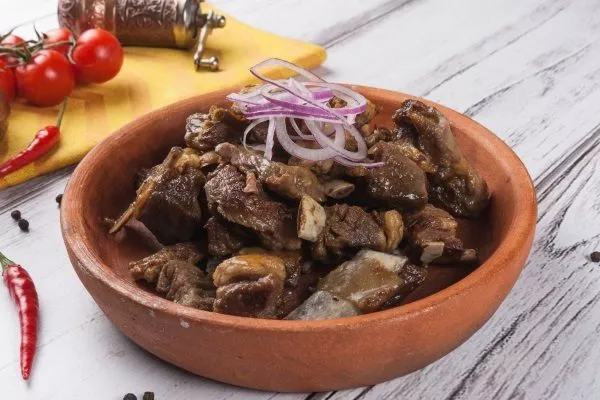
This meat is served with adjika and any side dish.
In a multicooker
Horse meat can be cooked in a slow cooker. You can choose any recipe, but stew is considered the most popular. To prepare it, you'll need the following ingredients:
- horse meat – 0.5 kg;
- tomatoes – 2 pcs.;
- carrots – 1-2 pcs.;
- sweet bell pepper – 1 pc.;
- water – about 400 ml;
- spices to taste, salt;
- mustard – 3-4 tbsp. l.
How to cook:
- Mix mustard, salt and spices in a small container.
- Cut the horse meat into medium-sized cubes.
- Mix the meat with the marinade and leave to marinate for 30-40 minutes.
- Cut the vegetables into cubes.
- Place them and the meat in a multicooker container.
- Add water.
- Turn on the simmering mode.
- Cook for 100 minutes.
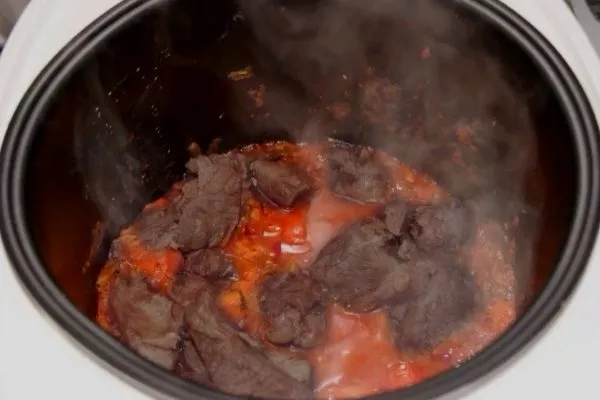
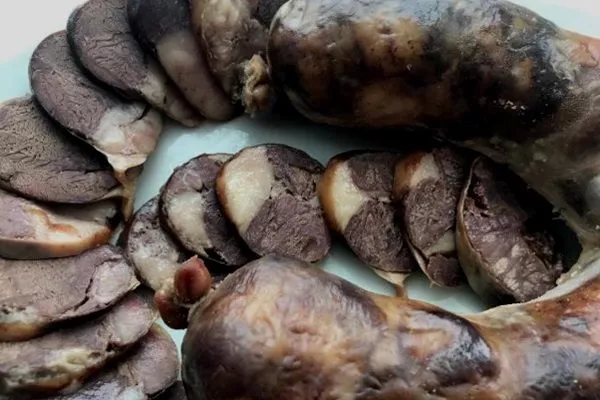
Homemade Kazylyk
This dish is a sausage-based product. You'll need the following:
- horse meat – 1.5 kg;
- salt – 1 tbsp;
- garlic – 6-7 cloves;
- ground black pepper – 1 tsp;
- intestines – 50-70 g.
Cooking instructions:
- Wash the horse meat thoroughly and cut into small cubes.
- Soak the intestines in clean water for 3-4 hours.
- Chop the garlic and add it to the meat.
- Add salt and pepper here.
- Mix thoroughly.
- Remove the intestines from the water, rinse, and stuff them with the meat mixture. Fill them as tightly as possible.
- Place in water or broth to simmer for 2-2.5 hours. You can add spices and bay leaf.
- After cooking, place on a plate and press down with weight on top.
- Once it cools down, you can consume it.
Don't forget to tie one end of the casing first, and then the other after it's filled. Cooking takes at least 3.5-4 hours.
Stew
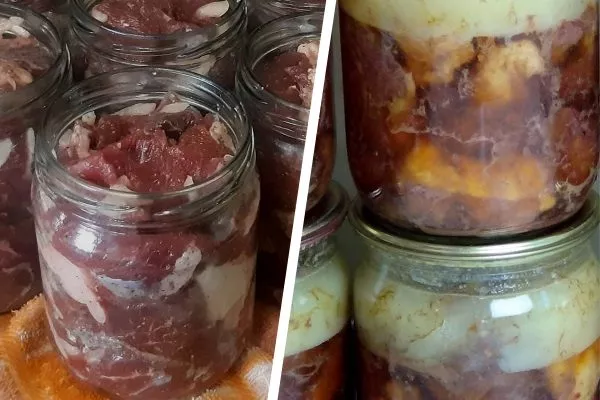
Horse meat stew has a unique aroma. It's easy to prepare, but first you need to gather the ingredients: horse meat, lard, bay leaf, salt to taste, and peppercorns.
The process is as follows:
- Cut the horse meat coarsely.
- Place the spices and meat in sterilized jars (pack them very tightly), leaving a little space at the top.
- Sprinkle with the required amount of salt, add a bay leaf and spread some sliced lard.
- Cover the jars with foil instead of lids.
- Place a towel or sterilizing device in the bottom of a large saucepan.
- Put the jars in.
- Pour in water.
- Place this container inside a wider, taller one and fill it with water. This will create a double boiler.
- Place the “structure” in the oven.
- Turn on the oven and set the temperature to 180 degrees.
- Leave for 6-6.5 hours.
- Roll up with tin lids.
Cutlets
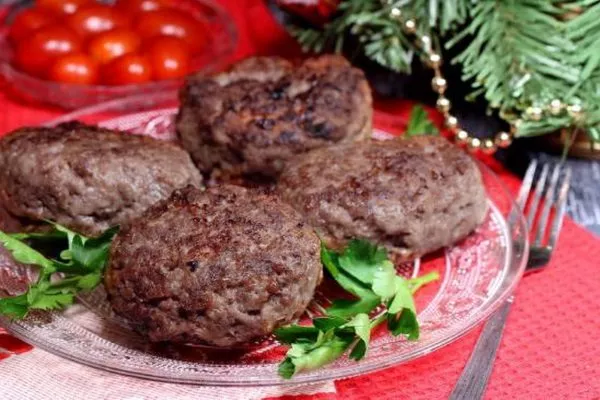
Horse meat cutlets are unusual, but they're a favorite in Asian countries. To prepare them, prepare the following ingredients:
- horse meat – 1 kg;
- pork fat – 300 g;
- cumin – 1 tsp;
- garlic - medium head;
- milk – 180-200 ml;
- bread or loaf – 2-3 slices;
- onions – 1-2 heads;
- vegetable oil;
- sesame;
- ground breadcrumbs, ground black pepper, salt.
The cooking process is almost standard:
- Cut the horse meat into pieces and soak them in salted water for 2-3 hours.
- Remove the meat and rinse.
- Pass it through a meat grinder together with lard and garlic.
- Separately, finely chop the onion.
- Soak the bread in milk.
- Combine all ingredients, mix as for regular cutlets, adding spices.
- Form patties, roll them in sesame breadcrumbs and fry in hot oil until done.
Beshbarmak (besbarmak)
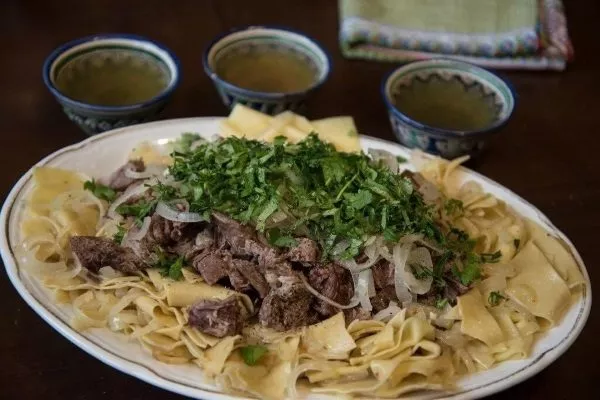
A dish that's common and beloved in our region. It originated in Asian countries. For this dish, you'll need:
- horse meat – 500 g;
- lamb on the bone – 700-800 g;
- onions – 3 pcs.;
- carrots – 1 pc.;
- vegetable oil for frying;
- salt, allspice/black pepper and bay leaf;
- flour – 500-600 g;
- eggs – 2 pcs.;
- greens (any to taste).
Step-by-step cooking process:
- Boil the horse meat and lamb. Cook for about 3-5 hours, depending on the toughness of the meat. Add salt, bay leaf, allspice, carrots, and 1 whole onion to the broth.
- Knead the dough from eggs, flour, and water. Wrap it in a plastic bag and let it rest for 30-40 minutes.
- Roll out the dough with a rolling pin and cut it into diamond shapes.
- Let it dry (about half an hour).
- Remove the meat, cool slightly and cut into random pieces.
- Strain the broth – it should be clear.
- Chop one onion and fry it in oil. It's delicious if you add horse fat.
- Add the second onion to the broth, bring to a boil, and add black pepper. This will only take a couple of minutes.
- Remove the onion and replace it with the dough diamonds. Cook until tender.
- Remove the finished diamonds and place them in a large dish.
- Add fried onions and stir.
- Place the pieces of meat and onions that were cooked before the diamonds on top.
- Season with pepper and sprinkle with your favorite herbs.
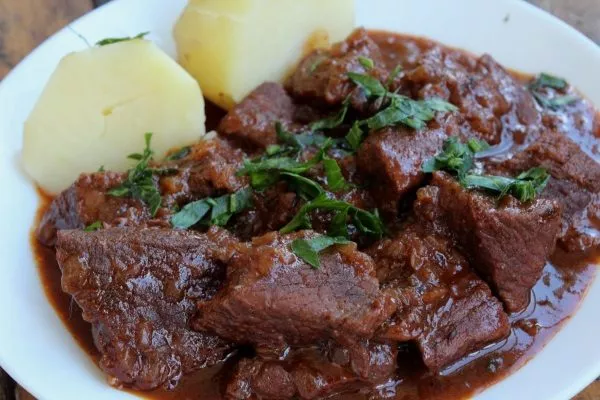
Goulash
This dish is considered simple yet delicious. Prepare:
- meat – 700 g;
- onion – 300-400 g;
- flour – 1 tbsp;
- tomato paste, oil and spices.
Process:
- Cut the meat into pieces and fry.
- Add chopped onion, and when it becomes translucent, add flour.
- Stir and add tomato paste to taste, then water.
- Simmer until done.
Shashlik
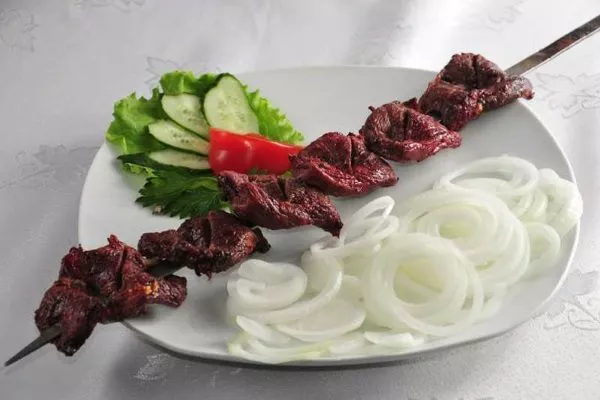
Shashlik is prepared in the standard way, but marinating for 12-20 hours is recommended. For horse meat, prepare a special marinade consisting of:
- water – 1 l;
- apple cider vinegar – 200 ml;
- onion and ground hot pepper.
Another option:
- kefir – 1 l;
- marjoram - a large pinch;
- mustard seeds – 1 tsp;
- ground pepper and salt;
- onion;
- kiwi and/or lemon.
Pilaf
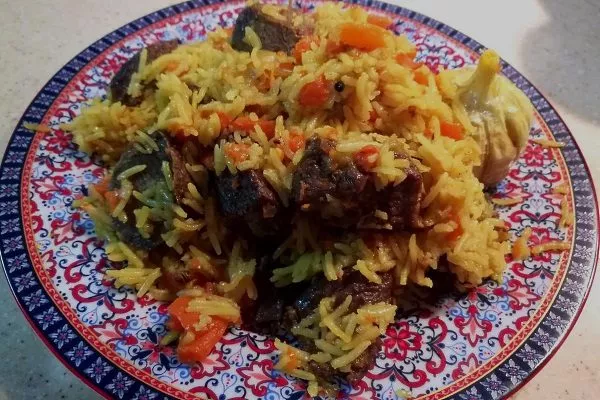
Horse meat pilaf has a unique flavor. To make it, you'll need:
- boiled horse meat – 400 g;
- ghee – 50 mg;
- carrots – 1-2 pcs.;
- rice – 140 g;
- onions – 1-2 pcs.;
- Spices for pilaf with the obligatory presence of cumin and barberry.
How to cook:
- Rinse the rice and boil until half cooked.
- Boil the meat and place it in a cauldron with melted butter.
- Fry.
- Add onions, carrots and spices.
- Place the rice and pour in the broth in which the meat was cooked.
- Cook over low heat until done.
Basturma
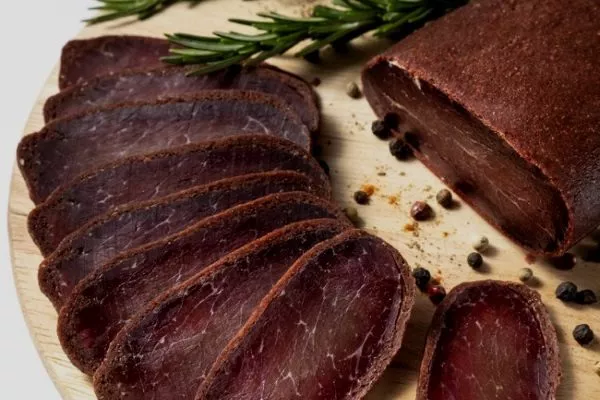
Horse meat basturma is just as good as beef basturma. To make it, you'll need:
- horse meat – 1.2 kg;
- spices (herbes de Provence are best) – 200 g;
- salt – 2.5 kg.
The cooking process is as follows:
- Divide the piece of meat into 4 equal parts.
- Sprinkle two pieces with 1.5 kg of salt.
- Rub the remaining two with a mixture of 1 kg of salt and spices.
- Place a small weight on top of both pieces and leave for 72 hours.
- Now soak all the meat in water for 4-5 hours.
- Wipe with napkins and make cuts on each piece, by which the meat will be hung.
- Prepare a marinade consisting of:
- ground red pepper – 1 tsp;
- dry garlic – 2 tsp;
- water – 100 ml;
- chaman – 1 tbsp;
- paprika – 1 tbsp. l.;
- flour – 3 tbsp.
- Coat the horse meat with the thoroughly mixed marinade.
- Hang the basturma on hooks and place it in a ventilated room.
After a couple of weeks the dish is completely ready.
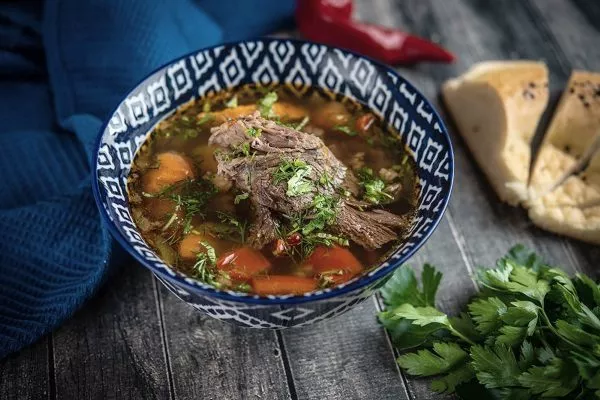
Shurpa
This soup is very rich and filling, but it's best cooked over a campfire. What you'll need:
- horse meat – 500-700 g;
- onions – 2-3 pcs.;
- carrots – 1-2 pcs.;
- garlic – 1 clove;
- tomato paste – 30 g;
- vegetable oil – 2 tbsp;
- spices – bay leaf, pepper, salt.
How to cook correctly:
- Place the meat in water and bring to a boil.
- Skim off the foam and add spices, onions and whole carrots.
- When the horse meat is ready, remove it from the broth and cut into pieces (or tear into large pieces).
- Place them in a hot frying pan and fry.
- Add raw onions and carrots and fry lightly.
- Strain the broth and add it to the meat and vegetables.
- Boil for 10-15 minutes.
Add chopped herbs when serving.
Can Orthodox Christians and Muslims eat horse meat?
Horse meat is widely consumed in Muslim countries because, according to Sharia law, the Prophet Muhammad states that eating horse meat is not a sin. As for Orthodoxy, according to the Old Testament, horses are considered odd-toed ungulates, meaning they are unclean. Therefore, the consumption of horse meat is discouraged in Orthodoxy.
Can dogs eat horse meat?
Horse meat is considered an ideal food for dogs because it contains a wealth of nutrients essential for a complete pet's diet. Horse meat can be fed to dogs either boiled or raw.
Horse meat is a nutritious product with hypoallergenic properties. However, it's important to follow the contraindications to avoid harming your body. Horse meat can be used to prepare absolutely any dish, adding a new dimension to your usual flavors.