
Tinker horses are a breed of horse that received official status only two decades ago. Today, the Irish Cob is famous worldwide. This stocky, powerful, and compact horse is prized by horse breeders. The breed is especially popular in the United States and Canada. A single Irish Cob costs 20 times more than a regular stallion.
Historical data about the breed
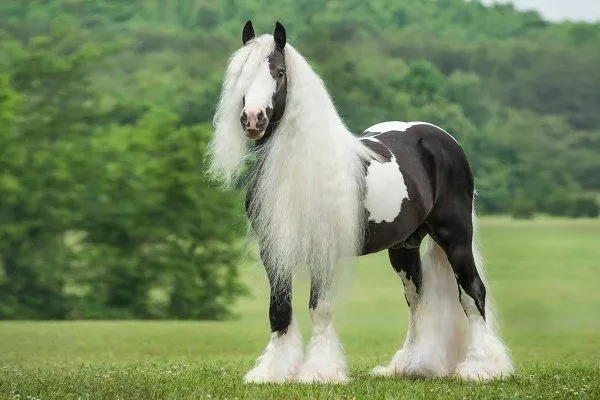
The Tinker is a hybrid of the Gypsy and Irish breeds. Officially, the breed is called the Gypsy Draft Horse. However, in Germany and Holland, these small horses are called Tinker Horses. In the UK, the word is used to describe Gypsies, but it carries a connotation of disdain. In Ireland, they are called "Cobs." The English word "cob" means a small, sturdy horse.
Literally translated from English, "tinker" means "tinker." This craft was common among Romanian Roma who migrated to England.
In Great Britain, the Gypsies are renowned horse connoisseurs and have been around for 600 years. Since then, a new breed has been developing, formed from local and Romani horses.
Irish Cobs are the descendants of hardy Gypsy horses, never pampered by their owners. Gypsies always valued horses, but they could never provide them with adequate nutrition, veterinary care, or proper grooming. Even horseshoes were a luxury for most Gypsy horses. The hardships these horses endured ultimately had a positive impact on the breed developed later—Irish Cobs are hardy, undemanding, and disease-resistant.
The Roma didn't engage in any specific breeding or document anything, so there's no precise information about the breeds' ancestors. It's believed that Tinker breeds have blood from:
- Highlands;
- Clydesdales;
- Shires;
- Welsh Cobs and others.
The breed's final formation took place in the late 1940s, but it only received official status in 1996. The stallion Cushti Bok is recognized as the breed's founder. Gypsy draft horses—that's the official name. Today, the breed has several stud books and is extremely popular among horse lovers.
Height and weight
| Name | Height | Weight | Suit |
|---|---|---|---|
| Classic Gypsy | 1.43-1.55 m | 240-700 kg | Piebald |
| Mini Gypsy | up to 1.43 m | 240-700 kg | Piebald |
| Grand Gypsy | from 1.55 m | 240-700 kg | Piebald |
The Irish Cob is a short breed, standing between 1.35 and 1.6 meters tall. There are no strict height standards for Tinker cats. Due to this wide range in height, Tinker cats are classified into three groups (according to the American classification):
- classic Gypsy – 1.43-1.55 m;
- mini Gypsy – below 1.43 m;
- Grand Gypsy – over 1.55 m.
The weight of individuals can also range widely – from 240 to 700 kg.
Exterior and other characteristics
All Tinker cats, regardless of color, size, and weight, have a strong build. Their bodies are massive, strong, broad, and muscular. The back is straight.
Other appearance details:
- The head is a little rough, the profile is hooked, the ears are large.
- The neck is thick and beautifully arched.
- There is a beard under the lower jaw.
- The withers are low, the shoulders are strong and steep.
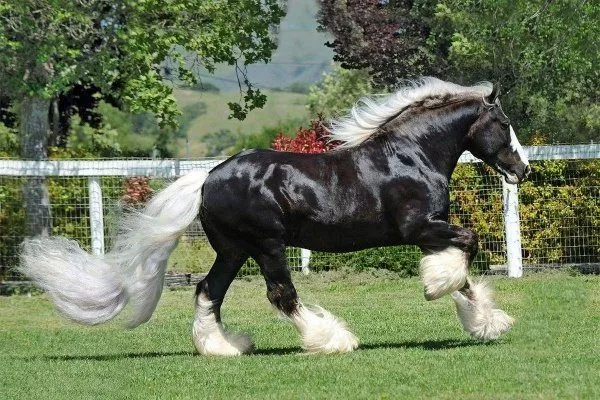
- The legs are decorated with friezes. The hooves are powerful and strong. A "knock-knock" stance is possible. This stance is considered a disadvantage in other breeds, but not in Tinkerbells.
- The mane, forelock and tail are luxurious and thick.
Friesians are the thick fur on a horse's legs. The name comes from the horse breed of the same name. These furred tufts decorate the horse's legs and protect their legs during the cold season.
Suit
| Name | Piebald type | Description |
|---|---|---|
| Overo | Chintz | Asymmetrical white spots that do not extend beyond the back line |
| Tobiano | Piebald | White legs, dark sides, spots on the body |
| Tovero | Combined | A combination of overo and tobiano |
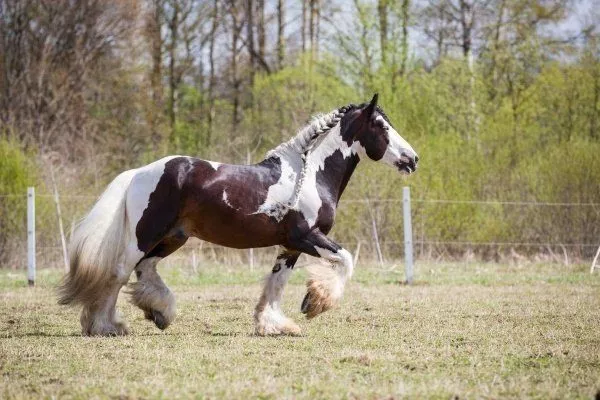
The breed is distinguished by its piebald coat—a dark background with white spots. There are also piebald, roan, and black varieties. Irish Cobs have three different piebald patterns:
- Overo. Another name for this color is "calico." It is characterized by the presence of asymmetrical white spots scattered over the body. However, these spots usually do not extend beyond a line drawn along the back, from the tail to the withers. At least one limb is dark. Sometimes all four limbs are dark. The tail is not spotted.
- Tobiano. The legs are usually white. One or both sides are dark. The front of the body has oval and round spots, covering the body from the chest to the neck. The tail is bicolored. The head is dark, but sometimes has white spots, such as a "star" on the forehead.
- Tovero. A combination of overo and tobiano. Tovero results from crossing different colored individuals, when neither parental trait becomes dominant.
| Piebald type | Frequency of occurrence | Difficulty of care |
|---|---|---|
| Overo | 40% | High |
| Tobiano | 50% | Average |
| Tovero | 10% | Low |
Gypsy draft horses have not only multi-colored fur, but also skin - they are gray under the dark fur, and pink under the light fur.
Character and disposition
Gypsy horses have a very calm disposition. These horses remain calm despite any stimulation. Phlegmatic Cobs are difficult to stir, even with the best will in the world. Because of their super-calm disposition, Tinker Horses are ideal horses for novice riders.
Lifestyle and habitat
Tinkers are unpretentious and undemanding, thanks to their Romani blood. The ancestors of the Irish Cobs, hardened by the nomadic life of the Romani people, passed on to their descendants exceptional survival skills.
Lacking stables, adequate nutrition, and veterinary care, Roma horses developed rare endurance and the ability to survive under any circumstances. Tinkers, having inherited the "endurance" gene from their ancestors, have become versatile horses—they can adapt to virtually any habitat and climate.
Conditions of maintenance and care
Since Tinker horses are undemanding in terms of living conditions—a trait inherited from the Gypsy breed—owners determine their own living conditions. It's up to each individual to create the most comfortable conditions for their pets. Typically, Tinker horses are kept in conditions typical for purebred horses:
- well ventilated stable;
- clean and bright room;
- Heating in the stable is not required.
The most challenging aspect of Irish Cob ownership is maintaining their splendor. Owners must constantly care for the horse's mane, tail, and fries—they are very thick and can even be curly. To keep the animal looking presentable, the hair needs to be washed and carefully brushed. More Tinker grooming tips:
- Special attention should be paid to the hooves and nostrils—they should be washed and cleaned after each walk. After a walk, the hooves should be cleaned with a special hoof pick. Washed hooves should be thoroughly dried to prevent the development of germs.
- Humidity in the stall is not less than 80%.
- The stall must be spotlessly clean. Before cleaning, take the horse outside. Wash the floor with water and detergent. Once dry, add hay. Change the hay bedding daily.
- Tinkers need to be brushed and combed daily. Two combs are used for combing: a hard comb and a soft comb. Brushing should begin at the horse's head and gradually move toward the back.
- When walking, it's best to braid the mane and let it down at night. Hairstyles can be changed, but the hair must be thoroughly combed each time.
- 2-3 times a week, it is necessary to wash the mane, tail and luxurious friezes, using a special shampoo and conditioners that give the coarse hair shine and softness.
- Every six months the horse should be examined by a veterinarian for preventive purposes.
- Every day – training, physical activity or just a walk.
Diet
Gypsy horses were free-range animals, suffering from heat and cold, and their offspring fetch exorbitant prices. Therefore, their owners take their diet seriously. When planning their cobs' diets, they consider the animals' general feeding and activity levels. To maintain their strength and energy, they are regularly turned out in pastures during the summer, where they can eat green grass.
A balanced diet affects an animal's appearance and health. Horses must receive vitamins B, C, and D, as well as calcium, in their feed.
In addition to hay, the Irish Cob diet should include:
- grain crops – oats, barley, corn, etc.;
- carrots and beets;
- potato;
- meadow grasses;
- concentrates.
Horses sweat excessively, which leads to an imbalance of water and salts. To restore this balance, horses should consume 30 g of table salt daily.
What else do you need to know about Tinkerbell nutrition:
- As a treat, horses can be given a few pieces of sugar or bread crumbs.
- It is prohibited to feed horses spoiled, moldy food and poisonous herbs.
- Horses are watered three times a day. In hot weather, the number of times increases to 5-6.
- Horses shouldn't be watered immediately after a walk or workout. Wait an hour or two.
- Horses need to be gradually transferred from one feeding system to another.
- Tinkers are fed five times a day. The number of feedings depends on the horse's lifestyle and activity level.
Advantages and disadvantages of the breed
Although the Gypsy draft horse breed is only two decades old, it has already gained popularity in Europe and the United States. It is one of the most expensive breeds in the world. Irish Cobs have many qualities that make them beloved and appreciated by breeders, horse breeders, and horse enthusiasts alike:
- External beauty. Just look at photographs of Tinkerbells to appreciate their magnificent appearance. Horse connoisseurs can easily discern traits of Shires and Clydesdales in their appearance. These horses are exceptionally elegant, looking like plush toys. These horses evoke positive emotions, are a pleasure to ride, and look magnificent in harness.
- Exclusive. Irish Cob horses are limited in number. Owners of these horses are proud owners of a rare horse to be proud of.
- Softness of gaits. Tinkerbells' gait makes them ideal for horseback riding.
- Calm. It's extremely difficult to upset a Tinker. The horse is ideal for training in saddle riding.
- Undemanding to content – stable, climate, feed. It's hard to find a breed that costs as much and is as low-maintenance as Irish Cobs. These horses thrive on simple feed and a shed instead of a stable.
The Gypsy draft horse breed has its drawbacks, but compared to its numerous advantages, they all seem insignificant:
- Not suitable for speed sports competitions. Tinker horses perform quite well in dressage, but they cannot show good results in racing.
- High cost. The breed is very popular. And its popularity is growing. However, the population is small. Given these circumstances, the price of Tinker horses is very high. Not everyone can afford such a horse.
Areas of use of horses
Tinkers are a versatile breed. Areas of use:
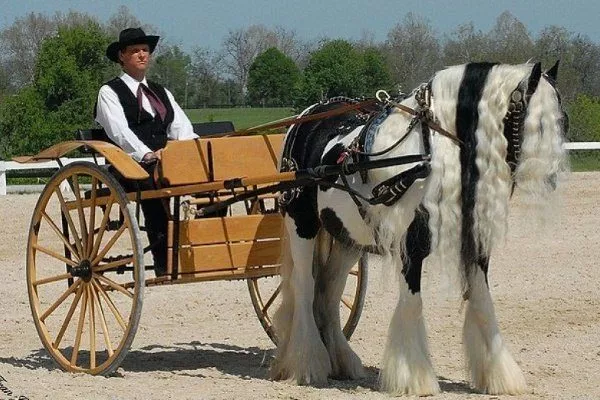
- As draft power. Cobs look great in harness.
- Horse riding. Suitable for training. Favorable conditions include a gentle gait and a calm disposition. These horses are easy to teach a child to ride on – they will never create dangerous situations, buck, or bolt.
- Hippotherapy. Good-natured Tinker horses are excellent for treating various ailments. This method is gaining popularity today, and Tinker horses, with their kind nature, are ideal for this purpose. Hippotherapy is particularly recommended for people with autism, motor disabilities, and neuroses.
- Moral support for the racehorses. At racetracks, they are brought out to accompany racehorses heading to the starting line. The calm of Tinkerbells has a calming effect on nervous horses.
- Wet nurses. Tinker mares, due to their calm nature, are often trusted to nurse foals sired by Thoroughbreds.
Tinkers in the modern world
Tinkers have much in common with Friesians. They look similar, are equally expensive, and, most importantly, are used in roughly the same way. Both breeds are so beautiful that they are primarily ornamental, though they are both excellent riding horses. The beauty of these horses comes at a cost not only of tens of thousands of dollars but also of time—these beauties require regular grooming of their manes, tails, and Friesians.
Tinker horses, like Friesians, are used for tourist entertainment, offering carriage rides or saddle rides. However, Tinker horses should not be allowed into the wild, as after rides, their hair becomes clogged with plants, thorns, and other debris. After outings, Tinker horses require extensive and thorough grooming.
Average cost of a gypsy harness
Tinker stallions are particularly sought after in the United States. Even their high price hasn't dampened their popularity. The minimum price for a stallion is $10,000, the maximum is $25,000. By comparison, a typical thoroughbred horse costs $1,000. In Europe, Tinker stallions fetch between €6,000 and €9,000, and they fetch about the same in Russia.
Interesting facts
The Irish Cob is not only interesting in appearance; there are many curious facts associated with this breed:
- Tinkers often have "magpie eyes," a term used to describe eyes with a light or white iris.
- Tinkers are shaggy because their ancestors include Shires, which passed this trait on to them.
- The Gypsy Harness combines the head of the Welsh Cob and the agility of the Hackney with the legs of the Clydesdale and Shire.
- ✓ Check for the presence of “magpie eyes” as a marker of breed purity.
- ✓ Assess the density of the fries and mane to determine health and grooming.
Those who want to learn horseback riding without risking their health, and at the same time get a beautiful horse without the need for superb care, definitely need a Tinker Bell. The only thing left to do is shell out a tidy sum for this Irish beauty.