
The Falabella is a miniature horse breed. They have an incredibly attractive appearance and a docile nature. They become true companions for those who acquire them. They are courageous and intelligent, understanding and quick-witted. Breeding them is a profitable business for breeders and an aesthetic pleasure for buyers.
How did the breed come about and why does the horse look like this?
The origin of the breed is unclear. There are several theories regarding the origins of the small Falabella horses. Some believe the breed arose due to a deficiency in nutrients necessary for growth. Supposedly, long ago, ordinary horses were trapped in a deep canyon and were unable to escape. Over time, this resulted in the birth of short horses, a trait that was subsequently preserved genetically.
It's believed that the horse got its name from an Argentine farmer who found it in a canyon and then brought it to a ranch. The man's last name was Farabella, which is why the horses were given this name. Although the farmer tried to feed the horses, it was to no avail; they remained small in stature.
Another version is slightly different, but it also mentions the Falabella family, who were allegedly given the secret of breeding miniature horses by the chief of the Kayak Indian tribe. This assumption seems highly dubious, considering that the Indians in those parts were warlike and preferred to breed war horses.
Description and characteristics of the horse
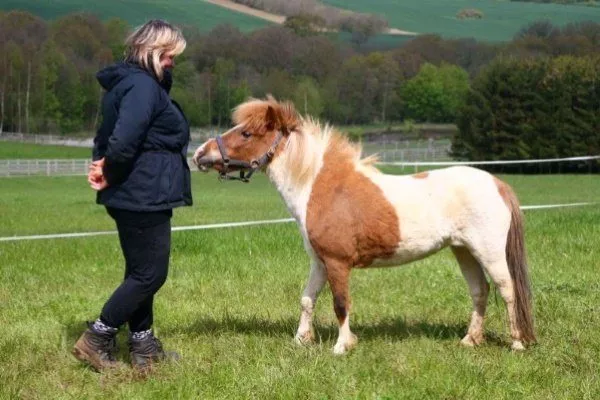
The Falabella is a small horse, standing 50-75 centimeters tall and weighing only 50-60 kilograms. However, there is a specimen of this breed in the world that weighs only 13.5 kilograms and stands 50 centimeters tall.
These horses are characterized by a small, proportional body with long legs and small hooves. The animal has a small head, which corresponds to its small stature. The Falabella has one rib and one vertebra less than a typical horse. The breed's distinctive features are its thin skin and soft-touch coat. Speckled and piebald specimens are also found.
The animal's distinctive features are its friendliness, calmness, and kindness. Falabellas are good-natured and easygoing, finding common ground with people. They are prized for their keen intelligence, quick learning ability, and trainability. They are skilled jumpers, which helps them overcome any obstacle. Farmers often install artificial barriers in their yards for entertainment and training purposes.
Today, the breed is very popular among connoisseurs of unique horse breeds. Its popularity stems from its habits. Falabellas are bred and kept not on farms, but in private homes or apartments. Besides their ability to jump well and run at high speed for long periods, these animals are also capable of performing well. The breed quickly bonds with its breeder, remains loyal, and strives to please them by demonstrating their abilities and skills.
The intended purpose of the breed
Miniature horses are primarily decorative and not intended for riding. A Falabella can pull a cart carrying one adult or two children. It is often kept as a pet. It is so fragile and graceful that it is unlikely anyone would dare use it for household chores. Furthermore, the price of such a horse is quite high ($3,000-$4,000), making it a symbol of luxury and wealth.
Horses also perform in the circus arena; they are easy to train and enjoy showing off in front of an audience. These animals are often adopted by people with disabilities, thanks to their gentle nature and long lifespan—the Falabella can live up to 45 years.
Care
Breeding miniature horses is no different from keeping and caring for their larger counterparts, the only difference being the animals' size. A wooden stall typically used for one large horse can accommodate two or three miniature horses of this breed. Their calm and friendly nature allows them to get along well not only with each other but also with other pets.
Small horses require the same care as larger horses: regular brushing, bathing, and cleaning their hooves of foreign bodies and debris. Additionally, a veterinarian should be consulted for regular checkups, vaccinations, and deworming, taking into account their weight to avoid overdose.
A married couple shares their tips for caring for a Falabella horse. The video explains the characteristics of this toy horse:
Nutrition
The main advantage of keeping miniature horses is their minimal feed consumption. While a larger horse requires 3 kilograms or more of balanced feed daily, a Falabella only needs 300-400 grams per day.
Miniature horses, like other miniature breeds, are prone to obesity. Therefore, they require a properly formulated diet. The key is to avoid overfeeding.
What recommendations to consider:
- Miniature horses are fed virtually the same diet as larger horses. It's important not to overfeed them. Feeding them oats in large quantities can cause an allergic reaction, resulting in unpleasant symptoms such as itching and eczema. Horses are fed hay twice a day—in the morning and in the evening.
- Falabella's diet should consist of potatoes, cabbage, and beets. Hay is used as roughage. Concentrates containing vitamins and minerals can be added to it. It is recommended to feed the "babies" a few carrots and an apple daily.
- Horses especially need fluids. In the summer, they are given water at least three times a day; in the winter, they feed on snow. Horses are given water before meals.
- ✓ The exact amount of feed in grams, taking into account the horse’s weight and activity.
- ✓ Specific vitamins and minerals needed to prevent obesity.
Each horse's diet must be tailored individually. For a pregnant mare, the feed volume is increased by 5-10%—she needs additional nutrients. The menu itself should be varied.
Breeding
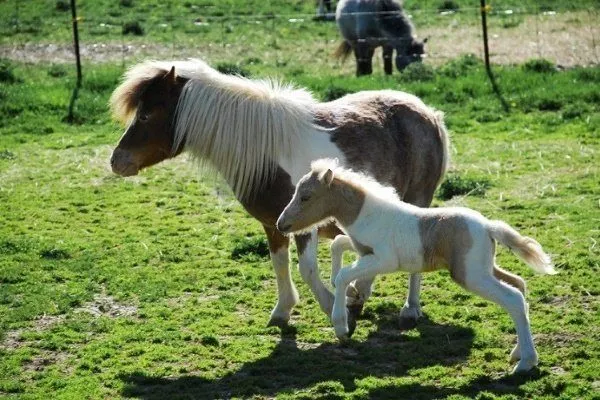
The main difference between the Falabella and ordinary horses is the pregnancy period, which lasts 1.1 years instead of 11 months. During the first year of life, the foal reaches the required height and becomes independent. By three years of age, the miniature horse is considered fully developed. A newborn horse initially stands 40 centimeters tall.
In the first minutes after birth, the little Falabella is exploring its new environment, doesn't recognize its mother mare, and begins searching for her by scent. During this period, a human should be present with the foal—the animal will begin to consider them a member of its family. It may rush after passing horses simply because they attract its attention—it will follow them. But a vigilant mare always remains close to her foal, frightening anyone who approaches it.
To introduce the new stablemate, adult horses begin to play with the calf, which promotes rapid adaptation. The mother is especially protective of her calf for a month, and after 7-10 months, she weans and pushes it away with her hooves, pushing it away from her udder.
Today, miniature horses are bred as ornamental pets. They are provided with favorable conditions, protected from disease and attacks by other animals, and given every effort to ensure their well-being.
Interesting facts
There are several interesting facts about Falabella horses. Below are a few of them:
- A unique fact is that the Falabella has 1 less vertebra and 1 less rib than other representatives of various breeds.
- Although the Falabella is no more than 75 cm tall, the animal is very active, brave, capable of jumping high and running long distances, developing excellent speed.
- Many aesthetes prefer to keep such horses as pets. Another advantage is the absence of unpleasant odors—the horses are trained to relieve themselves in a designated area.
- Falabellas are prone to temperature fluctuations. At night, they require a warm room, protected from cold and drafts, but with good ventilation and heating. Winter is considered a real challenge for the breed.
- In the United States, many horse breeds are used for social work. The Falabella is an animal used to assist the blind. With proper training, this miniature horse can become a good guide dog, able to distinguish sounds, learn any commands, and even understand road signs.
Falabella horses are extraordinary animals, captivating with their diminutive size and docile nature. Falabellas possess exceptionally positive traits and a fascinating origin story. Today, breeding these beauties is profitable.