
Color is an important trait in determining a horse's breed. It's not just the animal's coloring, but a combination of body, leg, mane, tail, and eye color. Color develops as the horse matures and cannot be determined at foal birth.
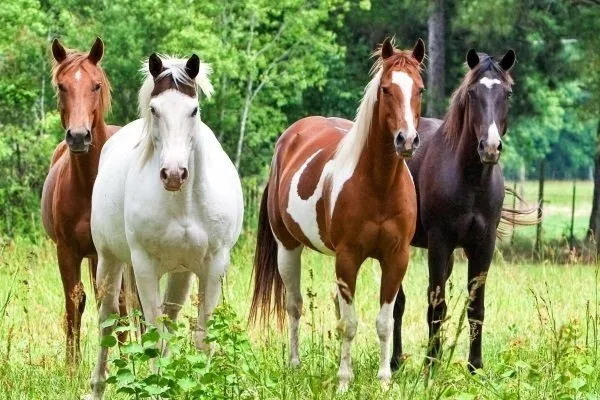
Suits and markings: general concepts
Horse coat color is determined by a combination of characteristics, including the color of the topcoat on different parts of the body, as well as the color of the mane and tail. Horses come in five basic colors: brown, black, white, yellow, and red. However, there are no such things as black or white. There are four basic colors:
- black;
- bay;
- redhead;
- gray.
- ✓ The presence of a “belt” along the spine for wild colors.
- ✓ Hoof and eye color for accurate color determination.
All other horse colors are derived from the four main colors. Generally, the definition and classification of colors is arbitrary.
There are also color variations. These are, so to speak, color variations ("color + shade"). The color variation determines:
- intensity of the coat color – how saturated the coat color is, whether it is lighter or darker;
- color nuances – the same color can have different shades, golden, red, etc.
- uneven color.
| Suit | Resistance to sunlight | Tendency to burnout |
|---|---|---|
| Black | Low | High |
| Bay | High | Low |
| Redhead | Average | Average |
| Gray | High | Low |
Below we will describe the suits and their markings.
Black
| Name | Height at withers (cm) | Weight (kg) | Type of use |
|---|---|---|---|
| Black | 160 | 500 | Horseback |
| Bay | 165 | 550 | Riding, harness |
| Redhead | 158 | 480 | Horseback |
| Gray | 162 | 520 | Riding, harness |
Black horses have black hair, skin, and eyes. Some horses can fade in the sun, while others remain black forever (called non-fading black, raven black, or jet black).
Black beauties are fiery and willful, and owning a black horse is the dream of any equestrian enthusiast. Among nomads, a black horse was considered a symbol of reverence and the most precious gift for any family. In other cultures, a black horse is a harbinger of misfortune, a mediator between man and otherworldly forces.
A black horse exuded splendor on the battlefield, instilling fear and awe in the enemy. Such was the famous Bucephalus, who belonged to the conqueror Alexander the Great.
The raven suit has several shades:
- Black in tan (dull black, dusty black or fading black). This type of horse is prone to fading in the summer sun. The black pigmentation in these horses is unstable, and if the horse spends a lot of time in the scorching sun, the coloring can turn from black to almost brown. However, with the arrival of winter, these horses return to their black color.
- Silver-black (silver black or chocolate silver). This coloration includes individuals with a black body and silver hairs on their mane and tail. The body coat is also lightened by silver hairs.
- Smoky black or ash black. The coat color is less intense, with a distinct shimmer—chestnut or chocolate. In winter, "smoky black" horses do not turn pure black, unlike "tanned black" horses.
Smoky-black horses can look very similar to dark browns, but smoky-black horses have a black or nearly black mane and tail. However, to accurately determine the horse's color, it's best to look at the horse's pedigree.
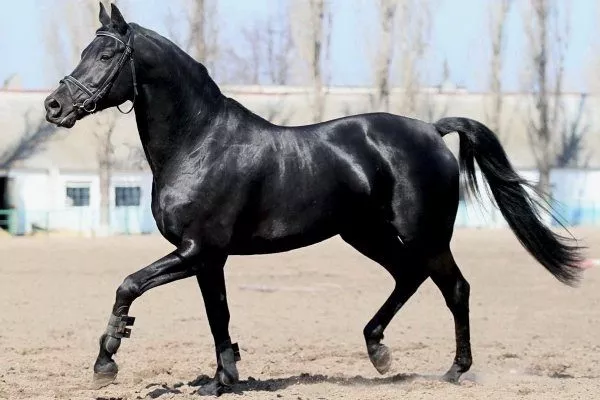
Raven suit
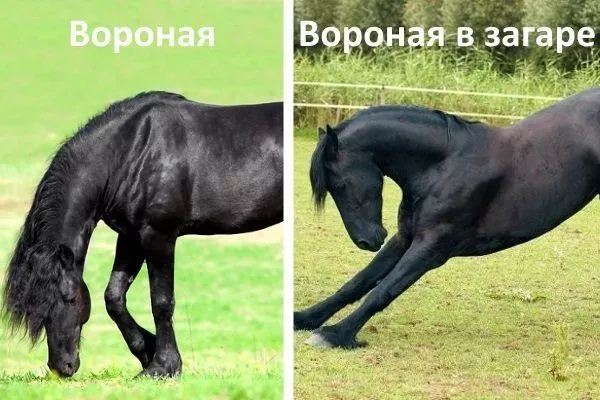
A tanned black horse has the ends of its hair bleached brown by the sun (usually only on the body)
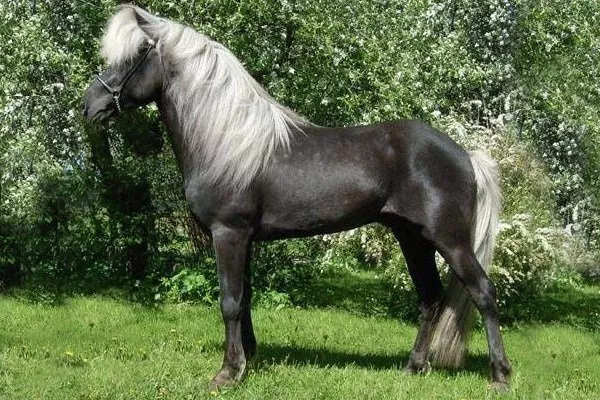
A silver-black horse with a silver-white tail and mane
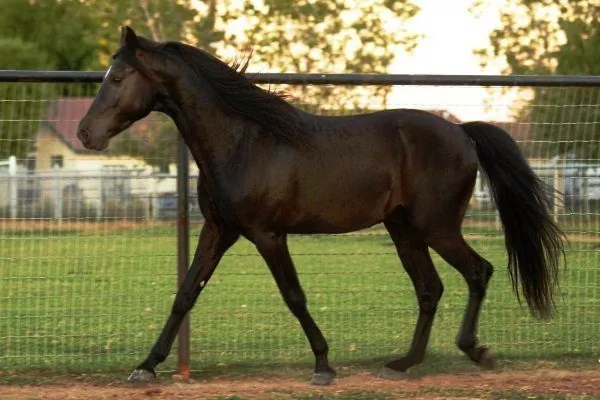
The smoky-black horse has a coat that is slightly lighter than black (with a dark chestnut tint)
Black horses have black hooves. The presence of white markings does not affect the color of the horse; they are perfectly acceptable on black horses.
Bay
One of the most common colors, bay specimens come in various shades of brown, from sandy to dark chestnut. This color is typical of wild horses, so bay horses are known for their remarkable endurance, ease of maintenance, and robust health. Bay horses are also renowned for their speed, as in the wild, their wild relatives had to quickly outrun predators.
A bay horse's mane, tail, and lower legs must be black! Read more about this color. here.
There are such excuses:
- Light bay (light bay or wild bay). There are light patches on the muzzle and underbelly. The mane and tail have a mixture of brown hairs. The legs are blackish-brown.
- Dark bay (black bay or bay-brown)). The top of the head, as well as the top of the neck, back, and croup, are dark, almost black. The rest of the coat is much lighter. The coloring resembles a tan black or a bay.
- Bay deer. The top is dark bay, the bottom is light bay. The top of the head, neck, croup, back, tip of the muzzle, and belly are light brown.
- Chestnut bay. The hair is a rich dark chestnut color.
- Cherry bay or blood bay. The fur is reddish-brown, sometimes reddish-red. Dark-colored individuals have a cherry-red tint. The legs are brownish.
- Golden bay. The fur of these horses is yellowish-brown with a golden sheen.
Mealy or mealy muzzle Horses with tan markings around the eyes, nose, belly, and groin are called tan horses. Light spots can also be found on the crooks of the legs and on the croup. Tan markings can appear in any color (most often in bays).
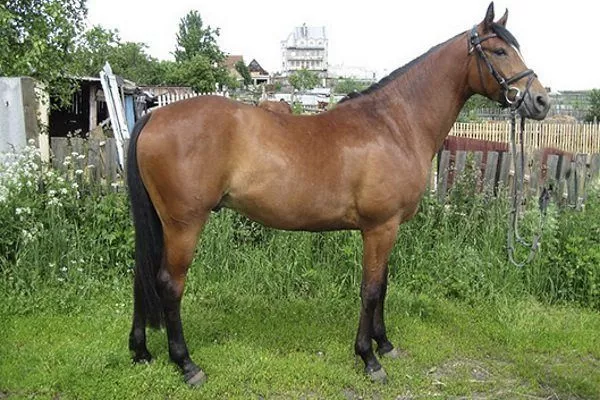
Light bay horse
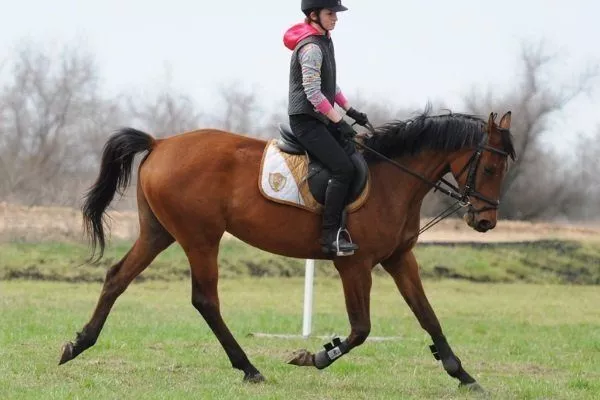
A pure bay horse
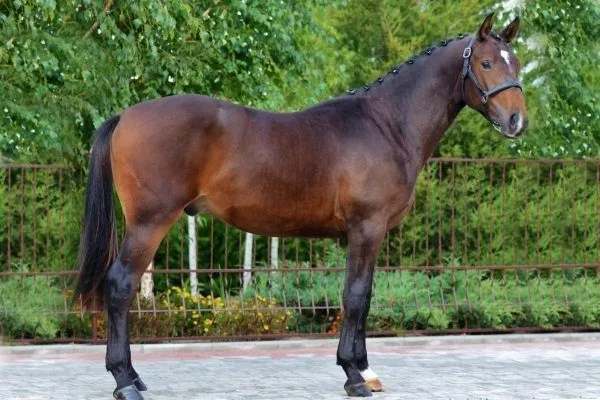
Dark bay horse
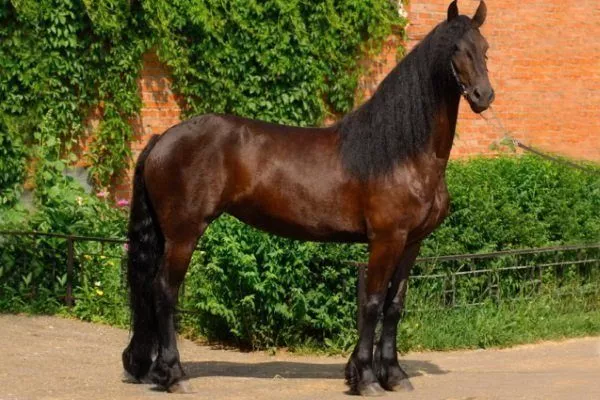
Chestnut bay horse
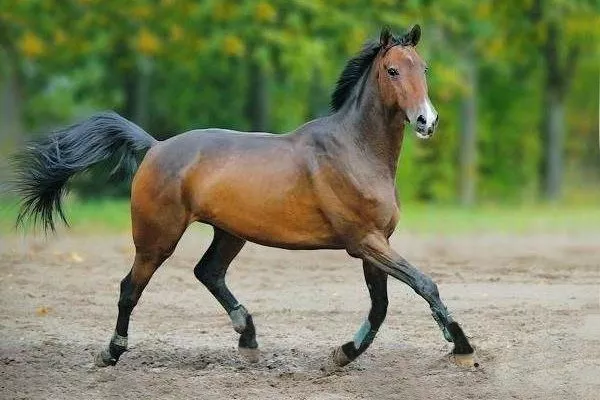
Deer-bay horse
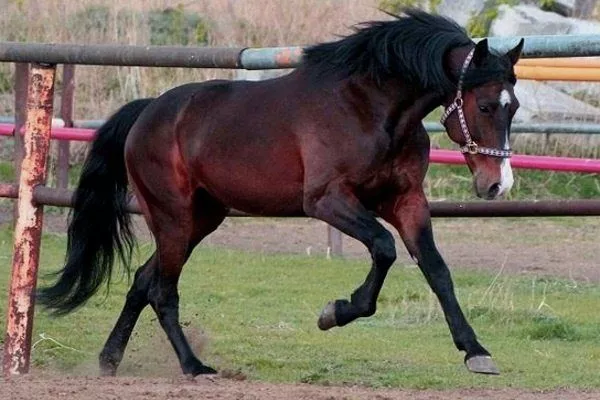
Cherry-bay horse
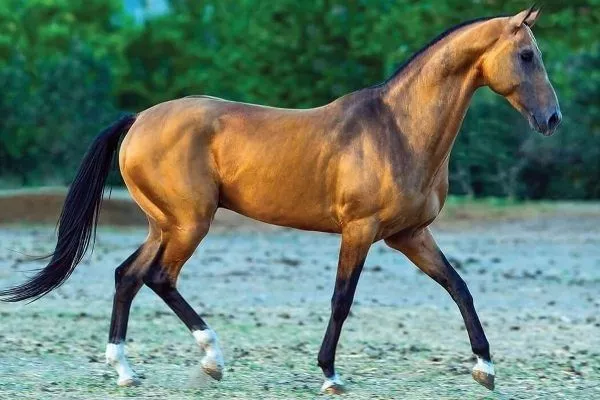
Golden bay horse
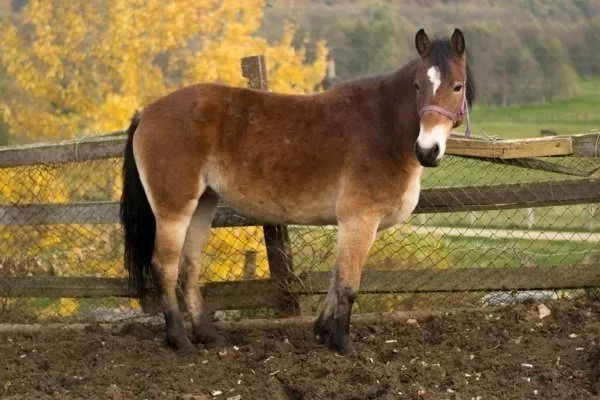
A slender horse
Redhead (Chestnut)
Chestnut horses are characterized by their distinctive coloring, which varies widely. Chestnut individuals can be light apricot, yellow, or light brown. The mane and tail are a richer color than the rest of the body. For example, a light golden horse may have a chestnut mane and tail.
A distinctive feature of chestnut horses is that their legs always match the color of their bodies. This is the main characteristic that distinguishes chestnut from bay.
There are several different shades of red horse. Let's take a closer look at them:
- Light chestnut, sorrel or blonde chestnut. The body, limbs, and head are light in color. The mane and tail may be lighter or darker.
- Dark red (often refers to liver chestnut). The body color ranges from chocolate to dark chestnut with a reddish tint. The mane and tail may be darker or lighter.
- Red chestnut, cherry chestnut. Wool with a copper sheen.
- Golden-red (gold). A golden sheen on the coat that plays in bright light.
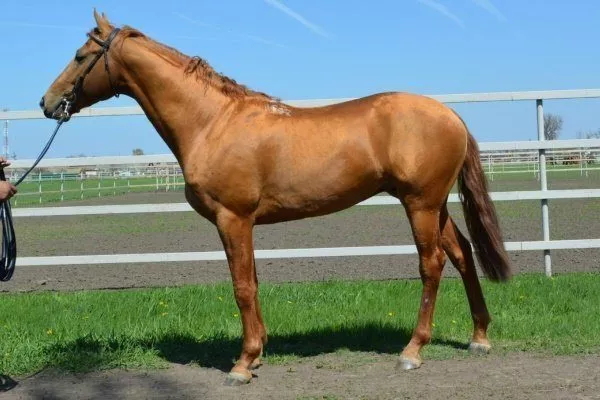
Light red color
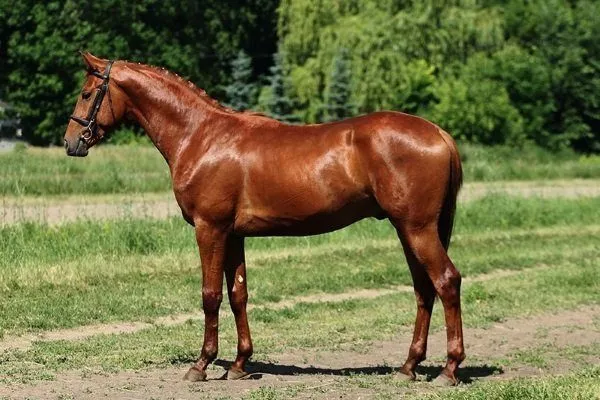
Red color
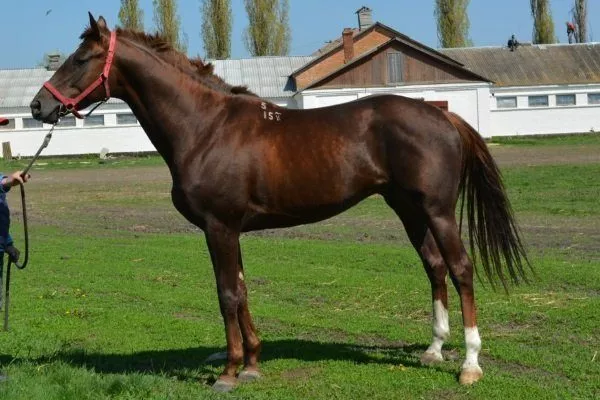
Dark chestnut horse
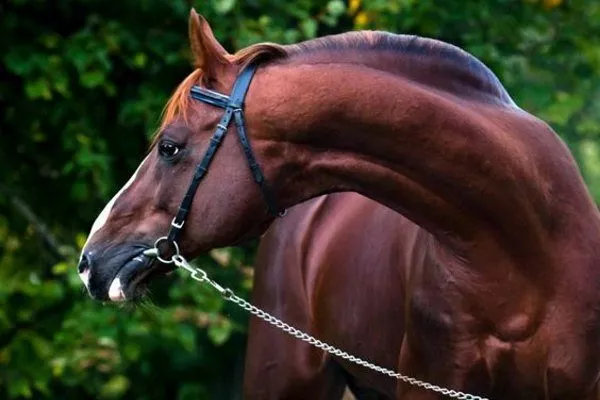
Red-chested horse
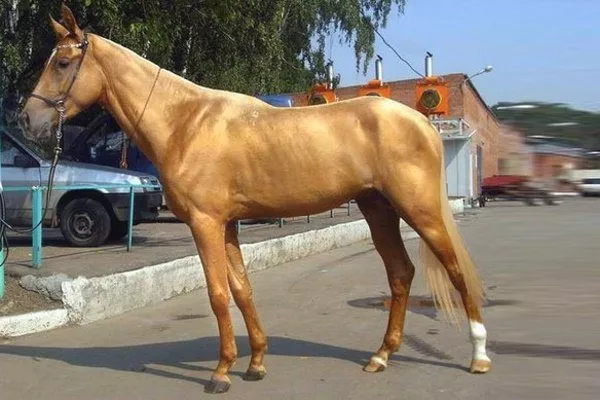
Golden-red horse
Gray
Often considered the primary coat color, this isn't entirely accurate. This coat color is also known as gray. It results from a mixture of black and white hairs. A distinctive feature of the gray coat is its changing shade throughout life.
Over time, any horse can change color—it can turn gray due to an increase in white hairs. Sometimes a foal is born black, but then its coloring changes, becoming lighter and lighter. Eventually, as an adult, the foal acquires a light gray coat, and can eventually turn completely white.
Horses noticeably turn gray after nine years of age. The belly and head are the first to gray, becoming lighter than other parts of the body. The croup and limbs remain darker for a long time.
Gray horses have 4 different coat colors:
- Light grey. This coloring is typical of a horse that has turned gray over time, but still has a nearly white coat.
- Dark gray (dark gray or iron gray). The entire body, except for the head, is dark gray. The head is usually light gray. This color is also known as steel gray, and is often confused with mouse gray.
- Dapple grey. The body is covered with round spots that are lighter than the background. These spots mimic the network of blood vessels.
- Flea-bitten gray, if the buckwheat is dark brown/black in color or trout (rose gray), if the "buckwheat" is a reddish-cherry color. The horse's body is covered with tiny spots, like grain. Some say the horse has "freckles," referring to this pattern. The first variant of "buckwheat" progresses with age, and the trout pattern appears precisely after the first shedding.
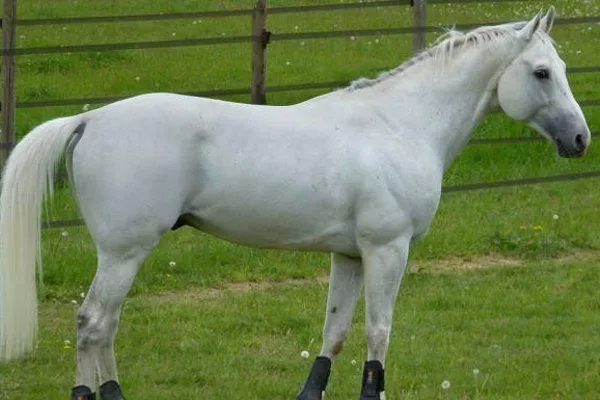
Light gray horse
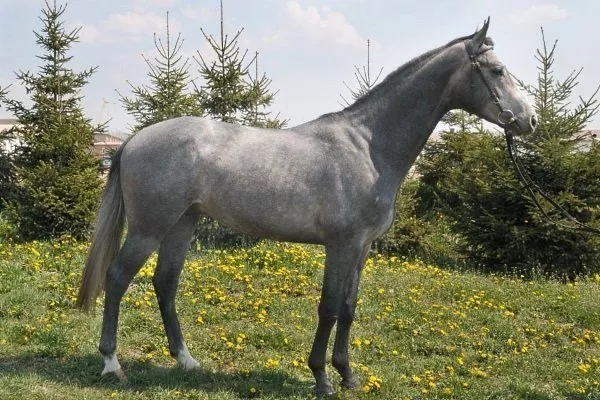
Gray suit
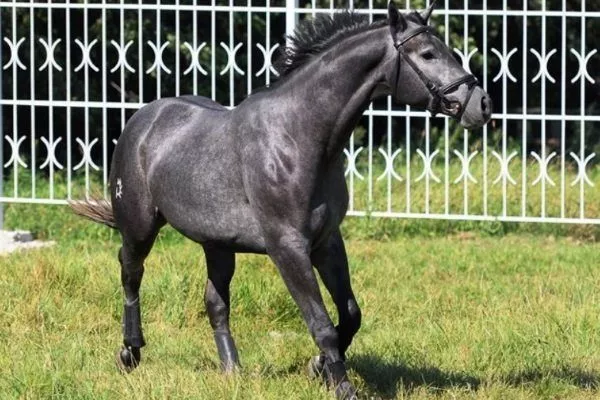
Dark gray horse
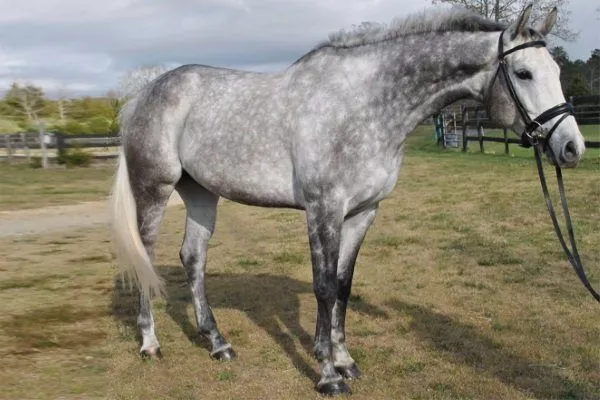
Gray with "apples"
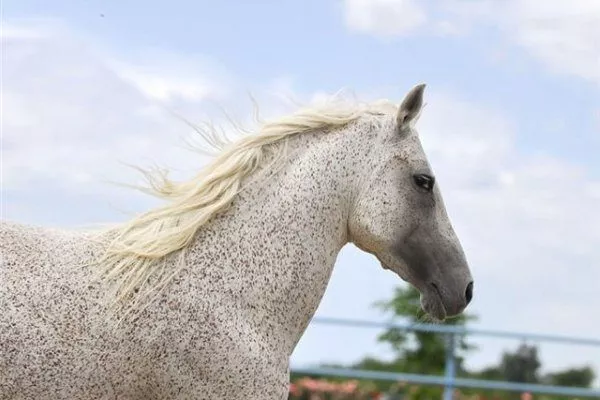
Gray in buckwheat
Derivatives of the suit
Derived colors are those colors that have evolved from the four main colors through crossbreeding. Let's take a closer look at them.
Karakova (Black and tan, Black-brown or Seal brown)
| Name | Height at withers (cm) | Weight (kg) | Type of use |
|---|---|---|---|
| Karakova | 163 | 530 | Riding, harness |
| Brown | 167 | 540 | Horseback |
| Igrenevaya | 159 | 490 | Harness |
| Nightingale | 161 | 510 | Horseback |
This coat color is believed to be a derivative of the black. The body, tail, and mane are essentially black. However, unlike black horses, bay horses are marked with golden or brown tan markings. Tan markings are common on the muzzle, around the eyes, under the arms, and in the groin. The light markings stand out against the dark background. The bay coat is considered a transition between black and bay.
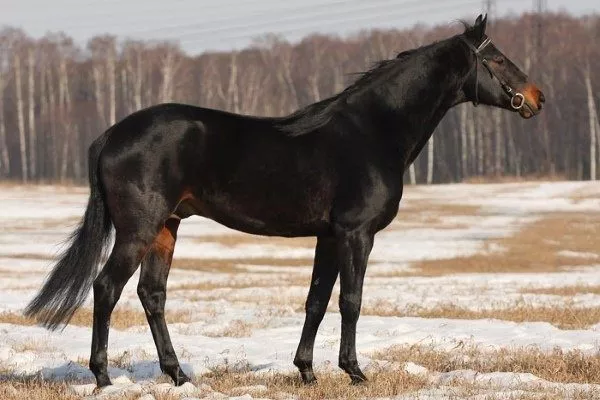
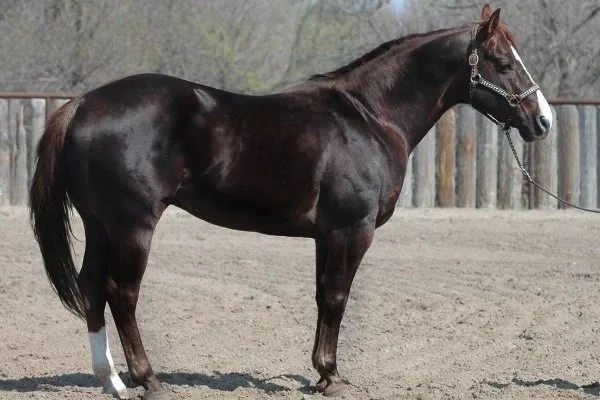
Liver chestnut
Brown horses have a dark brown coat. It can have chestnut or chocolate hues, sometimes reaching the color of burnt coffee. A brown horse's mane and tail are not black, but rather match the body color. Brown horses are considered a darker version of the chestnut color.
Game (Flaxen chestnut or Chestnut with flaxen mane and tail)
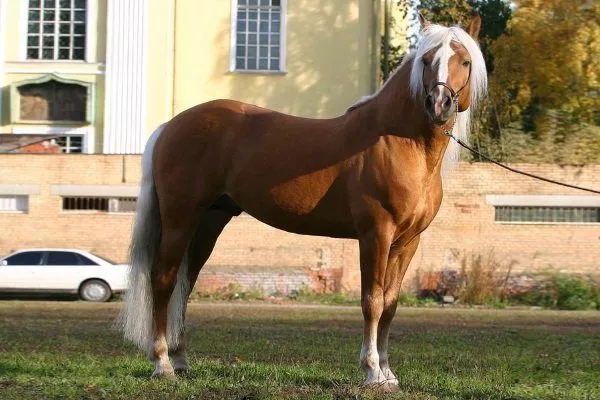
Bay horses have a reddish body color (in light bays) or brownish (in dark bays), and a white or smoky mane and tail due to the admixture of gray hairs. Sometimes, a bay horse is mistaken for a red horse with a lighter mane and tail. However, the hair of bay horses does not lighten with the changing seasons—it is a constant color. There are horse breeds that are exclusively bay and nothing else—for example, Belgian Heavy Draft Horses and Haflingers.
Palomino
Palomino horses are easily distinguished by their sandy coat, white mane, and matching tail. Dark hairs can be present in up to 15% of their hair. The tail and mane can sometimes be yellowish rather than whitish—similar to the shade of the hairs or slightly lighter.
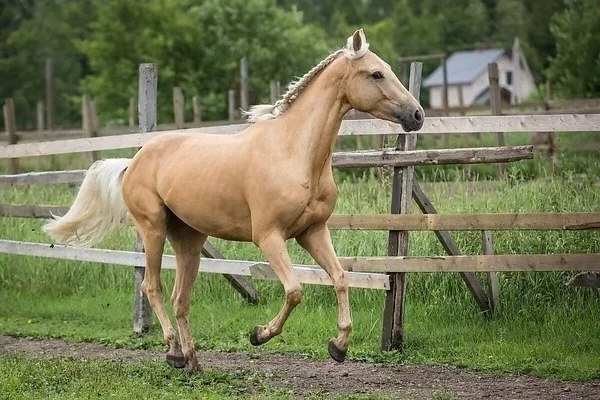
There are several types of palomino horses:
- Dark salt-colored. The coat is a rich yellowish color, sometimes with a red tint. The hooves are dark. The mane and tail are a similar or lighter color.
- Light salt-colored. Light sandy color. The mane and tail are either the same or white. This coloring is called Isabello.
- Golden-salmon. Rich yellow color with a golden sheen. Dark hooves.
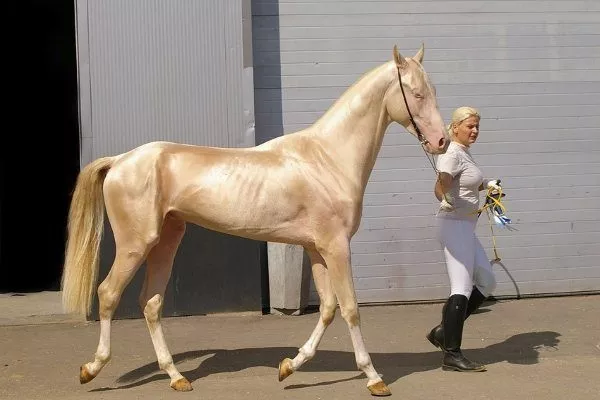
Isabella (Cream or Blue-eyed cream)
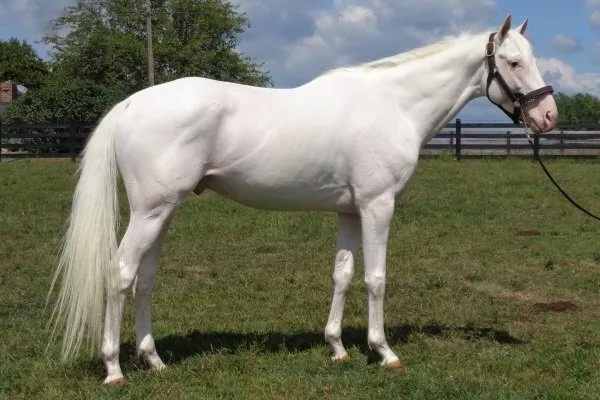
A rare color in horse breeding, it shares a genetic link with the dun and palomino colors. Isabella-colored horses are owned either by the very wealthy or by those who are serious about horse breeding. These horses are also called cream horses, reflecting their coloring. The coat is pink with a yellowish tint. The tail and mane are yellow or sandy. The legs are slightly darker than the base color.
The Isabella horse's coat changes shades in different lighting conditions. At dawn, it becomes milky white, during the day it becomes silvery, at sunset it becomes red, and in cloudy weather it takes on an ivory hue.
Distinctive features of Isabella horses:
- eyes only blue or green;
- changes color when lighting changes;
- The coat has a luxurious shine – the hairs shimmer in the sun.
Where does this unusual name for this coat come from? It's believed to come from the name of a Spanish queen. Isabella ruled Spain in the 15th century. At that time, cream-colored horses were quite popular among the nobility. The queen, of course, owned a horse of a similar color. There's even a legend about this: Isabella decided to keep her shirt for three years. After three years, Isabella's shirt acquired the shade typical of Isabella-colored horses.
White foaled
This is an extremely rare color. It's important to immediately distinguish between two concepts: a white-born horse and a white horse. The former refers to the dominant white coloration, which the animal retains from birth until its death. The latter refers to an acquired white coloration, more precisely a light gray. The latter coloration is acquired by the horse with age, gradually becoming lighter.
A white horse is a unique case. Napoleon Bonaparte's favorite white horse, Marengo, is known. The horse was lost at the Battle of Waterloo. Legend has it that Marengo could gallop without rest for up to five hours.
White-born horses have pink skin, not gray like light gray horses. White-born horses often have blue eyes. Some believe that such horses are albinos, and that white doesn't exist. However, albinism has a specific genetic mechanism that horses don't have. Therefore, albino horses don't exist!
Spotted or Appaloosa
A distinctive feature of the piebald coat is its numerous spots scattered across the body. The base color can be any color, and the spots contrast with it. The spots are oval in shape and typically range from 10 to 1 cm in diameter.
A distinctive feature of piebald horses is that their irises are smaller than usual. This results in visible whites in the corners of their eyes—an unusual feature for horses. Piebald stallions have striped hooves.
Plain horses are classified by color:
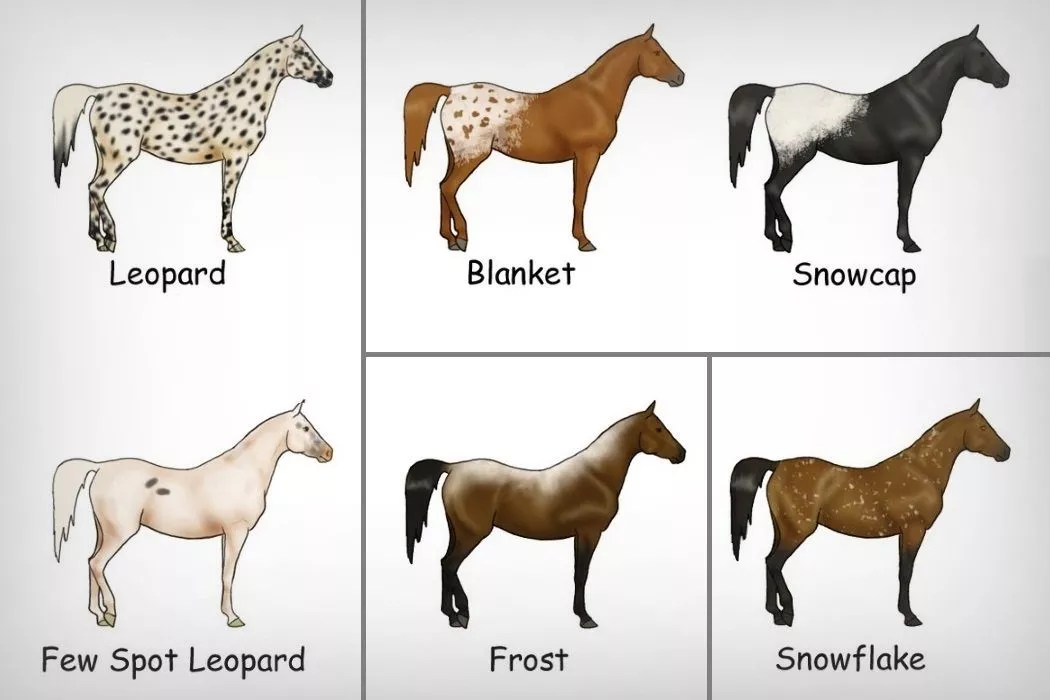
- Leopard. Small and medium-sized spots are scattered over a light background.Few-spot leopard - leopard-colored horse with few spots.
- "Cheprak" (blanket). Any color, the croup and back are covered with white spots.Snowcap - this is a pure white saddle cloth.
- "In the frost" A coloration in which the croup is covered with white hairs and spots.
- SnowflakeThe predominant background is dark, with many small light spots on it.
This curious coat originated in Central Asia in ancient times, as evidenced by numerous frescoes and paintings created in China, Mongolia, and other Central Asian countries. Chubary horses are extremely rare. Today, they are most common in Central Asia.
There are breeds for which the piebald coat is a key characteristic. These include:
- Knabstrupper. These are extremely rare horses. Danish Knabstruppers are the spitting image of equine "Dalmatians." Their breeding began during the Napoleonic era. It is believed that the name comes from the village of Knabstrup, where a mare of unusual color supposedly mated with a Frederiksborg stallion. Knabstruppers have an unusually vibrant coloring. The base coat is white, with blackish or brown spots. Horses of this breed have distinctive patterns. They are known for their good nature and are often used in circuses.
- Appaloosa breedDeveloped in America, the breed is docile and easy to train. The Appaloosa has proven itself in competitive sports, including show jumping, racing, rodeo, and dressage. The breed is known for its robust health.
Roan
Roan is also rare. Slavs once asked seven times more for roan horses than for regular ones. A distinctive feature of the roan coat is the abundance of white hairs all over the body. The head and legs retain their base color. The color of roan horses does not change over time. The amount of white hair varies, from stripes and spots to the finest veins.
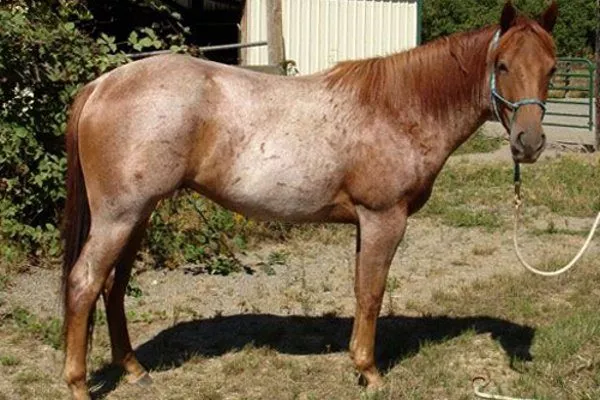
The roan gene Rn is characterized by its ability to regenerate fur. If an animal's skin is damaged, only the base coat grows back.
The roan gene isn't tied to a specific breed. It occurs in various breeds, but roan looks especially beautiful in dark-colored horses. Colors can be:
- Zonal – is located in spots and stripes.
- Non-zonal - white hairs are scattered interspersed throughout the body.
Characteristics of a roan horse:
- Hooves and eyes are dark.
- The color remains constant.
- The color changes depending on the season. Only the mane never changes.
- The tail does not change color. Except for dun-roan horses.
- The wounds heal without a trace with hair of the main color.
The roan gene is passed on to breeds with wild ancestors. Let's name the main roan patterns:
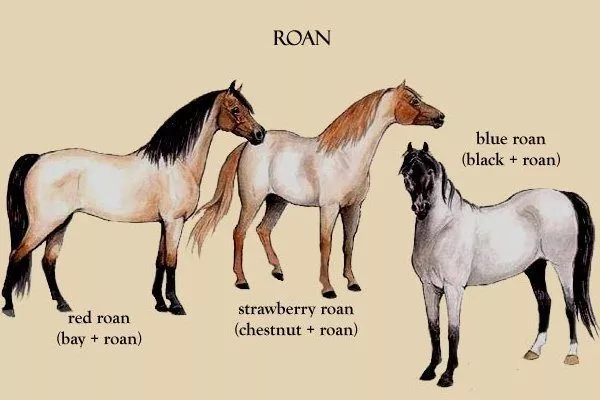
- Red roan. The base color is dark or reddish-brown. White hairs appear against this background. The tail and legs are dark. This color pattern is quite common.
- Strawberry roan. These horses are often called "pink horses." The base color is reddish-brown, with white hairs giving it a pinkish tint.
- Blue roan. The base color is black. White patches give the coat a smoky blue hue. The legs and mane are dark. From a distance, the coat appears lilac or blue, which is why these horses are often called "blue horses."
In addition to those listed, there can also be brown roan, dun roan, yam roan and palomino roan horses.
Breeding roan horses is impossible. Crossing roan-colored horses with carriers results in stillborn foals. Therefore, only one carrier of the gene is bred with a normal-colored horse.
Buckskin
These horses are distinguished by their yellowish-sand or golden coloring. A distinctive feature is the black mane and tail, as well as the lower legs. Bay horses can have a variety of shades—cream, close to dark bay, yellow-gray-brown, and others. A bay horse with "dapple" markings looks especially striking; it seems as if a dark net is draped over a golden background.
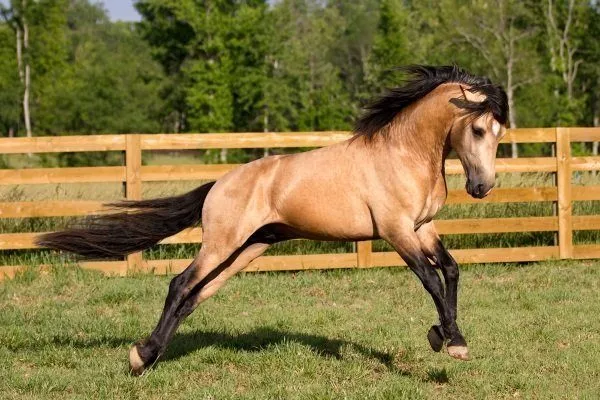
You can read more about the dun color of horses in next article.
Piebald (Part-colored, Broken color or Pinto)
Piebald is the most common of all coat colors. Its distinctive feature is the white spots scattered across the body. Piebald can appear on a variety of coat colors. Let's look at just the basic variations:
- skewbald, chestnut and white;
- skewbald, brown and white;
- pie-bald.
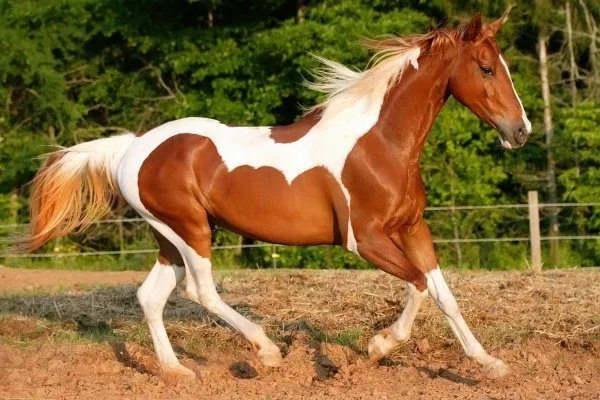
Red-and-white horse
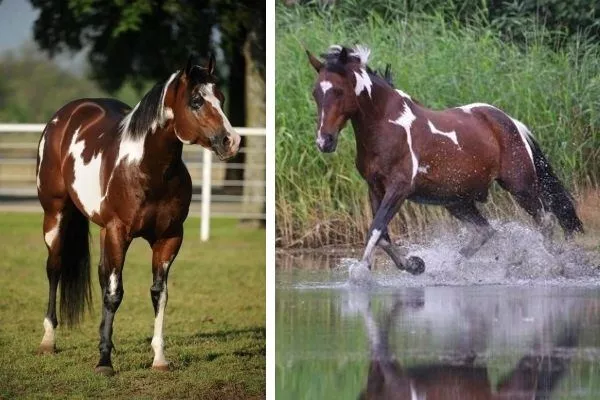
Bay-piebald understock
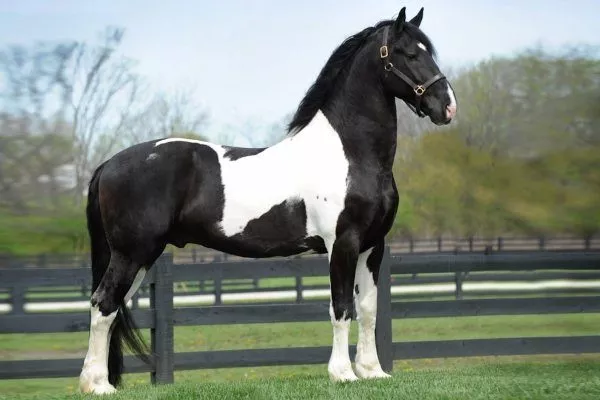
Black and piebald horse
It is noteworthy that in the USA and Great Britain, horses of the chestnut-piebald, bay-piebald, tan-piebald, etc. colors are all called the same thing – “skew-bald”.
"Pieve" cannot be on Isabella, White, Chubary, Bay and Mouse colors.
Types of piebald coats
Typically, piebald spots are found on the sides and back. White spots are caused by partial albinism, which results in the animal having blue eyes. Or one blue eye. In the US, these horses are called pintos and piebalds, and are divided into two types based on color:
- Tobiano. These are horses with one or both dark flanks. Their legs are white underneath. A certain symmetry is observed in the coat. This piebaldness is caused by the dominant gene To. Sometimes a foal is born to parents who are completely non-piebald—it's impossible to predict when the gene will manifest itself.
- Overo (overo). This coloring is divided into three types:
- Sabino (sabino). They have white legs. Spots are on the sides and belly. The head and lower lip are white. The gene is not exactly determined—N or Sb.
- Splashed White (splashed white). The horses look as if they've galloped through puddles of white paint. The Spl gene is responsible for this coloring.
- Frame overo. The white spot is surrounded by dark fur, like a "frame." Often, the main color is visible only on the crown and ears. The Fr gene is responsible for color.
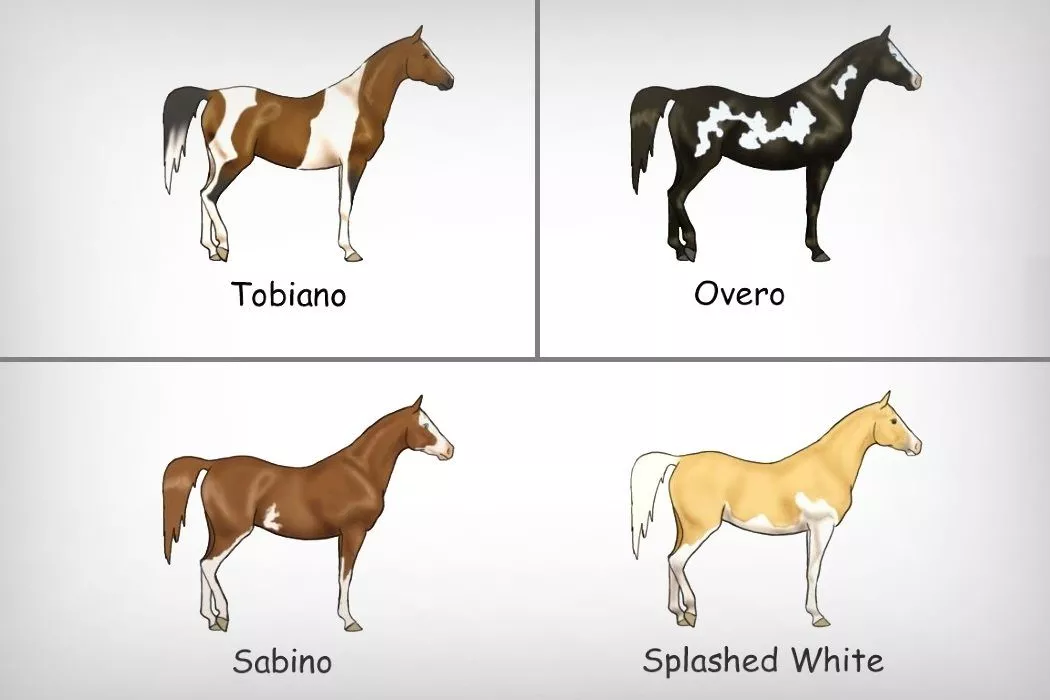
Types of piebald coats
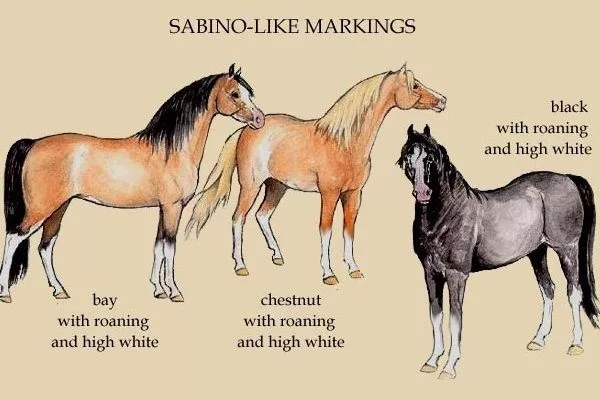
Sabino on the main suits
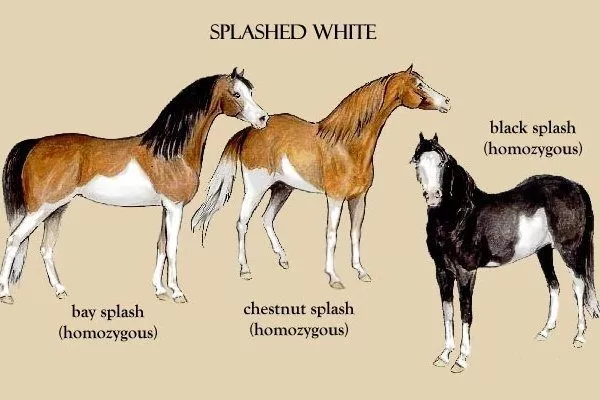
Splashed white on the major suits
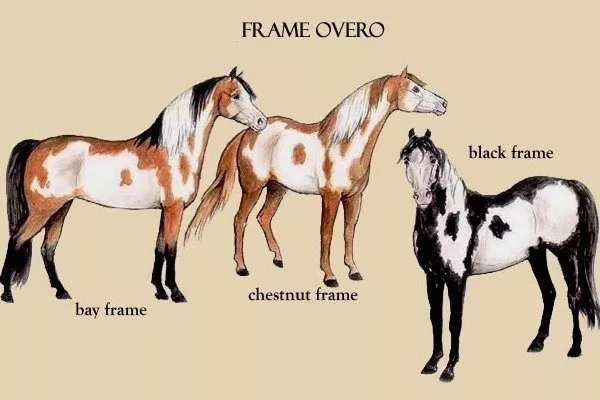
Frame overo on the major suits
Wild suits (Dun)
Breeders have isolated a "wild" gene, DUN. It's dominant and lightens the pigments of red and black fur, but its effect doesn't extend to the pigmentation of the mane and tail. Individuals of this color are well camouflaged in the wild, which is crucial for the survival of their population.
All modern horse colors are believed to descend from "wild" colors. Characteristics of "wildness":
- A distinct black-brown stripe runs along the spine—it's also called a "belt." This is a must!
- The legs have indistinct stripes, a phenomenon also called "zebroidness."
- The horse's shoulders have a blurred transverse stripe of dark color - "wings".
- The ears have dark edging.
- The tail and mane are marked with whitish strands.
Let's learn more about "wild" horse colors.
Savrasaya (Bay dun)
It is believed that the "wild" gene turns a bay horse into a dun horse. This "wild" color is characteristic of Przewalski's horsesThe coloration is yellow, lightened yellowish, or pale red. The body is unevenly colored, with light spots on the belly. The tail, mane, and lower legs are darker, sometimes reaching black.
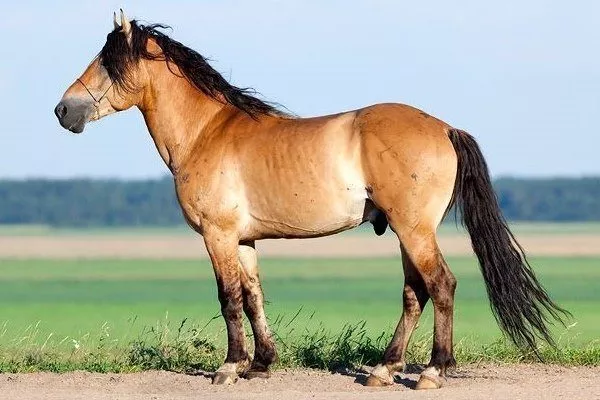
Another representative of the dun color is the Norwegian Fjord Pony. The forelock, tail, and mane of these miniature horses feature silver, white, and black hairs.
Features of the dun color:
- From the tail to the withers there is a dark stripe (called a belt).
- The lower part of the limbs is dark or black, with a zebroid appearance.
- Lightening of color on the muzzle, belly and throat.
It's rare, but it does happen.web" (cobwebbing) on the muzzle of a dun-colored horse. This is a grid-like pattern or simply dark stripes on the horse's forehead.
Kauraya (Chestnut dun or Red dun)
It is considered the "ancestor" of the chestnut color. The chestnut horse is also called a chestnut savras. Chestnut horses are rare, usually found in zonal and wild breeds. Horses of this color have a light chestnut coat, with a darker mane and tail.
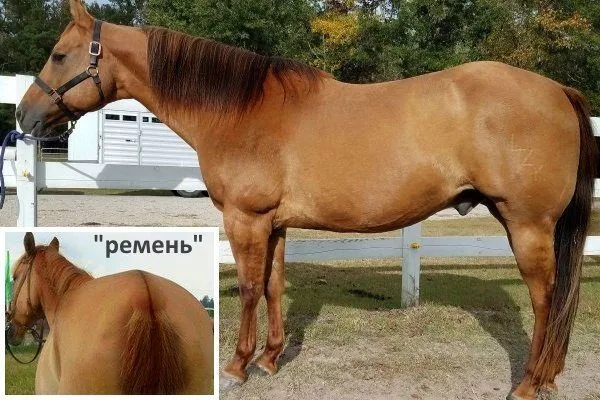
Shades of chestnut horses:
- Dark brown. The body is dark red. The head and lower legs are darker. There is a dark brown "strap." The tail and mane are darker than the body and are colored reddish-brown. There are light streaks in the mane and tail, and zebra-like markings on the legs, with a few brownish spots on the shoulder blades.
- Light brown (claybank dun). It has a lighter body. The head and legs are darker. The tail and mane are made up of red and light strands.
Bay horses are rare these days. In Russia, they are found only in the Altai breeds native to Kazakhstan and the Yakut breeds. Soviet heavy draft horses, although rare, do produce bay horses.
Mouse (Blue or Mouse)
The "wild" gene turns a black horse into a mouse-gray horse. Mouse-gray horses have a gray coat, with a black mane and tail. Their heads are slightly darker than their bodies. Some specimens have a completely black head. The legs of mouse-gray horses are dark, black, or with a black sheen.
A distinctive feature is a black "belt" along the spine. Zebroid markings on the legs are extremely rare. mouse-colored There may be such shades:
- Dark mouse-colored (black dun). The legs, tail, and mane have a black sheen. A stripe runs down the spine. Everything else is gray.
- Light mouse-colored (silver grullo/grulla). The color is cloudy white. The head is completely or partially dark. The tail and mane are black or white. The "belt" is dark gray.
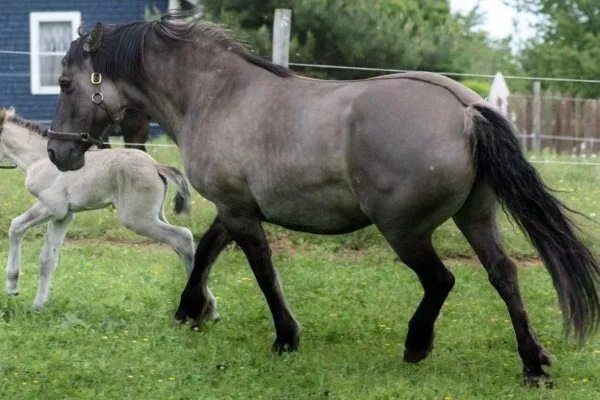
Dark mouse horse
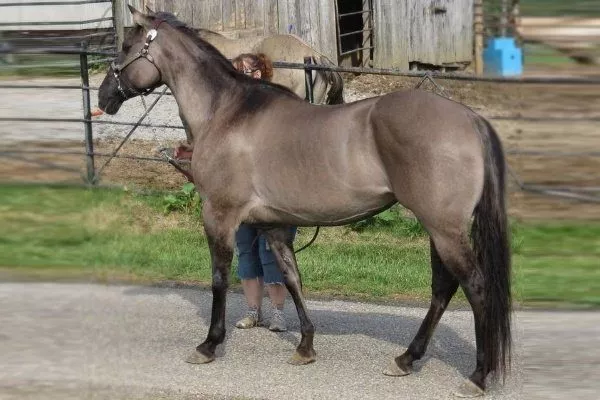
Mouse-colored
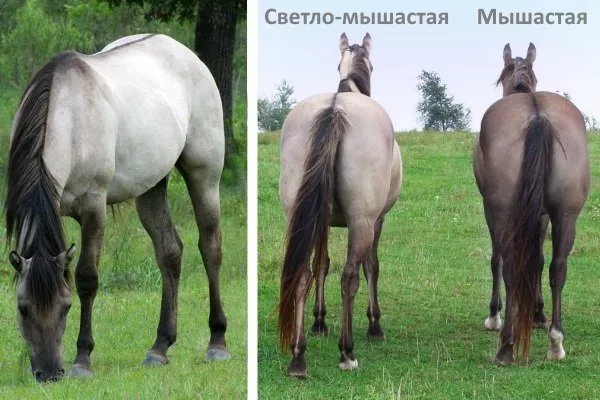
Light-mouse undercoat
A common gray horse gets its color from a combination of white and black hairs. Only mouse-gray horses have truly ash-gray hairs. These horses don't change color as grays age—their coat color is remarkably stable.
Mouse-colored horses can vary slightly in color depending on the season. In winter, their coat develops silvery hairs with a blue tint. In summer, the color becomes predominantly yellow.
The mouse-gray color is typical of horses descended from aboriginal breeds. It has been observed that mouse-gray horses dislike buckwheat straw—they have a kind of allergy to it. True mouse-gray horses possess a "wild" gene. Without it, the color is more like a black.
Mukhortaya (Muddy dun or Muddy grullo)
It's very rare; in fact, virtually no one in modern times has seen this color. This color is distinguished by the presence of yellowish or reddish markings around the eyes, muzzle, groin, and thighs. Essentially, it's a dark brown coat lightened by the "wild" gene. Therefore, this color is also called a dark brown-savrass.
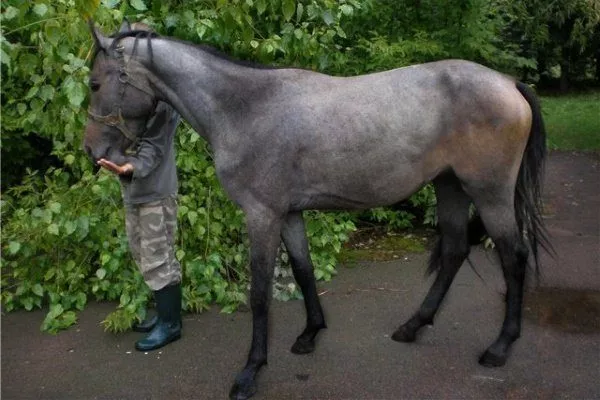
This is what a mohair colored horse might look like.
Basic markings on horses
A small white spot on a horse's forehead is star, and the big spot is called starThere may also be a spot (white or pinkish) between the nostrils, which is called whiteness.
The white narrow stripe along the muzzle is called ductIt can be combined with a star and/or whiteness. The blaze may be interrupted.
A wide white stripe, sometimes partially covering the nostrils, is called "bald head", and if it covers the entire facial part of the muzzle and the lower jaw, then it is "flashlight".
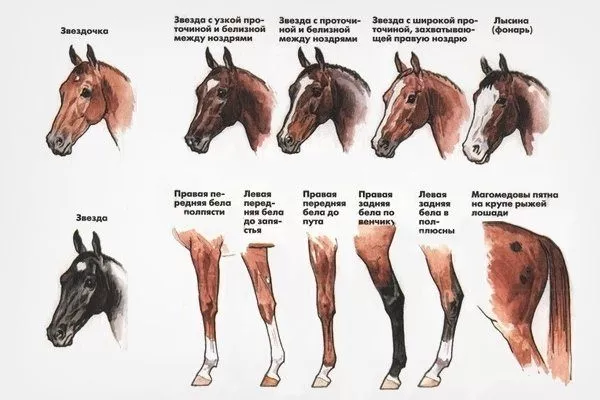
Markings on horses
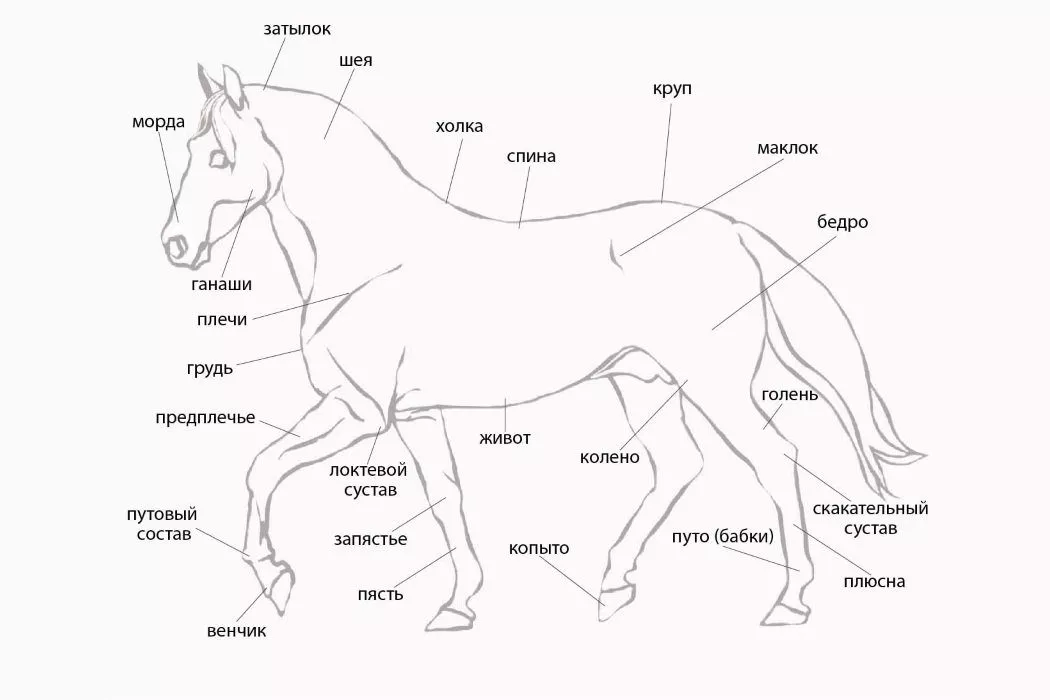
The structure of a horse
Markings can also be on the limbs. When talking about white spots on the limbs, they indicate the part of the leg where the mark is located (see the drawing of the horse's structure). The white on the half-pastern is called "with a sock", white up to the wrist joint - "with a sock", and white with the capture of the wrist joint - "stocking".
Red horses may have spots on their croup. Mohammed's spots. And also, regardless of the color, there may be light round spots on the sides of the horse (“apples"), which mimic the network of subcutaneous blood vessels of a horse. The appearance of apples is believed to be a sign of health and well-groomedness of the horse.
Colors and breeds
Each breed has its own set of colors. In some breeds, color is an important breeding trait, while in others, it's of little importance. Some breeds have only one color—for example, friezes Haflingers are only black, while Haflingers are only chestnut. Some breeds have a luxurious palette of colors and patterns. These typically include aboriginal breeds. For example, Mongolian horses can come in absolutely any color, while Icelandic horses are the only ones that lack piebald. Table 1 lists the colors and the horse breeds in which they occur.
Table 1
| Suit | Breed |
| Gray |
Rarely, but gray color can occur in:
French trotters never have a grey coat. |
| Black |
Rarely found in trotting breeds:
|
| Bay | Cleveland bays - there are no other colors in this breed.
This is an extremely common color and is found in many purebred, aboriginal and mongrel horses. |
| Redhead | It is found in most existing breeds - heavy draft horses, Kazakh steppe, Mezen, Pechora, Don, and many others. The following breeds have the most red coats:
|
| Isabella |
|
| Chubaraya |
|
| Piebald | The Paint Horse is an American breed of piebald horses.
Piebald is not found among stud breeds. Piebald is common among ponies. Aboriginal and mixed-breed horses can also be piebald. |
| Igrenevaya | Heavy draft horse breeds:
And also trotters:
|
| Savrasaya |
Wild mustangs and Przewalski's horses are also common. Arabian and Trakehner horses never have a dun color. |
| Roan | Bashkir heavy draft horses and noble horse breeds. |
Thanks to nature and painstaking breeding, horses with unique colors exist in the world. Understanding the diversity of colors and patterns can be quite challenging. But for those who love horses or breed them, it's a fascinating and rewarding pastime.