
Wild horses are the ancestors of modern racehorses. There are many species of wild horses, each with distinct appearance, personality, and color. This article examines the varieties of wild horses, their appearance, and behavior.
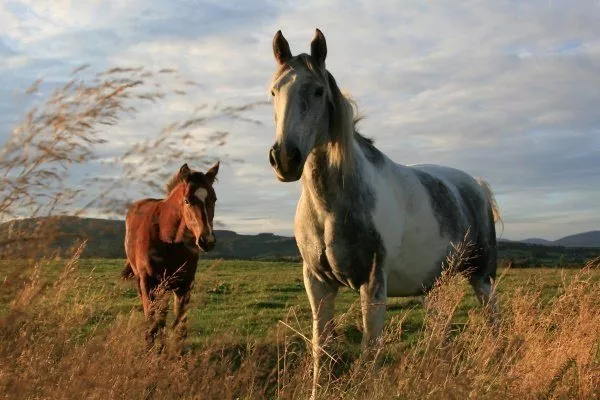
Where and how do wild horses live in the wild?
In the modern world, there are virtually no wild horses left in the wild. While free-ranging herds were extremely rare in Europe 4,000 years ago, by the early 20th century, only two species remained: the Tarpan and the Przewalski's horse.
As for the mustangs of America, the Brumbies of Australia, and the Camargue of the Mediterranean, the designation "wild" is arbitrary. This is due to their physical characteristics. All wild horses are small in stature and stocky in build. They have short legs and a bristling mane. Modern horses have a more attractive exterior: the animals appear graceful, tall, and stately, with flowing manes.
In the wild, horses typically form herds. Typically, a herd consists of one leader stallion, several mares, and young. More often, however, the most experienced horse is the true leader, determining new grazing areas and maintaining order within the herd. While she is under the sole control of the leader, all other animals in the herd obey her.
Young males live in a communal herd until they are three years old, then the leader expels them. Horses expelled from the herd form groups and live like that until each manages to gather their own herd or recapture another's.
Species of animals of the horse family
| Object | Height at withers (cm) | Weight (kg) | Color |
|---|---|---|---|
| Polish Konik | 140 | 400 | light gray with a smoky tint |
| Przewalski's horse | 130 | 300-350 | reddish-sandy |
| Appaloosa | 142-155 | various | |
| Camargue | 135-150 | light gray | |
| Zebra | 140-150 | 300-350 | striped |
| Kulan | sand | ||
| Pinto | 145-155 | spotted | |
| Donkey | 90-160 | gray, brown, black | |
| Mustangs | 130-150 | 500 | various |
| Heck's horse | 140 | 40 | gray with a grayish tint |
| Brumby | 140-150 | 450 | |
| Tarpan | 136 | grey |
Polish Konik
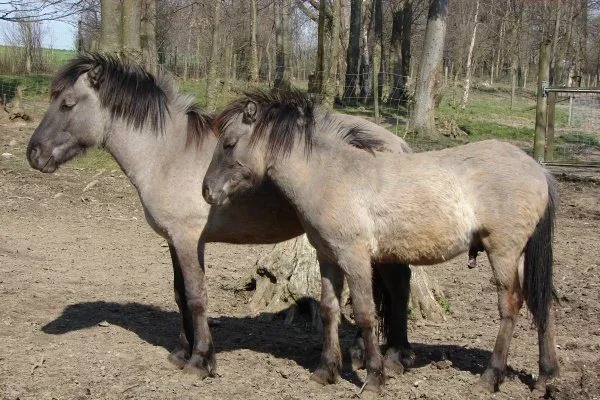
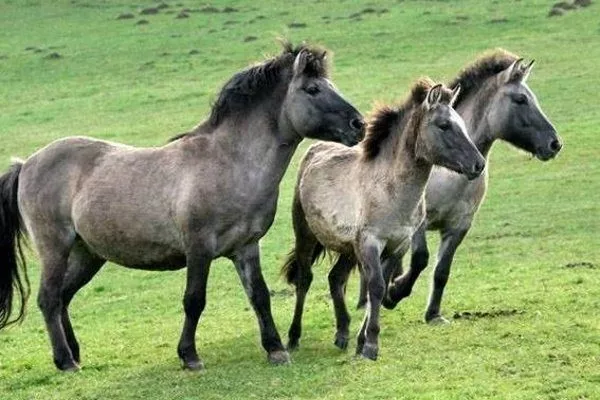
The Polish Konik is a stocky animal with a mouse-colored coat. These horses were bred in the early 20th century. The direct ancestors of these horses are the Tarpan breed; after its extinction, the name "Koniki" or "Tarpan horses" was coined. Polish Koniks were originally used for heavy work.
The animals previously inhabited the Belovezhskaya Pushcha, in the part of it located in Poland. This influenced the breed's name. Over time, wild horses also migrated to Belarus.
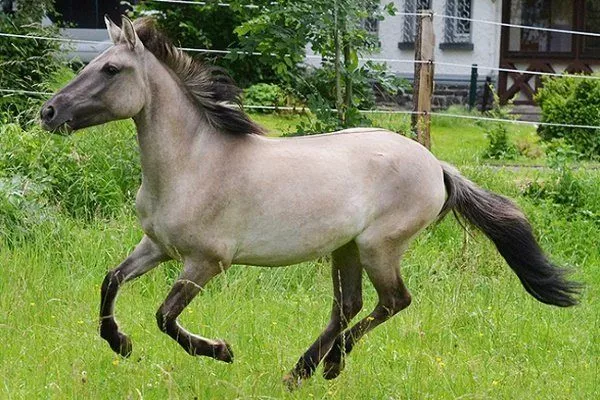
The horse is characterized by its small size, reaching up to 140 centimeters at the withers and weighing up to 400 kilograms. Its distinctive features are its light gray coat with a smoky tint and a black tail, mane, knees, and legs. Today, these animals are found in European zoos, but the World Wildlife Fund has been working for several years to return them to the wild.
Przewalski's horse
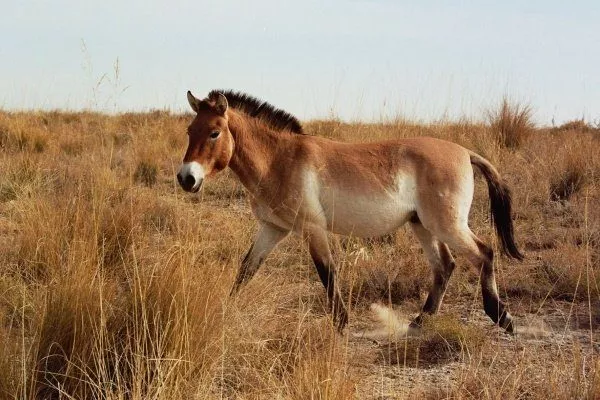
Przewalski's horses, also known as steppe horses, known worldwide, still exist in the wild today, but their numbers are minimal. No more than 2,000 individuals currently live on the planet. Two herds are located in Pripyat, where they were introduced by zoologists hoping the population will increase.
Przewalski's horses are distinguished by their powerful, stocky bodies. They have a reddish-sand coloring, a short, spiky black mane, and black legs. Their height at the withers reaches no more than 130 centimeters. An adult weighs approximately 300-350 kilograms. Przewalski's horses are massive in appearance, with rounded shapes. They are capable of running fast, but are sensitive to outside noise and are timid.
Appaloosa
The Appaloosa is considered an American horse breed, as its breeding began in the 18th and 19th centuries along the Palouse River in the northern United States. The breeders were the Nez Perce Indians, who inhabited what is now Idaho, Oregon, and Washington. In the late 18th century, North America was being actively developed, and spotted horses were imported from Europe. The natives purchased them and crossed them with local horses, resulting in the emergence of this new breed.
An adult horse reaches a height of 142-155 centimeters. However, specimens up to 163 centimeters have been recorded, which is very rare. A distinctive feature of the Appaloosa is its proportionality. Generic traits include a neat head with small, pointed ears and a muscular, straight neck. The horse has a short back and a rounded, powerful croup, strong legs, and hard hooves. The tail is carried high.
The animal's mane and tail are soft to the touch. A distinctive feature of this breed is its expressive eyes. Small black spots are visible on the muzzle, a sign of lineage.
Appaloosas are distinguished by their distinctive coloring. Individuals with the following colors are found:
- roan (many white hairs in the coat);
- saddle cloth (a white spot with small dark spots on the rump);
- spotted;
- of the same suit;
- roan saddle cloth;
- spotted saddle cloth.
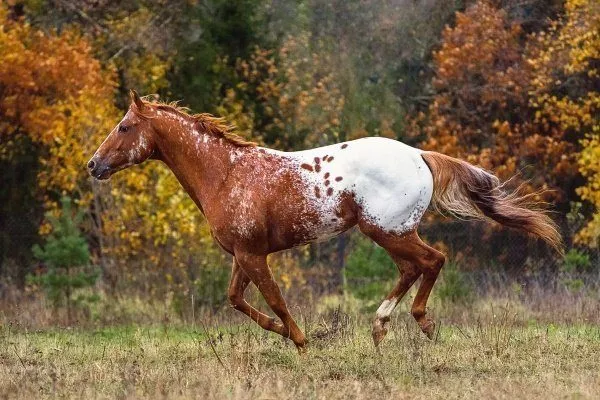
Horses are often born with light-colored coats that change color over time, becoming darker. Gray horses, on the other hand, become lighter. Determining the exact color of a horse is only possible when it reaches five years of age.
Horses were specifically bred to work with people, making them easy to get along with. They have a balanced, docile nature and a good disposition. Appaloosas are loyal animals, so a change of rider or owner can be stressful for them.
Camargue (French wild)
The Kamagra is considered one of the oldest horse breeds in the world. It is a wild, light-gray horse native to the marshy areas of the Rhone River delta, on the Mediterranean coast of France. Foals are born black or dark bay.
The horse stands between 135 and 150 centimeters at the withers. It has a large head, large expressive eyes, and short ears. The head rests on a short, muscular neck. A distinctive feature is the deep and broad chest. The Kamagra has short, straight shoulders, long, strong legs, and strong hooves that require no shoes.
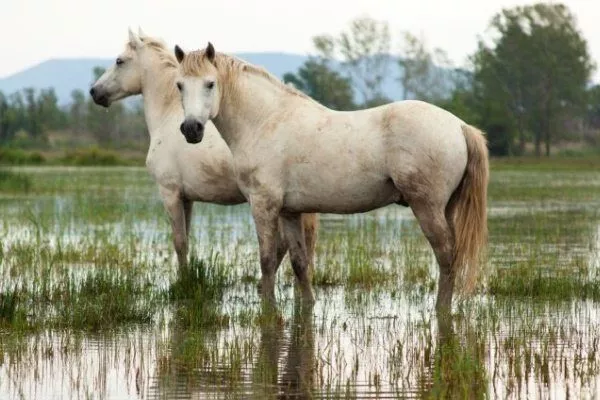
The breed is designed to guard fighting bulls and for recreational riding. These horses are long-lived, living up to 25 years. Kamagra horses are not particularly attractive in appearance, their body size is medium, but they are strong and resilient. They are well-balanced horses, yet agile and courageous. They are able to survive in conditions often characterized by poor weather and can feed on brackish water.
Zebra
A zebra is a member of the equine family. A horse-zebra hybrid, known as a zebroid, exists. A zebra's body can reach over 2 meters in length. Its weight ranges from 300 to 350 kilograms. It has a short tail, up to 50 centimeters long. Males are always larger than females, reaching 140 to 150 centimeters at the withers. These animals are characterized by a compact and stocky build, short legs, and strong hooves. Zebras have a short, stiff mane and a muscular neck.
Zebras aren't as fast as horses, but when necessary, they can reach speeds of up to 80 kilometers per hour. If attacked, they employ a unique tactic: zigzagging. Zebras are generally resilient animals with poor eyesight but an excellent sense of smell, allowing them to instantly sense danger and alert their herd.
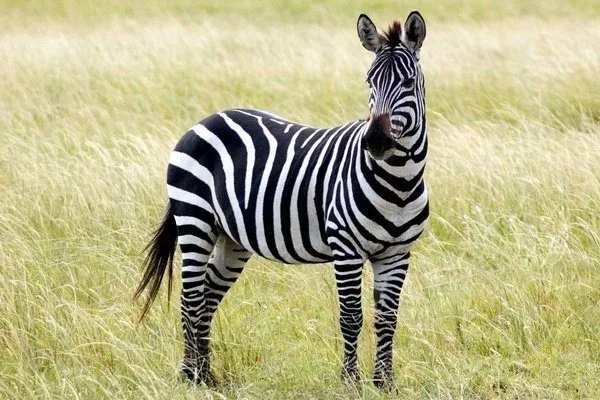
Zebras make a variety of sounds, sometimes resembling a horse's neigh, a dog's bark, or a donkey's braying. It depends on the situation.
Kulan
The kulan is a wild Asian ass, considered related to wild horses, African donkeys, and zebras, and belongs to the horse family. There are several subspecies of kulan, differing in appearance.
Animals inhabiting the foothills are small in size but brightly colored. Plains kulans are taller and resemble horses in appearance. All kulans have an upright mane and no forelock. They have a large head and long ears. A black tuft tipped their tail. Kulans are predominantly sandy-colored, with a light, almost white belly.
The kulan can reach speeds of up to 65 kilometers per hour and run for very long periods. Even a horse cannot catch the animal. This wild donkey's remarkable ability to run at high speed and its endurance are its defining characteristics. It is also an excellent jumper, capable of leaping up to a height of one and a half meters and jumping from a height of 2.5 meters. The donkey is physically very well developed. Its thick coat protects the kulan from both severe frosts and intense heat.
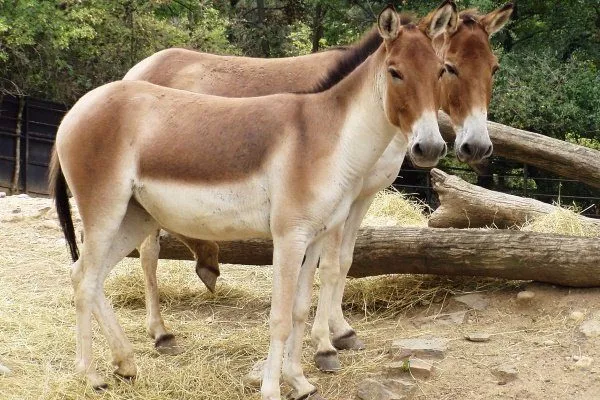
Wild asses live in herds of 5 to 25 individuals. An adult male becomes the herd leader. He always stands slightly apart from the rest of the herd, but keeps an eye on his "charges." If danger approaches, the leader signals with a cry reminiscent of that of a common donkey.
When kulans are angry, their eyes become bloodshot and their mouths snarl. Males grab their opponents with their legs, trying to knock them down, and gnaw with their teeth. However, the animals are peaceful toward almost all birds and animals. However, they dislike sheep and dogs—if they approach, kulans may attack.
Pinto
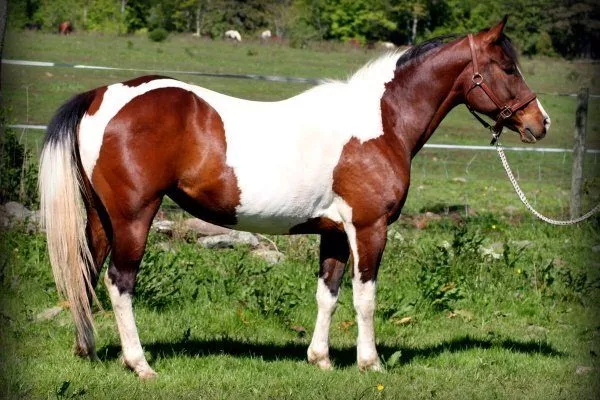
The Pinto is a wild horse, distinguished by its distinctive coloring: red or black spots on a white coat. The animal's name comes from the Spanish word "pintado," which means "painted." Scientists have been trying to determine the animal's origins for many years. Some are convinced that the Pinto originated in the Middle East, while others claim its roots are in the Eurasian steppes.
Horses range in height from 145 to 155 centimeters. Pintos are distinguished by their stately presence, power, and strong muscles. They have a beautiful head and a muscular croup. Describing the personality of Pinto horses is difficult due to the variety of breeds within the herd. However, they are generally friendly toward their fellow horses and people. These energetic horses are known for their docility.
Donkey
The wild ass belongs to the equid family of the order Equidae. Its domesticated form played an important historical role in human economy and culture. Geneticists have discovered that wild asses emerged approximately 4.5 million years ago, and that all modern horses, donkeys, and zebras are descended from them.
The wild ass reaches a height of 90 to 160 centimeters. Anatomically, the donkey is not much different from the horse—the horse has six lumbar vertebrae, while the donkey has only five. However, their appearance is quite different. The donkey has a large head and thick, long ears with long hair inside.
The donkey is distinguished by its long body, short croup, stiff mane, and tufted tail. Individuals can be gray, brown, or black, and occasionally white. The belly, muzzle, and area around the eyes are light. A narrow dark stripe runs down the center of the back. Some subspecies have additional stripes on the shoulders and legs. The donkey has black hooves. Wild asses can reach speeds of up to 70 kilometers per hour.
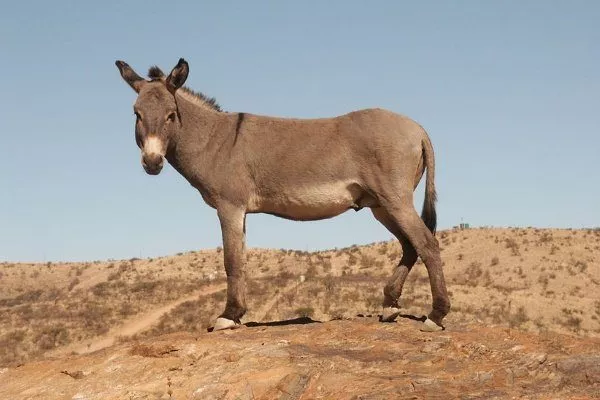
The wild ass is a little-studied animal that lives in deserts and semi-deserts in family herds. An older, experienced donkey is considered the leader. Herds can travel long distances in search of food and water.
Mustangs
The mustang is considered an attractive, freedom-loving animal. In the 16th century, the Spanish, arriving on the North American continent, brought the ancestors of this breed with them. Initially, they were domesticated, but some later escaped and settled in the wild. This is how the wild Mustang horses were born. The name comes from the Spanish word mesteño, meaning "untamed animal."
Over the years, the blood of Spanish racehorses has been mixed with various breeds, ultimately resulting in the creation of a remarkable horse—the Mustang. These are strong, hardy animals. Due to constant crossbreeding, Mustangs have a unique and varied coat. Red, piebald, and bay specimens are most common, while dun, palomino, and Appaloosa Mustangs are less common. While they don't look like horses, they are much more interesting. Mustangs range from 130-150 centimeters at the withers and weigh around 500 kilograms.
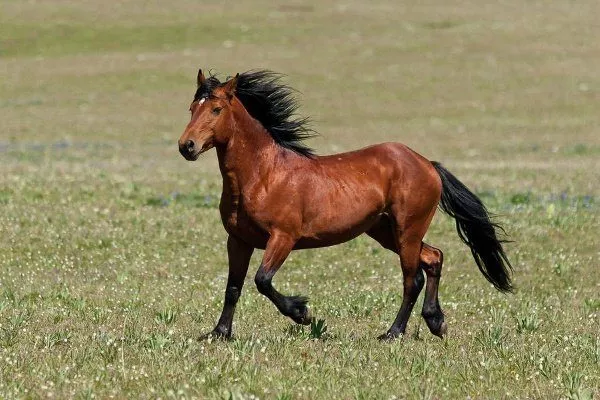
There are also black Mustangs, which display all the beauty of this species' wild species. Black animals were once brought to Mexico and Florida, and they descended from Iberian ancestors.
Heck's horse
This breed is little known. Heck horses are predominantly gray with a grayish tint. They can weigh up to 40 kilograms and stand up to 140 centimeters tall. These horses were bred artificially by crossing feral horses. The process itself was spearheaded by the Heck brothers in the early 20th century. This influenced the breed's name.
Today, crosses of these horses with Polish Koniks are found in major zoos around the world and in nature reserves in Germany, Spain and Italy.
Brumby
The brumby is a wild horse native to Australia. The horses became feral after domesticated animals escaped or were released by their owners in 1851 during the gold rush. In 1788, the horses were brought to Australia. Due to the appalling conditions of transportation, only the strongest and most resilient survived; the rest did not survive the long journey.
At first, animals were used for agricultural work, becoming useful in the development of Australian lands. Horses and oxen were used as pack animals and means of transport. Later, horses were bred for sale. At one time, animals were raised exclusively for meat and also for their hair.
The breed was developed by crossing with many free-ranging horse breeds. The Brumby's ancestors were most likely some pony breeds, Percherons, Anglo-Arabians, Wallers, and Australian Stock Horses. This contributed to the breed's lack of uniformity in appearance.
The height at the withers ranges from 140 to 150 centimeters. They weigh up to 450 kilograms. They often have a heavy head, a strong back, and a short neck. They have strong legs, straight shoulders, and a sloping body.
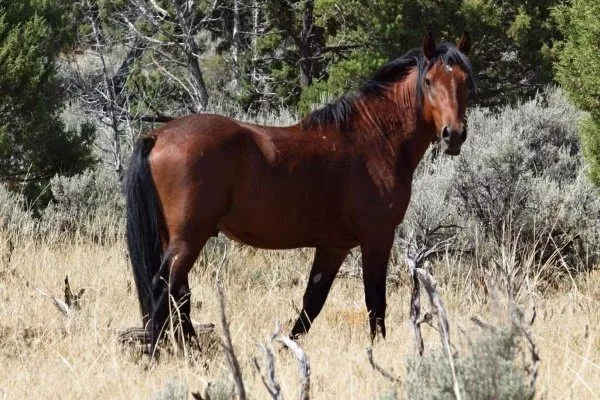
In the wild, Brumbies form herds. They have adapted so well to Australia that they can survive even on a diet of steppe vegetation. They are not riding horses, as herd animals are difficult to tame and break in. They have a free-spirited nature.
Tarpan
An extinct species. Wild horses similar in appearance to their smaller relatives. This beauty never exceeded 136 centimeters in height. Forest and steppe Tarpans once existed. They gathered in herds, some containing over a hundred animals. Horses with a grayish tint of fur were most common.
Tarpans had short, slightly upturned manes and a dark gray tail and mane. Their powerful bodies, supported by strong legs and sturdy hooves, made this breed recognizable. Wild horses' coats changed from gray to sandy during the winter.
Interesting facts about wild horses
There are several interesting facts about wild horses. Some of them are presented below:
- Appaloosa horses' skin can range from a rich, light shade to an unpigmented shade with dark patches. An Appaloosa can be born with one pattern, then evolve into a different "landscape" over time.
- The Camargue horses attracted French poets and artists with their unique appearance. The Camargue coat of arms depicts white horses and black bulls.
- Mustangs are feral domestic horses native to the United States. They are aggressive and hardy.
- Tarpans were impossible to break in. Even if they were domesticated, they died in captivity. Like camels, they could go a week without water.
- The smallest horse in the world was a Pinto. Its birth weight was 2.7 kg, and its height did not exceed 36 cm. Today, horses of this breed are featured at national celebrations and competitions.
- Przewalski's horses often form a ring around their young, placing their young foals in the center. This is how they protect their young from predators.
Today, wild horses exist in some parts of the world. These animals were previously domesticated by humans, helping them with heavy work and transportation. However, some horses escaped and established themselves in the wild, after which most species avoided human contact.