
Andalusian horses are distinguished by their exceptional appearance. They are majestic, graceful, intelligent, and obedient. These many qualities make this breed so popular and sought after by breeders across Europe. They are used for equestrian sports, circus performances, and parade performances.
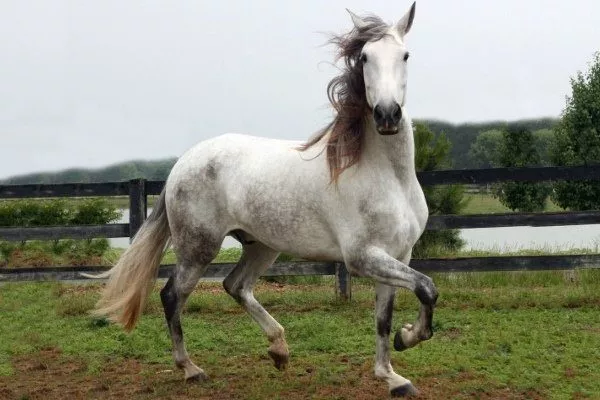
Andalusian gray
History of appearance
This breed takes its name from the southernmost historical region of Spain, Andalusia. The breed developed from local genetic material over several millennia. During this time, many peoples living on the Iberian Peninsula actively contributed to improving the characteristics of the local horses.
In addition to selecting only the very best horses for breeding, they were also crossed with Arabian, French, and German horses. By the end of the Western European Middle Ages, the Andalusian horse breed had fully developed. By the 15th century, the breed had become the most famous in Europe. Since then, these animals have become renowned throughout the world.
Andalusians were not only actively bred outside the peninsula, but were also used to develop other breeds. Every European monarch owned these horses. This breed was considered the best for cavalry.
In the early 18th century, the demand for horses declined sharply. This was due to several factors:
- a large-scale epidemic in the 1830s put the breed at risk of extinction;
- During the Napoleonic occupation of Spain, the French stole almost the entire horse population, which led to a significant decline in their numbers;
- New breeds appeared in Europe that turned out to be better suited to military conditions;
- The technical process that had an impact on battle tactics showed that the Andalusians and their main advantages were not necessary.
From then until the mid-20th century, Spanish horse breeding was threatened with collapse, and the survival of the horses remained in doubt. Only after World War II did things begin to improve, and in 1962, Spanish authorities authorized the sale of Andalusians abroad.
Exterior and character
The animals' primary uses are equestrian tourism, racing, and hippodrome racing. The modern Andalusian horse is a domestic animal, albeit well adapted to life in the wild. Horses surrounded by care and attention from humans can develop strong bonds with their owners, making it difficult for them to survive in the wild.
Horses range in height from 150 to 160 centimeters at the withers and weigh approximately 400 kilograms. Their coats are predominantly gray, less commonly black, bay, or chestnut. Their distinctive features include expressive almond-shaped eyes, small ears, and a prominent crest. They are distinguished by a large, gently arched neck, a powerful skull, a humped nose, and a long fringe. The Andalusian has a shiny, lush mane. Their massive body has a broad back and muscular shoulders, a rounded, firm belly, and slightly shortened but strong legs with heavy hooves.
By shifting the center of gravity slightly toward the hindquarters, the forequarters are raised as much as possible, making the horse more agile and graceful. The horse is distinguished by its high gait, which can make the Andalusian appear to be dancing rather than walking.
The breed is considered good-natured, with a calm disposition. They are obedient, kind, and hardworking. They are easy to train and discipline. For these reasons, they are often used in circus performances. Another advantage of this horse is its keen intelligence, majesty, and agility.
Use of Andalusians
Today, the breed is popular and sought after by breeders. English racehorses excel in racing, but Andalusians are unrivaled in equestrian sports where precision, rather than speed, is paramount. For these reasons, Andalusians are bred for driving, show jumping, and dressage. Furthermore, just as they did 400 years ago, Andalusians excel in parades and circus performances.
A striking example of how an Andalusian horse demonstrates its extraordinary skills is shown in the video. The animal performs its work perfectly:
Thanks to their good nature, obedience, and intelligence, these horses have become indispensable for equestrian tourism. These characteristics are considered essential by Spanish breeders. Their widespread popularity worldwide has made this breed numerous—approximately 200,000 livestock exist worldwide. The majority of purebred horses are found in Andalusia. The world's best horses are bred at large stud farms and small breeding stables.
The Spanish are committed to keeping their horses in strict conditions—this helps preserve the Andalusians' excellent endurance. The Spanish rarely break their mares; they simply keep them in communal herds. Only stallions are selected for riding.
Horses of this breed are also used to staff mounted police units. These horses are chosen for bullfighting, as traditionally, at the beginning of the fight, the animals must demonstrate their skills: agility and the ability to avoid being gored by an enraged bull.
Many of this breed are found in Portugal. Outside the Iberian Peninsula, Andalusians are actively bred in the United States, Brazil, Great Britain, Mexico, Italy, and the Netherlands. These horses are also found in Russia, but due to the country's underdeveloped horse breeding industry, their numbers are minimal.
Animal lifestyle
The modern Andalusian horse is considered a purely domestic animal, despite its adaptations to the wild. These animals were raised and trained by people who provided them with far from domestic conditions.
People not only tempered the horses' spirits but also managed to surround them with care and attention. Because horses become so attached to people, it's difficult for them to survive independently in the wild.
On the verge of extinction
The early 19th century was a difficult time for Andalusian horses, driven by the popularity and demand for English and Anglo-Arabian thoroughbreds. In Spain, a stud book was established in 1912, and Andalusians were dubbed "pure-bred Spanish horses."
After this, Spanish breeders did a tremendous amount of work to purify the breed from Arabian influences. In 1960, a stud book was also created in Portugal, where Andalusians were called "Purebred Lusitanian Horses." In reality, both purebred horses are the same breed, known as the Andalusian or Iberian.
Content
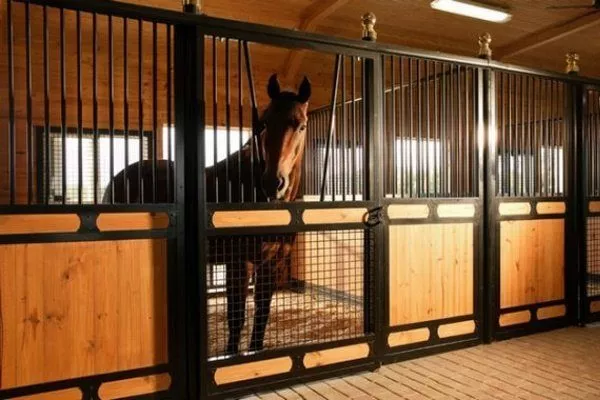
Habitat and diet are important factors when keeping an Andalusian horse. A stable is a room where animals are kept, separated by partitions. Because the Andalusian is a free-spirited horse, it is best kept in a stall (a room where one horse is kept alone).
| Parameter | Meaning |
|---|---|
| Stall area | ≥9 m² |
| Room height | ≥3 m |
| Water temperature | 8-12°C |
In this case, it's important to have an individual stall for each horse in the stall. The stall should be at least 9 square meters in area and at least 3 meters high. The stall should have outward-opening doors and a high-quality ventilation unit. The stall should have a waterproof, cold floor covered with straw or peat. It's equally important to add a forge, a feed room, and a storage room for equipment.
Andalusians require constant access to fresh air, so paddocks—spacious outdoor areas for keeping the animals—are recommended. However, grazing requires a fenced clearing or meadow.
Care and nutrition
With proper care and a balanced diet, a purebred horse can live for over 25 years. Caring for a racehorse involves regular veterinary examinations, minimal exercise, and grooming.
Nutrition
- ✓ Vegetables: carrots, beets, potatoes, apples – 5 kg/day
- ✓ Cereals: oats, wheat, rye – 3 kg/day
- ✓ Water: 50 liters in summer, 30 liters in winter
An Andalusian's daily diet should include carrots, potatoes, beets, and apples. Oats, hay and straw, wheat and rye, and legumes are also essential. Animals require clean water.
Before each meal, it's important to water your horse. In summer, one horse requires 50 liters of fresh water; in winter, up to 30 liters is sufficient. Horses are fed frequently and in small quantities. Overfeeding can cause stomach or intestinal colic, and excess calories can disrupt digestion.
Feeding racehorses before physical activity is strictly prohibited. The diet should be varied, based on succulent and filling foods containing fiber, vitamins, proteins, and minerals. When feeding dry food, the horse should receive 2-3 kilograms of feed per 100 kilograms of body weight. For young racehorses, the daily ration is increased by 15-20%.
Horseshoe
Andalusian horses are shod only on their front hooves, using a lightweight material. Horses that compete in races and racing are shod on all four feet, using a more durable material.
Changing horseshoes is a must—they are replaced every 30-40 days or immediately after cracks are discovered. It's advisable for horse owners to allow their horses a short break from shoes once a year by letting them out on soft grass barefoot.
Replacing a horseshoe is done according to the following scheme:
- Inspect the hooves for any damage. Even the slightest scratch can cause serious inflammation in horses.
- Carefully remove the old shoe so as not to damage the horse's leg.
- Remove dirt, dust, rough tissue, and foreign particles from the horseshoe.
- Treat the lower part of the legs with a disinfectant and leave the animal for 15-20 minutes.
- Select horseshoes of the appropriate size, cool them and attach them, starting with the front legs.
Cleaning
| Stage | Tool |
|---|---|
| Hoof cleaning | Hoof hook |
| Dust removal | Rubber scraper |
| Wool cleaning | Hard brush |
Regular grooming will ensure your horse remains in good health. This process is also essential to ensure the animal is clean, with its mane and coat looking shiny and silky. Horses are groomed daily, following certain guidelines:
- Because Andalusians are considered calm horses, there's no need to tie them up. However, during grooming, assistance is essential: one person holds the animal while the other grooms.
- The beginning of grooming involves an important step: clearing the hooves of dirt, stones, sand, and trapped grass. Particular attention is paid to the frog—a sensitive, V-shaped area.
- Using a rubber scraper, go over the fur to remove dust, dirt, excess particles, and plant debris. Work the scraper in a circular motion against the fur's growth. Avoid scraping the legs, spine, and bones; instead, work from the neck to the stomach, then to the sacrum.
- From the neck to the tail, cleaning is carried out with a hard brush - this helps remove excess hair and parts that remain after cleaning with a scraper.

- The face, ears, and back are cleaned with a soft brush. It is applied to areas of the body with short hair.
- Wipe your face, ears and nose with a damp cloth.
- The mane is combed with a special comb, and the horse’s tail is combed with another brush to remove any remaining dirt and other foreign parts.
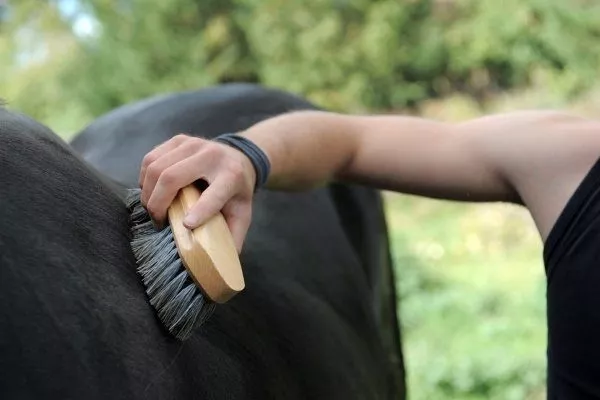
It's important to use different brushes and combs for each body part. This process seems complicated, but it's only at first glance. After just the second brushing, your pet will be quick and easy.
Where to buy and how much does it cost?
Purchasing a purebred horse is a decision that should be made with care. Before purchasing, it's important to ensure comfortable living conditions, proper care, adequate nutrition, and attention and attention. Many purchases of this breed of horse require intermediaries. These intermediaries purchase the animals directly from their homeland, Spain. This guarantees a purebred horse with a proven pedigree.
There are several ways to purchase horses:
- At a specialized stud farm. This method is considered the most reliable. In this case, the animals are regularly examined by veterinarians, who ensure they receive timely vaccinations. An expert will be able to accurately describe the behavior, character, and habits of the horse offered for sale. An additional advantage is the presence of awards for sporting or other achievements. A distinctive feature of the stud farm is the provision of a purebred pedigree.
- At horse shows. This place is considered one of the best for buying a breeding horse. Only the best racehorses are presented here. The intense competition among owners helps to evaluate the stallions' qualities and also provides an opportunity to negotiate prices.
- From private breeders. These are resellers who typically sell racehorses at exorbitant prices. The advantage of buying horses from private breeders is that they may have rare varieties of Spanish stock. It's important to understand that buying from a private breeder carries a significant risk, as there's a risk of being scammed.
- In sports and equestrian clubs. These establishments specialize in the care, training, and preparation of horses for racing. They don't sell horses, but you can find a trusted seller among their customers.
The price of an Andalusian horse depends on its age, appearance, health, pedigree, and training level. Two- to three-year-old Andalusians cost between €8,000 and €15,000. Four- to five-year-old horses cost between €15,000 and €25,000, while six- to eight-year-olds cost between €25,000 and €35,000. Professionally trained horses can cost between €16,000 and €70,000.
Breeding
Andalusian horses are considered versatile and capable of performing any work typically assigned to domestic horses today. However, given the high price of breeding animals, breeding them solely for meat and milk is foolish.
There's also no point in breeding this breed if the horse is needed for racing or pulling carts. Today, the English Saddlebred is preferred for racing, while cheaper, unbred horses are chosen for transporting goods.
Andalusians are best bred for equestrian competitions (show jumping, driving, or dressage). They are intelligent, trainable, agile, and obedient. This breed has proven itself excellent in pleasure riding. It is best to breed horses for sale to private stables or to travel agencies specializing in equestrian tourism.
Because horse breeding in Russia is very underdeveloped and the costs of breeding purebred horses are quite high, such a business cannot be considered profitable. Even within the livestock sector, many more profitable and promising areas can be found than breeding purebred horses.
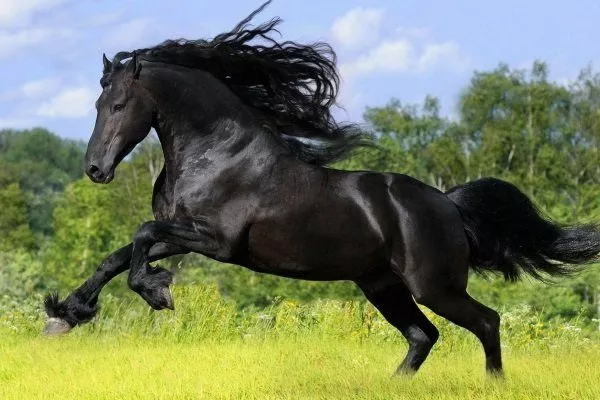
Black Andalusian horse
Breeding racehorses is best done only if you have a strong passion for these animals. Even then, a stable shouldn't be your primary source of income, especially since the business will be unprofitable for the first few years. And in the future, it may not be possible to reap sufficient profits from such a venture.
Interesting facts
There are many interesting facts about the Andalusian horse. Below are some of them:
- Numerous legends and superstitions have been invented about the Andalusian horse's coat color. A horse without white markings and swirls was considered unlucky and had a bad reputation. A horse with white spots was considered kind and docile. If the horse had swirls on its body that the animal couldn't see, it was a bad omen.
- For over a century, the breed was developed in Spain. Exporting its specimens abroad was prohibited. The animals were guarded by monks, who prevented the crossing of purebred horses with other breeds.
- Andalusian horses excelled in knightly combat and battles—with their help, riders always emerged victorious. This military glory made the "Spanish horses" popular, leading great Renaissance artists to paint exclusively this breed.
- The horse's high gait gives it a slightly "dancing" gait. When trotting, the horse can easily lift its front legs up to its chest.
The Andalusian horse breed is considered the most famous in Spain. It has gained popularity among many breeders, renowned not only for its attractive appearance but also for its physical attributes. Today, breeding horses is only profitable abroad.