
A saddle is a special piece of equipment for a horse that ensures comfort for both the rider and the horse. It comes in a variety of designs, providing comfort for the rider and optimal protection for the horse's back from strain and injury.
What does a saddle consist of?
The saddle's shape and weight were experimentally selected. Every line of the saddle has been carefully considered, and every element has a specific function.
A rider sitting bareback on a horse puts their weight on the animal's back. The sit bones bear the brunt of the load. A saddle distributes the load across the entire contact area.
The saddle consists of the following elements:
- Luke — the bending part of the frame. It allows the rider to sit more confidently and securely in the saddle. There are two types of pommel: the fore-bow and the hind-bow.
- Seat — it's located below the bow. This is what the rider occupies during the ride.
- An archak, or lenchik, is a rigid frame consisting of a pommel and side benches. It is made of laminated wood, plastic, or fiberglass. The size and shape of the archak determines the appearance of the saddle.
- Girth - stirrup straps (they are also called stirrup leathers).
- Stirrups are attached to the saddle by stirrup leather and stirrups. They ensure a secure ride and allow the rider to maneuver by changing the center of gravity.
- Schneller — locks on which the stirrup rope is attached.
- Wing —elements made of leather. They are designed to cover the buckles that attach the stirrups and girth. The shape of the wings depends on the type of saddle. Dressage saddles have straight and elongated wings, while show jumping saddles have short, slightly forward wings.
- sweat blanket — it's placed under the saddle to increase the horse's comfort. It's made of a natural material that absorbs horse sweat well.
- Saddle cushion — it's stuffed with wool or synthetic material. It prevents the saddle from touching the animal's spine.
- Girths — straps that encircle the horse's body and hold the saddle on its back. Made from leather or synthetic material.
- Martingales — leather straps running from the headband to the headband. These are necessary to prevent the head from being raised too high.
- ✓ The material must be natural and hygroscopic to effectively absorb sweat and prevent irritation of the horse's skin.
- ✓ The thickness of the saddle pad should be sufficient for cushioning, but not too thick so as not to create unnecessary pressure on the animal’s back.
Types of saddles
Horseback riding is a sport, a pastime, a method of rehabilitation and therapy, and more. Depending on their purpose, saddles vary in design, weight, shape, and so on.
Cavalry
These are military and work saddles designed for long horseback rides. They were previously used in the military and were equipped with attachments for cargo and weapons.
Peculiarities:
- a durable tree (made of wood or steel) ensures a high level of wear resistance and distributes the load as evenly as possible;
- weight - from 8 to 11 kg;
- finishing material - rough and durable leather;
- maximum load capacity - 30 kg;
- designed for continuous transitions of 6–7 hours.
Ladies'
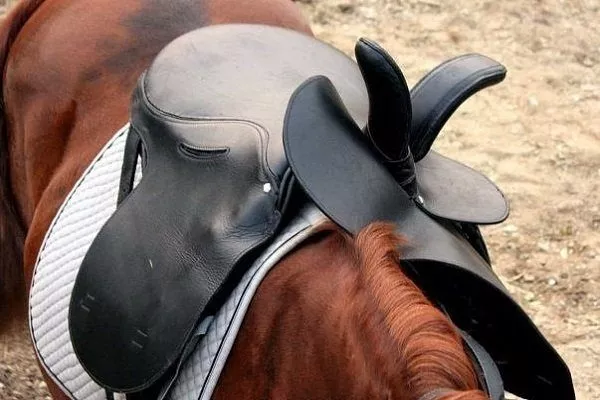
Ladies' saddles were invented in the 14th century. The design was created to accommodate women's clothing—women wearing long dresses would mount sideways on horses.
Side saddle features:
- the harness is equipped with only one stirrup;
- There are two front bows - one foot is placed between them, the other is placed in the stirrup.
In the 1920s, women began wearing trousers. The existence of a women's version of the saddle became obsolete. It is used primarily at horse shows, and less frequently at competitions.
Racehorses
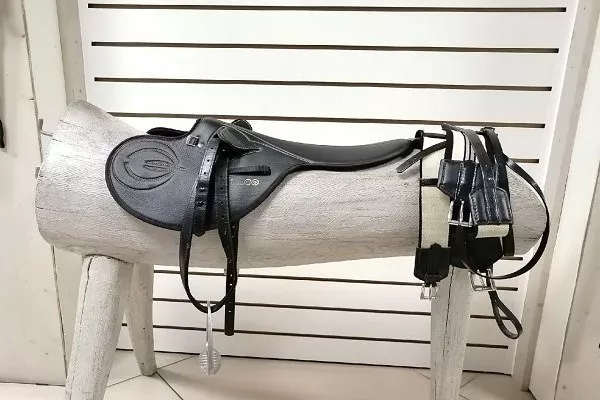
Designed exclusively for racing, it is the lightest saddle among horse tack. It looks very elegant and lacks many of the elements used in other sports.
Features of a racing saddle:
- weight up to 2 kg;
- no bows or cushions;
- equipped with shorter girths and small wings;
- shape - flat.
A racing saddle is completely unsuitable for ordinary riding. Jockeys don't sit in such saddles, but stand in the stirrups.
Competition jumping
An elegant racing saddle designed specifically for show jumping. Its construction takes into account the increased stress experienced by horses during jumping.
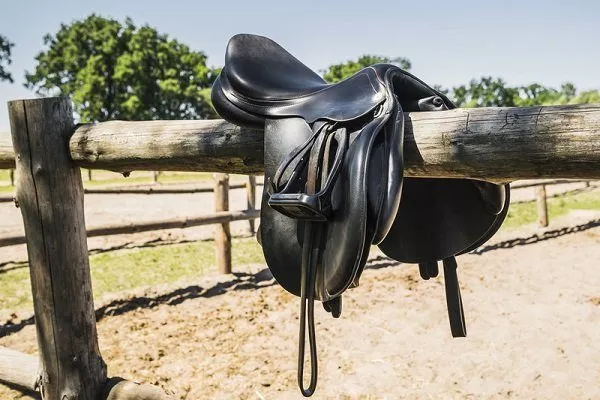
Features of a jumping saddle:
- It has a more robust design compared to the racing one;
- equipped with large, thickened wings;
- the design prevents the rider's legs from sliding forward when the horse lands after jumping;
- The back bow is round or square for ease of fit.
Dressage
A type of sport saddle designed for dressage. It has a more convex tree than other saddles. The saddle is designed to allow the rider to sit deeply and keep their legs well-straightened.
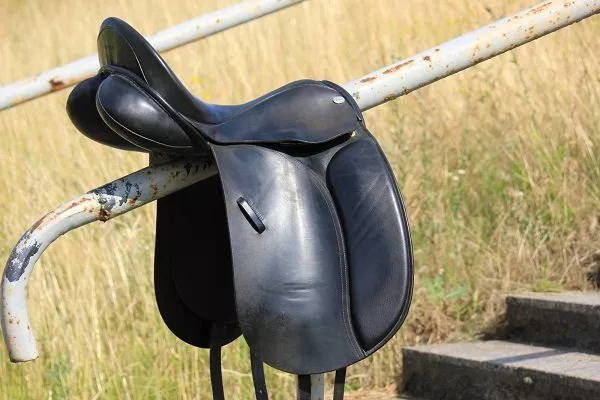
Features of a dressage saddle:
- shortened seat - provides the deepest possible seating position for the rider, necessary for riding;
- long and narrow wings - to support the leg in the desired position;
- reduced upholstery, shelves made narrow and shortened.
Universal
This saddle, with its versatile shape, is used in a variety of equestrian disciplines. It is also suitable for general riding, such as walking, hunting trips, training sessions, and more.
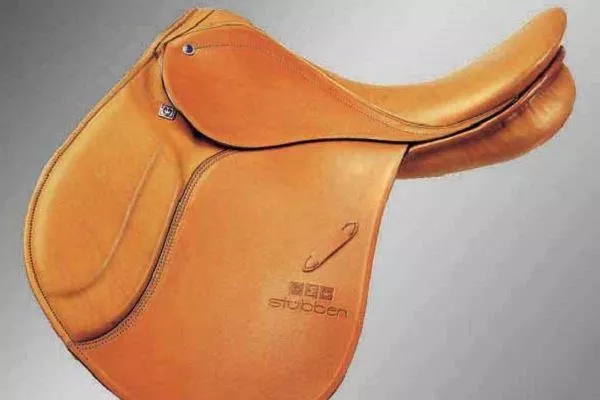
Features of the universal racing saddle:
- weight - about 5 kg;
- sizes - medium;
- The seat is soft, equipped with large wings.
Eventing
The saddles' appearance is very similar to their all-purpose counterparts. They are used in a wide variety of equestrian events. An eventing saddle is required for the second day of eventing—for steeplechase and cross-country, and for cantering in a field seat. It is also suitable for regular walks and riding.
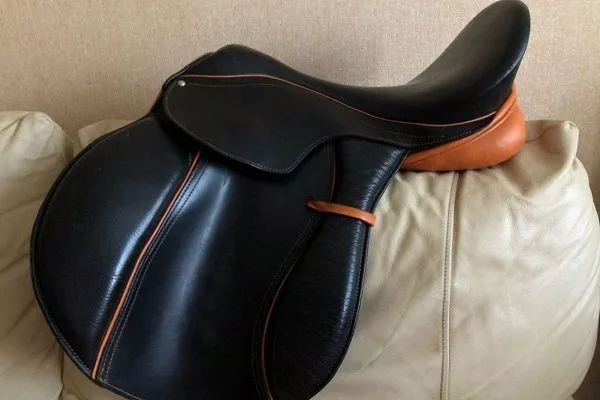
Features of the eventing saddle:
- unlike the universal one, it is equipped with a more forward-facing wing and cushion;
- the wing is often equipped with external knee rests - this solution is necessary for support during field landing;
Cossack
They are designed for long journeys. Their shape is radically different from other saddles. The main elements are the fenders, arch, and pads. The design allows riders to trot while standing with straight legs.
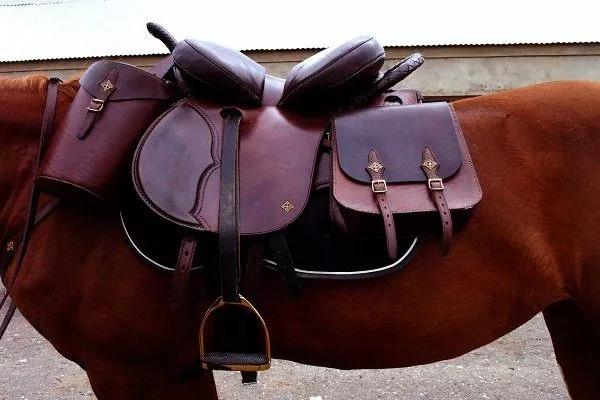
Peculiarities:
- It has a special shape and a small handle, which allows for trick riding;
- All products have a holster and a food bag;
- the distance between the pommels is less than that of all other saddles;
- wooden arch with a concave profile;
- a cushion with soft stuffing - it is placed on the archak, and on top of it - a saddle troke;
- provided with groin.
A pakhva is a tail strap or harness. One end is fastened to the cantle. The other end has a soft loop through which the horse's tail is passed. A pakhva prevents the saddle from slipping down the horse's neck during steep descents, rough terrain, and trick riding.
Officers
They are intended for parades and various military events. They are used by the mounted police and the army. Another name is Warsaw saddles.
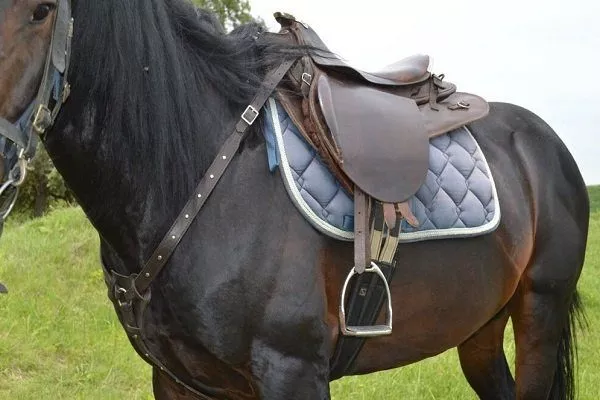
Features of the officer's saddle:
- features a comfortable deep fit;
- equipped with numerous rings, bags, and straps for securing cargo and weapons;
- It has a comfortable curve for the horse - the saddle does not rub the animal's back for a long time, and is suitable for hiking and field riding.
Cowboy
Another name for these saddles is "western." This design was used by cowboys herding cattle. The saddle's shape ensures a stable and comfortable position for the cowboy, even during sudden movements and when the horse stops.
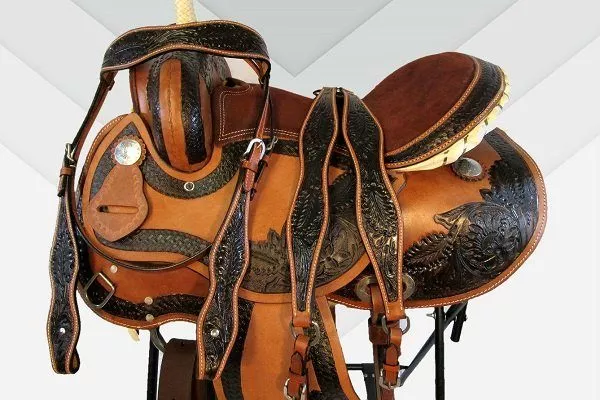
Features of a cowboy saddle:
- large and heavy - up to 15 kg;
- the main difference from other types of saddles is the lasso horn;
- deep shape and high bow height - for a confident fit while freeing the cowboy's hands;
- wide stirrups - so that the cowboy can stand up while the horse is running;
- leather pads - to protect feet from thorny bushes;
- A comfortable design for the animal - thanks to the wide pommel, the rider's weight is distributed as evenly as possible (the saddle is suitable for long rides).
Australian
They look like a unique hybrid of cowboy and classic European saddles. They provide a comfortable riding position and are suitable for long rides.
Features of the Australian saddle:
- light weight;
- horse-friendly design;
- shaped like a soft chair;
- There are small knee pads in front.
Bezlenchikovye
This is a training saddle. It stands out from other types due to its softness. It is used for riding horses with weak or injured backs.
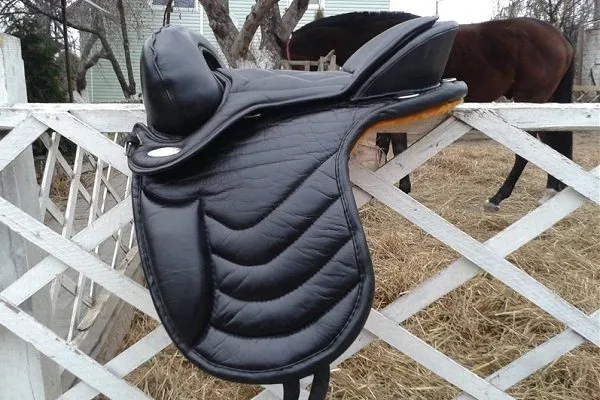
Features of a treeless saddle:
- there is no rigid base (tree);
- material - leather;
- There are special gel pads that are placed on the horse's back.
Pack animals
They are designed specifically for riders carrying bags, sacks, and packs. Their design includes secure cargo attachments. These saddles are popular in mountainous terrain where carts are not accessible.
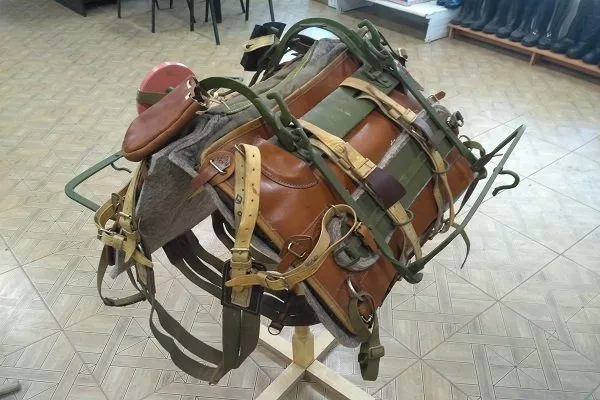
Features of a pack saddle:
- the tree is made of glued wood, but can be made of metal;
- the top is covered with soft leather, the second option is felt;
- It is secured to the horse using two girths to more securely hold the load;
- the saddle is equipped with a harness and a breastplate to prevent packs from slipping while moving downhill;
- maximum load weight: 100–130 kg.
Spanish
This is a lightweight version of Australian saddles with a European twist. Its main advantage is its comfort, thanks to its design, and the ability to withstand long periods of riding. These saddles have proven themselves to be excellent training saddles, making them ideal for learning to ride.
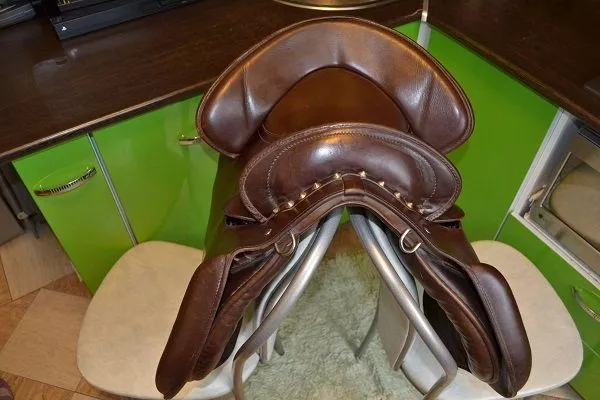
Features of the Spanish saddle:
- There is a high side at the back for a comfortable fit;
- There is no bow in front, instead there is a small side.
Vaulting saddles
This saddle looks a little unusual compared to other types of saddles. Riders use them to perform athletic exercises—either directly on or near the horse.
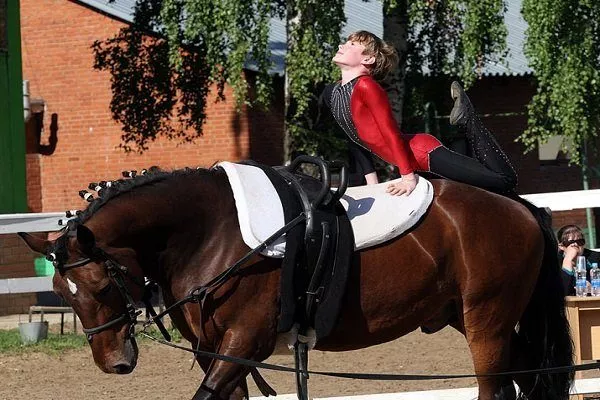
Features of saddles for vaulting:
- has a non-dismountable design;
- all parts are tightly attached to each other;
- a small-sized archak is complemented by pillows;
- Handles are attached to the back, which the rider holds onto while performing exercises.
How to choose a saddle?
The saddle should be comfortable for the person and, at the same time, not cause discomfort to the animal.
What to look for when choosing a saddle:
- Type of activity. For riding, for sports, for certain equestrian disciplines.
- Physical characteristics of a horse. This refers to the specific body structure of different breeds, the height of the withers, and the width of the back.
- Size. It's determined by the distance between the archak's shelves—this is the saddle's width. The wider the horse's back, the larger the size. Saddles usually have two sizes: one for the person and one for the horse. The first is determined by the length of the legs, the second by the width of the animal's back.
Choosing a saddle is complicated by the lack of a standardized sizing chart (sizes vary between manufacturers). It's essential to try on any tack before purchasing. It's best to consult a professional to help you choose the right saddle and other equipment for your horse.
How to make a saddle with your own hands?
Making a real saddle is a complex and labor-intensive process. For DIY projects, it's best to choose the simplest possible model. Experience working with leather is advisable.
To work you will need:
- cardboard;
- wire;
- plywood, wood or plastic, fiberglass;
- foam rubber;
- leather or thick fabric;
- belts - homemade or purchased;
- file;
- hammer;
- nails or a stapler - to fix the parts.
The procedure for making a saddle:
- Place a 1.5 m long piece of wire on the animal's back. Press it firmly, forming the contour of the back. Position the front part of the archak 5 cm below the horse's shoulder blades.
- Place the wire on cardboard and trace the outline. Cut out the piece along the outline and place it on your back to try it on. If there are any discrepancies, adjust the pattern.
- Make the arch from plywood, plastic, wood, or fiberglass.
- Place the wire, curved to the horse's back, onto the material and cut it out. It's unlikely you'll get the perfect shape right away—you'll need to adjust it.
- Upholster both sides—the outside and the inside—using different materials. For the inner lining, use foam rubber. Fold it in 3-4 layers and trim along the ends of the archak, leaving a 1-2 cm allowance.
- Cut the base from a sheet of plywood. Place it on the arch, trimming away any excess. Place a layer of foam rubber between the prepared base and the tree. Secure the structure with nails.
- Cover the outside of the archak with thick material so that it covers the entire body.
- Buy girths at a store. Attach them to both sides of the saddle—be sure to align them symmetrically, otherwise the horse will be difficult to control.
Video on how to make a saddle:
How to put a saddle on a horse?
To saddle a horse without any problems, you'll first need to gain its trust. Beforehand, the horse undergoes basic training and learns commands.
Saddle order:
- Inspect the animal's back. Put the saddle on if there are no injuries or abrasions. Remove any hay, thorns, or other debris from the back.
- Place pads or a pillow on your clean back.
- Approach the horse from the left side. Throw the stirrups and girth onto the seat, and place the saddle on the withers.
- Check to see if the stirrup or girth strap is under the saddle. Move the saddle onto your back.
- Lower the girths and tighten the straps until you can fit a finger between the horse's body and the strap. You'll tighten the girths fully later, once you're in the saddle.
- Lower and adjust the stirrups. Adjust their length individually to suit your needs.
- ✓ Check that the saddle does not press on the withers or slide back when moving.
- ✓ Make sure there are no gaps between the saddle and the horse's back that could cause chafing.
Video on how to saddle a horse:
The wide variety of saddles often leads the average rider to make the wrong choice. There are no standards. Choices are based on the task at hand and differences in the animal's body structure. Riders also differ in their posture. Considering all the factors involved in choosing a saddle will ensure both rider and horse feel comfortable.
Thank you for this material, it was very useful