Loading Posts...

Types of horse halters and how to make them yourself

In addition to attention and care, keeping a horse requires specialized equipment. One essential item is a halter. This is a special piece of equipment for horses without a bit. It's most convenient for moving animals short distances or as a restraint while waiting, for example, during a veterinary examination or bathing.

Halter and its features

A halter is not made of iron, so it doesn't provide strict control. Its special weave ensures a comfortable fit on the horse's muzzle and allows for gentle control.

Criteria for choosing material for a halter
  • ✓ Consider the horse’s allergic reactions to materials (for example, synthetics can cause irritation).
  • ✓ Pay attention to the material’s resistance to weather conditions (rain, sun, frost).

The device itself looks simple and has a small set of parts:

  • nose strap (capsule);
  • carabiner or buckle;
  • strap for cheeks, back of head and chin.

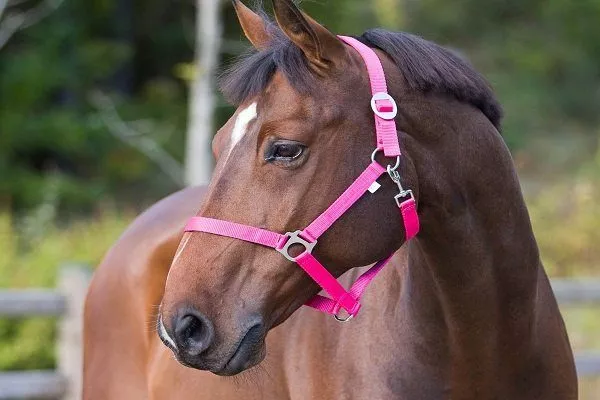
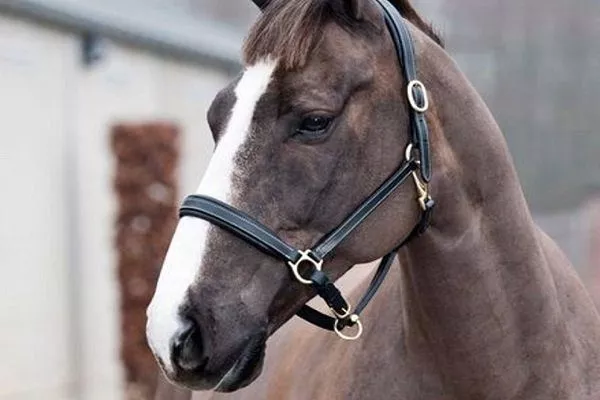
The photo clearly shows what the accessory looks like when worn on a horse:
Halter on a horse

Types of halters

Name Material Purpose of use Peculiarities
Exclusive show halters High-quality durable leather Off-site events Soft backing, decorated with fittings
Everyday halters Various materials Daily use Simple design without frills
Leather halters Leather Durability and convenience Tight fit, does not cause discomfort
Rope halters Nylon or yacht rope For anxious horses Reliability, knots for rigor
Halters made of braid Braid Strength and diversity Variety of colors, soft linings

Horse halters are divided into several classifications. The most common classification is based on their intended use:

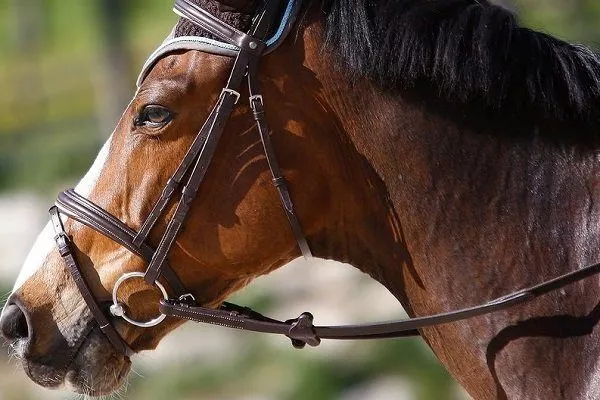
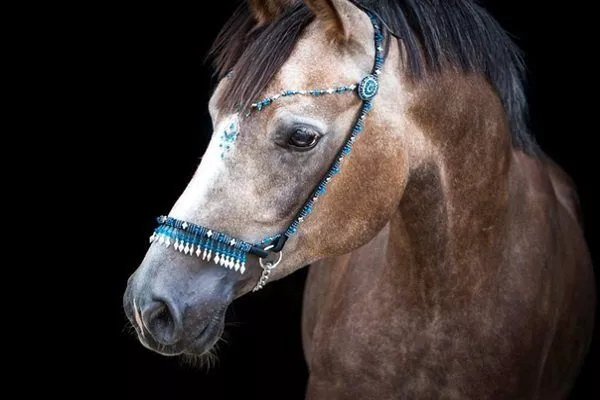
  • Show (exclusive) halters. Very beautiful, elegant, and with a minimal number of straps, they're quite expensive and are often used for outdoor events like horse racing, shows, circus performances, and so on.
    These devices look elegant and usually blend seamlessly into the animal's head. They are made of high-quality, durable leather. They feature a soft padding on the back strap and nose bridge. A buckle on the left cheek allows for size adjustment. They are often decorated with beautiful fittings.
    Exclusive show halters
  • Everyday halters. Used in everyday life, these are simple, no-frills designs.
    Everyday halters

A halter is one of the most essential pieces of equine attire. Let's look at the classification of materials used for this item:

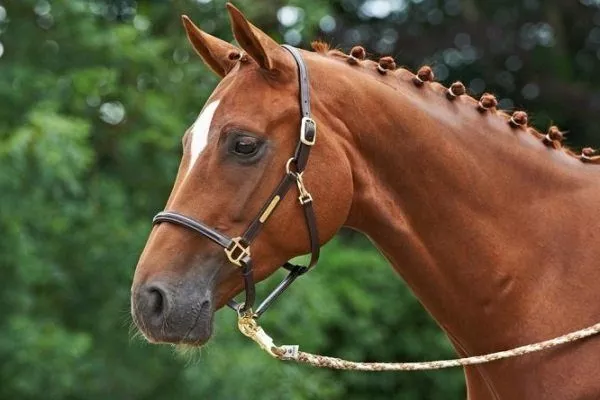
  • Leather halters. They are strong, durable, fit tightly to the horse's body and do not cause him any discomfort.
    Leather halters
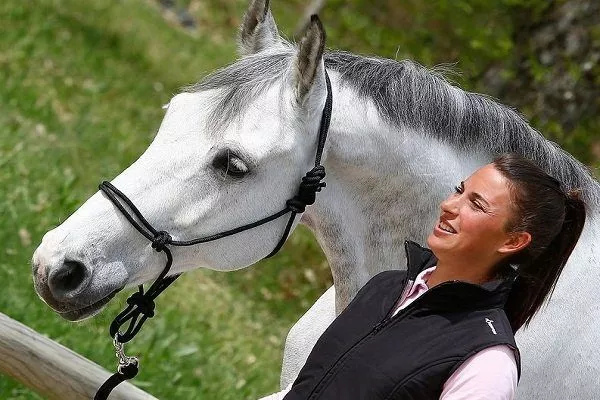
  • Rope. The most economical. They are made from strong rope with a diameter of about 8 mm. These halters are considered among the most reliable. This rope accessory is most often used for particularly anxious horses. The knots on the halter help keep the animal under control.
    This type of halter should be used carefully and sparingly. When using a rope halter, it's important to follow certain safety rules:

    • do not leave the animal in it for a long time;
    • do not allow the horse to frolic;
    • do not leave the horse unattended;
    • The device must be optimally selected for your horse.
      Rope
    Warnings when using a rope halter
    • × Do not use a rope halter on horses with sensitive skin or without proper experience with knots.
    • × Avoid wearing a rope halter for long periods of time to prevent chafing.
  • Halters made of braid. These are the most common. They are distinguished by their durability and a wide variety of colors. These products are available with various lining options:
    • On the back of the horse's muzzle and the bridge of its nose, soft velour or fleece is used as a lining;
    • On some parts of the product or on all parts adjacent to the animal’s muzzle, sheepskin fur is often used;
    • The inside of the belts is lined with leather.
      Halters made of braid

Making a halter

Each owner determines for themselves the purposes for which they need an accessory and which type will be most convenient for their pet.

If you can't afford a ready-made accessory, you can sew one yourself. Just follow the instructions for making your own gear.

Halter sizes

To ensure the device fits your pet perfectly, it's important to take all measurements very carefully and accurately. There are several measurements:

  • horse head length;
  • forehead line from the side of the muzzle;
  • length of the bridge of the nose.

Do not use a product that is too small. It will rub against the animal's skin and cause pain.

The video below explains in great detail how to properly measure a horse's head to make a halter:

Tools and materials

If you need to make a halter for your horse yourself, you'll need to choose the material you'll use and stock up on a few tools. This consists of the following components:

  • leather or synthetic straps;
  • fleece or soft velour;
  • awl;
  • large needle;
  • 5 strong rings - for attaching belts;
  • strong threads;
  • sewing machine;
  • scissors.

The steps to making a leather halter

Making the product will not be difficult if you have prepared all the necessary tools and materials in advance, and taken measurements of the horse's head.

Halter Making Preparation Plan
  1. Check that you have all the necessary tools and materials before starting work.
  2. Make sure your work area is well lit and ventilated.
  3. Prepare your horse for measurements by ensuring it is calm and comfortable.

The manufacturing technology consists of several steps:

  1. Take the measurements you obtained from measuring the horse's head and create a pattern based on them. The pattern should have seven straps.
  2. Next, cut out the straps according to the pattern and sew the edges to make them stronger.
  3. Attach a buckle or carabiner to the left side of the occipital strap.
  4. To adjust the halter, make holes on the other side of the product.
  5. Attach a ring to the bottom section of the belt, to which the leash will later be attached.
  6. Connect all the straps with rings. The diameter of the rings should be at least 3 cm.
  7. Use soft cloths on the inside of the straps to prevent chafing.

Video instructions:

Making a rope halter

This device is made using nylon or yachting rope. Nylon rope is more difficult to make because it is slippery and crumbles when cut.

The manufacturing technology of the product consists of several steps:

  1. Using the measurements you have obtained, tie 4 regular knots on the rope.
  2. Fold the rope into a loop and tie a standard knot. The loop should be approximately 10 cm long.
  3. Tie bow knots on the sides of the loop.
  4. Next, make the throat knot. It's tied so that it's positioned in the middle, equidistant between the nose knots.
  5. Make the next knot so it passes near the animal's right ear. The halter should now look its best and be the correct size. A little larger is acceptable.
  6. Tie two long ropes of the halter into a regular knot to create two loops 10-12 cm long.
  7. Before tightening the loops, try the product on the horse's head.
  8. Once everything fits snugly on the animal's head, tighten the knots securely. If necessary, you can adjust them to fit the head and then tighten them.

Video instructions:

A halter made of webbing or cord

Horse halters are often made from strong webbing. These halters always include rings and a strap with a buckle.

One ring is approximately 65 cm in diameter and fits over the horse's muzzle. The second, approximately 105 cm in diameter, is secured to the horse's head, behind the ears. The two rings are connected by three 20 cm long crossbars located along the cheeks. The third crossbar, located under the horse's chin, should be 13 cm long.

To make a halter from braid with your own hands, you need to do the following:

  1. Prepare about 3 meters of sling.
  2. Cut 7 strips and fold them in half.
  3. Connect the ends of the strips in the middle and sew belts from each.
  4. An old belt with a buckle is often used. You'll need 15 cm of the belt with the buckle and 55 cm of the other belt with holes.
  5. Next, fold the strap in half and sew on part of the belt so that its total length is 105 cm.
  6. To make a strap around the muzzle, fold the webbing pattern in half and sew it into one whole ring.
  7. Place the middle strap of the lower part on this ring and in the middle of the sling insert, and place a metal ring from the muzzle.
  8. Next, wrap the ends of the straps and stitch them on the machine.
  9. At the junction of the strap and the belt, connect both ends of the cheek strap with the ring and sew it on.
  10. Repeat the same steps with the second cheek strap.

Once you've completed all the steps described above and have the device ready, try it on your horse. If everything fits, you've successfully made a halter for your pet.

You can learn more about making a horse halter from webbing by watching the video:

Halter care

Inspect all accessories you use on your horse. It's important that they are in good working order, not torn or worn, and that they look clean and neat.

Tips for caring for a leather halter
  • • Use only specialized leather care products to avoid damaging its structure.
  • • Check leather straps regularly for cracks or wear.

To maintain the halter in proper condition, the following measures are necessary:

  • If a break is detected, repair the product. You can do this yourself or take it to a special workshop.
  • Pay special attention to the fold areas. These items often wear out, causing cracks and holes to appear. Address these issues promptly.
  • If the halter is heavily soiled, clean it or wash it with detergents. If it's made of fabric, of course. Glycerin soap is the safest for this procedure. It won't irritate the animal's skin. To wash the item, unfasten all buckles.
  • Regularly lubricate leather equipment with protective cream. If you don’t have a special cream, lubricate it with regular fat or vegetable oil without additives.

Preventive measures

For preventative purposes, horse tack is treated with special products. These create a protective layer that prevents the negative effects of dirt, dust, and sweat.

To prevent leather parts from drying out and ensure they last as long as possible, it's important to always keep them lubricated with protective products. This helps the leather halter remain flexible and pliable.

Periodically inspect all connections on the halter—knots, rings, and buckles. Clean them of dust and dirt.

Storage of the product

For storing a halter, it's best to choose a room away from direct sunlight. This is most often a dry, ventilated barn. Other guidelines:

  • Ammunition must not be stored near central heating radiators. Items near them dry out, harden, and then cause pain to your pet.
  • For long-term storage, it is advisable to use special covers. There are also specialized bags available. These will prevent dust and excess light from entering.
With proper care and storage, horse accessories will last a long time and provide aesthetic pleasure not only to you but also to your horse.

Step-by-step instructions for putting a halter on a horse

Putting a halter on a horse requires certain skills. Horses are shy and cautious animals, so carefully study the steps for putting on a halter. By following the step-by-step instructions, you'll be able to handle the procedure with ease.

The steps for putting on a halter are as follows:

  1. Before placing the halter on your horse, carefully inspect the tack for integrity and the correct position of the fastenings. The fastening should be on the left side of the horse's head.
  2. When approaching the horse, avoid making any sudden movements to avoid spooking it. Approach from the left side and, to restrain the animal, place a lunge rope or lead rope around its neck.
  3. Unfasten the buckle on the head strap.
  4. Hold the halter in your left hand and place it on the animal's muzzle with your right. Once the straps are on and adjusted, fasten the buckle or snap hook.
  5. Make sure the halter isn't too tight for your horse. To prevent it from slipping off, it should fit snugly but still be comfortable.

The video shows how to properly put a halter on a horse:

Precautionary measures

To prevent injury to animals, halters must be used that are liable to tear or snap in an emergency. To achieve this, leather inserts are used in the manufacture of the device, and fastening clasps are designed to snap open under strong force.

The basic guidelines for safe use of a halter are as follows:

  • There is no need to leave the horse in a halter if it is tied - in this case, remove the device from the animal's head;
  • The halter used for a particular animal must fit the horse's head tightly, only then can you be sure that it will not come off;
  • If a horse is grazing in a meadow or a field, then there is no need to put a halter on it;
  • The horse should not be disturbed (restricted in its movements) when in contact with other animals.

Where to buy a halter and what is its price?

You can purchase various horse accessories, including halters, at specialized stores such as https://sedla.ru. The average price of a basic everyday halter is 750 rubles.

To ensure your horse's equipment lasts a long time, pay special attention to its quality when choosing it. Depending on the type of equipment, you should check:

  • softness of the rope;
  • buckles and carbines;
  • strength of belts.
The product should be pleasant to the touch, fit your horse perfectly, and not cause any pain to the animal during use.

A halter is a bridle without a bit, used to lead a horse from one place to another or to restrain it. This equipment can be purchased at a store or made yourself using one of the instructions provided in this article. The key to ensuring the longevity of the product is proper care and storage.

Frequently Asked Questions

How to choose the right size halter for a horse?

Is it okay to leave a halter on a horse overnight?

How often should you clean a leather halter?

Why are rope halters recommended for anxious horses?

What material is best for horses with sensitive skin?

Can a halter be used instead of a bridle for training?

How to recognize a low-quality halter?

How to store a halter during the winter?

What are the most common mistakes people make when putting on a halter for the first time?

Why are show halters more expensive than everyday halters?

Which halter should you choose for a hot climate?

Is it possible to make a halter yourself?

How to avoid chafing from a halter?

Why should the snap hook on the halter be turned towards the neck?

How to disinfect a halter after a sick horse?

Comments: 1
February 5, 2024

Thank you, very interesting

0
Hide form
Add a comment

Add a comment

Loading Posts...

Tomatoes

Apple trees

Raspberry