
Horse owners often have limited knowledge of their animals' bodies. In most cases, they faithfully care for their horses without a deep understanding of equine anatomy and physiology. In this article, we'll examine the structure of equine eyes and potential problems they may encounter.
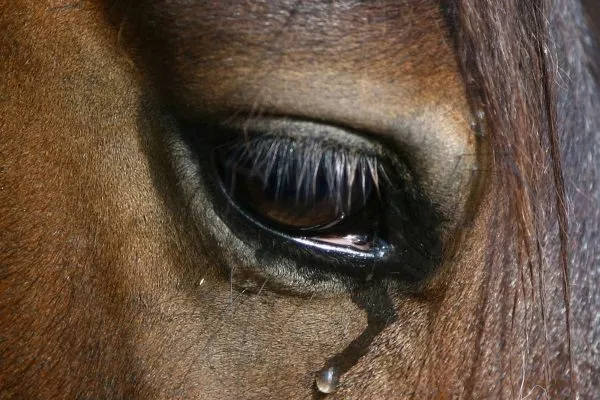
Anatomy of the equine eye
The equine visual system has a specific structure. Detailed description:
- Eyeball. This is the horse's main organ of vision.
- Muscles. They are located around the eyeball and control its movement.
- Lacrimal organs and eyelids. They are adjacent to the eyeball and perform important functions in maintaining the health of the eye.
The following structural elements are distinguished in the composition of the eyeball:
- Fibrous membrane. It acts as a protective layer for the eye and provides moisture.
- Shells consisting of vessels. They control the amount of light entering the eye. The iris determines eye color.
- Crystalline lens. The organ allows the horse to focus its gaze.
- Retina. The horse's visual acuity, its ability to distinguish colors, shadows, and light, as well as its ability to see at night, depend on it. The retina contains a blind spot.
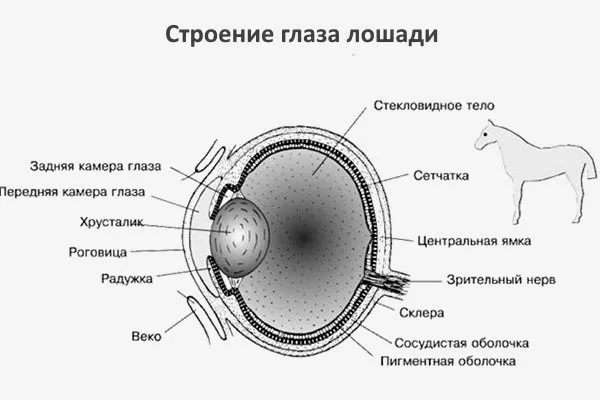
The choroid contains the iris, which determines the color of a horse's eyes. They are typically brown, but blue and green eyes also exist, more common in piebald horses. Iris color is determined by genetics and the horse's coat color:
- The champagne gene is responsible for green eyes.
- Horses with an Isabella color have magpie or blue eyes.
- Animals with a palomino or dun color have a light brown iris.
Purple and red eyes in horses are extremely rare due to genetic factors, and usually appear alongside blue eyes. Red eyes in horses can indicate serious problems and require veterinary attention.
Properties of horse vision
Horses have a unique eye structure. They are positioned on the sides of their heads, allowing them to see across a wide range of vision without having to turn their heads. This is especially important for animals, as it allows them to spot potential threats or predators at great distances.
Field of view
Horses have a total field of view of approximately 360 degrees, making their vision unique. These animals see objects in different areas of their visual field differently. They can notice more even with one eye than a human with two.

This special view can be adjusted by adjusting the position of the head. This is why riders raise their horses' heads when jumping obstacles. This allows them to assess the location of objects or obstacles and take appropriate measures to successfully negotiate them.
Color scheme
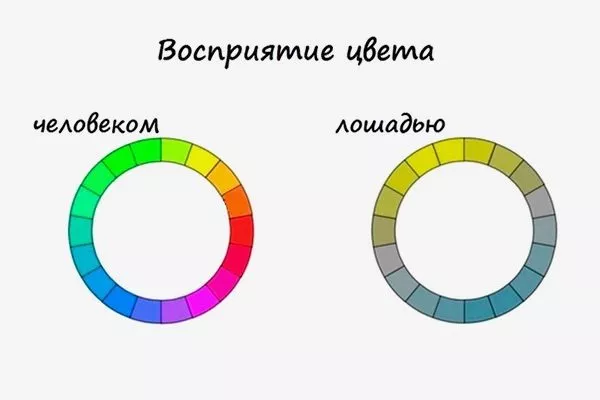
Determining exactly how horses see the world is a complex task, and research in this area is ongoing. It is believed that horses distinguish yellow best, followed by green, blue, and red. Their ability to distinguish colors may be limited compared to human vision.
Sharpness
Horses have good medium-distance vision. Compared to human standards, the average equine visual acuity is considered to be 20/30. This means a horse can clearly see objects approximately 6 meters away, while a human can see these objects from approximately 9 meters.
Night vision
Horses have night vision, partly due to the presence of the tapetum lucidum—a layer of cells in the eye that reflects light back through the retina, increasing the amount of light reaching the photoreceptors. This allows horses to see better in low-light conditions.
Ophthalmological diseases
Horses can suffer from certain ophthalmological diseases. Let's take a closer look at their symptoms and causes.
Blocked tear ducts
Lacrimation in horses can be a problem, especially during warmer months. Typically, tears drain from the eyes through the lacrimal or nasolacrimal duct, which connects to the nasal cavity. These ducts are quite narrow and susceptible to damage.
Damage or blockage of these ducts can lead to tear accumulation in the eye area, which can cause various problems, such as swelling and inflammation. You may notice tearing or staining of the fur around the eyes due to constant moisture.
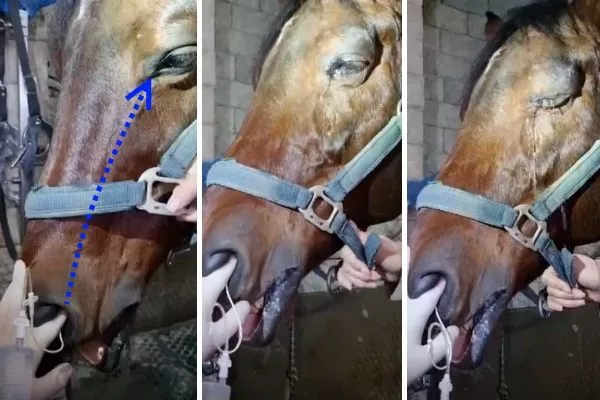
To diagnose the condition, a special green solution is placed in the eye. Normally, green fluid will drain from the nose within 5-10 minutes, as the ocular and nasal ducts are connected. If this doesn't happen, the duct is blocked. To resolve the problem, veterinarians perform a lavage (irrigation) of the horse's nasolacrimal duct.
Uveitis
Uveitis in horses, as in other animals, is a serious condition caused by inflammation of the internal structures of the eye, such as the choroid, iris, and cornea. In most cases, uveitis is caused by viruses, bacteria, or other infectious agents.
Symptoms of uveitis include catarrhal conjunctivitis accompanied by eye pain, lacrimation, photophobia, and pupillary constriction. After a few days, the disease progresses to keratitis and iridocyclitis. The final stage is characterized by cataracts and vitreous opacification (the onset of "moon blindness").
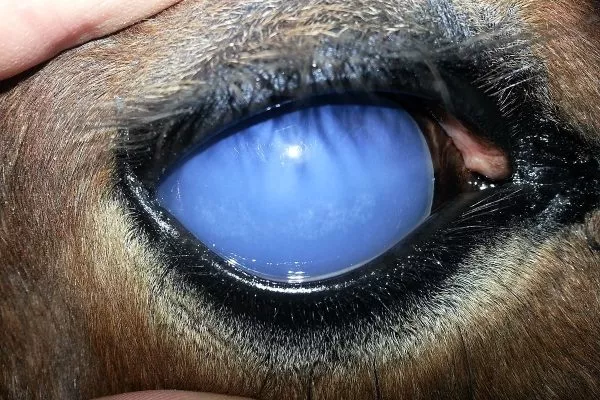
- ✓ A history of 'moon blindness' in a horse may indicate recurrent uveitis.
- ✓ Pupil constriction and photophobia are early signs of uveitis that require immediate intervention.
It is impossible to permanently cure a horse for uveitis. This disease often recurs. Therefore, therapy is aimed at reducing the unpleasant symptoms of the disease immediately and as quickly as possible to prevent complete blindness. To reduce pain, medications to dilate the pupils (Aropin sulfate eye drops) are prescribed, as it is the constriction of the pupils that causes pain. Anti-inflammatory therapy (Flunixin meglumine and topical prednisolone acetate ophthalmic suspension) is also prescribed.
Corneal ulcer
The causes of this condition are not fully understood, but eye trauma can be a trigger. An ulcer is a lesion of the cornea, the outer clear layer of the eye. It can be very painful and cause various symptoms (blepharospasm, corneal swelling, lacrimation, abnormal discharge from the eye, redness, and attempts by the horse to keep the eye closed).
The diagnosis is made after performing a fluorescein test (a substance is placed in the eye that stains the affected areas of the cornea green).
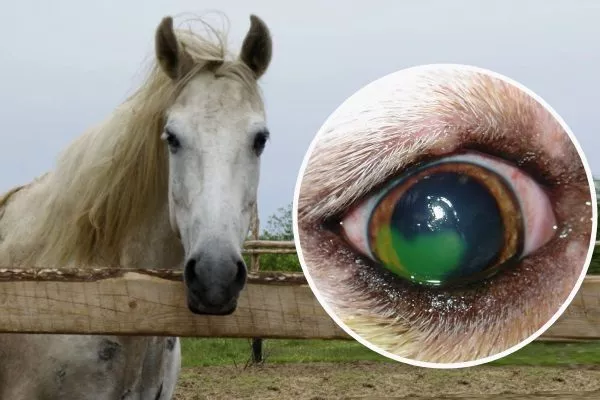
Bacterial and fungal infections are often associated with ulcerative lesions, so therapy should also target pathogens (most commonly streptococci, staphylococci, and pseudomonas). Painkillers (Flunixin meglumine) and atropine are also administered to stop eye muscle spasms.
Conjunctivitis
Conjunctivitis in horses can be caused by a variety of factors, including trauma, bacterial infections, or fungal diseases. This condition is characterized by inflammation of the conjunctiva—the thin, transparent membrane that lines the white of the eye and the inside of the eyelids.
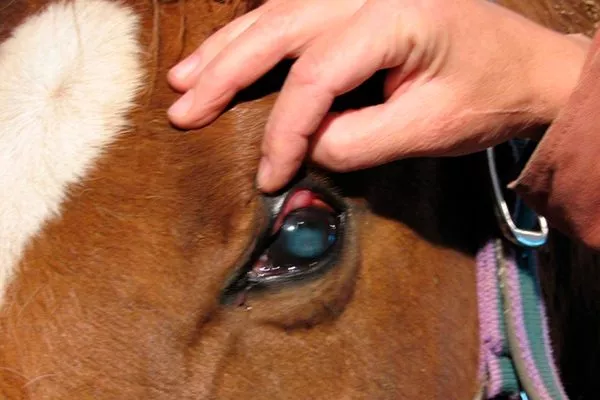
Symptoms of conjunctivitis in horses include yellow fluid draining from the eye, swelling and redness around the eye, as well as discomfort and itching.
When treating the conjunctival sac, it must first be cleaned. This is done by rinsing it with a furacilin solution (1:5000). Next, a broad-spectrum antibiotic is used (for example, 1% tetracycline ointment) and anti-inflammatory eye drops (for example, Ciprovet).
Cataract
Cataracts in horses are a serious condition characterized by opacity of the eye's lens. This lens is responsible for focusing light onto the retina, allowing the horse to see clearly.
Cataracts can be congenital, age-related, or develop as a result of various factors, including certain diseases such as equine recurrent uveitis (RU), European equine sickness (EES), and others. The main signs of cataracts in horses are poor vision and the appearance of white spots in the eye. As cataracts progress, the horse may experience difficulty navigating the world around it and performing routine tasks.
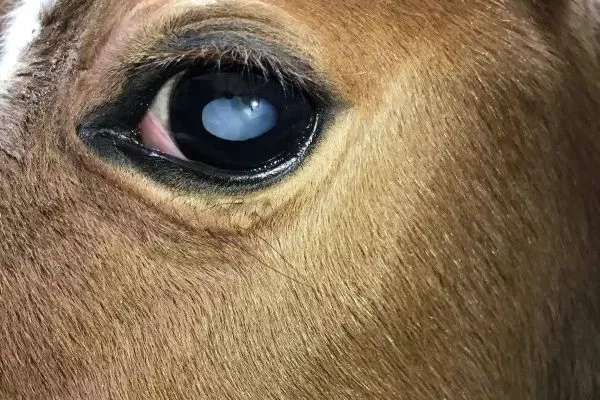
Medications like Katahrom, Vitayodurol, or Catalin can only temporarily slow the progression of cataracts, and only if treatment is started in the very early stages. However, the only treatment option for cataracts is surgery. It costs 60,000 rubles and up. Without cataract removal and artificial lens implantation, the animal faces blindness and even loss of the eye.
Sarcoma, carcinoma and other tumors
Tumors such as warts or growths can have a serious impact on the eyes and surrounding tissues in horses. Symptoms may include:
- swelling of the upper eyelid;
- visual impairment;
- the appearance of nasal congestion;
- protrusion of the eyeball;
- inability to close the eyelid;
- the appearance of ulcers on the cornea.
Diagnosis of eye diseases in horses
It's important to recognize the signs of eye disease in horses to detect and treat problems promptly. Some common signs of eye disease in horses include:
- excessive blinking and squinting;
- negative reaction to light;
- formation of a veil over the eye;
- increased lacrimation;
- redness of the blood vessels in the eye;
- constriction of the pupil.
Treatment
Proper treatment of eye diseases in horses involves several important aspects. Let's take a closer look:
- For most conditions, ophthalmic drops and ointments can help improve eye condition and relieve symptoms. For infections, antibiotics are recommended.
- Even after the horse's condition improves, antibiotics should be continued. This is important to consolidate the results and prevent possible relapse.
- During treatment, move the horse to a dry, warm room, avoiding drafts. Close the windows to reduce bright light. These conditions should be maintained throughout treatment and for several days afterward.
- In the future, provide the horse with conditions that will minimize the risk of recurrence of the disease.
By following these guidelines, you will ensure the best possible restoration of visual function and overall health for your horses with eye disease.
Preventive measures
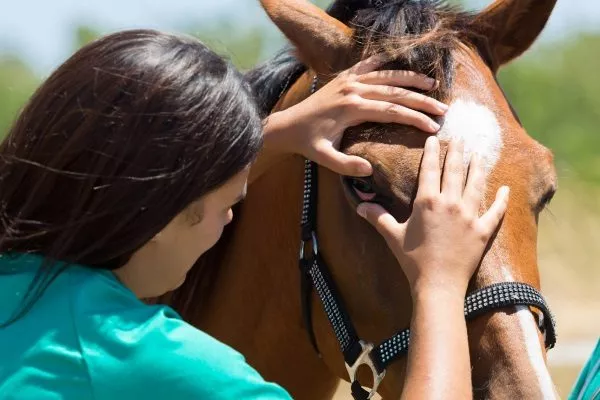
Eye diseases in horses can arise from a variety of causes, including contact with sick animals, injury, eye contamination, and improper handling. To prevent and promptly detect eye problems, follow these steps:
- Inspect your horse's eyes and surrounding hairs daily. Pay attention to symmetry and shape, as well as signs such as redness, increased lacrimation, and swelling of the conjunctiva and eyelids.
- Ensure the horse's stables are clean and provide a balanced, varied diet. Regularly clean horses of debris and dirt. Ensure stalls and mangers are safe and do not pose a risk to the horses' eyes.
- If you notice signs of illness in your horse, isolate it immediately and contact your veterinarian.
- Ensure horses are kept in a location where bright daylight does not blind them and avoid sharp objects that could cause eye injury.
Caring for equine eye health requires attention and regular monitoring. If you suspect any eye problems, it's best to consult a veterinarian who can provide the necessary treatment and recommendations.
Why do horses need to close their eyes?
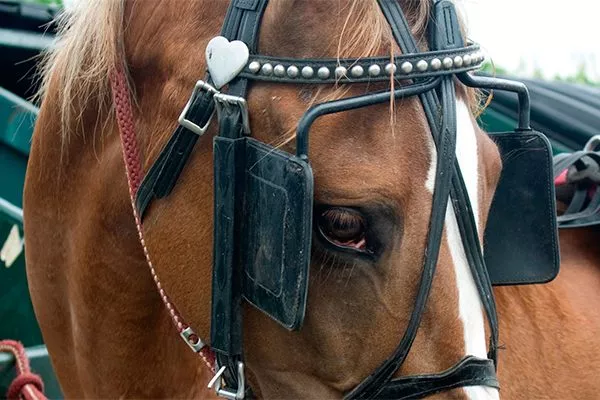
Properly fitted blinders help the horse concentrate on the task it is participating in and can help prevent distractions that may impact its behaviour or performance.
Interesting facts:
- Blinders can be used in the equestrian and horse care fields, depending on specific needs and tasks.
- In addition to blinkers, blinders are used - special devices that completely cover the lateral areas of the eyes and direct the horse's gaze only forward.
They are made of durable plastic and serve several functions, such as protecting the eyes from dirt during racing or adjusting the light level according to the veterinarian's recommendations. - Closing a horse's eyes can help it relax and reduce stress. This can be especially helpful when the horse is in a new situation or unfamiliar environment.
Understanding the structure and characteristics of equine eyes plays a vital role in caring for these magnificent animals. The eyes are one of the most vulnerable organs in horses, and understanding their functions and potential problems helps prevent and treat various diseases.