
Climate conditions are a significant factor that can alter cattle management practices. While animal management is straightforward in the summer, the onset of cold weather raises a number of issues, the most important of which is frostbite.
When do cows freeze?
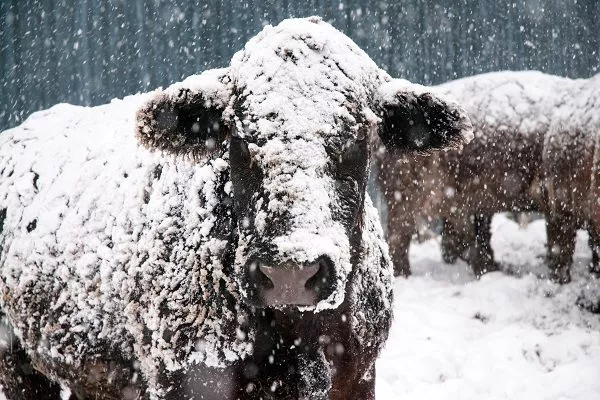
Cows tolerate cold much better than heat, but an animal can freeze if the room temperature is low, there are drafts, or the straw bedding is wet.
It is important to adhere to microclimate indicators:
- the air flow should be at least 17 cubic meters per hour for every 100 adult cows and 50 cubic meters per hour for calves;
- air speed – no more than 0.5 m/s;
- Humidity should not exceed 60%.
You should also remember to clean the barn from manure and change the bedding in a timely manner.
What does freezing lead to?
The main organ affected by frostbite is the udder. The skin becomes red, the animal experiences pain during milking, and becomes aggressive. Frostbite of the tip of the teat is particularly dangerous, as it can lead to blockage and subsequent gangrene.
- ✓ Redness of the skin of the udder, especially noticeable after milking.
- ✓ Increased aggressiveness of the animal during milking due to pain.
- ✓ Blockage of the nipple canal, leading to gangrene if left untreated.
How to help an animal?
In case of frostbite, the cow must be warmed by restoring circulation. To do this, keep the animal in a warm room and rub the lymphatic vessels using a massage brush or woolen cloth.
- Move the animal to a warm, draft-free room.
- Rub the affected areas along the lymphatic vessels with a massage brush or woolen cloth.
- Apply glycerin, alcohol solution or ichthyol ointment to the affected areas.
- Replace the bedding with dry and warm one.
- Provide the animal with warm drinks.
Afterwards, lubricate the affected areas with glycerin, alcohol solution or ichthyol ointment, then change the bedding and give the animal something warm to drink.
How to prevent cows from freezing and getting frostbite?
In order for a cow to feel comfortable during the cold period, it is necessary to create all the necessary conditions for her conditions of detentionThis includes eliminating drafts, providing proper food and water, cleaning the barn regularly, etc.
A draft-free room
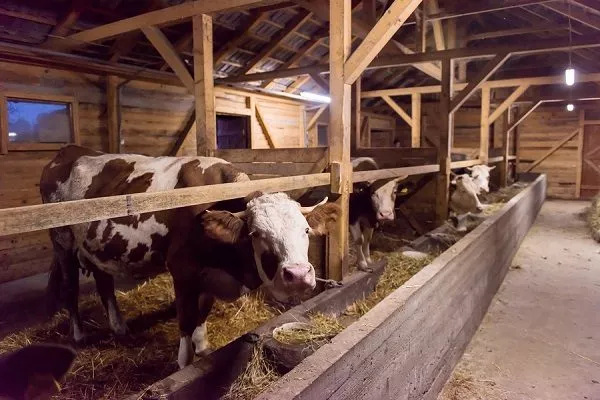
Wintering begins first and foremost with setting up the barn, which must be properly prepared to prevent the animals from freezing, especially calves, which are very sensitive to low temperatures.
What needs to be done:
- seal the cracks and crevices in the walls and between the window frames with insulating material (tow, cotton wool, etc.);
- insulate doors and windows using blankets, boards, roofing felt, straw mats or additional sheathing;
- The cracks in the ceiling and roof should be repaired.
Protecting water pipes from frost
In addition to drafts, cows are also very sensitive to cold water, so they need clean, warm drinking water. An animal needs at least five 10-liter buckets per day. To ensure the water is at the right temperature (room temperature), only use natural materials (wood) in the barn.
If possible, special water heating systems can be installed in the barn.
Automatic drinkers are divided into:
- individual (for tethered cows);
- group (without leash).
The advantage of these tanks is that the water constantly circulates through the pipes, preventing it from freezing. There should be at least two tanks in a barn so that while the liquid in one tank is being used, it is heated to the required temperature in the other.
Proper removal of manure and bedding
Before laying down insulation in the room, it's important to consider the flooring. It should be made of wood (as wood naturally generates heat), and then covered with a layer of hay.
| Material | Heat supply | Moisture-absorbing property | Health risk |
|---|---|---|---|
| Straw | High | High | Short |
| Peat | Average | High | High (ulcers on the udder) |
| Wood shavings | Low | Average | Average |
| Sawdust | Low | Low | Average |
Some farmers add peat, but this material has a drawback: it can cause severe udder contamination, which can lead to ulcers. Therefore, straw is a better choice, as it has increased heat transfer and moisture absorption properties, significantly superior to other bedding materials such as leaves, wood shavings, and sawdust.
There are 2 ways of keeping cattle:
- daily manure removal;
- on manure.
In the first case, the room is completely cleaned, while in the second, straw is laid on top of the manure, creating a "cushion," but hay must be added daily. The thicker the layer of bedding, the more favorable the temperature conditions. Cleaning the room is carried out only in the spring.
Heating
Before the cold weather sets in, it's important to select the right heating system for your barn. There's a wide range of equipment available to create the right microclimate in the space.
There are several types of heating:
- hot water;
- gas;
- air;
- infrared lamps.
The temperature in the barn during winter should be no lower than +4°C; +8°C is optimal. If there are calves in the barn, the temperature should be raised to +10°C, as they are very sensitive to low temperatures.
Winter cold can be a real challenge for farmers, as cows require extra care and attention during this period. Without this, the animals will become ill, and milk yield will decrease. Therefore, it's essential to properly manage cattle to ensure their health.