
The processing of cowhides is a crucial step in leather production. These hides serve as the basis for a variety of products, from durable footwear and horse tack to stylish clothing and accessories. From the choice of tanning method to the subsequent processing stages, every step influences the final result.
What is animal skin used for?
Animal hides have a variety of uses across a wide range of industries. Below are some of the main uses for hides:
- The hides are used to obtain leather, which becomes the material for making various products such as shoes, clothing, bags, belts and accessories.
- Some skins, especially fur skins, are used to create clothing items such as fur coats, hats and gloves.
- In some cultures, skins are used to create traditional costumes, carpets, jewelry, and other artistic items.
- Leather and hides can be used for furniture upholstery, providing a durable and aesthetically pleasing material.
- Skins are often used to create decorative interior elements such as rugs, pillows and bedspreads.
- In some cases, animal skins are used to create casings for percussion instruments such as drums.
- Some types of skins are used in medical implants, plastic surgery, and other medical applications.
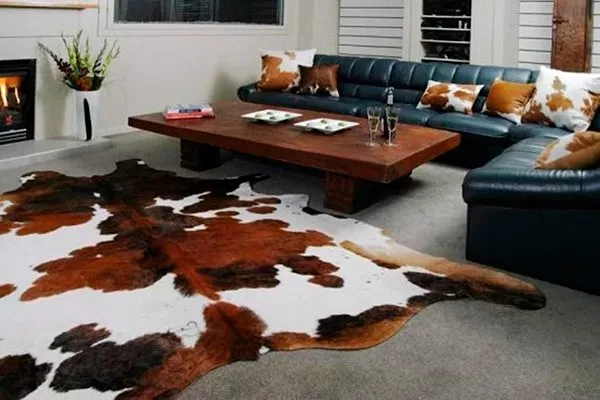
These are just a few examples, and the use of hides may vary depending on the region, culture, and specific industry.
How are cow hides classified?
There are many different types of cowhides, each with its own unique degree of hardness. When processing them, it's important to carefully consider many aspects.
| Name | Skin thickness (mm) | Weight (kg) | Usage |
|---|---|---|---|
| Slimy | 1.5-3 | 13-17 | lycra, chrome leather |
| Opoek | 1.5-3 | 13-17 | lycra, chrome leather |
| sprout | 1.5-3 | 13-17 | lycra, chrome leather |
| Heifer | 3-5 | 13-25 | yuft, saddle cloth, velor |
| Bychina | 5 | 17-25 | manual, mechanical embossing |
| Bull | 5 | 25+ | yuft, morocco, napplak, blinders |
| Cheprak | 5 | 25+ | yuft, saddle cloth, velor |
| Nappa | 1.5-3 | 13-17 | soft shoes, car seats, bags |
| Yuft | 1.5-3 | 13-17 | shoes, bags, gloves |
Slimy
Sklizok (slimed) are a type of cowhide characterized by certain characteristics. This type of hide is typically obtained from young animals transitioning from a dairy diet to a plant-based diet. These hides have a number of unique characteristics:
- Often characterized by the presence of a distinct stripe on the back of the skin.
- The coat becomes less vibrant after the shedding process, giving it a distinctive appearance.
- Such skins are actively used for the production of lycra and chrome leather.
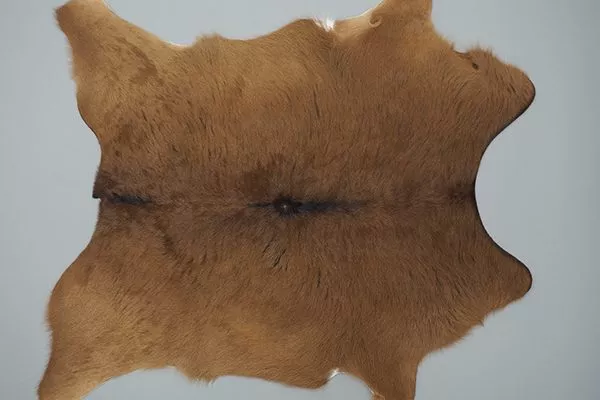
Slippery skins require a specific approach to processing and can be a valuable raw material for certain types of leather production.
Opoek
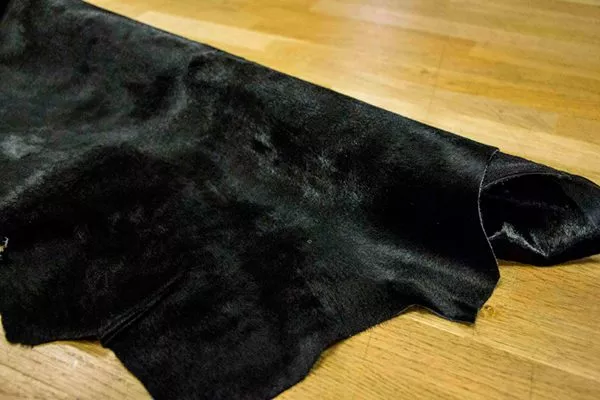
Leather obtained from the carcass of a calf is distinguished by the presence of primary hair, which naturally falls off. The hide-removal process takes place from birth to the end of lactation. This raw material is used in the production of lycra and chrome leather.
sprout
The starting material for production is young animals that have transitioned from a dairy diet to a plant-based diet. This raw material has the following characteristic features:
- presence of a ridge strip;
- dull fur that has undergone shedding.
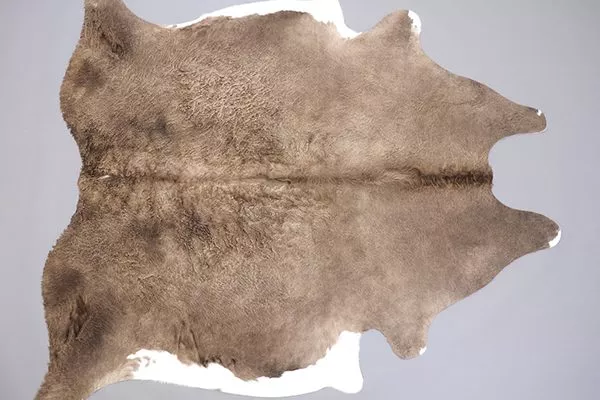
These cowhides are used to make lycra and chrome leather. The hide's thickness varies from 1.5 to 3 mm.
Heifer
This type of hide is obtained from adult individuals. This type, in turn, is divided into several subspecies:
- light skin (13-17 kg);
- average (17-25 kg);
- heavy (more than 25 kg).
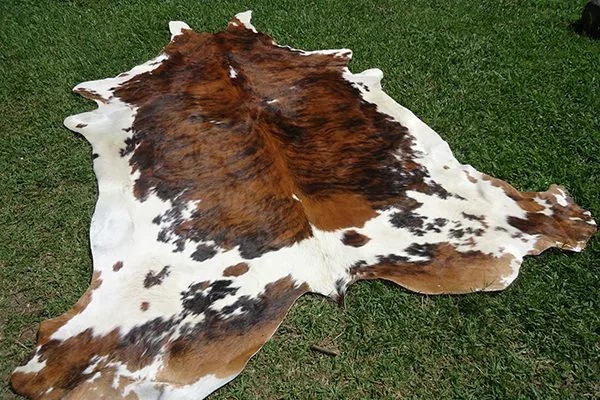
The material is used for the production of yuft, saddle cloth, and velour.
Bychina
This type of hide is obtained from castrated bulls weighing over 17 kg, as indicated by their name. The material is up to 5 mm thick, yet despite this, bull hides are highly durable, and the products last for many years, retaining their attractive appearance.
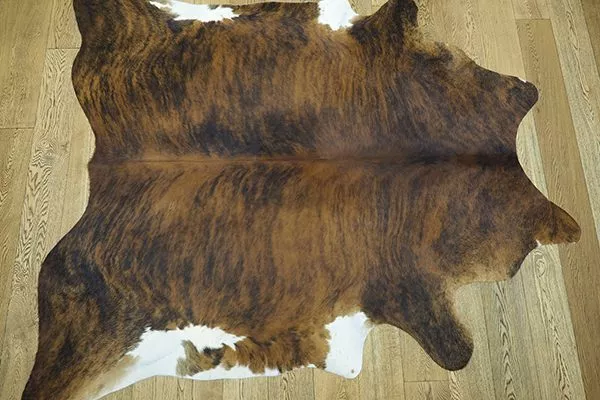
This type of raw material is widely used for both manual and mechanical embossing. Ox hide is characterized by minimal wrinkles in the collar area. Depending on its weight, ox hide is divided into two types: light (17-25 kg) and heavy (over 25 kg).
Bull
This type of hide is obtained from bulls that have not been castrated. The characteristics of this material include:
- significant thickness;
- high strength.
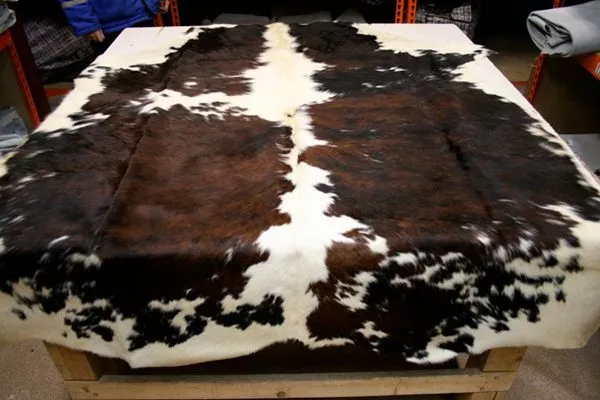
This raw material is actively used for the production of yuft, morocco, napplak and blinders.
Cheprak
Cowhides of this type have their own distinctive features. These hides are most often obtained from adult animals. Characteristics:
- The skins are highly durable, making them attractive for use in various leather goods.
- Skins are widely used in the production of various leather goods, such as yuft, saddle cloth, and velour.
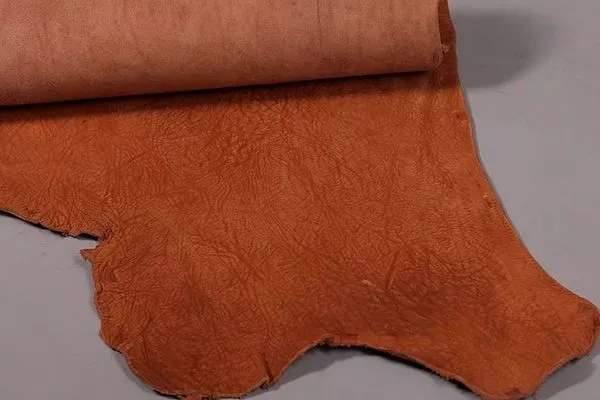
Like any type of hide, saddle cloth requires special attention and specific processing methods to preserve its quality and characteristics.
Nappa
Nappa is a special type of cowhide with unique characteristics. Here are some of the features of this type of leather:
- Nappa is typically characterized by a soft texture and thin thickness. These characteristics make it particularly suitable for making soft and flexible items.
- Despite its thinness, leather can be quite durable, making it a popular choice for a variety of crafts.
- This type of leather is often used to make high-quality products such as soft shoes, car seats, handbags and accessories.
- Nappa can be dyed in a variety of colours, giving designers great freedom to create a variety of styles and collections.
- To preserve its quality and unique characteristics, the leather is processed with special care, using technologies that maintain its softness and strength.
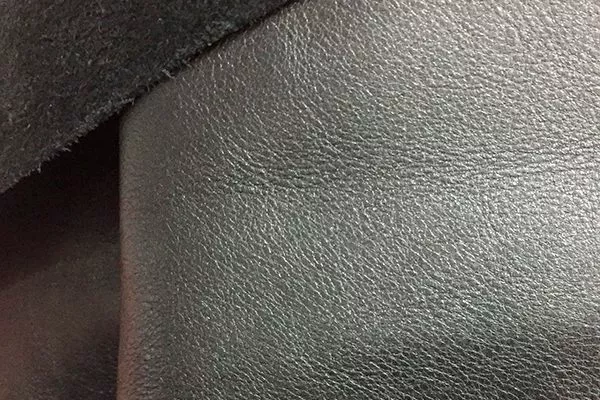
Nappa is a valuable material in the leather industry, providing opportunities for creating stylish and comfortable products.
Yuft
Yuft is a special type of cowhide with unique properties. Here are some key characteristics of this type of leather:
- One of the main characteristics of yuft leather is its softness and good ductility. This makes it an excellent material for making flexible and comfortable items.
- Yuft is often distinguished by its relatively thin thickness, which gives products made from this material lightness and sophistication.
- Yuft leather is breathable, making it suitable for the production of footwear, clothing and accessories.
- This type of leather is often used in the fashion industry to create stylish and sophisticated products such as shoes, bags, gloves and other accessories.
- Yuft is available in a variety of colors, giving designers ample scope for creativity and the creation of unique collections.
- Yuft leather requires careful processing to preserve its natural characteristics. This may involve specific tanning and finishing methods.
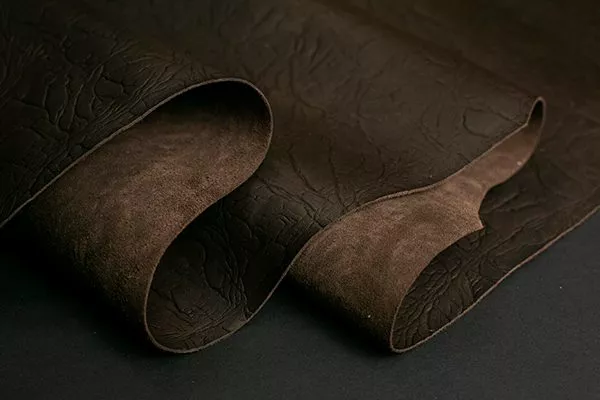
Yuft leather remains a popular material in the fashion world due to its pleasant tactile properties and the ability to create elegant and comfortable products.
Preparation of prepared skins for tanning
Cow hides intended for further processing must meet certain standards, so it's important to follow production procedures from the very beginning. Preparing prepared hides for tanning involves the following key steps:
- Cleaning from residual fat and meat. Removing residual fat and meat is the first step in the process. This is necessary to ensure the material is clean and ready for subsequent processing steps.
- Cooling on a flat surface. The hides are spread out and cooled on a flat surface with the fur underneath. This promotes even heat distribution and prepares the material for the next steps.
- Apply a generous layer of table salt. Iodine-free table salt is applied liberally. This step is essential for effective preservation of the hides and preventing material decomposition.
- Drying for several days. The hides are dried for several days until they are dry and supple. This stage ensures the preservation process and imparts the necessary properties to the leather.
Leather dressing at home
There are many ways to tan cattle hides at home, and the choice depends on specific conditions, preferences, and goals. Some popular methods include fleshing, tanning, fatliquoring, and others.
Soaking and fleshing of cattle skins
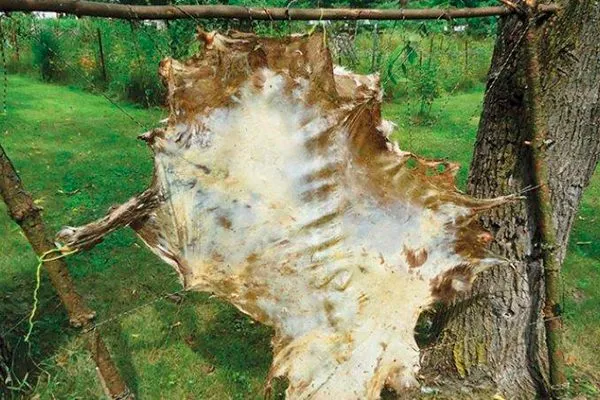
To achieve high-quality leather, it's essential to properly soak the raw material. The step-by-step instructions are as follows:
- Thoroughly wash the hides using chemical solutions and water to remove any traces of blood, dirt, preservatives, and grease. Ensure the flesh is as close to fresh as possible throughout the entire hide. The soaking process is a two-step process.
- Wash the hides with a surfactant (surface-active agent) for 3-4 hours at a solution temperature of 25°C. For the launch, select a liquid with a hardness level of 5. Load the hides into the launch in the evening.
- The solution contains salt (20 g/l), an antiseptic (formaldehyde or KFN – 1 g/l), and a detergent (washing powder or liquid soap – 2 g/l). Stir the skins every 10 minutes throughout the entire process.
- Once the rinsing is complete, drain the old solution and prepare a new, similar mixture for subsequent soaking. Add the hides, stir, and leave overnight.
- During the second stage of soaking, the solution should have a hardness level of 5 and a temperature of 35°C. Soaking time depends on the preservation method used: wet-salted – 2-4 hours, dry-salted – 8-12 hours, and fresh-dry – 24 hours.
- In the morning, remove the skins, place them on trestles to drain the liquid, and then pour out the used solution.
- ✓ The water temperature for soaking should be strictly 25°C for the first stage and 35°C for the second, to avoid damage to collagen fibers.
- ✓ The salt concentration in the preservation solution must be at least 20 g/l to prevent bacterial growth.
Washing, pickling and pickling
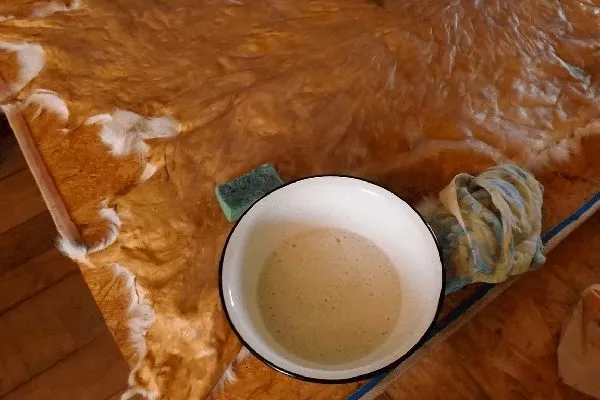
When using chrome tanning agent for leather tanning, it is necessary to create an acidic environment within the leather tissue, which promotes uniform distribution of the tanning agent particles throughout the collagen fibers. Pickling of leather can be accomplished using sulfuric, acetic, or formic acid, or a combination of these.
Instructions:
- The pickling solution contains a hardness level (HL) of 2 to 5, salt (40 g/L), acetic acid (5 g/L), sulfuric acid (1.2 g/L), or a combination of acetic acid (7 g/L) and salt (50 g/L). The pickling time is 24 hours, and the solution temperature is maintained at 30°C.
- During the first 2 hours, continuous rotation is carried out, after which the barge can be left overnight.
- After pickling is complete, perform a skin inspection by testing the cut of the skin with methyl dye.
The red color should be uniform across the entire thickness of the cut. The pH of the used pickling fluid is maintained in the range of 3-3.4.
Tanning procedure
Chrome tanning agent is widely used for tanning leather, including bovine hides. Craftsmen use a simultaneous pelt tanning method, where after pickling, they proceed to tanning in the same solution without unloading.
First, a pre-dissolved dry tanning agent is added, and then, after the tanning agent has been evenly distributed throughout the leather, baking soda is added to the solution. This process fixes the tanning agent within the hide, imparting improved properties to the leather, such as increased strength and water-repellent properties.
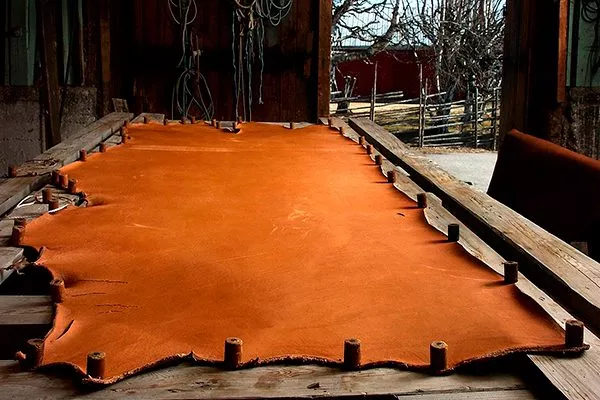
Step-by-step instructions:
- Heat the pickling solution to 40°C and add dry tanning agent at a rate of 9 g/l. Rotate the hides for 10 minutes every hour.
- After 12 hours, heat the solution to 45°C and add dissolved dry tanning agent (9 g/l). During the second tanning, which lasts 24 hours, add baking soda (2-3 g/l) diluted in warm water.
- Four hours before the end of tanning, neutralize the leather in the same solution with the addition of baking soda (2.5 g/l) and ammonium sulfite (2.5 g/l) in several stages at 10-minute intervals. Maintain the solution temperature at 30-35°C.
- The skin section should be colored blue and the pH of the resulting liquid should be 6-6.5.
- The tanning process is tested using a boiling test (BBT). A 5x5 cm piece of leather is cut and immersed in boiling water for 3 minutes. If the coagulation is less than 10%, the tanning process is considered complete.
Remove the finished skins, place them on trestles to drain the liquid, and then leave them to rest.
Watch a video about tanning hides:
Proper fattening
Fatliquoring is a key stage in the processing of cattle hides, aimed at giving them flexibility, softness, and an attractive appearance. There are two main fatliquoring methods: dipping and spreading, but the former is most often preferred.
To prepare the fat composition, specialized pastes are often used, available both domestically and imported (Polish or German). Consumption rates are specified according to the instructions for use.
Alternatively, a fatliquoring emulsion can be prepared using the following components: alizarin oil (40%), fish oil (25%), and sulfated fish oil (35%), total weight 100%. After fatliquoring, rinse the hides in running water at 30-35°C for 30 minutes. Then hang them to dry.
How to dry?
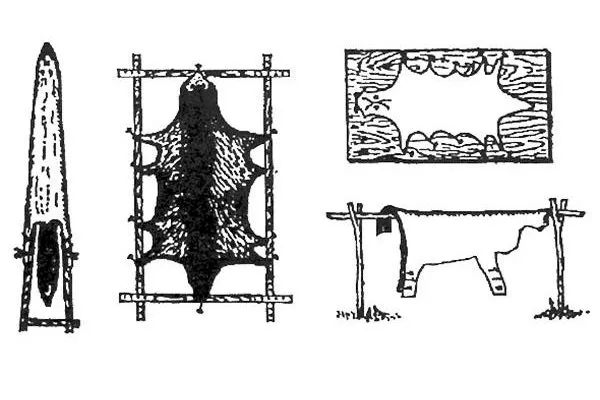
Depending on the conditions, the leather is dried either on wire or poles outdoors under awnings, or in warm rooms during the cold season. Once completely dry, lay the leather out on a table with the flesh side facing up and spray it with warm water.
After this, beat the moistened hides in special drums using rubber balls or blocks, rotating continuously for 2-3 hours. Remove the crushed hides and dry them.
Where and to whom can I sell cow hide?
Selling cow hides can be done in a variety of ways, depending on your preferences, resources, and market opportunities. Here are a few options you might consider:
- Local markets and fairs. In such places, you can often sell your hides directly to buyers. Contact the organizers of local agricultural fairs or markets for information on how to present your products.
- Internet platforms. Use online marketplaces like Etsy, eBay, or specialized leather selling platforms. Here, you can reach a wide audience, including buyers from other regions or countries.
- Local meat processing plants. Contact nearby meat processing plants or farms. They may be interested in purchasing hides as an additional source of income.
- Tanneries. Research local or regional tanneries that may be interested in purchasing leather for their products.
- Agricultural cooperatives. Agricultural cooperatives or farmers' associations in your area may be able to offer resources and advice on selling leather.
- Orders from artisans. If there are local artisans who work with leather, contact them and offer your products. They might be interested in purchasing high-quality hides for their crafts.
Cow hide is one of the most sought-after materials for the production of high-quality leather. Proper tanning procedures produce soft, smooth leather free of cracks and defects. This article presents hide tanning methods and marketing recommendations.