
Miniature cows are bred for milk or ornamental value. However, there are breeds bred for meat. Compared to a standard cow, the milk yield of miniature cows is minimal. A cow weighs approximately 100 kg and produces up to 3 liters of milk per day. However, the "miniature" variety is much easier to maintain. Their productivity is more than sufficient for a single family.
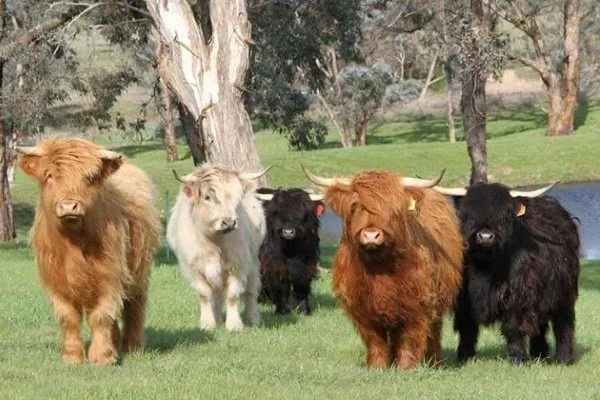
Where did dwarf cows come from?
Dwarf cows have wild ancestors. For example, the ancestors of the Zebu have long lived on the island of Sri Lanka. While these animals have long been common there, Indian scientists have become extremely interested in the miniature cows. In India, cows are sacred, and keeping a miniature version of them for religious purposes is much more profitable than a full-sized animal. It was in India that the Zebu breed was developed.
The trend was soon picked up in the West. In America, miniature cows were initially bred purely for entertainment, but in England, where free-range pastures were scarce, miniature cows were immediately viewed from a practical perspective.
Features and performance
According to the latest data, there are 30 miniature cow breeds worldwide. All share similar characteristics:
- They weigh 100-110 and 250-350 kg (depending on the breed).
- Height – no more than 1 m.
- Daily milk yield is 2-3 liters. For some breeds – 6-8 liters.
| Breed | Weight (kg) | Daily milk yield (l) | Peculiarities |
|---|---|---|---|
| Highland | 350-750 | 3-4 | Dietary meat, frost resistance |
| Evening | 150-200 | 3-4 | High fat content of milk, resistance to humid climate |
| Yakut | 200-300 | 3-6 | Marbled meat, frost resistance |
| Zebu | 80 | 3 | Hump on the back of the neck, unpretentiousness to food |
| Angus | 250-300 | 10 | Marbled meat, demanding pasture |
| Palskho | — | 3 | Resistance to low temperatures, unpretentiousness in feed |
| Krasnogorbatovskie | 350 | 10-15 | High milk yield, disease resistance |
| Plush | — | — | Decorative, no horns |
Advantages of miniature cows:
- Very tasty milk with good chemical and biological composition.
- Their strong immunity is a credit to breeders. The cows rarely get sick, and if they do catch a cold, they easily overcome it.
- Milk has valuable nutritional properties. Its small fat globules indicate a high content of phospholipids, which are essential for brain development.
- ✓ Adaptation to climate conditions
- ✓ Breed orientation (meat, dairy, decorative)
- ✓ Demanding of food and living conditions
- ✓ Availability of the breed in the region
- ✓ Financial capabilities for acquisition and maintenance
Unfortunately, dwarf cows haven't yet gained widespread popularity in Russia. Buying a calf is expensive. While in India they'd ask $100 for one, here a Zebu can cost up to $7,000.
To keep a miniature cow, you need to spend approximately 1,000 rubles a month on hay.
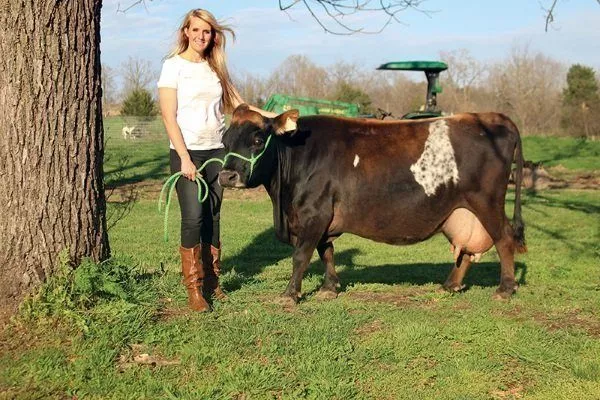
Highland
This is one of the most productive beef breeds among the dwarf cattle. Highland cattle, developed in the Scottish Highlands, are bred throughout the world. Their genetic ancestor is the Celtic cattle.
Exterior Description:
- long horns, diverging to the sides - can protect themselves from predators;
- thick, long hair, wavy or double-layered;
- under the fur there is an undercoat, which allows animals to withstand cold without having a thick layer of fat;
- there is a long fringe - it protects the eyes from wind and insects;
- coat color – black, red, gray-brown, yellow, silver;
- the back of the body is slightly raised;
- The body is small and the legs are short.
The breed is prized for its lean meat. However, Highlands have a gentle and calm disposition, so they are often kept for their own enjoyment rather than for profit.
Other characteristics of the breed:
- excellent immunity – almost never get sick;
- undemanding in terms of maintenance and diet;
- undemanding to food - they can digest any food, including coarse fiber;
- calving is easy and without complications;
- Instead of a barn, they make do with a canopy - the cows only need shelter from snow and rain;
- meat is dietary, with a low cholesterol content;
- They produce decent milk yields for 25 years.
The breed is widespread in Europe, North America and Australia.
Highlanders can't be kept on a leash—they'll immediately begin to lose weight. They need space to graze.
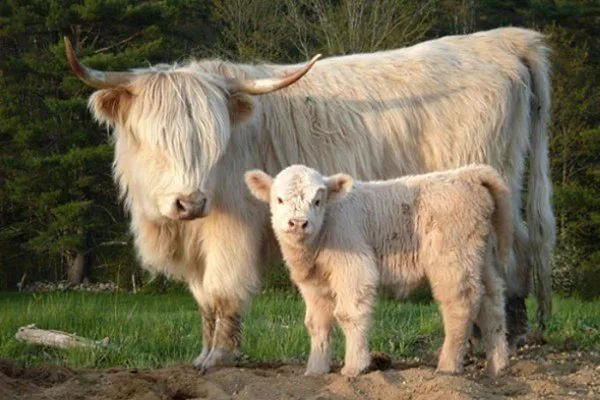
Productivity:
- Despite their small size, they gain impressive weight. The range in weight is very wide: a cow can weigh up to 350 kg, while a bull can weigh up to 750 kg.
- First calving – at 3 years. Calf weight – 11-16 kg;
- They produce offspring for up to 20 years, but Highlands are kept for 10 years - the meat of old cows becomes second-rate;
- The best age for slaughter is 1-3 years;
- Maximum daily milk yield is 3-4 l.
The breed is not suitable for tropical and subtropical climates. Their thick fur prevents them from tolerating heat and high humidity. Animals quickly die in such conditions.
Evening
The breed was developed in India. Vechuras is the town where the selection took place. This is the smallest cow in the world. A cow weighs no more than 150 kg, and a bull, 200 kg. Their maximum height is 90 cm. Vechuras are as tall as a large ewe. Their milk production is 3-4 liters per day.
External characteristics of the Vechur breed:
- color – black or brown;
- horns - small, thin, short;
- tail – long;
- There is a hump in the front part of the body.
Breed characteristics:
- economical in terms of feed;
- withstands difficult weather conditions and tolerates humid climates well;
- has strong immunity;
- not prone to mastitis, oral and hoof diseases;
- They produce milk with up to 5% fat content, which is easily digested by the human body;
- they do not need additional grain feeding, grazing is enough for them;
- are distinguished by their intelligence, cleanliness, and strong immunity;
- Vechurov manure is dry, it does not interfere with the germination of crops and easily turns into compost.
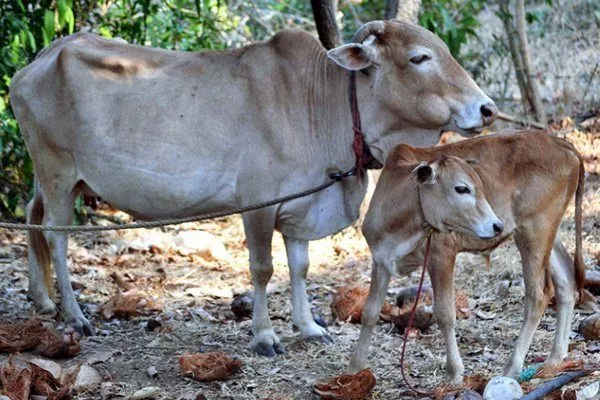
Vechurov milk is believed to help treat diabetes, asthma, autism, allergies, schizophrenia, and heart disease.
Yakut
The breed is considered indigenous to the Sakha Republic. It is used for meat and dairy production. Cows weigh 200 kg, and bulls up to 300 kg. The ancestors of the Yakut breed, having arrived here from Mongolia, successfully assimilated. External characteristics:
- head – large;
- color - variegated, combines white, brown and black colors;
- legs - short;
- the chest is widened, the back is narrowed;
- in the area of the scruff of the neck there is a slight hump;
- height – up to 120 cm at the withers;
Average annual productivity is 1,500-2,000 liters. Milk produced per day is 3-6 liters. Fat content is up to 11%.
Breed characteristics:
- resistant to low temperatures – easily tolerate frosts down to minus 50 °C;
- unpretentious in matters of food;
- resistant to tuberculosis, leukemia, and various infections;
- the meat is marbled, with thin streaks of fat;
- slaughter yield – 60%.
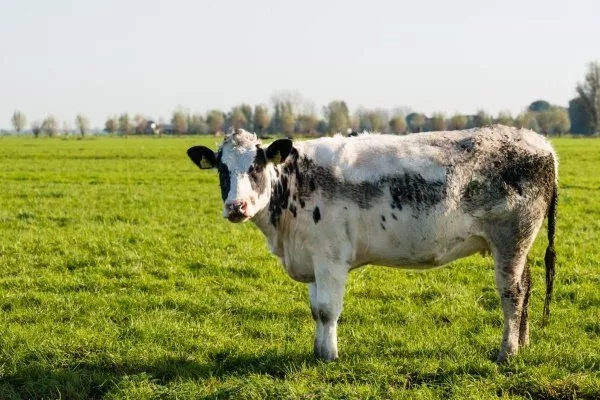
Zebu
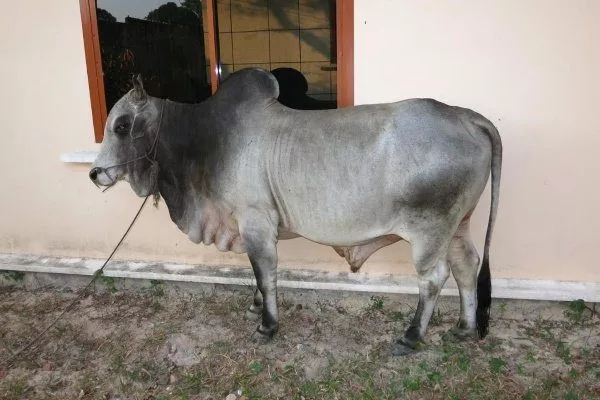
The breed originates from Sri Lanka. Height at the withers is 90 cm, weight is 80 kg, and daily milk yield is 3 liters.
Distinctive external features:
- the hump on the back of the neck is a kind of fat “depot” in case of hunger;
- the limbs are thin and do not have well-developed muscles;
- the fur is quite long – it protects the cows from numerous tropical insects;
- Between the forelimbs there are pronounced skin folds.
Characteristics of the Zebu breed:
- hardy;
- unpretentious to food;
- maintenance is similar to that of regular cows, but costs three times less;
- The temperature in the barn should not fall below 0°C.
The breed is widespread in Africa, Pakistan, and India. Through selective breeding, many varieties of zebu have been developed—there are currently around 70 of them. The pursuit of perfection nearly led to the extinction of the purebred line. Through the efforts of breeders, the breed has been restored.
Angus
The Angus Dwarf cow's ancestors are full-sized Angus cattle from Scotland. Australian and Scottish breeders developed this miniature version. The goal was to create a high-quality beef breed. They weigh up to 250-300 kg. Their maximum daily milk yield is 10 liters.
External signs:
- the body is round, massive, with developed muscles;
- poorly defined neck;
- the udder is well developed;
- height at withers – up to 100 cm;
- color – brown or black.
Breed characteristics:
- meat is highly valuable, marbled, with a small amount of fat;
- compared to other dwarf breeds, they are quite heavy;
To successfully gain weight, 10 cows require a pasture of 2 hectares. This area is not enough to feed even two full-sized cows.
Dwarf Angus cattle are bred primarily in Australia, where they were bred. When bred in temperate climates, they must be kept in barns with ample space to move around.
Aboriginal
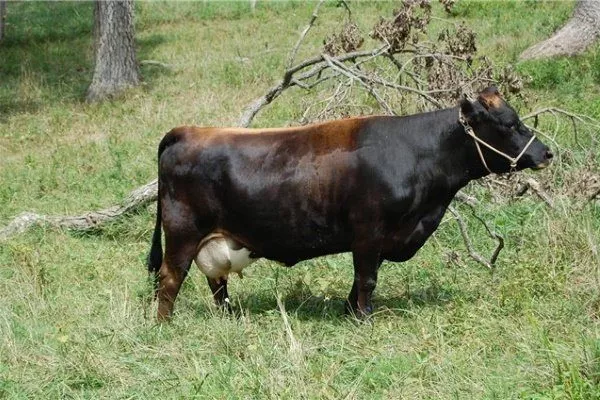
Aboriginal dwarf cattle breeds are not a separate breed, but a category that includes cattle from all over the world. Aboriginal cattle are those that have become smaller in size as a result of natural development. The parameters of these animals differ only slightly from the standard.
Palskho
The breed was developed in Sweden and registered in 2002. It is almost as small as the Vechuras. External characteristics:
- body – cylindrical;
- back - straight, even;
- horns - small, diverging from the head;
- slightly sagging skin on the chest;
- color - most often red, light gray and black.
- the head is small.
The breed has been nicknamed the "living lawnmower" for its ability to efficiently munch on lawn grass. It produces up to 3 liters of milk per day. It can graze on even the most sparse pastures and easily tolerates low temperatures.
Krasnogorbatovskie
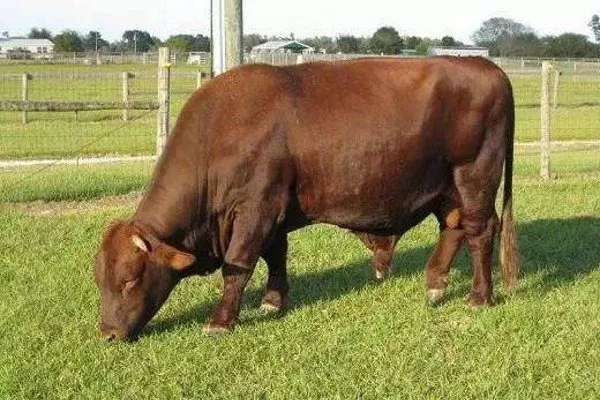
This domestic breed can hardly be considered a dwarf breed. Compared to other miniature cows, Krasnogorbatovskaya cattle are quite large. They are not much smaller than regular cattle in size and weight. The breed was developed in the Nizhny Novgorod region. Breeders aimed to increase milk yield and immunity in the Priokskaya breed. As a result, they produced cows with the following characteristics:
- hardy;
- undemanding to food;
- economical in terms of feeding;
- disease resistant;
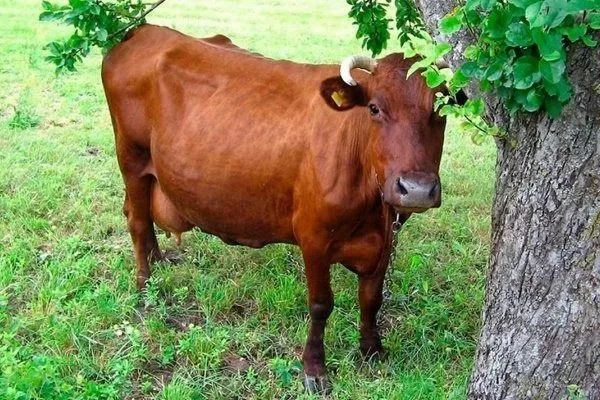
- high milk yield – up to 6,000 liters per year.
A cow weighs 350 kg. The average daily milk yield is 10-15 liters. The milk has a fat content of at least 4.3% and is rich in amino acids and proteins. Recently, Russian breeders saved the breed from extinction. The herd size had dropped to 1,500 head. Today, the situation has stabilized.
Plush
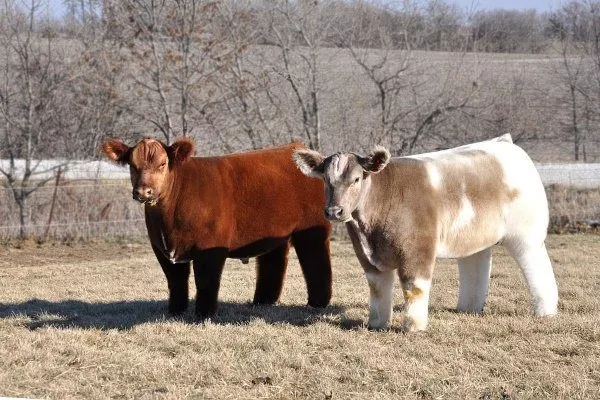
The breed originated in the state of Iowa, USA. These cows were bred for aesthetic purposes—for exhibition purposes. The plush cow, resembling a toy, was developed by American breeder Lottner. The breed has not yet been officially registered—many experts believe the furry cow is nothing more than a hybrid. Milk yield and meat and dairy performance are not discussed for the plush cow—it is bred solely for its decorative qualities.
Appearance features:
- color – red, black, light brown;
- often the main color is complemented by spots;
- no horns;
- the udder is minimally developed – milking is not expected;
- legs - short;
- body – rectangular;
- the back is straight, smoothly flows into the head;
- the neck is not pronounced;
- The coat is very soft and plush to the touch.
It would seem that plush cows have no practical use. But a single one can cost tens of thousands of dollars these days. To ensure these plush "toys" look pristine, they are meticulously cared for:
- During exhibitions they are washed several times a day;
- the wool is sheared - otherwise it looks like the wool of long-haired breeds;
- the wool is dried using professional hair dryers with special attachments;
- The result is fixed with special varnishes, and foam, balm, and oil are also used in care;
- To make the wool brighter, they dye it.
To ensure that the cow is healthy and beautiful, it is given special nutritionally optimized food.
Advantages and disadvantages
In Russia, miniature cow breeding is in its infancy. However, given the advantages of miniature cattle, this trend is sure to grow.
Advantages of small cows:
- Regular milking. 3 liters of fresh milk per day is an excellent result for miniature cattle. They can produce milk longer than standard cows.
- Valuable meat. Many breeds have marbled meat.
- Easy care. Because the animals are smaller, they are easier to care for, clean, and transport.
- Calm disposition. Compared to full-sized breeds.
- They're cheaper to maintain and require less feed. One or two cows can even be grazed on the lawn near the house.
- No compound feed is needed for feeding - grass is enough in summer, and prepared hay is enough in winter.
- Because of their light weight, animals don't trample the grass; some are even used to "mow" the lawn.
- Strong immune system, resistance to many diseases, low mortality rate.
Basics of growing and care
The rules for keeping miniature cows are the same as for regular cows. The only differences are in the simplified care processes:
- Mini cows require significantly less feed and require less space, making do with minimal pastures.
- Pygmy cows rely on local plants for sustenance—they don't even need to buy feed. The amount of hay required is several times smaller than for standard cattle.
- Small animals are much easier to care for – they are calmer than large cows, more docile and manageable, and show virtually no aggression.
Why are miniature cows not popular?
Reasons for the low prevalence of miniature cows in Russia:
- High priceMiniature cows are very expensive in Russia. Buying an "economy" version of a dairy cow requires a hefty price tag. Calves can cost several thousand dollars. Only those who plan to make their livestock a business decide to buy animals at this price.
- Low adaptation of certain breeds to cold climates. For example, Zebu and Dwarf Angus are accustomed to subtropical conditions, so keeping them in Russia requires a closed, heated space.
Before purchasing a dwarf cow, find out how well the breed adapts to local climate conditions. The only breed that adapts well is the Highland. However, these cold-hardy animals are primarily produced for meat, making milk production extremely challenging. However, raising Highlands for meat is profitable—consuming less feed than sheep, they can live and thrive in their natural environment.
Dwarf cows are tempting, but expensive. Before breeding them, consider the benefits and risks. Some breeds are simply impossible to raise in temperate, let alone harsh, climates. Choose miniature cows from the frost-resistant category—Highland, Yakut, and Krasnogorbatovsk breeds are all suitable.