
Ayrshire cows are deservedly among the leaders in dairy production. This breed is considered one of the best in terms of milk yield and milk quality. Ayrshire cows are loved and trusted by breeders worldwide.
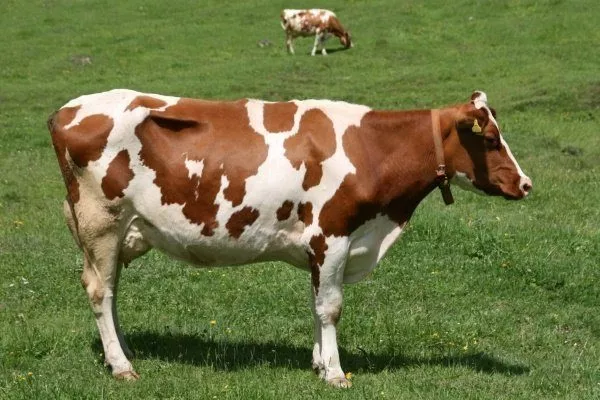
History of Ayrshire Cows
Ayrshire cattle, as a distinct breed, trace their origins to the late 18th century. Their homeland is the Scottish county of Ayrshire. Local farmers bred them from native cows, which they crossed with Dutch, Teeswater, and Alderney bulls. However, the exact breeds involved are unknown. Shorthorns, Jerseys, and other cattle may have been involved—there are many theories.
The Ayrshire breed was officially registered in 1814. Its unpretentiousness, high milk yields, and delicious milk quickly made it popular worldwide. In the early 19th century, Ayrshire cows were brought to the United States. And in the 20th century, the Ayrshire breed's triumphant march across the globe began. Ayrshires were brought to Russia from Finland in the late 19th century.
Breed characteristics
The breed is classified as medium-sized cattle. External characteristics of Ayrshire cattle:
- Weight. Females weigh 400-500 kg, with a maximum weight of 540 kg. Bulls weigh 600-800 kg. Yearling calves weigh 250-300 kg.
- Height. Females and males reach 125-130 cm in height.
- Color. Red and white or white with brown spots. Bulls have more intense spotting, ranging from light red to brown.
- Physique. A strong, muscular body. Length – up to 154 cm. The chest is broad, the neck is straight, blending smoothly into the shoulders and head. The back is straight. The legs are short and set correctly. The head is small, elongated. The horns are large.
- Udder. Cup-shaped, well-formed. Nipples are wide, conical or cylindrical.
Ayrshire cattle have very strong hooves. They are successfully bred not only on flat lands but also in mountainous areas. The breed is not polled from birth. Ayrshire cattle are dehorned by acquisition—the calves' horns are cauterized immediately after birth. If this is not done, the cow/bull will eventually grow long and beautiful horns.
Advantages and disadvantages of the breed
Positive qualities of Ayrshire Terriers:
- They easily adapt to different climatic conditions.
- Undemanding to maintenance conditions.
- They easily withstand long distance travel.
- They digest food well.
- They are distinguished by their energy, good health and longevity.
- They demonstrate stability in milk yield in any season.
- Early sexual maturity – they can produce offspring from the age of two.
- High productivity and economic benefits of breeding.
The breed has few disadvantages:
- They don't tolerate heat well.
- They are wayward and have a complex character.
- They love freedom and don’t want to be locked up all the time.
Productivity
Ayrshire cows can produce up to 7,000 liters of milk per year. The average milk yield is 4,000 liters per lactation. In terms of milk quality, Ayrshire cows surpass Holsteins, the leading milk producers. Characteristics of Ayrshire milk:
- Ideal raw material for the production of cheese and butter.
- Fat content – 2.3-4.2%.
- Protein content: 3.4-3.5%.
High-quality Ayrshire milk is used to produce baby food.
Record-breaking cows can produce up to 11,000 liters of milk per lactation. Milking lasts 305 days per year.
The Ayrshire's productivity characteristics make it the most profitable dairy breed. The breed's meat production is satisfactory. Cattle gain weight quickly, and their slaughter yield exceeds 50%. Read more about raising bulls for meat. here.
How to choose the right cow?
The main reason people buy Ayrshire cows is for milk production. When choosing a cow, their milk production is the primary consideration. External signs indicating a high milk yield don't guarantee high milk yields, but they do increase the likelihood.
- ✓ Check the milk yield history for at least the last 3 lactations.
- ✓ Assess the condition of the udder for hidden mastitis using a somatic cell test.
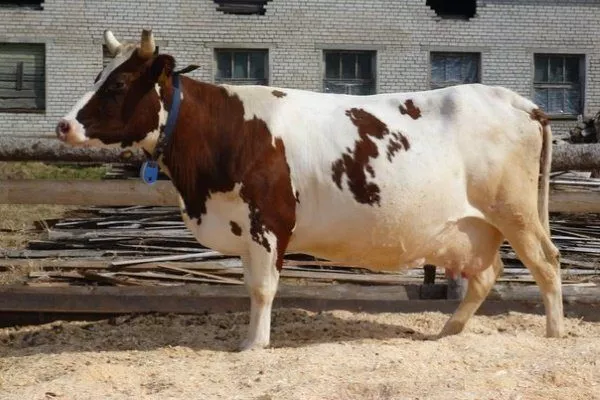
How to choose a dairy cow:
- A productive cow has a well-developed, cup-shaped udder. It is wide, attached high at the back, and projects far forward, blending smoothly into the ventral cavity. The bottom of the udder is almost horizontal, positioned at the level of the hocks.
- An overly large udder is a disadvantage. If the udder hangs too low—below the hocks—it will catch and injure itself on bushes, dry, tough grass, and other things.
- Animals with "goat" udders are characterized by low productivity. A "goat" udder is triangular in shape, and the teats are long, thick, and closely spaced.
- A sure sign of high milk yield is a well-developed milk vein.
If the exterior of the purchased cow meets the criteria for high milk productivity, they move on to evaluating other criteria:
- Health. The coat should be smooth and soft. The gait should be firm, and the eyes should be clear. A sick animal can be identified by its behavior—it will stand dejected and respond poorly to stimuli.
- Age. To assess age, examine the horns or teeth. It is not recommended to buy a cow older than ten years, as after this age, milk yield declines.
The character of the cattle
Farmers admit that Ayrshire cows have a difficult temperament. Many even refuse to breed them because of their restless nature. These cows are both aggressive and extremely shy. Often, it is fear that provokes their aggression. Their increased activity makes housing and milking Ayrshire cows difficult.
Compared to other breeds, Ayrshire Terriers are very active. They don't like being left standing in one place and become nervous when confined. This breed requires open enclosures where they can roam freely and stretch their legs.
Breeding of the breed in Russia
The largest herd of Ayrshire cattle is in Finland. The cows here live a long time—decades—while consistently producing 11,000 liters of milk. Today, the breed is widely raised by farms in Russia.
The breeding area is concentrated primarily in the western regions of the Russian Federation. Ayrshire Terriers are bred in the following regions:
- Karelia;
- Komi;
- Moscow region;
- Novgorod region;
- Leningrad region;
- Krasnodar Krai.
In our country, approximately 90,000 Ayrshire cattle are raised at any one time. Milk yield at breeding farms is 7,000-8,000 liters per year. Live weight per kg costs 200-260 rubles. An adult animal costs 80,000-100,000 rubles. Breeding males and females are more expensive.
Content Features
The Ayrshire breed is easy-to-manage and adapts easily to a variety of housing systems. These cows are robust and milk equally well whether they are kept in pasture or in stalls. However, they do need to be provided with ample exercise, as they don't like to stand in one place for long periods.
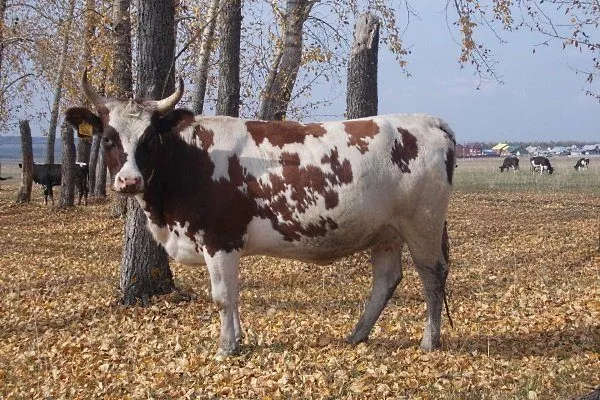
Care
Conditions of maintenance and care:
- Although Ayrshires are hardy, they require extra attention in winter, providing favorable living conditions - a temperature of +15…+17°C, no drafts, and good ventilation.
- In the summer, a paddock is provided for the cows. To provide shelter from the sun and rain, a canopy is installed over the paddock.
Ayrshire cows are able to tolerate cold and high humidity, but they react poorly to heat – it is harmful to the cows’ bodies, and milk yields decrease.
Nuances of equipping barns for cows:
- Light. The barn should be well-lit. Lighting should be dim.
- Air exchange. Outdoor air is essential.
- Floor. They lay it out using wooden planks, with a layer of straw on top.
- Stall. It is built to the animal's size. The tethering area is usually made from 10 cm diameter pipes.
- Feeders. You can build a feed trough—place it in front of the stall to make it convenient for the animals to eat. If the animals are allowed to roam freely around the barn, the feeders can be mounted on a wall.
Post-calving care
Ayrshire cows mature early, giving birth to their first calf at 24 months. Newborns weigh 25-30 kg. Calving is almost always successful, and newborns have a high survival rate. Once calving is complete, the cow and calf should be provided with the following care:
- The afterbirth is removed.
- Half an hour after calving, the cow is given hay and water at room temperature or slightly warmer.
- After calving, the cow is milked 4-5 times daily.
Cleaning the stall
To keep cows and young animals healthy, the stall must be cleaned regularly:
- Before cleaning, cattle are brought out of the premises.
- The manure is removed, the feeders and drinkers are washed with water.
- They sweep up the trash and change the straw bedding.
Nutrition
In summer, it's best for cows to stay in pastures, and in winter, in a corral to allow them to exercise. Ayrshire cows adjust to the new diet smoothly. They are fed:
- Basic. Hay is the main winter diet. Other roughage, such as husks, chaff, and husks, is also given. Experienced breeders recommend providing free access to feed for Ayrshires.
- Balancing. To increase milk yield and milk quality, cows need wheat, oats, oilcake, and soybean meal.
- Compound feed. A serving for a cow is 3-4 kg.
When feeding cows compound feed, remember that too much can cause gastrointestinal problems. If the feed contains excess starch, limit the single dose to 2 kg.
When feeding Ayrshire cattle, it's not recommended to overuse haylage (dried grass) or silage (fermented plants). The following should be included in the diet:
- chalk;
- succulent feed – beets, cabbage, carrots, pumpkin, potatoes.
For information on keeping Ayrshire cows, see the video below:
An approximate daily ration for a cow weighing 500 kg is shown in Table 1.
Table 1
| Feed | Quantity, kg |
| Silage | 30 |
| Hay | 6 |
| Beet | 5 |
| Sunflower cake | 1.5 |
| Wheat bran | 0.7 |
| Barley flour | 1 |
A cow should receive about 30-40 liters of water per day.
More has been written about the rules for feeding dairy cows. HereWe also recommend that you read the article about feeding calves from birth, because the diet of adults and babies is different.
How are Ayrshire Terriers bred?
Breeding Ayrshire cattle can be a profitable business if you carefully consider and organize a sustainable production process. To raise milk-producing cows profitably, follow these steps:
- Acquire knowledge about breeding, keeping and feeding cows in summer and winter.
- Find reliable distribution channels for your products. Products can be delivered to various locations, including stores, dairies, and supermarkets.
- Prepare a business plan that takes into account all risks and costs.
- Register a business. Buy or lease land for a farm. Obtain permission from Rospotrebnadzor (Federal Service for Surveillance on Consumer Rights Protection and Human Wellbeing) for your operations.
- Build barns in accordance with livestock standards. Install feeders and waterers. Construct stalls.
- Buy young animals. Animals are purchased according to intended purposes.
Farmers prefer to breed purebred Ayrshires to prevent genetic defects. To increase milk production, livestock breeders often crossbreed Ayrshire bulls with cows of different breeds, such as Holsteins, Red Steppe, and Simmentals.
About the bull line
Today, the primary focus in dairy breeding is on developing lines from a single ancestor. A line of bulls is defined as males that not only belong to the same breed but are also descended from the same sire.
Types of bull lines:
- Genealogical. This subgroup of bulls has a single lineage leader. It consists of bulls with diverse pedigrees.
- Factory. It is created through careful selection, which allows the unique characteristics of the breed to be preserved.
Breeding by lines:
- They find a bull through which they will improve the qualities of future livestock.
- Having assessed the qualities of the offspring, they look for the ideal ancestor – the founder of the line.
- The progenitor is given over to breeding. Then his offspring will be bred, providing material for the next selection.
- After evaluating the bulls descended from the founder, the best are selected. One successor is chosen. This process is repeated again and again for each subsequent generation.
Bull lines are needed as long as they retain their winning traits. But by the fourth or fifth generation, they fade away.
Choosing a calf
Before raising Ayrshire calves, you need to prepare for their care. If you have the appropriate housing, paddock, feed, and everything else needed to raise young calves, you can choose your calves.
- ✓ Check the calf's activity - healthy calves show interest in the world around them.
- ✓ Assess the condition of the coat - it should be shiny and without bald spots.
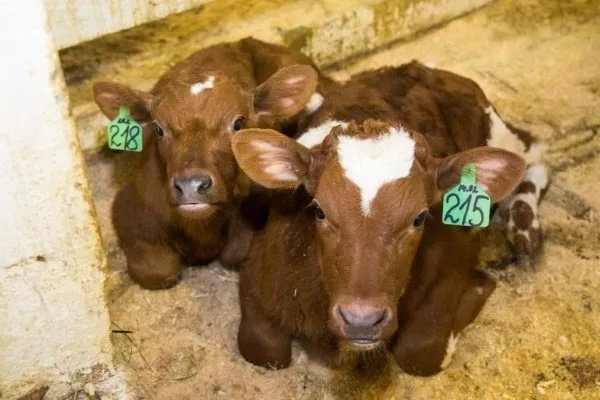
Criteria for their evaluation:
- Pedigree. The productivity of the mother cow and the bull's lineage are important. Inbreeding—crossing close relatives—is discouraged.
- DevelopmentThey evaluate the calf's physique, how rapidly it is growing, and whether its constitution is strong.
- Live weight. Each breed has its own standards, which are used to estimate the weight of individuals at different ages. For example, it's known that yearlings should weigh around 250 kg, and if they weigh less, they may be sick or born weak.
Buy young cattle from breeding farms. Dealing with unknown sellers can result in the purchase of non-viable or mongrel animals. Breeding farms that breed Ayrshire cows:
- ONO PPZ “Smena” (Moscow region, Sergiev Posad district).
- OJSC Moscow Stud Farm No. 1 (Moscow Region, Odintsovsky District).
- Federal State Institution "Novoladozhsky" (Leningrad region, Volkhov district).
Diseases
The Ayrshire breed, known for its robust health, is resistant to common bovine diseases. However, they are not immune to certain health conditions that can arise from improper husbandry practices:
- Pneumonia. If the room is cold, animals can catch a cold. If bacteria from the environment enter the lungs of a weakened animal, pneumonia can develop. Symptoms of the infection include fever, wheezing, labored breathing, and coughing. Effective antibiotics are required for treatment.
- Mastitis. It is treated with antimicrobials and homeopathy. Symptoms of mastitis include clots in the milk; soreness, inflammation, and swelling of the cow's mammary glands. Remember,udder edemamay also be observed for other reasons.
- Poisoning. Cows can become poisoned by grazing in fields where poisonous plants grow, or by improperly storing feed. Furthermore, it's important to limit their access to pesticides used in farming and gardening.
For prevention, young individuals are vaccinated against:
- foot-and-mouth disease;
- rabies;
- smallpox;
- brucellosis.
Farmers' reviews
Ayrshire cattle are prized and loved by farmers around the world. Because of their high yields and high-quality milk, farmers are willing to forgive their whims and temperament. Farmers claim the following:
- This breed is ideal for pasture maintenance.
- The breed is also suitable for household use.
- Ayrshire milk is very tasty, with excellent characteristics.
- The meat has a good taste.
What ordinary Ayrshire cow owners say:
Ayrshire cows are an ideal choice for a dairy farm. This breed, without requiring lavish living conditions, will provide the family with delicious milk and bring the farmer considerable profits through high and consistent milk yields.