
Milk yield is influenced by various factors, such as the breed of cattle, the time of year, etc. Therefore, it is impossible to say definitively how much milk cows produce, but it can be determined based on a combination of indicators.
When do cows start producing milk?
Around six months of age, a cow reaches sexual maturity, making it possible to inseminate her. However, experts do not recommend this, as the cow's body is not yet fully developed, making pregnancy challenging.
The optimal time for the first conception is from 1.5 to 2 years.
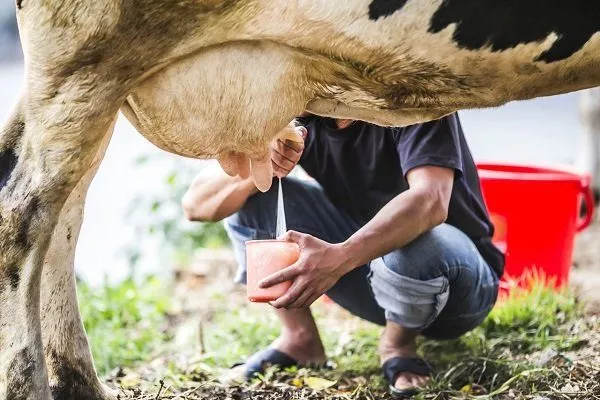
The first milk can be expressed immediately after calving, but colostrum continues to flow from the teats for about 14 days. This is the same milk, but with a higher fat content, which is beneficial for the calf's health.
Dependence of milk quantity
The maximum milking period is 12 months, but the first three months are considered the most nutritious. For this reason, it is recommended to inseminate cows annually.
Milk production directly depends on the individual animal's health. Its health affects milk yield, so it's important to provide the cow with high-quality and varied feed, vaccinate her regularly, and keep her in suitable conditions.
Scientists identify the main reasons for good milk yield:
- Weight. The healthier the cow, the stronger her body. The optimal height at the withers is 120 cm.
- Age. After her first calving, a cow produces the least milk, but lactation improves with each subsequent insemination. The most favorable period for the highest milk yield is from calving four to seven.
- Time of year. During cold weather, there's no green fodder, so the cow's body doesn't receive enough nutrients. This causes the body to weaken.
There are factors that negatively affect lactation activity:
- Floor coveringIf there are holes in it, etc., the cow develops lameness, fear, and discomfort.
- Lighting, walks. Without enough light and fresh air, the animal withers.
- Inflammatory processes. The development of mastitis and other udder problems dramatically reduces milk yield, and in advanced stages, lactation stops completely.
- Nutrition. The diet must be balanced. Roughage (straw, hay) and protein (compound feed, grain) are essential. This affects not only milk yield but also taste qualities of the product.
- Water. It should be freely accessible at all times. If this is not possible, animals should be given water three times a day.
- Hygiene. If the cow is not washed and the bedding is not changed frequently, infectious diseases develop.
- Stress. Dairy cows don't tolerate excessive noise, sudden movements, shouting, or rough treatment. This can cause them to become frightened, which can lead to decreased milk production.
In addition, milk yield and quality are affected by genetic predisposition, milking frequency (preferably three times a day and at the same time), and the relationship between the milker and the animal (if there is rough contact, the cow will refuse to give milk).
How is milk formed?
Milk is produced in the mammary glands. Here's how it happens:
- special substances are extracted from the blood;
- are directed to the udder;
- When in contact with elements of the mammary glands, they are converted into components of the dairy product.
Thus, milk (unlike blood) is rich in sugar, calcium, and fat. To produce 1 liter of milk, about 500 ml of blood passes through the mammary glands.
To form fat, rumen enzymes synthesize acetic acid from the food the animal eats, which is what produces fat. This is why an animal's diet is so important.
Average milk yield
Taking all factors into account, experts calculated average milk yields per day, month, and year. These figures are averages and should not be relied upon strictly.
Indicators:
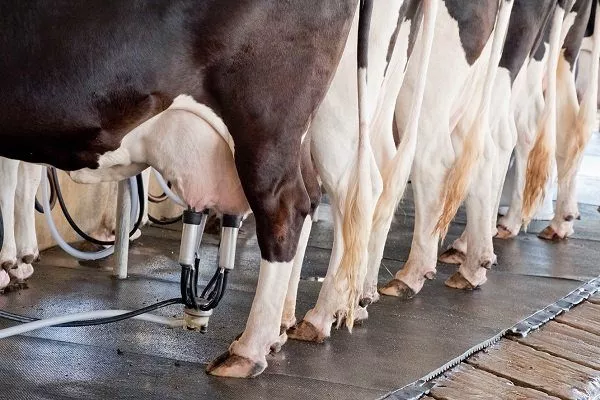
- Average daily milk yield of a cow. In the first 1-2 months after calving, a cow produces 7 to 11 liters of milk per day. As she milks, the milk quantity gradually increases. After the fourth calving, you can milk in a day up to 20 liters or more.
- Average monthly milk yield. A cow's milk production varies over 30 calendar days, as it depends on a combination of factors, including the season, breed, time and frequency of milking, age, and so on.
For example, if 4 to 12 weeks have passed since calving, monthly production will peak. After that, it declines. Based on statistics, in Russia and the CIS, cows produce between 200 and 400 liters of milk per month.
Israel is considered the country with the highest milk yield – their monthly milk yield reaches 1500-1700 liters. - How much milk can you get in a year? Annual dairy production in Russia ranges from 5,000 to 8,000 liters. The former is for beef cattle, the latter for dairy cattle.
Reasons for the decline in milk yield
In addition to external negative factors, there are conditions such as low milk production (hypogalactia) and no milk production (agalactia). These are pathological abnormalities that most often require veterinary intervention.
Varieties:
- Agalactia forage. The disease is caused by an improper diet and insufficient water intake. Another possible cause is digestive diseases.
- Artificial agalactia. It develops due to stress and improper milking regime.
- Agalactia climata. Milk spoils due to high humidity, cold, and lack of light.
- Agalactia exploitativa. The reason is the owner inducing premature birth, excessive milk production, infrequent or excessively frequent milking.
- Agalactia physiological. It occurs against the background of diseases such as inflammation of the mammary glands and uterus, mastitis, food poisoning.
How long does a cow give milk?
The lactation period in cows is conventionally divided into the following categories:
- Ripening time. This is the age of an animal up to 2 years, when it is fully formed for conceiving and bearing a calf.
- True maturity. This period ranges from 2 to 10-15 years, depending on the breed and the cow's health. During this time, the cow undergoes active milking.
- Old age. A cow is considered to be out of milk after 12-15 years of age.
The best dairy breeds
| Name | Milk fat content, % | Average milk yield per year, l | Origin |
|---|---|---|---|
| Holstein | 3 | 12775-14600 | Holland |
| Yaroslavskaya | 4.5-5 | 6000-7000 | Russia |
| Red steppe | 5 | 4000-11000 | Ukraine |
| Jersey | 4-6 | 4000-10000 | England |
| Black and white | 4 | 7500 | Russia |
There are a huge number of dairy cow breeds, but in Russia the following are considered the best:
- Holstein. The cow originates from Holland and is most often raised in the United States, but is also found here on large and small farms. Its milk fat content reaches 3%, with a daily milk yield of 35-40 liters.

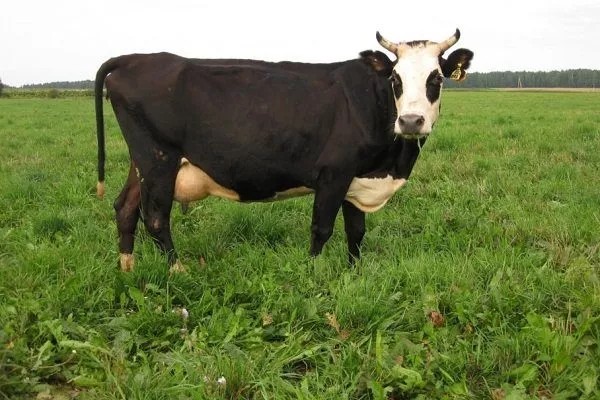
- Yaroslavskaya. This breed was bred in Russia and is considered very popular due to its low maintenance requirements. Annual milk yield ranges from 6,000 to 7,000 liters, with a high fat content of 4.5-5%.
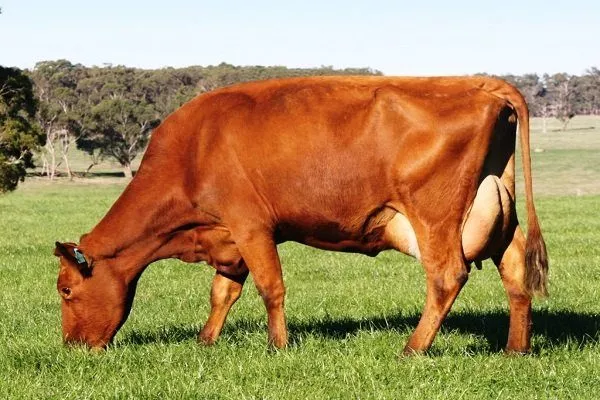
- Red steppe. The breed originated in Ukraine and is also considered in demand, with an average annual milk yield of 4,000-11,000 liters and a fat content of 5%.
- Jersey. Originating in England. Fat content is 4-6%, average annual milk volume is 4,000-10,000 liters.
- Black and white. This Russian cow is distinguished by its large weight – 700-1000 kg. Its fat content is 4%, and its annual milk yield is at least 7,500 liters.



How to choose a cow for high milk yields?
If cows are bred specifically for dairy production, it's important to select the right breed. Regardless of the breed, the animal must meet certain requirements:
- limbs are strong, gait is without lameness, step is confident;
- udder - the bigger the better, pay special attention to the visibility of thick veins (this is an excellent indicator);
- abdominal area – without sagging;
- chest - the wider and deeper it is, the better the quality of the cow (if the chest is lowered down by 15 to 25 cm, discard such an animal);
- the skull is necessarily elongated;
- horns - small and thin;
- tail section - the base should not be wide, otherwise this indicates an incorrect body structure;
- ribs - there should be a wide distance between the ribs, which indicates a well-developed respiratory system.
To find out how much milk a cow produces, compare all the factors, keep a diary, and increase milk yields through a properly formulated diet, good living conditions, and careful, kind treatment of the animal.