
Hoof diseases in cattle are common and a pressing issue in livestock farming. This painful condition reduces cow productivity, with milk yields declining or even stopping altogether. This article explains how to recognize the early symptoms of common hoof diseases and prevent them promptly.
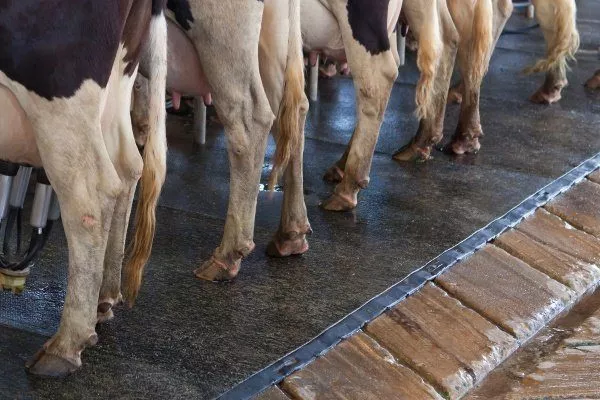
In 98% of cases, hoof diseases are observed in cattle that are kept in improper conditions.
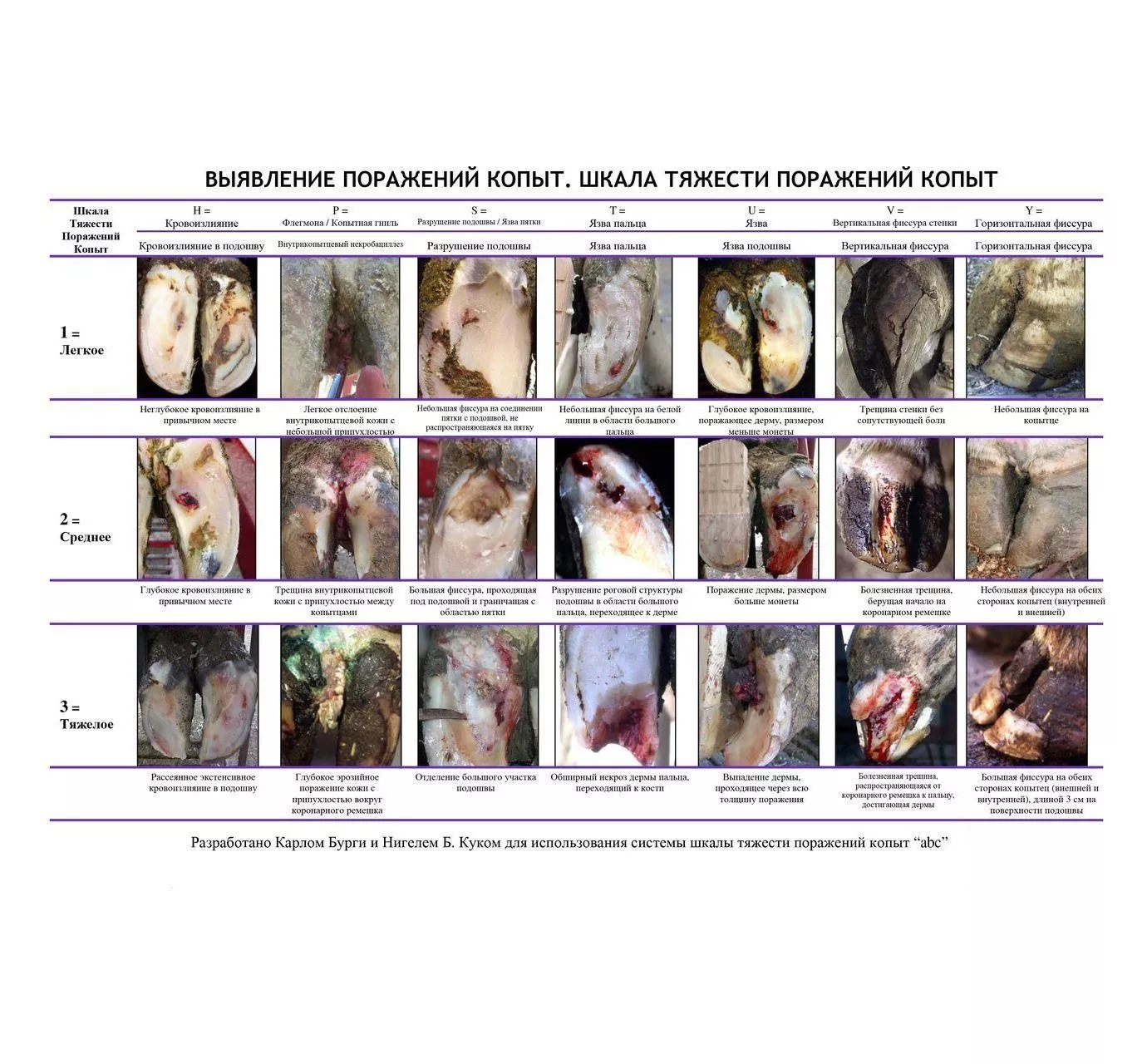
Hoof disease severity levels
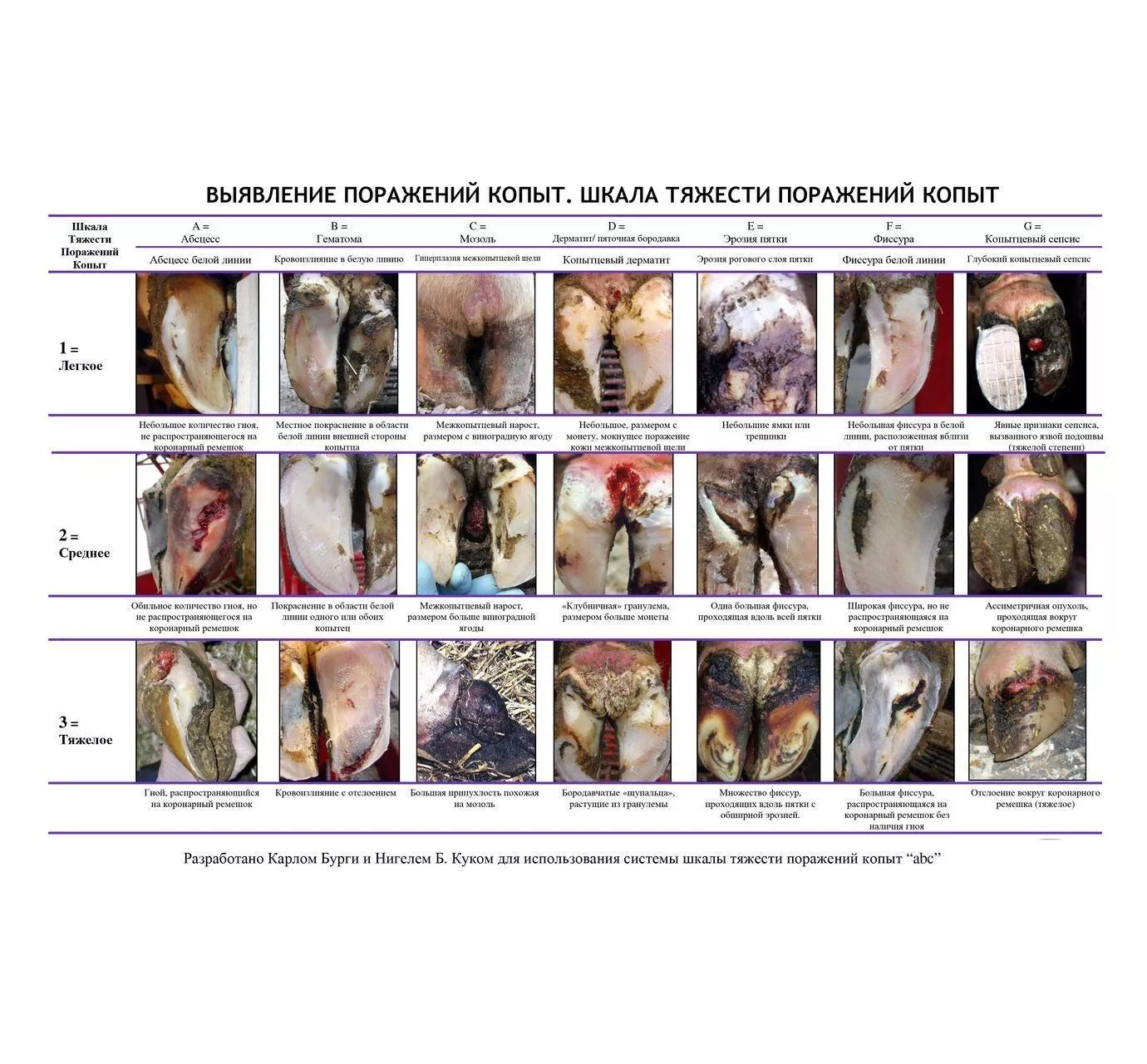
Severity of hoof diseases
Main reasons
Considering the fact that cattle spend most of their lives standing in a pen (in winter) or on a pasture (in the warm season), their limbs are subject to heavy loads, which can lead to the development of hoof pathologies.
The main reasons may be:
- Trauma while walking – an animal can injure a limb when moving over uneven surfaces.
The majority of the risk of injury occurs while livestock are grazing in pastures.
- The condition and height of the bedding, the quality of the floor covering in the barnWhen lowering a limb, the animal places weight on the outer part of the hoof. If the surface is soft, the animal's weight is distributed evenly across the entire surface. On a hard surface, this distribution is not achieved, and the cow's entire weight rests on the outer part of the hoof, which leads to a number of health problems.
Hard flooring in a barn subjects the animal's limbs to unevenly increased stress, resulting in mechanical and traumatic diseases.
- Improper conditions and disregard for sanitary standardsHigh humidity, untimely manure removal, and the introduction of infectious agents into the wound can all cause the disease. Read about cow welfare standards on a farm. Here.
- Keeping cows exclusively in a barnThis can include hoof deformation: when horses are kept in stalls without access to exercise, the sole of the hoof is not properly ground down, leading to abnormal gait and, as a consequence, lameness and certain illnesses.
- General condition of the cow's bodyA weakened immune system, resulting from complex illnesses (mastitis, gastrointestinal diseases), can lead to a weak local immune response, which can lead to the development of inflammatory processes.
Hoof diseases are more common during the cold season.
First signs
Any hoof problem causes discomfort to the animal, and depending on the severity of the condition, symptoms can vary widely. However, there are common symptoms common to most diseases:
- lameness is observed when moving, the animal puts more emphasis on the healthy leg;
- if several limbs are painful, the animal may lie down for a long time;
- On examination, the affected limb may appear swollen, with an elevated local temperature;
- with severe pain, decreased appetite is noted;
- the amount of milk decreases, and lactation may even stop completely;
- If an infection penetrates the wound, the body temperature may rise.
- ✓ Elevated local temperature of the hoof in the absence of visible damage may indicate the initial stage of pododermatitis.
- ✓ An unusual position of the limb at rest (for example, bent and resting on the toe) may be an early sign of coronary band phlegmon.
Common diseases and pathologies
There are about a dozen diseases that affect cows' hooves. Let's look at the most common ones.
Injuries
| Name | Type of injury | Severity | Recommended treatment |
|---|---|---|---|
| Open injuries | Cut sole | From light to heavy | Cleaning and disinfection |
| Closed injuries | Internal damage | Moderate to severe | Rest and anti-inflammatory |
Any injury to the sole of the hoof can lead to inflammation of varying severity and is the basis for almost all of the diseases listed below.
In turn, injuries are divided into 2 groups:
- OpenHoof injuries involve cuts of varying depths on the sole caused by sharp foreign objects (pieces of metal, nails, broken glass, or sharpened stones). In severe cases, the sharp object penetrates deeply, damaging structural elements of the hoof. Injuries to the middle portion of the sole are particularly dangerous due to the location of the digital tendons, hoof joint, and other elements in this area.
- ClosedTraumas are internal injuries to the limb—muscles, tendons, joints (dislocations, strains, etc.). They occur as a result of careless handling of the animal, or moving the herd over dug-up, uneven surfaces, or rocky terrain. This pathology develops quickly, causing discomfort and pain to the cow.
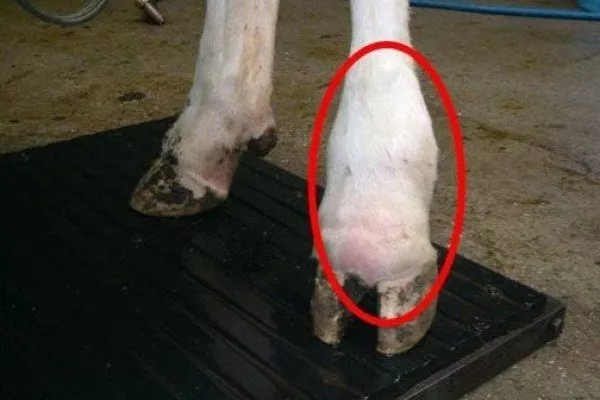
Pododermatitis
| Name | Form of the disease | Symptoms | Treatment |
|---|---|---|---|
| Aseptic skin inflammation | Non-infectious | Moderately elevated body temperature | Rest and anti-inflammatory |
| Purulent pododermatitis | Infectious | Lameness, limb abducted to the side | Antibiotics and disinfection |
This disease manifests itself in two forms:
- Aseptic skin inflammationThis condition occurs after cows have been driven for long periods over uneven surfaces, as well as during long transports without the opportunity to rest. Hooves can be damaged by bruises and compression at the base of the sole skin (called "nails"). Dislocations, sprains, and other injuries can also trigger the disease.
- Purulent pododermatitisIt occurs after infection of damaged parts of the hoof (soles, coronet, and cushion), as a complication of aseptic skin inflammation, or as a result of cracks in the hoof horn.
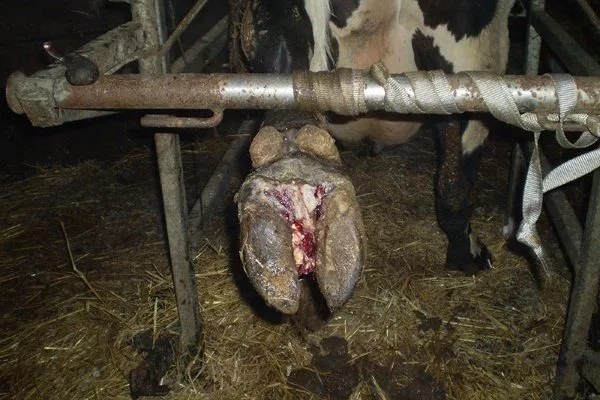
Signs of the disease are:
- moderately elevated body temperature;
- lameness when walking - the limb is abducted to the side;
- in a state of rest - the limb is bent and the support falls on the hook part.
Phlegmon of the hoof coronary band
An inflammatory condition of the subcutaneous tissue of the coronary artery that has no clear boundaries is called phlegmon. It is often caused by staphylococci, less commonly by E. coli and other microorganisms. After penetrating the subcutaneous layer, the pathogens multiply, invade, and infect the overlying tissues, which become inflamed.
Any breach in the hoof's integrity, such as cracks in the coronary band or skin wounds, serves as entry points for infection. The disease can also develop as a complication of purulent pododermatitis.
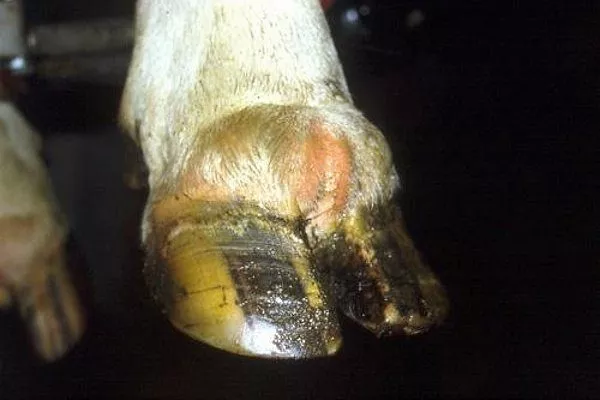
The characteristic signs of hoof coronary phlegmon are:
- general poor condition: lameness, increased body temperature, decreased appetite and milk yield;
- Upon examination, a swelling is found in the interdigital space, which is hot and dense to the touch.
The prognosis for phlegmon depends on the degree of inflammation and the volume of purulent lesion.
Hoof erosion
Hoof erosion is a condition in which the toes become deformed—the outer portion grows larger than the inner portion. This causes the load to be distributed unevenly.
The disease can be detected while walking:
- the cow is limping;
- her legs buckle;
- the gait becomes unsteady.
In advanced cases, inflammation may develop in various areas of the hoof.
The main preventative measure in this case is the use of special heels that prevent the hoof from growing and give the limb the correct position.
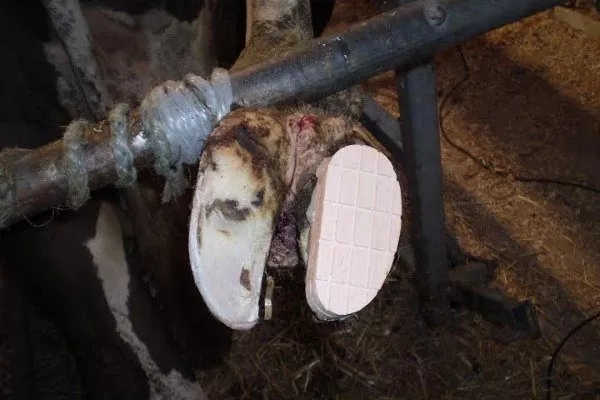
Hoof caps
Strawberry disease
This pathology received its name due to the fact that the appearance of the inflammatory process resembles a strawberry - the area of the skin in the area of the hoof gap becomes covered with tubercles and acquires a red tint.
At the initial stage, the disease does not pose a serious threat and goes away on its own with good care, nutrition, and cleanliness.
If the condition is neglected, the skin around the hooves becomes very inflamed and even fistulas may appear.
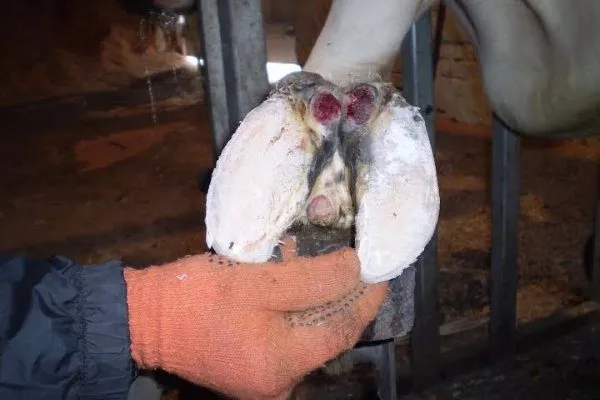
Available vaccines against strawberry hoof disease are not very effective.
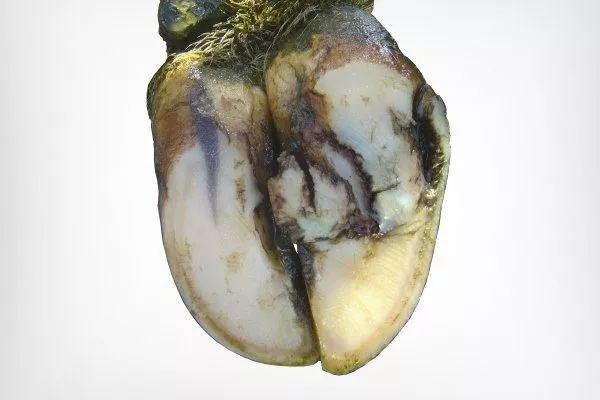
Laminitis
Laminitis is a hoof condition that occurs in young animals, fattened cattle, and pregnant cows. It is triggered by difficult calving or serious dietary and exercise deficiencies.
The main feature of the disease is that several hooves are affected at once.
With laminitis you can observe:
- the animal falls on the sore limb;
- tense gait;
- presence of muscle tremors;
- painful changes occur in the structure of the hoof, in which the horny layer delaminates, becomes deformed, and the hoof bends upward;
- when pressing on the stratum corneum, the animal experiences pain;
- local temperature is elevated.
Treatment
The primary criterion for treating hoof diseases is creating favorable conditions for the animal. Before beginning treatment, it's important to analyze the underlying factors that contributed to the disease. For example, bedding should be replaced, flooring should be made more comfortable for the animal, and the diet should be adjusted.
The hoof treatment plan includes the following steps:
- Hoof cleaning. To trim the hoof, the foot is immobilized. During this procedure, a specialist trims away overgrown parts with a hoof knife, shaping the hoof properly, removing ulcers and foreign objects, and repairing cracks.
- Treatment with disinfectant solutions. Next, the cleaned surface is treated with disinfectant solutions (Furacilin, Betadine, Hydrogen peroxide).
- Use of local medications. If necessary, apply wound-healing ointments, such as Ichthyol.
- Limb bandaging. The dressings are changed daily until the wounds heal.
- Antibiotic therapy. In case of hoof tissue damage by infection, large lesions, or a strong pain reaction, the animal is given novocaine-antibiotic blockades.
- Boosting immunityA general strengthening complex is administered, for example, Katozal injections.
- Symptomatic treatment. Includes antipyretic and analgesic drugs.
| Solution | Effective against bacteria | Effectiveness against fungi | Recommended concentration |
|---|---|---|---|
| Furacilin | High | Low | 0.02% |
| Betadine | Very high | Average | 10% |
| Hydrogen peroxide | Average | Low | 3% |
In case of forced use of broad-spectrum antibiotics, milk is prohibited and the cow is milked separately.
Prevention
As preventive measures the following is carried out:
- timely removal of wet, contaminated bedding;
- checking the bedding for foreign objects that may cause harm to health (construction nails, wood chips, broken glass);
- Timely floor repairs – the floor covering is maintained in proper condition, repair work in the barn is carried out as often as the first unevenness is discovered.
The basics of prevention also include:
- Frequent inspection of limbs and general condition of livestock.
- Hoof trimming is done in a timely manner. The old layer is scraped off with a knife, the walls are leveled with pliers, and the surface and walls are smoothed with a file.
- Foot baths are performed every 3-4 days. For these purposes, containers with a capacity of up to 200 liters are used. One container of plain water is needed to clean the hooves of dirt. The animals are then transferred to a container with a disinfectant solution—formaldehyde, copper sulfate, or a commercially available solution. One such bath is prepared for 200 animals; after that, the solution is refreshed.
Although hoof diseases are quite common on both large industrial farms and small farms, they can and should be combated. Compliance with all sanitary and hygienic procedures, maintaining a stable, appropriate diet that takes into account the energy needs of dairy cattle, proper grazing, and timely herd checkups are the keys to animal health.