
Lagomorphs are considered very clean animals, but despite this, rabbits sometimes smell. There are many possible causes, ranging from simple dirt in the cage to serious illnesses. To get rid of the unpleasant odor, you need to carefully examine the cause before taking action.
Do rabbits smell?
There's a theory that rabbits, especially those living in the wild, prevent the formation of a persistent odor by scraping all impurities from their fur and constantly licking themselves. This is done to increase the risk of detection by predators.
Rabbits have a very fast metabolism, so after consuming plant foods, they experience flatulence, which causes unpleasant odors. However, if their fur and skin stink, serious issues should be considered—both in their body and in their living conditions.
Possible causes of unpleasant odor
If a rabbit stinks at home, it's usually due to human activity or physiological factors. However, there are also more serious causes, such as illness or psychological issues.
Improper care
Rabbits secrete biological substances through their skin, such as sweat, which settles on sawdust, straw, or any other bedding. This accumulates and creates a pungent odor, so it's important to clean the cage and bedding regularly.
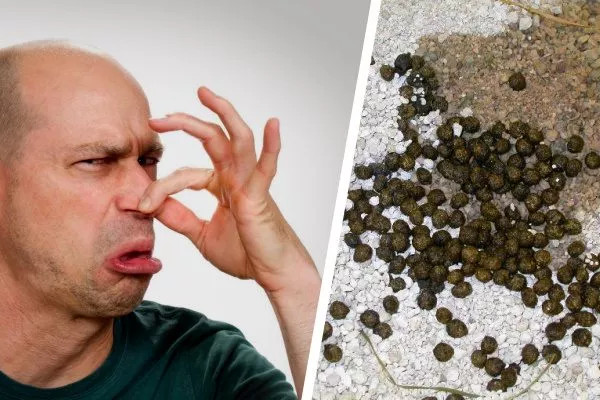
The same situation applies to pet litter: if it is changed infrequently, it becomes saturated with urine and harmful substances from feces, after which this "aroma" is transferred to the animal's body.
Puberty
Rabbits, whether raised on farms or at home, reach adulthood at 3-5 months, depending on the breed. This is their transitional age, when sexual maturity occurs:
- dwarf animals – 3-4 months;
- medium-sized rabbits – from 3.5 months;
- large in size – from 4-5 months.
Regardless of gender, they mark their territory by emitting a secretion mixed with urine. Males also rub their chins, which contain specialized sex glands, against objects to attract the attention of the female rabbit, which also produces an unpleasant odor.
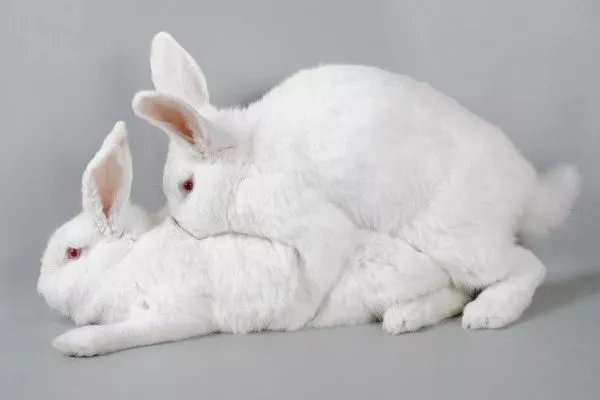
The main signs of the beginning of the rut:
- pets refuse to use the litter box, so they defecate and urinate anywhere;
- the remaining individuals become aggressive, to the point of biting the owner;
- animals make unnatural sounds - buzzing, hissing;
- constantly hang around a potential partner, and if the rabbit is alone in the apartment, then around the feet and hands of the breeder;
- sitting in a cage, the animals dig holes;
- their genitals become enlarged.
If, along with the unpleasant “aroma,” you notice these signs, then the problem lies in puberty.
Psychological state
When a rabbit's psyche is unstable, various processes occur in its body, which affect the smell of its excrement—it becomes pungent and foul, and is immediately absorbed into the animal's fur.
In what cases does this manifest itself:
- fear from loud sounds, blows, loud music, crowds of people, the appearance of new individuals;
- change of residence – when moving, transporting an animal to a veterinary clinic, etc.;
- the presence of other pets nearby – dogs, cats, ferrets, etc.;
- resentment and boredom - if the owner does not pick you up, does not pay attention;
- lack of walking area – rabbits need space to run and jump.

Illness and old age
If your rabbit smells and there's no apparent reason, it may be sick. This is especially true if there's a widespread infestation. In this case, you should immediately take it to the vet for tests and examinations.
The presence of disease is indicated not only by an unpleasant odor, but also by other signs, depending on the disturbances in the rabbit’s body:
- Intestinal catarrh. It manifests itself as abdominal tension, diarrhea, and lethargy. The smell is very strong. The cause is unsanitary conditions, improper feedingTherapy is prescribed by a veterinarian on an individual basis.
- Coccidiosis. Symptoms include bloating, diarrhea, cramps, and sudden weight loss. The causes are the same as in the previous case. Treatment involves an iodine solution (1 ml per 1 liter of water).
- Ringworm (trichophytosis). Signs include the formation of red spots on the skin, a rash, itching, and hair loss. The main factor is infection from other animals. Rabbits are prescribed antibiotics (griseofulvin) and vaccinated with Microderm.
- Cysticercosis. The rabbit drinks a lot of fluids and refuses to eat. Pressure on the abdomen causes pain. The main causes are dirt and contact with sick rabbits. Treatment involves deworming the entire flock.
- Psoroptosis. Signs – combing ears, the release of large amounts of wax. The odor is purulent and putrid. The cause is an infestation with ear mites. Antibiotics containing acaricidal substances are used.
- ✓ Intestinal catarrh: in addition to the odor, there is tension in the abdomen and lethargy.
- ✓ Coccidiosis: accompanied by bloating and cramps.
- ✓ Lichen: manifests itself as red spots and baldness.
In all these cases, rabbits begin to stink. Unless there are illnesses or other causes, young rabbits never emit unpleasant odors. This is typical only for adults, as harmful substances from the environment accumulate in their skin and hair follicles as they get older.
How to eliminate unpleasant odor?
Before getting rid of an unwanted odor, determine its cause and conduct a comprehensive treatment. To avoid unpleasant odor, it must be eliminated. There are two main methods for this: cleaning and bathing.

Cleaning the cage and equipment
Cleaning procedures are carried out in all cases—when the rabbit is simply frightened or when there is a disease. Rules:
- change the bedding at least 1-2 times a week for young animals and 3-4 times for older generations;
- disinfect the tray, as urine, etc. flows into it – use formalin, soda solution;
- Clean the tray once a day, be sure to treat it with an antiseptic, but keep in mind that it should not have too strong a smell - otherwise the rabbits will refuse to use it (it is best to use a light pink solution of potassium permanganate or vinegar - 1 tbsp per 200 ml of water);
- For the litter box, buy a wood mixture that absorbs odors and neutralizes them;
- Scald your pet's toys with boiling water every day;
- Wash fabric bedding once a week, and if there are a lot of rabbits in the cage, do this more often;
- treat feeders and drinking bowls - wash with a 10% soda solution, then pour boiling water over them;
- Do not use chemicals.
If the rabbit's stench is due to puberty, monitor the animal for markings. Treat them with lemon zest once or twice a day.
Bathing your pet
Bathing a smelly rabbit is essential—this will neutralize the unpleasant odor and improve the condition of the skin and coat. However, over-bathing is not recommended. The skin has a protective lipid layer, which is quickly washed away by water, resulting in dryness.
Dry cleaning powders and waterless sprays can be used to solve this problem, but for severe contamination, regular rodent shampoos (Shustrik, Stepashka, etc.) are used. The procedure can be carried out in two ways: in a basin or under the tap.
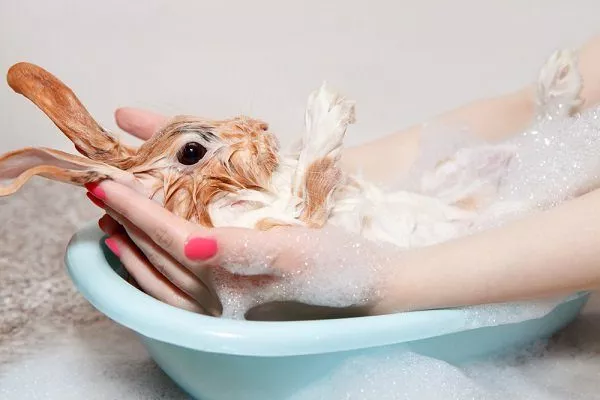
How to do it right:
- Ask one of the farm workers or household members to help you, as rabbits do not like an abundance of water, so they will jump out of the container, scratch, and bite.
- Pour water into the basin to a depth of 3 cm.
- Lower the animal with its hind legs, then with its front legs.
- Pour water to wet the fur.
- Apply shampoo and lather thoroughly over the entire body, avoiding the ears and face.
- Rinse with clean water several times. Make sure there is no detergent left on the skin or fur, as pets lick themselves after bathing, and shampoo residue can disrupt the microflora of the gastrointestinal tract.
- Dry with an absorbent towel. If the rabbit is large and very fluffy, use 2-3 towels.
- If the animal is kept indoors, wrap it in a blanket and dry its fur with a hairdryer. If it's a farm rabbit, place it in a completely dry and clean cage.
Castration
If a farmer breeds rabbits, sterilization is out of the question. However, if the rabbit is raised solely for meat and wool or kept as a pet, it's best to consult a veterinarian and have it castrated.
This will prevent unpleasant odors from developing during the hunt, which can be quite long. Neutered individuals live slightly longer than their untreated counterparts. The procedure is performed before or immediately after the first rut. This occurs approximately 4-5 months into the long-eared hen's life, depending on the breed.
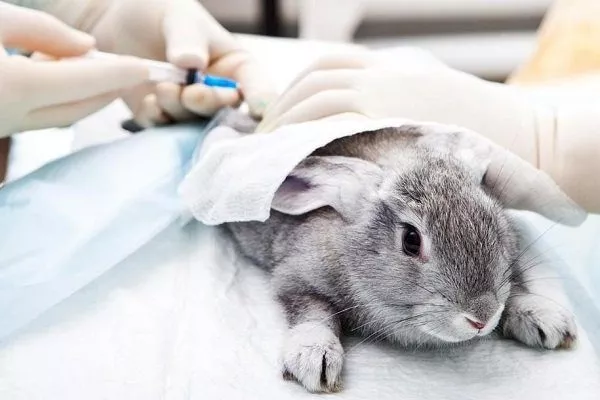
Castration methods:
- Chemical. Special medications or implants containing them are administered to the rabbit. Suprelorin, Covinan, and Lupron are most commonly used. With injections, the effect is short-lived—only two months—and symptoms resolve within 7-8 days.
When an implant is inserted, the result lasts for 24 months, and the odor and other signs disappear within 25-30 days. - Surgical intervention. This is a reliable method that involves removing the testicles from the male and the ovaries or ovaries and uterus from the female. The effect lasts for life, with symptoms resolving within 7-10 days.
The surgery is performed under general anesthesia, using absorbable sutures. It poses no threat to the pet's life.
General recommendations
It's easier to prevent an unpleasant rabbit odor than to get rid of it later. This applies to cases of disease, which is undesirable when raising animals for meat, fur, or breeding.
What do experts and experienced rabbit breeders advise:
- Vaccinate on time - rabbits are very susceptible to diseases, so you can’t refuse vaccinations;
- keep the cage and litter tray clean;
- Wipe down paws and other dirty parts of the body after each walk or exercise in an open pen;
- Keep individuals of different ages separate;
- avoid drafts;
- When purchasing a new batch of rabbits, arrange for quarantine;
- Do not allow other animals near the rabbit hutch, hang up sticky tape to keep out flies and other insects, as they can all carry infections;
- Disinfect all objects that the long-eared one comes into contact with.
If your rabbit smells, don't ignore it, especially if you keep large numbers of animals on a farm. This can lead to the death of the entire flock. Pay attention to the animals' condition and always sniff them when interacting with them.
We got a new dog and chained it up near the rabbit hutch... I guess I should have written that at the end. Anyway, out of the blue, my rabbits started smelling a bit. I couldn't figure out why, but when I read your article, I thought maybe it was the dog barking all the time. And that's exactly what happened. We moved the dog away from the rabbits, and within a week the smell had stopped. Even though we'd washed them and done everything before that. Thanks for your help!