
Keeping rabbits is becoming a very profitable business for farmers. However, it's also a labor-intensive endeavor, as it's crucial to create specific conditions for the animals. Winter housing requires special attention, as there are specific considerations in feeding and housing.
Is it possible to keep rabbits outside in winter?
Rabbits have thick fur, so they can easily tolerate mild frosts. However, in winter, these animals require specific living conditions. This will help protect them from frostbite and diseases that can not only harm their health but also lead to death.
Keeping rabbits in winter has certain advantages:
- cool air helps strengthen the immune system;
- Insulating existing nesting cages is much cheaper and easier than building a winter rabbit hutch;
- There is no ammonia fumes, animals breathe fresh air.
If the farm is large and has a barn or other livestock, the rabbits can be moved in with them and left there for the entire winter. For example, they get along well with goats. This approach will save you a significant amount of time and money.
Keeping rabbits in winter does have some minor disadvantages. These include:
- To produce offspring in winter, it is necessary to artificially increase daylight hours, which leads to additional energy costs;
- It is necessary to regularly heat water for drinking.
Extreme frosts will negatively impact rabbits' health. Although they can withstand temperatures down to -30°C, this is undesirable.
Features of winter maintenance
During winter storage, farmers must pay special attention to air humidity, avoiding drafts and sudden temperature changes. Humidity should not be allowed to exceed 70%, which is common during warm, wet winters.
On the street
A sudden drop in temperature and constantly ventilated cages can seriously harm the animals' health. If favorable conditions aren't created, rabbits can not only lose weight but also become seriously ill.
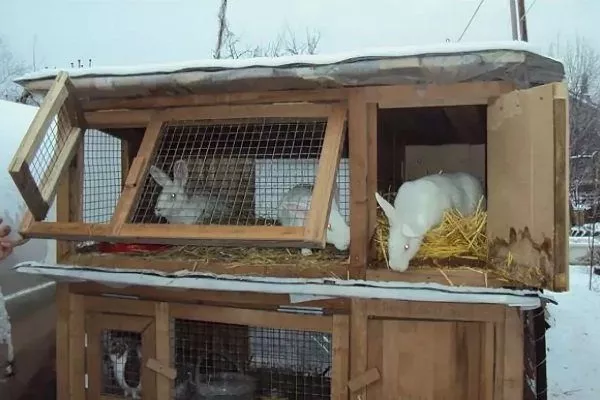
When kept in winter, rabbit cagesThe cages are raised to a height of 70-90 cm above the ground. The floor of the cages themselves is lined with pre-dried straw. It is advisable to create a thick layer (the animals warm the straw with their own breath, which helps retain heat for a long time).
The nesting boxes where the females and their offspring are kept are well insulated. Female rabbits will give birth at temperatures no lower than -25°C. Sufficient fresh air and sunlight must also be provided.
If there is any empty space between the barn wall and the rabbit hutches, it should be filled with, for example, foam plastic, a special artificial material used in construction, etc. Thermal insulation can be achieved using natural materials, such as:
- dry straw;
- moss;
- dry branches and leaves.
- ✓ The thickness of the straw layer should be at least 15 cm to effectively retain heat.
- ✓ Using foam plastic to insulate cage walls requires protection from rodents with a metal mesh.
It's also necessary to construct a canopy over the cages to provide protection from precipitation. Slate sheets or other roofing material can be used.
When severe frosts begin, the top of the cages are covered with quilted sheets (any warm clothing can be used).
Placing cages indoors
During severe frosts or weather with high humidity, rabbit cages are moved indoors (storage sheds). Bringing cages indoors is not recommended.
It is not recommended to house rabbits near cattle. Such a room will create stale air, which can negatively impact the rabbits' health. In some cases, this can even lead to their death.
Avoid keeping rabbits in noisy areas, such as a chicken coop. Rooster crowing or barking dogs can be very frightening, especially for nursing hens.
Greenhouse maintenance
This is a fairly popular method of keeping rabbits during the winter. This method has its advantages:
- always warm;
- no drafts;
- Animals fertilize the soil, which is useful for future plantings.
After harvesting, the rabbits are immediately placed in a greenhouse, where they remain until spring.
An additional enclosure is installed in the greenhouse. It should be large enough to accommodate the number of rabbits it will house. The enclosure is a mesh structure dug into the ground to a depth of no more than 0.5 meters. If this depth is less, there is a risk that the rabbits will dig a passage and escape.
Pit content
If rabbits are kept in a pit, no special preparation is required before winter. The animals' habitat should have a shelter that provides reliable protection from the cold and inclement weather. The floor should be covered with a thick layer of well-dried straw.
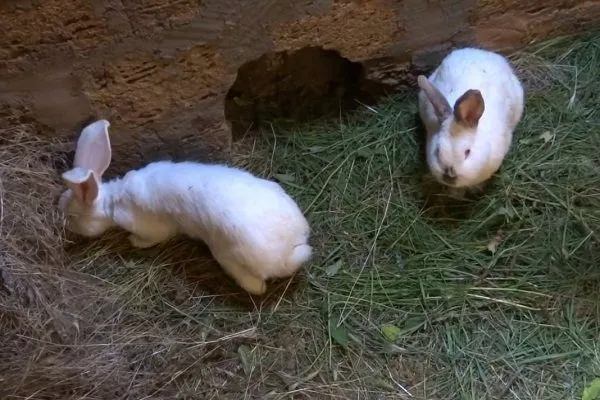
A combined method of keeping the plants can be used, with a greenhouse built directly over the pit. This method has many advantages:
- there is no need to cover the hole by constructing a canopy;
- The polycarbonate construction of the greenhouse allows sufficient amount of sunlight to pass through.
If rabbits don't get enough sunlight during winter, they may develop blindness. This problem is often seen in animals kept in pits.
Feeding rabbits in winter
Pets' health directly depends on a properly balanced diet. In winter, animals are fed concentrated feed and various vitamin supplements.
The lower the temperature in the animals' home, the more food they need to be given.
Feeding
The transition to winter feeding is gradual, as the animals' bodies need to adapt to the new diet. As soon as autumn arrives, rabbits are fed barley and oats. For variety, wheat by-products can also be added.
Daily feed intake:
- succulent feed – 200 g;
- roughage or concentrates – 60 g;
- hay – 150 g.
What can you give rabbits in winter:
- bran and boiled potatoes and other seasonal vegetables;
- grain (dry only);
- dried nettle (leaves).
Cabbage leaves are allowed, but use with caution and in small quantities. This product can cause severe stomach pain.
A properly balanced diet will ensure excellent health and good weight gain for your pet. Vitamins are essential in winter, and deficiencies can be compensated for with special mineral complexes and natural supplements.
For example, fruit tree branches (pear or apple) have a stimulating effect on the gastrointestinal tract. Maple, birch, aspen, and oak branches, along with their leaves, can be used. Conifers (spruce or pine) are also beneficial. It is not recommended to feed pets plum, cherry, apricot, or poplar branches.
Peach branches are strictly prohibited, as they are poisonous to rabbits.
Animals are fed twice a day. Nursing females and young animals require three meals a day. You can prepare mashes containing pureed and mixed scraps of various vegetables. Winter mashes may include:
- carrot;
- potato;
- eggshells;
- beet.
In winter, any remaining mash should be removed immediately, as it may freeze to the feeder.
A balanced and nutritious diet provides rabbits with the necessary nutrients during winter. The animals receive enough calories to support their own warmth and weight gain.
Watering
If animals don't get enough water, various health problems can develop. Symptoms include:
- severe shedding begins;
- sudden weight loss;
- impaired renal function;
- lactating females lose milk.
The recommended feeding schedule is approximately 1.5-2 liters of water per 1 kg of feed. Lactating females can drink up to 2 liters of water per day.
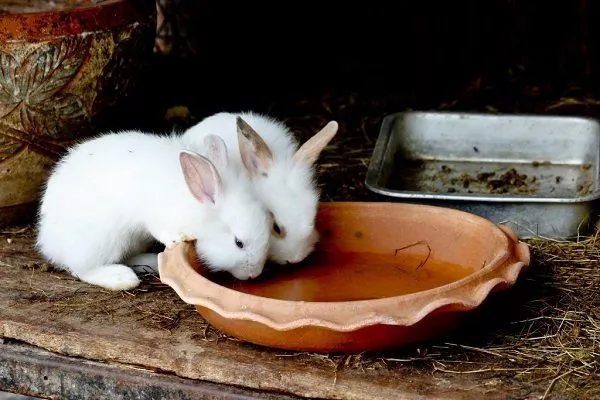
In winter, water in drinking bowls often freezes. It's important to keep the water constantly warm. This can be achieved by using various heaters or bringing the water to the rabbits several times a day. drinking bowls with warm water.
It is not recommended to use metal containers, as the water in such bowls will cool down very quickly.
Breeding rabbits in winter
If you create optimal conditions for rabbits and regularly monitor their nutrition and health, even in winter, litters can be produced. It's crucial to properly set up the nesting box where the mother and litter will be kept.
Winter kindling
The male and female need plenty of light, otherwise the animals lose interest in mating. In winter, daylight hours are short, so artificial lighting is required.
The doe gives birth in a nest box. It's important to prepare it properly, especially in winter. Only then will you be able to produce healthy and strong offspring. Fill the box with as much straw as possible so the doe can make a nest for herself and make herself as comfortable as possible.
In areas with very cold climates, it is best to bring the cage with the mother rabbit and her offspring indoors, such as a garage or barn.
When it is not possible to move the queen cell indoors, it must be insulated:
- The walls are covered with foam plastic and lined with plywood sheets.
- A fairly thick layer of well-dried straw is laid inside the house.
For additional heating, doe and kittens sometimes use special infrared film with heating elements, which is sold at hardware stores. The film is placed on one side of the cage.
Nutrition of pregnant and lactating females
The health of newborn rabbits directly depends on the quality of the diet the mother receives. In winter, fresh greens are unavailable, so other types of feed are used to compensate for the lack of grass in the diet.
Daily nutritional requirements for pregnant rabbits:
- succulent feed – 250 g;
- roughage with concentrates – 130 g;
- hay – 200 g.
Daily diet of a female during lactation:
- succulent feed – 500 g;
- hay – 250 g;
- roughage with concentrates – 140-160 g.
You can give a nursing female:
- seasonal root vegetables;
- grain crops;
- silage;
- high-quality hay containing meadow grasses;
- mineral and vitamin supplements.
The quality of a doe's diet affects milk production. It's important that the doe receives sufficient warm water.
If the mother rabbit has abandoned her babies, read the article on how to do it yourself. feed the rabbits.
Possible diseases of rabbits in winter
Poor living conditions can trigger illnesses. Warm fur can't protect animals from drafts, especially when temperatures drop below -20°C. Frostbite is highly likely. The paws and ears are affected first. Affected animals become restless and constantly lick the affected areas.
Animals also often suffer from cold-related rhinitis in winter. This condition manifests itself with the following symptoms:
- mucus is released from the nose;
- the animal sneezes frequently;
- the animal refuses food.
If clear discharge (without signs of pus) appears, it's a common cold. Treatment should be carried out in a warm room. The animal needs plenty of food, vitamins, and regular nasal irrigation with a furacilin solution (diluted 1:100 with water).
If rhinitis is infectious, the rabbit's nasal discharge will be white or green. The disease is contagious and treatment should be carried out under the supervision of a veterinarian.
Finally, an experienced farmer will talk about the specifics of keeping rabbits in winter in the following video:
Experienced farmers can successfully breed livestock even during the cold season. To ensure a healthy population, they provide the animals with comfortable conditions and proper nutrition.