
Rabbits shed periodically, which is a natural physiological process—their fur needs to be renewed. During this period, special care is required to prevent them from ingesting furballs, as this can sometimes be fatal.
What is molting?
Shedding refers to the replacement of an animal's fur. The fur is partially or completely renewed. However, there are non-physiological causes that can lead to pathological changes in the animal's body, which should be a concern for every farmer.
Types of molting and duration
| Name | Moulting period | Signs | Care instructions |
|---|---|---|---|
| Inconspicuous appearance | 50-60 days | Partial hair loss | Regular brushing |
| A sudden variety | 50-60 days | Bald spots in clumps or stripes | Examination for diseases |
| Fast type | 14-15 days | Rapid hair loss | Accelerated skin care |
| Excessive appearance | Long, without breaks | Abundant bald spots | Diet correction |
Molting in rabbits is divided into several types, which differ in frequency, symptoms, and other characteristics. Learn more about the types:
- Inconspicuous appearance. It is characterized by partial hair loss, which is almost imperceptible upon visual inspection.

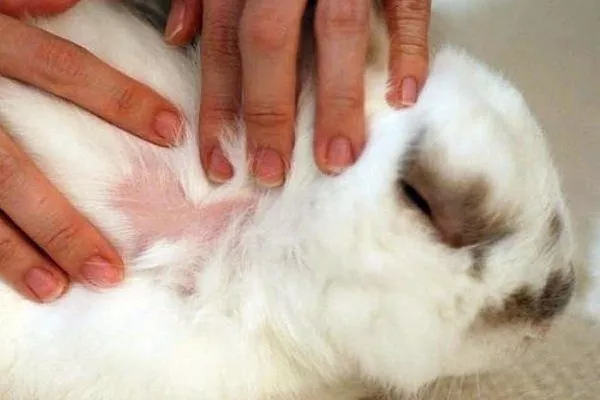
- A sudden variety. Rabbits develop bald patches unexpectedly, with the empty spots appearing in clusters, but more often in stripes. There are two causes: illness and physiological factors.
In the first case, the skin shows signs of a rash, ulcers, wounds, redness, irritation, while in the second case, such signs are absent. - Fast type. The fur falls out rapidly and in large clumps. If there's no underlying pathology, new fur grows back just as quickly in the bald spots. This process takes a maximum of 14-15 days.
- Excessive appearance. The shedding process is prolonged and uninterrupted. Extensive bald patches are visible all over the body. There are two possible causes: age-related changes and metabolic disorders.
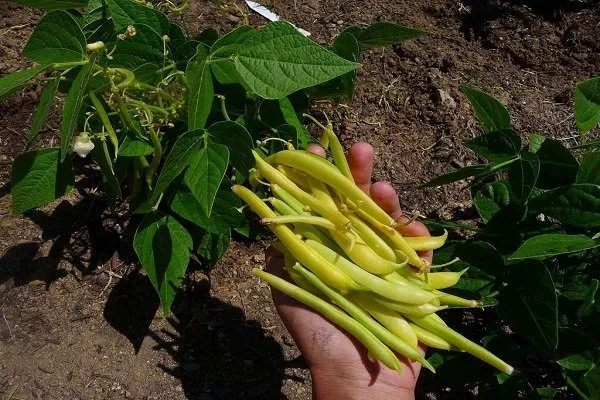
This also occurs due to a sudden change in feed, poor food quality, improper diet, allergic reaction and feeding rabbits with products such as beans, alfalfa, clover, etc., where the protein content is excessive.
The duration of molting in rabbits is influenced by many factors:
- cause of baldness;
- breed characteristics (for example, downy breeds renew their fur longer);
- conditions of maintenance – at elevated air temperatures the duration of the process increases;
- nutrition;
- age.
Causes and features of the course
There are many factors that contribute to shedding, but it's also possible for rabbits to eat each other's fur. This is due to simple boredom. To prevent this, simply take them for walks more often, give them toys, and arrange games. In other cases, more drastic measures will have to be taken.
| Name | Moulting period | Signs | Care instructions |
|---|---|---|---|
| Age-related molt | 50-60 days | Dulling and shedding of fur | Transition to a plant-based diet |
| Seasonal molting | 50-60 days | Hair loss from paws | Special skin care |
| Compensatory pathological molting | Depends on the disease | Various, depending on the disease | Treatment of the underlying disease |
Age-related molt
Baby rabbits are born completely bald, but that's only the appearance. In reality, their bodies are covered in downy hair, which strengthens and grows as the animal develops. This hair is replaced twice during adolescence:
- in 40-45 days – the first molt, during which the duration of loss of soft fur takes about 50-60 days (wool is not used for sale);
- 15 days after the first– the second molt, which is characterized by the same period, but with cyclicity (the wool is suitable for processing).
The main sign of natural age-related shedding is dullness and shedding of the fur. Bald spots with a hint of new down are acceptable.
The phases of the second coat renewal are as follows (each lasts about 10-12 days):
- Hair loss begins from the lower part of the neck area, tail and back paws (such skin is characterized as grade 1).
- The update covers the upper neck, abdomen, thighs, shoulder blades, and lower back (the product is considered second-rate).
- Next, the back, sides, and chest are subject to molting (this is the 3rd grade of skin).
- The fur is replaced in all other areas of the body (the fur is considered unusable).
- After complete hair loss, active hair growth begins in the abdominal area and other places, while the back continues to renew itself.
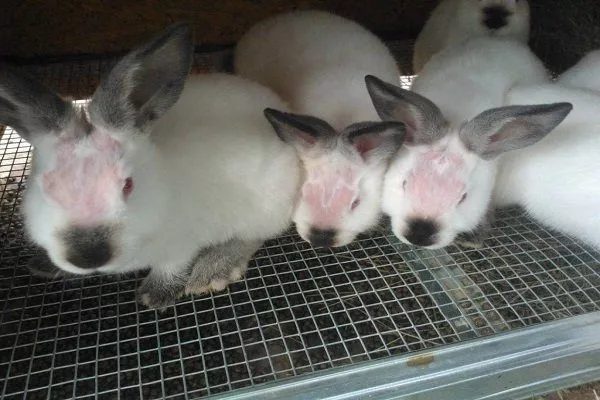
If rabbits are kept indoors, they age over time. By the age of 6-7, their metabolism is disrupted, all bodily processes slow down, and they begin a natural shedding period.
It manifests itself as gradual and prolonged hair loss (about 5-6 months), which is replaced by thinner, weaker hairs. To slow down the process of "senile" fur loss, switch your pet to an exclusively plant-based diet, completely eliminating grains.
Seasonal molting
Rabbit fur is renewed twice a year—in spring and fall—because it becomes thinner and more sparse in summer and thicker and denser in winter. This is the ideal time to slaughter rabbits for their pelts.
The seasonal molt lasts the same amount of time as the age-related molt – from 50 to 60 days. The seasonal period is:
- spring – from March to April;
- autumn – from August to September.
Features of manifestation:
- hair begins to fall out from the front and back paws;
- molting moves to the head and neck;
- spreads to the sides;
- The back and stomach are the last to be updated.
How to determine the end of molting:
- Blow on the fur in the areas where the rump and spine are located.
- Look at the color of the skin.
The skin tone should match the breed's characteristics, but is usually snow-white. If there are dark patches, postpone slaughter for 9-10 days.
Compensatory pathological molting
Quite often, when diseases or parasites are present, rabbit fur begins to shed – this is the body’s way of telling a person that urgent treatment is needed.
In many cases, the signs of compensatory pathological fur change resemble the symptoms of physiological shedding, so you should pay attention to other accompanying manifestations, depending on the problem:
- Ring worm. It occurs due to infection by microscopic fungi and is transmitted through contact with infected animals, equipment, and feces. It can be recognized by localized, bald patches lacking even down.
Additionally, red spots and irritation appear on the skin. Vaccination is used for treatment.
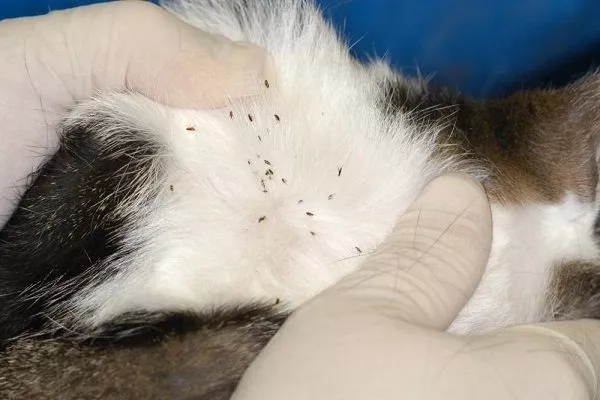
- Fleas. Rabbits, dogs, and cats share the same species of fleas, so they are the most common in households or when kept as pets. Signs of an infestation include intense itching and subsequent scratching of the body.
If this factor is ignored, an allergic reaction develops, leading to active hair loss in various areas of the body. There is an increased risk of myxomatosis.
For treatment, special drops are used, applied to the withers (as for cats and dogs).
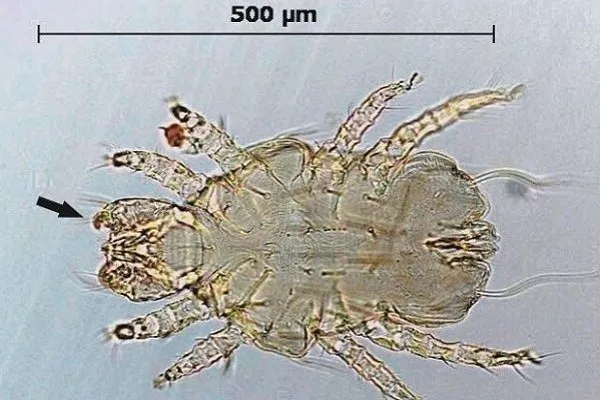
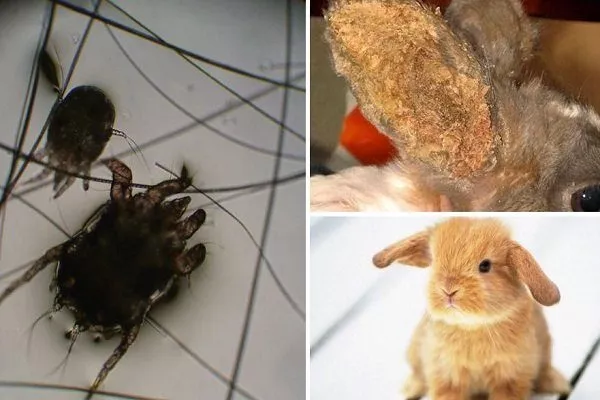
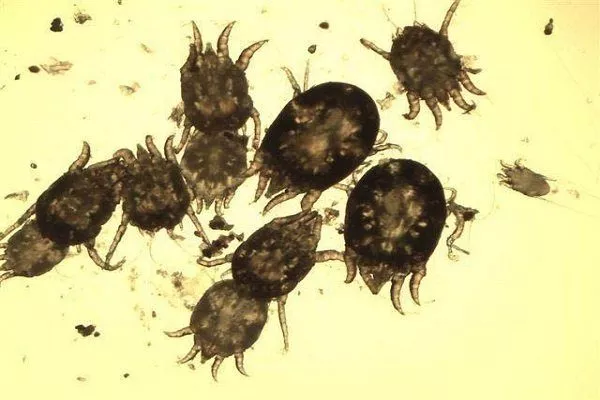
- Ticks. They are found on the skin's surface, beneath it, in hair follicles, and on the fur. Sulfur powders, birch tar, ointments, and sprays (Butox-50, Stronghold, Ivermectin, etc.) are used to get rid of them. Rabbits are affected by three types of mites:
- furry - manifests itself as baldness in the tail area, the peculiarity is the absence of itching, therefore there are no other signs;
- ear - localized in the auricle, which is why the animal scratches it (this leads to the formation of a brown coating, a change in the shade of sulfur, the presence of ichor, and then pus);
- Scabies - found around the eyes, ears, nose, manifested by exhaustion of the rabbit, hair loss with purulent wounds on the skin.
- furry - manifests itself as baldness in the tail area, the peculiarity is the absence of itching, therefore there are no other signs;
- Hormonal imbalance. Baldness can occur in any pattern. The condition can only be detected through a blood test. Treatment is determined based on the type of disorder.
- Dermatosis or Pododermatitis. It manifests itself as severe itching, bald spots behind the ears, and redness and flaking of the skin. Ichor oozes from the wounds. Treatment is usually with zinc ointment, iodine, or brilliant green. If ulcers have formed, Vishnevsky ointment is used.
- Rabbit syphilis. It is most commonly found on large-scale farms with large rabbit populations. Symptoms include ulcers on the body, head, and genitals. Penicillin-based medications are used for treatment.
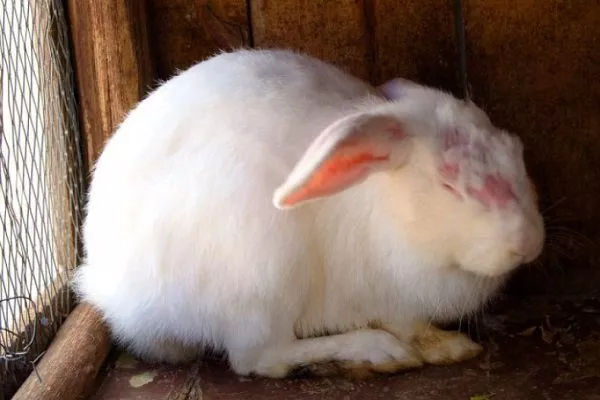
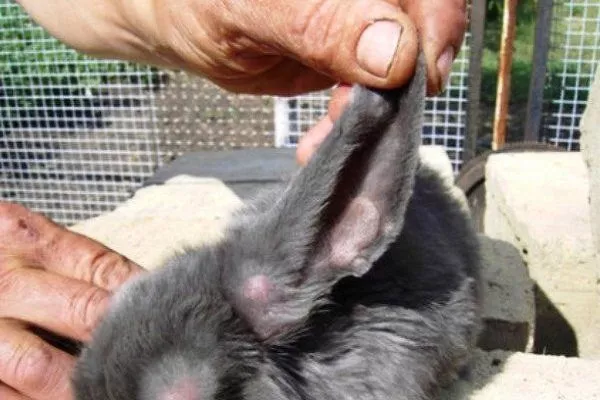
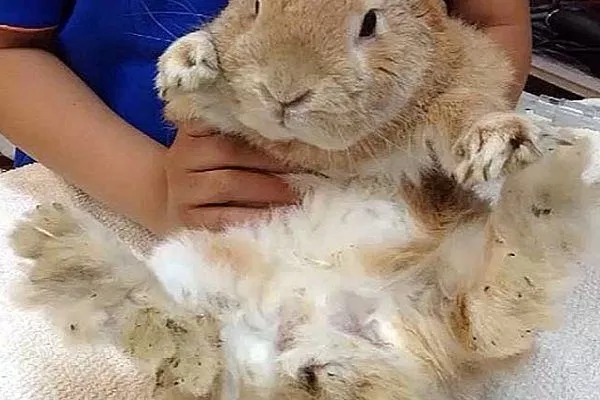
Rabbit baldness
Baldness is divided into two types: congenital, in which protein synthesis and metabolism are disrupted, and natural, which occurs as a side effect of disease.
A lack of vitamins and minerals in rabbits' diets negatively impacts their fur, causing it to shed rapidly. These animals require vitamins B12, E, A, and D most of all. With vitamin deficiency, fur shedding begins on the back, then spreads to the sides, belly, and other areas.
Additional signs:
- dry eyes;
- loss of appetite;
- delayed development and growth;
- formation of a runny nose;
- bleeding gums.
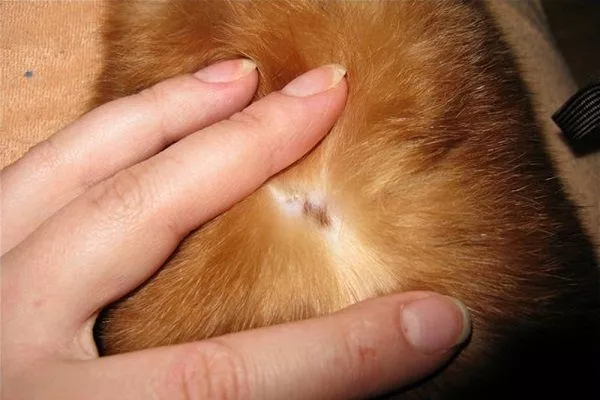
A much more complex condition is ringworm, which develops as a result of a fungal skin infection. It spreads rapidly from one animal to another, so the first step when detecting accompanying symptoms is to separate the affected animals from other rabbits.
There are three types of lichen: suppurative, chronic, and superficial, but the symptoms of all forms are identical:
- the skin on bald areas peels;
- pink spots are formed;
- the affected areas are round in shape;
- the lesions are distinguished by raised edges;
- The rabbit scratches itself non-stop.
Without treatment, the rabbit will become completely bald. For treatment, the veterinarian prescribes Microderm and Vacderm, along with antifungal ointments.
What to do when your rabbit is molting?
The main reason for special care during shedding is that rabbits try to shed their fur themselves by constantly licking themselves. They do this even without shedding their fur, but this prevents the large number of hairs that can cause problems from entering the body.
- ✓ Use only natural bristle brushes for grooming to avoid damaging the rabbit's skin.
- ✓ During the shedding period, increase the amount of drinking water by 20-30% to prevent dehydration.
Rabbit care
To ensure a successful molt (without complications or other negative factors), pay special attention to your rabbits' diet, cage cleanliness, and fur. Here's what you need to be especially careful about:
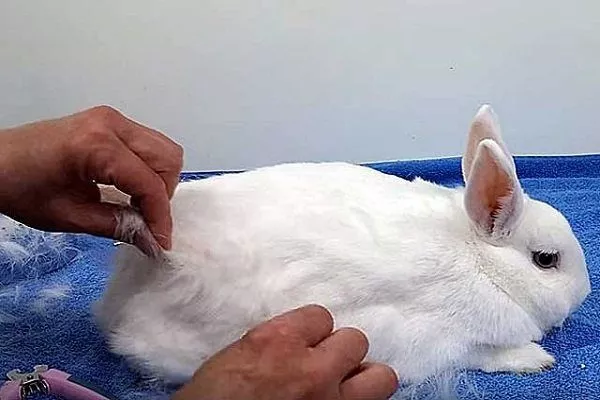
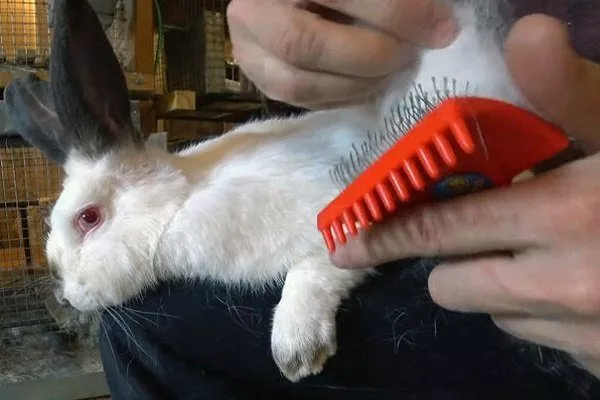
- Brush shedding individuals daily - if there are too many of them and you can't devote attention to this every day, hire an additional worker or brush them at least once every 2 days;
- If the fur has tangles, trim them carefully with scissors, as if they fall out, the rabbit could swallow a large lump of fur, which could be fatal;
- If the farm contains short-haired breeds, it is enough to remove the fur layer using a moistened palm (to speed up the process, put on work gloves with rubberized elements);
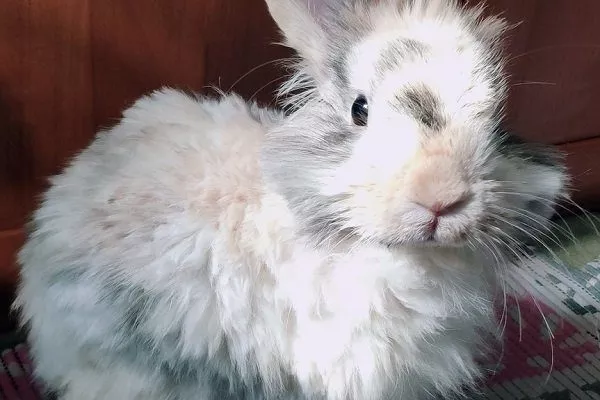
- For long-haired individuals, use special brushes and combs, otherwise it will be impossible to remove hair;
- 1-2 times a day, remove soiled bedding in the cage and clean out feces;
- Disinfect feeders, drinking bowls, trays or trays, and the floor of the rabbit hutch once every 1-2 days;
- change the water to clean water several times a day;
- Inspect your animals more frequently for signs of illness, as these can also occur during seasonal/age-related shedding.
But even meticulous cleanliness and care for rabbits doesn't guarantee that they won't ingest hair. This is a dangerous condition, causing the stomach to fill with furballs and become completely clogged. Signs of this pathological condition include:
- feces come out in dense lumps (like in goats);
- the feces are connected to each other by a thread of wool, so when defecation occurs they are released as a ribbon;
- the stool is too dry;
- the rabbit rarely goes to the toilet;
- the animal refuses to drink or eat, even if it is its favorite food.
If you notice these signs, take immediate action. Here's what you need to do, step by step:
- Buy some Vaseline oil and inject it into the rabbit 3 times a day, 2-3 ml at a time.
- Massage the abdominal area. Use gentle, slow movements, starting from the chest and moving toward the hindquarters.
- Give your furry friend Espumisan – 1 teaspoon is enough for one individual.
- Get your pet running and playing outdoors. The more it moves, the faster the hair will leave its body.
If the stomach is completely filled with fur and the rabbit refuses to drink or eat, call a veterinarian to administer the necessary injection. Typically, 5 ml of 0.9% NaCl and 10 ml of glucose (5%) are used. After this, you'll need to perform several more procedures:
- After intramuscular administration of the drug, add Espumisan at a dosage of 1 teaspoon.
- Wait 30 minutes, then prepare some carrot juice (store-bought or refrigerated carrot juice is not suitable). Use 20 ml for juveniles and 25 ml for adults.
- After another 30 minutes, give some Vaseline oil (5 g).
After about 30-50 minutes, the hair in the stomach will soften and quickly pass out during defecation.
Nutritional Features
To ensure rapid fur growth and a balanced supply of nutrients, feed your rabbits specialized food containing vitamin and mineral supplements during shedding season. There are many different types, depending on age group and manufacturer.
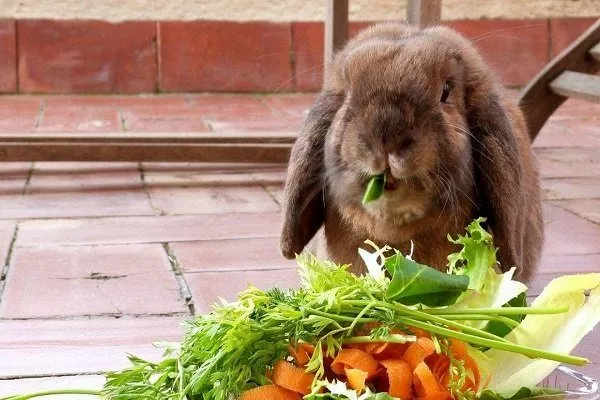
Necessarily introduce into the diet Plant foods, which accelerate all metabolic processes, making the shedding process quicker and easier. Pay special attention to foods containing fiber, so feed more birch, ash, and willow branches, bark, and leaves.
Don't forget about fruits and vegetables—more carrots and cabbage, greens and salads. Sulfur is essential for hair growth. To achieve this, buy a sulfur supplement and give it at a dose of 0.01 g per day.
Preventive measures
Vaccination is the key to preventing abnormal molting in rabbits. This is especially true for ringworm, which most commonly affects these long-eared rabbits. Veterinarians use two medications for this purpose:
- Vakderm vaccination – prevents the development of dermatophytosis;
- Microderm vaccine – the purpose is identical, but differs in the live lyophilized form.
To prevent furballs from forming during shedding, experts recommend the following preventative measures:
- starting from 4 months of age, introduce 1 prune into the diet 4 times a month;
- from the very beginning of molting, give 3 ml of Vaseline oil once a day every day;
- Buy a special paste for hair removal from your veterinarian, such as Gimpet malt-soft, Gimbi Nager-Malt Paste, etc.
Don't forget about the living conditions, water purity and food quality, which determine the degree of infection with bacteria, viruses and fungi.
Shedding in rabbits occurs for both physiological and pathological reasons. It's difficult to stop, as natural processes take time and the underlying cause must be addressed. By strictly following all recommendations, you'll make your pets' lives much easier during coat renewal.