
Hares are naturally sweet, but they can often exhibit aggressive behavior, such as biting and hissing. It's important to immediately determine the cause of this behavior—it could be anything from a simple tantrum to an underlying medical condition.
Why does the rabbit bite?
There can be various reasons for a rabbit's aggressive behavior toward humans—serious health problems, mental disorders, territorial defense, adaptation to a new environment, sexual arousal, etc.

Pay special attention to when exactly the animal began to behave this way, what accompanying symptoms are present, and what can be done to correct the situation.
Rabbits kept on farms (for breeding) bite more often. Domesticated rabbits are tamer and less prone to aggression and fear.
Timidity
An animal may bite a person out of fear. If it was purchased from a pet store, it hasn't been handled or touched often, so the new owner may cause some stress.
There are several signs that your rabbit is experiencing discomfort:
- trampling with paws;
- fur fluffing;
- eyes wide open;
- squeal.
In such cases, give your pet time to adjust to the new environment (up to 2 weeks). If your rabbit continues to scream for a long time, seek professional help. This behavior can lead to serious heart problems.
Some factors that may cause a rabbit to be scared:
- presence of other animals;
- loud and sharp noise;
- Inappropriate human behavior with an animal – holding tightly, stroking roughly, or, conversely, not paying enough attention, etc.
To prevent the animal from being frightened and biting, follow certain rules:
- At first, interact with your pet, i.e. gently stroke its withers, this will allow it to get used to the new smell;
- give food from your hand - the rabbit will get used to being handled differently;
- Walk him more often - every new place will become familiar to him due to its smell.
If the rabbits are raised on a farm and the herd is large, training them to be handled is pointless. Biting and fear are natural consequences of large-scale cage housing. Especially if the rabbits are raised for meat and fur, there's no need to train them. It's a different matter if the animal's behavior gets out of control and it becomes aggressive toward its fellow rabbits and appears unwell.
Attracting attention
If you pick up a pet rabbit, you may feel light nibbles, which can lead to more intense bites. This isn't an aggressive behavior, but rather an attempt to attract attention.
There are several actions that a rabbit performs:
- pokes his nose into your hand;
- looks into eyes for a long time;
- runs fast;
- slaps the cage with his paws.
In such cases, pick up the animal, gently stroke its head, and give it a treat. The animal will feel the attention, will soon get used to this behavior, and will perceive you as a loving owner.
Adaptation to new conditions
After you've acquired a rabbit and brought it home, don't let it out of its cage right away. It needs time to adapt to its new surroundings and get used to the unusual smells.
Key points:
- place the cage in a place where it will be permanently located;
- the animal's house should have solid walls - this will ensure peace and security;
- The room in which the long-eared one will live must be quiet.
If your rabbit doesn't eat for a while, don't be alarmed; this is a normal reaction to being in a new home. They may refuse food for up to 5 days and will resume eating when they feel completely safe.
Water shortage
Water accounts for up to 70% of an animal's body weight, helping regulate metabolism and protecting against overheating. Aggressive behavior can be caused by thirst, so a clean water bowl should be provided in the animal's cage and changed daily.
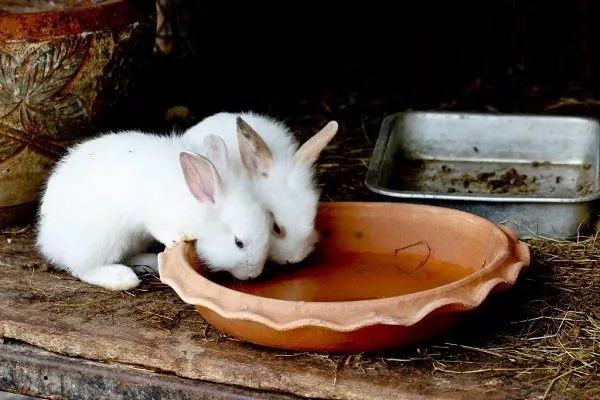
What can a lack of fluid lead to:
- feeling unwell;
- hair loss;
- loss of appetite.
Influence of feed
When choosing feed, pay attention to its ingredients; it should contain all the necessary vitamins and nutrients. Particular attention should be paid to the micronutrients present in the food, as these are essential for the rabbit's overall health.
The diet of a domestic or farm rabbit should include the following products:
- vegetables, as they contain vitamins A, B1, B6;
- fruits you can give include apple, pear and melon;
- fresh sprouted grass;
- Nuts - they prevent the growth of long fangs.
To prevent the animal from biting, be sure to include chalk, special sticks with dense grains, which can be purchased at a pet store, and solid food (carrots, etc.) in its diet.
If your pet starts to develop mats, pay attention to the calcium content of the food. You shouldn't feed the animal only granulated food, be sure to give branches of fruit trees and chamomile and calendula flowers.
Sexual activity
Rabbits frequently bite people due to puberty. The male rabbit will hover around for a long time and may suddenly exhibit aggressive behavior (biting, hitting with its paws, hissing, etc.). The female rabbit will sit motionless in the cage for a long time, after which she will begin to fluff up her fur and make a nest.
What needs to be done:
- leave the animal in complete peace;
- Give vitamins for sexual activity.
- ✓ The male may begin to mark territory outside the cage, which is not mentioned in the article.
- ✓ During the period of sexual activity, the female may refuse regular food, preferring only certain types of food.
If you do not plan to breed rabbits, veterinarians recommend castration or sterilization to prevent aggression and possible diseases.
Defending your territory
A rabbit, like any animal, defends its territory, especially if there are other four-legged friends in the house. They have self-preservation instincts, and invading their space can lead to aggression and biting.
This mostly happens when the owner cleans the cage, so there are some rules to follow:
- open the door to let the rabbit out of the house, then start cleaning;
- in an open area, feed him;
- If it doesn't come out, put on gloves to avoid being bitten;
- Avoid contact with other animals.
At first, the animal begins to mark its territory; provide it with a minimum of space - this will help it gradually get used to the new premises.
Crowding in a cage
Rabbits are very active animals, so if kept in a cage for too long, they may become bored and behave erratically. To avoid this, let them go for walks and hold them more often. Get them toys that will help them feel more at ease, such as:
- cardboard boxes you can climb into and chew on;
- rolls or toilet paper;
- baskets with various fillings (hay, grass, etc.);
- specialized toys that are sold in pet stores;
- fruit branches;
- plastic bottles (water only) and cotton towels.
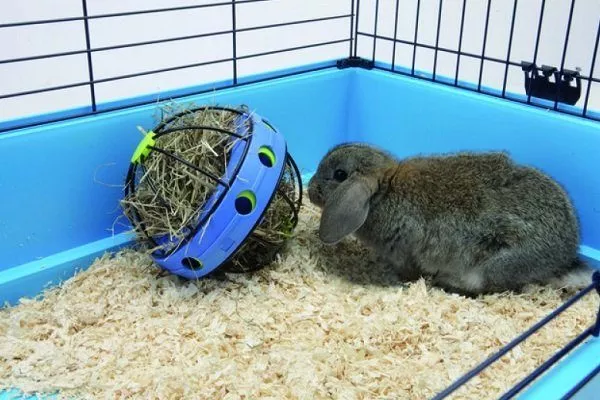
Sometimes, your pet will start eating its own feces—further evidence that it's bored in its home. If you want your rabbit to be active and non-aggressive, pay more attention to it and keep it active.
Incorrect conditions of detention
Improper care can also cause stress, leading to aggressive behavior. To avoid problems for your furry friend, follow these basic care guidelines:
- Size of the house. The home should not be cramped, he needs to feel the space, when standing on his hind legs he should not touch the ceiling with his ears.
- Grainy fillers or shredded newspaper. Your pet's paws will be in constant contact with feces, which can lead to illness. Therefore, be sure to provide adequate bedding.
- Incorrect location of the dwelling. It's important to find the optimal habitat for your rabbit. Keeping it in a draft, on a cold floor, near a radiator, or in direct sunlight can lead to illness.
- Nutrition. It's important to provide a proper diet; don't feed only grain mixtures. Instead, indulge your pet with vegetables and fruits.
- Drinking bowl and feeder. Plates and water containers should be at such a height that the rabbit cannot climb in with its paws, otherwise all the food and drink will be covered in feces.
- Teeth sharpening. Only fruit tree branches are suitable for animal fangs; you should not purchase special toys, mineral stones, ropes, or wires.
- Aquarium cage. This type of shelter doesn't make the animal feel secure because the walls are transparent. Glass quickly heats up in the sun and doesn't retain heat as well as a wooden house. Therefore, the rabbit will feel uncomfortable.
Diseases
Pet and farm rabbits are highly susceptible to disease, which can result from improper feeding, poor care, and exposure to harmful microorganisms. Even minor physical abnormalities should raise concern in the owner, so appropriate measures should be taken immediately.
Diseases that animals most often suffer from:
- Smallpox. The main symptoms include a rash, rhinitis, conjunctivitis, swelling of the skin and abdomen, and, in severe stages, rapid breathing and hyperthermia. Cure is virtually impossible; the only treatment is preventative vaccination.
- Rabies. The virus attacks the brain, heart, and nerve cells, causing the rabbit to die from suffocation. Domestic rabbits rarely contract this disease, as they don't come into contact with wild animals, but if they do, it's virtually impossible to cure. If rabbits are kept on a farm, keep a close eye on all animals.
- Parasites. When infected, pets experience shortness of breath, coughing, purulent nasal discharge, and wheezing. Without appropriate treatment, joint damage occurs, and the animal begins to limp. Treatment is with the antibiotic tetracycline.
Other reasons
A rabbit may show aggression towards its owner not only due to poor health or physical abnormalities, but this can also happen for the following reasons:
- pregnancy - the female in this state is very irritable, so every action of yours can provoke a bite;
- If you start waking up a rabbit while it's sleeping, it can be very frightening and the reaction will be immediate;
- Constantly being in a cage also provokes the pet to aggressive behavior.
In these cases, leave the animal alone and observe its condition, giving it its favorite treats. Once it calms down, open the cage and wait for the rabbit to emerge on its own.
How to stop a rabbit from biting?
It's easy to wean a rabbit off aggressive behavior: provide it with favorable living conditions, feed it its favorite food, and pet the animal more often.
If you can't avoid a bite, it may mean that your pet is trying to dominate, so try to leave it alone for a while, let it feel in charge, and it will soon get used to it.
What to do if a rabbit bites you and draws blood?
Children are the most likely victims of pet bites, and this occurs due to improper handling (sharp or rough handling, noise, fright, etc.). Don't be alarmed; if your pet has been vaccinated, there is no risk of rabies.
To treat the wound, use the following methods:
- pour 3% hydrogen peroxide onto the bite site;
- apply antiseptic (brilliant green, iodine);
- apply a bandage or adhesive plaster.
A rabbit, regardless of where it's kept, is a timid creature susceptible to various illnesses, which can lead to inappropriate and unpredictable behavior. Therefore, take care of your pet and create the best possible environment for it (whether on a farm or at home). This will ensure it feels comfortable and protected, and it will never show aggression toward you, much less bite.
My beloved rabbit bit me. I was shocked, as I'd raised him since birth; he was my favorite. Then I picked up Timoshka, and he bit me so hard that blood flowed. Thank you for explaining the reason. It turns out my boy was out for the first time.