
Keeping rabbits in winter requires special knowledge. First and foremost, make sure you've got your pets' housing set up. Rabbits tolerate frost well, but in very low temperatures, they can freeze and become seriously ill.
At what temperature do rabbits freeze?
Winter keeping of rabbits has a number of advantages. The main advantage is that animals born in winter have stronger immunity and are distinguished by high endurance.
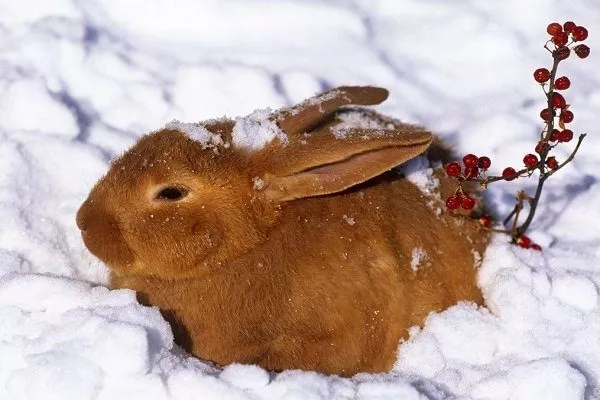
What temperatures can rabbits tolerate?
- adults feel comfortable at temperatures of -12…-15 degrees;
- baby rabbits If the nest box is properly equipped and well insulated, they can easily withstand temperatures down to -5 degrees.
Adults can tolerate temperatures as low as -30°C for short periods. However, prolonged exposure to such conditions is contraindicated, as it can cause serious harm to the animals' health.
How can you tell if a rabbit is cold?
It's important to constantly monitor the animals' behavior and well-being. If rabbits in cages begin huddling together, tucking their paws under themselves, they're cold. Feel their ears—if they're cold, move them indoors or add additional insulation to their cages.
There are cases where animals become severely cold while kept outdoors in winter and begin to stiffen. If you notice this early and try to warm them up, there's a good chance of saving the animal.
What to do when a rabbit is cold?
If a rabbit is cold, don't try to warm it with your own breath, especially if it's a small kitten. Take a cardboard box and line it with a warm blanket (any kind of bedspread will do). Then transfer all the animals into the box and bring the box indoors.
Avoid placing the box near heating devices to avoid accidentally aggravating the situation. At room temperature (around 20–25°C), the animals will gradually warm up. Once the rabbits return to their normal activity, the danger has passed.
If there is severe frost outside, it is better to keep animals indoors for some time.
How to warm up a newborn rabbit?
In severe frost, move newborn babies and their mother to a warm room. If the babies are very cold, we recommend the following procedure to help warm them up quickly:
- Fill a bucket with warm water (you can use any container).
- Gently pick up the baby rabbit by the head and body and slowly lower it into the warm water. Be careful not to submerge the baby's head, as this could cause the baby to choke.
- After about 5-10 minutes of bathing, the baby rabbit will start to move.
- As soon as the baby starts moving, stop the procedure.
- Take a dry cloth and dry your baby thoroughly. Try to remove as much moisture as possible.
- Place the baby rabbit in the center of the nest and cover it with down.
The nuances of keeping rabbits in winter
Keeping rabbits in winter has its own rules and peculiarities. To not only preserve but also increase the number of animals, create optimal conditions for them. It's important to properly insulate the hutch, paying particular attention to the farrowing area.
Necessary conditions
Their physiological characteristics and warm fur allow rabbits to easily tolerate low temperatures. If the animals grow up on a farm, they are accustomed to a comfortable life created by humans. Therefore, they are more vulnerable to weather conditions and significant drops in temperature.
- ✓ Maintain the temperature in the rabbitry at least -15 degrees for adults and at least -5 degrees for babies.
- ✓ Ensure there are no drafts or humidity in the room.
- ✓ Use thick bedding made of hay or straw, changing it regularly.
Inappropriate housing conditions lead not only to disease but also to the complete extinction of livestock. Therefore, before the cold weather sets in, consider insulating your animal shelters. Comfortable conditions can even help expand your rabbit herd and produce healthy offspring.
Features of winter keeping of rabbits:
- If winters are mild, it's best to keep rabbits in cages. Insulated sheds are also an option. The main thing is to avoid drafts and high humidity.
- Thick bedding of hay, straw, or sawdust is essential. The bedding should be changed periodically.
- During the winter, animals can be kept in a greenhouse or garage. If severe frosts occur, electric heaters can be used.
- Proper nutrition and vitamin supplements help maintain good health. Rabbits' diets should include vegetables, fruits, greens, and hay.
- Don't forget to water your animals. In winter, water can freeze, so it's necessary to regularly add fresh, warm water. Avoid using metal containers, as the liquid in them freezes quickly.
How to insulate a rabbit hutch?
Before the onset of cold weather, insulate the rabbit hutch using the following materials:
- fallen leaves;
- straw or hay;
- moss (only dry);
- branches (pre-chopped).
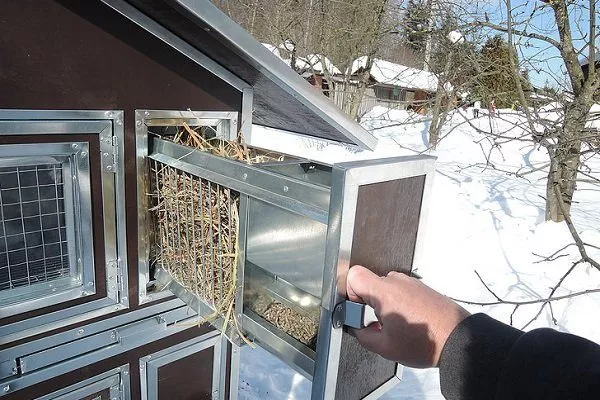
Insulators are placed between the inner and outer walls of the cage. Synthetic materials such as foam and felt can be used. A large amount of well-dried hay is placed inside the house. These materials retain heat well.
To prevent the floor from freezing, use thick wooden planks. If the temperature drops below -20°C, place blankets, quilts, old jackets, or other warm items on top of the cages.
Arrangement of the uterine section
Newborn rabbits don't have a warm coat, so it's important to properly insulate the nesting box. Otherwise, the young will quickly die.
Plywood sheets are used to insulate the cage frame. Spaces are left between them, which are filled with foam or polystyrene foam. This design is quite sufficient for mild winters without severe frosts. It is important to insulate all cracks to prevent drafts.
You can purchase a brood cell with automatic heating. This device is available in specialty stores, but it's expensive. This way, you won't have to worry about the brood dying.
Keeping rabbits in winter has many advantages and is very profitable for farmers. It's important to take care of the animals in advance, insulate their hutches, and stock up on feed. Proper feeding and care help increase the herd over the winter and produce healthy rabbits with strong immune systems.