
Regardless of how rabbits are kept—for breeding on a farm or as pets in an apartment—it's important to monitor not only their health but also their appearance. Pay particular attention to their claws, as overgrown nails can cause serious problems.
Why do rabbits need their claws trimmed?
Some novice rabbit breeders mistakenly believe that trimming rabbits' claws is not necessary, citing the fact that no one performs such a procedure on them in the wild.
In fact, when animals are in such conditions, they lead a very active lifestyle, so their nail plates wear down on their own.
If a rabbit lives in an apartment or in a cage on a farm, it does not have this opportunity, so its claws grow too long, become sharp, and break abnormally, which leads to consequences.
The main reasons why rabbits have their nails trimmed are:
- If they break, a crack may develop, leading to injury to the soft pads, which subsequently contributes to the development of purulent wounds;
- Due to excessively long claw elements, the animal’s weight is unevenly distributed when moving – the rabbit rests on its heels, and not on the entire foot, which leads to curvature of the toes, the formation of calluses and wounds;
- the risk of scratching other living creatures increases - if the long-eared one lives in an apartment, then to children and adults, if on a farm, then to its relatives, but in all cases it injures itself;
- Constantly growing and not wearing down nail plates curl and bend, which prevents the animal from running, jumping and moving normally;
- When kept at home, a decorative rabbit clings to the carpet with its long claws, which results in a broken plate, a torn claw, or a broken toe.
If the owner never trims the claws, this leads to decreased motor activity, problems with joints and the musculoskeletal system, impaired posture, and the development of degenerative processes in the skeleton, ultimately resulting in death.
The main sign that the procedure is necessary is the rabbit’s constant attempts to bite its claws.
Features of the procedure
The initial nail trimming is performed when the rabbit reaches 1.5 months of age, but this is not mandatory, as the rate of nail growth depends on the animal's developmental progress, which is influenced by the characteristics of the individual breed. Therefore, some rabbits' nails are trimmed for the first time at 2, 3, or even 6 months.
The frequency of trimming depends on the rate of claw growth, which is influenced not only by the breed, but also by other factors:
- walking area - if the animal spends time on areas with a hard surface (asphalt, pebbles, etc.), then the claws are slightly worn down, but if only in grass with soft soil, they grow back quickly;
- frequency of walking – the less often the rabbit is walked, the more often the procedure is performed;
- diet and feed quality;
- long-eared creature activity;
- the conditions in which the animal is kept.
Based on this, experts recommend trimming overgrown claws at least once every 3 months, but on average it is advisable to do this every 6-9 weeks.
Preparatory activities
Trimming the nails of any animal is extremely stressful, especially if it's the first time. To reduce anxiety, caring farmers and pet rabbit owners prepare their pets from the start.
Tool selection
There are two types of nail clippers for trimming rabbits' nails—the same ones used for dogs and cats. Various sizes are available at pet stores, so consider your pet's size when purchasing.
You can find simplified versions with a safety stop, which will prevent you from cutting off excess.
Types of nail clippers and their operating principles:
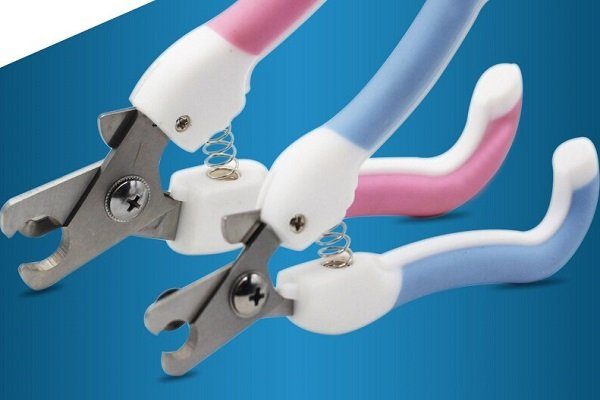
- Nippers. They are also commonly known as nail clippers. They are most often used on cats and toy dogs, as they are designed for trimming thin to medium-thick nails. They function like scissors, so the owner simply points the clippers at the nail plate and makes the cut.
The main advantage is the tool's freedom of maneuverability, allowing it to trim all corners of the nail. The disadvantage is that using clippers without a limiter risks damaging capillaries.

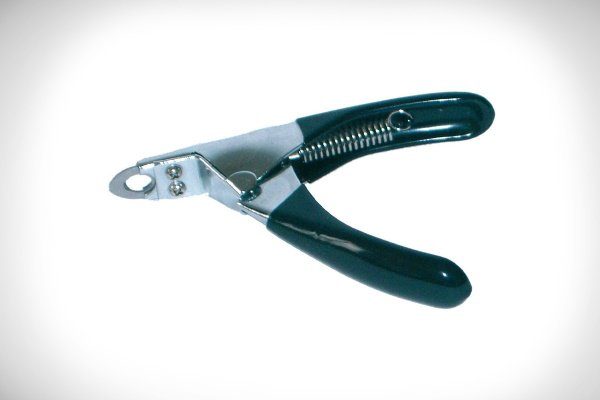
- Guillotine. Used for large dogs with thick nail plates, these clippers feature a round hole containing a sharp, durable blade. This blade is attached to handles, which, when squeezed, cut the nail.
A major advantage is that it's virtually impossible to injure the rabbit's paw or trim off excess hair, as the tool is secured to the rabbit's toe (even if it twitches, nothing serious will happen). The disadvantage is the high cost of the device.
Today, there are a huge number of models on the market from different manufacturers, varying in price and, consequently, quality. To avoid buying a tool that will soon break and be inconvenient to use, pay attention to the key requirements for nail clippers:
- blade material - steel, as it has a higher level of strength;
- type of metal – stainless steel, because the instruments are disinfected before and after the procedure;
- sharpening - high quality, sharp;
- edge joining - very dense, without gaps or bevels;
- pens – with a rubber grip, otherwise the nippers will easily slip out of your hands when trimming the claws.
If the groomer is new to nail trimming and has no experience with it, there's a higher risk of nicking a capillary, causing bleeding. Be prepared for this, so have bleeding control products and other necessary supplies ready in advance:
- cotton pads and swabs;
- hydrogen peroxide;
- streptocide in the form of powder for disinfection;
- a special hemostatic sponge or special powder, pencil, etc., that stops bleeding.
Additionally, prepare a table lamp, a flashlight, a blanket and a nail file.
Preparing your pet
There's only one way to calm a rabbit: if it knows its owner and interacts with them frequently. This is problematic on large farms, so experts recommend not neglecting the principle of establishing contact between the animal and its owner.
What you need to do before trimming nails:
- Pick up your pet and sit on a chair. Their back and hindquarters should be near your stomach, with their neck and head resting on the crook of your arm. If you're using a table for the procedure, place them on the surface and sit next to them.
- Press it lightly against you, wrapping your arm around the eared creature's chest. Be careful not to squeeze the animal too hard, as this will frighten it. Apply force only when it starts to twitch, trying to escape.
- Stroke the rabbit on the back, take its paw in your palm.
- Sit like this until his breathing becomes even. This usually takes about 10-15 minutes.
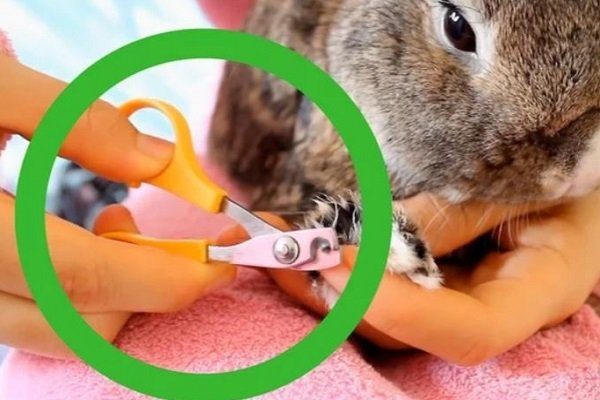
If your pet panics, hold it by the sides of its body so that its elbows touch the thighs of its hind legs. This action calms it down, as it feels a sense of security, similar to being in a den.
Fixing the rabbit
This procedure is essential, as it's impossible to trim the claws without immobilization without causing injury. Immobilization is performed after the animal is completely calm. There are several methods for this:
- Lying on your back. This method is used once the rabbit has become accustomed to this position. To do this, the rabbit is placed on a person's lap with its head resting against the owner's stomach.
- Sitting. Either on your knees or on the table. The positions are the same as when calming the animal.
- In a diaper. A soft towel or fabric (such as flannel, fleece, etc.) is used. It is important to wrap the animal in the same way as you would swaddle a human baby.
If you're trimming on a table, you'll definitely need an assistant, as the rabbit will feel uncomfortable and may flinch. If you're trimming on your lap, you can easily do it yourself.
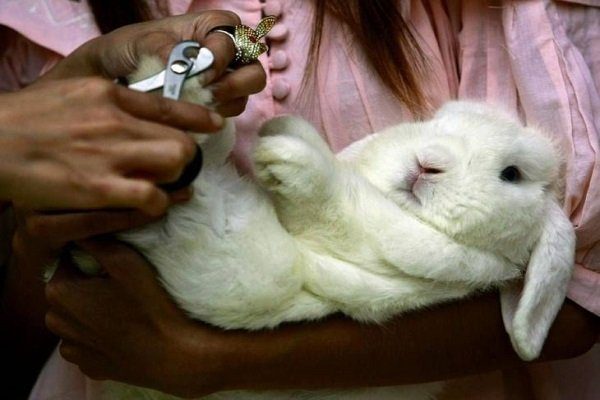
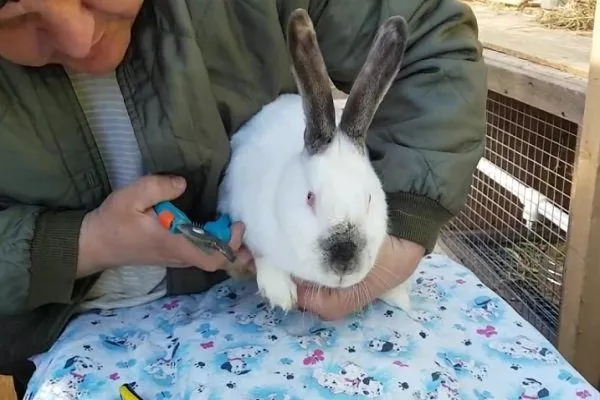
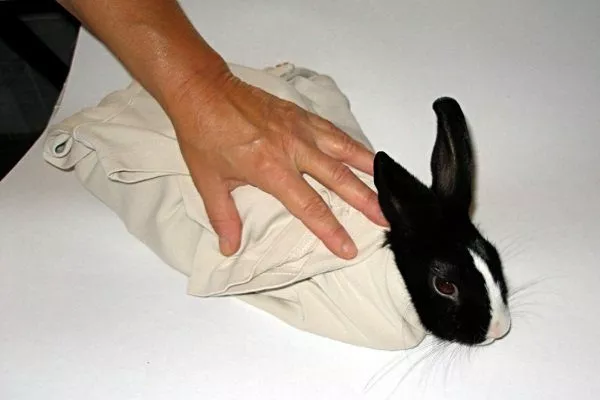
How to trim a rabbit's claws?
During the procedure, proceed with extreme caution – do not squeeze the rabbit's body too tightly, do not grab its ears, and do not shout. This will frighten it even more. Your tone should be gentle and soothing, and your touch should be gentle.
How to determine the "live" part?
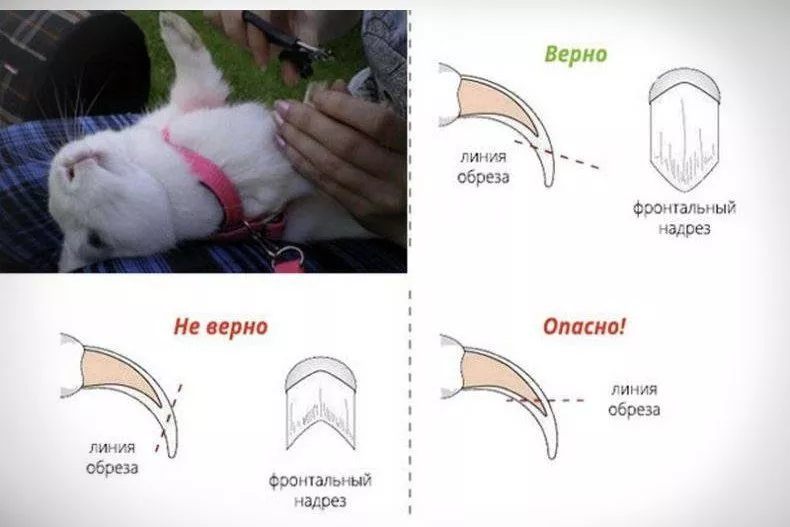
A rabbit's nail plate consists of two main parts: the "live" and the "dead" parts. The "live" part contains blood capillaries, so it's absolutely necessary to avoid clippers cutting this area. Therefore, before applying clippers to a nail, carefully inspect it.
How to determine what can be trimmed and what cannot depending on the color of the nail plate:
- Transparent or white color. This is the simplest option, as the area with blood capillaries stands out more than the whitish and completely transparent skin. The part without any red or pink tint is cut off.
- Dark color. Visually identifying the "dead" zone can be challenging, so use a flashlight. Simply shine it on the nail—the "live" part will be darker, while the part that needs trimming will be slightly transparent.
- ✓ In rabbits with dark claws, the 'quick' part may not be visible to the naked eye, use a flashlight to illuminate the border.
- ✓ In rabbits with light-colored nails, the 'live' part is usually pink or red, making it easy to see.
Step-by-step instructions
A rabbit's hind feet have 4 toes, and the front feet have 5 (the extra rudimentary ones are located on the inside and slightly higher than the others), so be prepared to trim 18 claws.
If you're using the blanket method, stick each paw out one at a time before trimming. The nail trimming procedure is as follows:
- Disinfect all instruments.
- Take your rabbit's front paw and apply gentle pressure with your finger. This is necessary because the pressure will cause the rabbit's toes to spread slightly and extend forward. This allows for a better view of the nail plate to determine the cut location and eliminates the risk of scratching the adjacent toe (if using clippers).
- Step back about 3-5 mm from the pulp (the "living" zone) and position the scissors so they are parallel to the paw. If using a guillotine, insert the claw into the opening and secure the instrument.
- Cut off the claw with a sharp movement.
- Take a hard nail file (not metal, but fine-grained) and file the nail so that there are no sharp edges left.
Do this with every claw on all paws.
To see how experienced rabbit breeders perform the procedure, watch our video:
Consulting a specialist: the pros and cons
It is advisable to have your rabbit's claws trimmed if there are only a small number of animals on the farm or if you are a breeder of decorative animals as a pet.
If the farm is of impressive size, this will lead to significant monetary expenses, since rabbit manicure is expensive.
For this reason, large-scale rabbit breeders try to master the shearing technique themselves. If the procedure results in pain and bleeding, and there's no other option, be aware that the next time the injured rabbit will resist, even to the point of not being able to be handled.
Despite this, professional service has many advantages:
- absence of unpleasant consequences – an experienced veterinarian will not allow cutting off a “live” area;
- professional and very sharp nail clippers – the procedure is carried out quickly;
- painlessness for the animal – the doctor performs all actions confidently;
- absence of stress for the owner – Many hosts experience anxiety and stress before, during and after the event.
The high cost of a manicure isn't the only drawback, but the second drawback is more related to the veterinarian's negligence—if they don't disinfect their instruments according to standards and requirements, there's a risk of infectious disease in the animal.
What to do if a capillary is damaged?
If, due to inexperience, you accidentally cut a bit of the quick on your rabbit's nail or puncture the skin on their finger, they will experience severe pain and blood will flow from the nail plate. In this case, you need to act immediately.
What to do:
- soak a cotton pad in hydrogen peroxide and apply it to the wound, alternatively, pour the solution onto the paw;
- sprinkle with powder or another product that is intended to stop bleeding;
- When the bleeding stops, sprinkle the affected area with streptocide powder.
If you can't stop the bleeding on your own, apply a tight elastic bandage to the paw and take the animal to the veterinarian immediately. In this case, keep the rabbit in a separate cage from other rabbits until the wound has fully healed, disinfecting the cage beforehand.
Helpful tips
To avoid many of the mistakes beginners make, heed the advice of experienced rabbit farmers. Here are some tips:
- Give your pet a treat immediately after the procedure - in the future, it will perceive the procedure more easily, since it will understand that a treat follows;
- If you are trimming your pet's nails for the first time, give them a treat after trimming each nail, and the next time, give them a treat after finishing the procedure with each paw;
- If during the activity the animal suddenly becomes nervous, do not continue, but stop for a few minutes and calm it down again;
- Do not let your long-eared cat out for a walk immediately after washing, as microcracks remain in the nail plates, through which bacteria can penetrate;
- For the same reason, before introducing the animal into the cage, treat it and all its accessories (tray, feeder, water bottle, toys) with an antiseptic.
Trimming a rabbit's claws is a must, as it will make it easier for them to move around. If you're completely confident in your nail-care skills, go ahead, but remember that rabbits are very timid animals.
I've been raising rabbits for two years now, so I hadn't really thought about trimming their nails. Then my neighbor (who's a real granny) told me I needed to trim them. Our vet is 70 km away, so I decided to do it myself. I was searching online for information, and your article was my favorite—it's comprehensive, informative, with step-by-step instructions, helpful tips, and more. And most importantly, it's all written in accessible language. I really like this site; I find a lot of gardening information here. Thank you so much!