
To obtain high-quality, dietary rabbit meat and beautiful, thick fur, these long-eared animals need proper feeding. A balanced diet, with the optimal balance of essential nutrients, also boosts the animal's immunity and reduces the risk of epidemics. More on feeding rabbits below.
Types and characteristics of feed
The food given to rabbits is divided into several types.
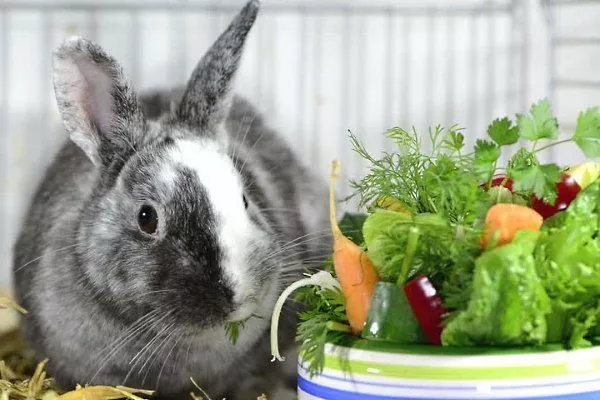
Succulent food
| Name | Starch content | Vitamin content | Recommended cooking method |
|---|---|---|---|
| Potato | High | Low | Boiled |
| Carrot | Low | High (carotene) | Raw or boiled |
| Pumpkin | Average | High (carotene) | Raw or boiled |
| Fodder beet | Average | Average | Raw or boiled |
| Sugar beet | High | Average | Raw or boiled |
| Kale | Low | High | Boiled, pickled or fresh |
| Jerusalem artichoke | High | Average | Raw or boiled |
| Silage | Average | High | Fermented |
| Apples | Low | Average | Raw |
| Pears | Low | Average | Raw |
This term refers to various vegetation that is 70–90% water. This includes silage and various vegetables:
- Potato. Potato tubers are low in vitamins, but they are rich in starch, which is quickly absorbed and digested. Potato tubers are fed boiled or added to mash. Fresh potatoes can be fed in small quantities, peeled. Raw potatoes should not be fed to pregnant sows.
- Carrot. It's rich in carotenes. It's given to breeding males, pregnant and lactating does, and growing rabbits. Adults are fed up to 500 g per day, while young rabbits, starting at 20-25 days of age, are fed 20-30 g (ground first), then gradually increase the dose to 100-200 g.
- Pumpkin. Pumpkin is also rich in carotene. It also keeps well, so it can be included in the diet from fall to spring. Rabbits are fed it cut into small pieces.
- Fodder and sugar beets. Rabbits also eat fodder beets well, but if fed in large quantities, be sure to add good-quality legume hay and a small amount of compound feed to the diet. Sugar beets are given raw or cooked. They boost immunity and improve blood counts. Red beets are not given to animals. The daily beet ration per rabbit is 50 g.
- Kale. To promote undercoat growth, feed cabbage—boiled, pickled, or fresh. The recommended serving size for adults is 400 g, for lactating females—600 g, and for young animals—30 g. Feeding begins at one month of age. Only raw cabbage is restricted, as it can cause bloating.
- Jerusalem artichoke. Both the green mass and the tubers are used for feed. The greens are fed until the first frost, as the plant has a long growing season. The tubers store well in the ground. This vegetable is an excellent preventative against intestinal diseases.
- Silage. Silage is made from alfalfa, legumes, clover, and other meadow grasses, as well as root crop tops. Fresh herbs are chopped, fermented, and compacted. It is stored in barrels or specially dug trenches, covered with sawdust and coated with clay. High-quality silage is free of rot and mold and has a normal acidity. Livestock are gradually introduced to silage from three months of age. The first portion is 50 g. For adults (4 kg) - 300 g per day, for pregnant does - 200 g, and for lactating females - 300-400 g.
- Fruits and berries. Hard fruits like apples and pears are preferred. However, rabbits have poor digestion and often suffer from bloating, so experts recommend feeding them vegetables.
- ✓ The acidity level of the soil in which vegetables are grown should be within the pH range of 6.0-6.5 for optimal absorption by rabbits.
- ✓ The storage temperature of succulent feed should not exceed +4°C to prevent the development of pathogenic microflora.
The most nutritious succulent feeds are red carrots and fodder cabbage.
Roughage
| Name | Fiber content | Energy value | Recommended feeding period |
|---|---|---|---|
| Hay | High | Average | All year round |
| Haylage | Average | High | Winter period |
| Straw | High | Low | With a lack of fiber |
| Branch feed | Average | Low | All year round |
It's also plant-based, but dry, and contains a large amount of fiber. It's a nutritious food that provides sufficient nutrition. Eating it helps keep animals' incisors sharp, and digestion releases the necessary heat to help the body maintain normal body temperature.
- Hay. Legume hay contains several times more protein than cereal hay. The grass is mown before or at the very beginning of flowering and dried in the shade. Properly harvested hay has a green color and a pleasant aroma.
Drying the grass in direct sunlight, exposing it to rain, or mowing it after flowering reduces the nutritional value of the feed. It becomes coarser and is poorly digested. Wild grass hay, such as steppe, meadow, and forest hay, is also used.
The main drawback of feeding hay to rabbits is the high rate of wastage. The more valuable parts of the plant—leaves and young stems—often end up on the floor, leaving the animal to make do with the stems. - Haylage. Industrial farms have found a solution: they store hay in pressed briquettes. For large private farms, another method of storing grasses—silage—is effective. This is thin-stemmed herbaceous plants harvested early in the growing season, meaning they contain the maximum amount of nutrients, and dried to a moisture content of 50-55%. Silage is fed during the winter, helping to diversify the rabbits' diet.
- Straw. Another type of roughage, but for some reason it's considered only suitable for bedding and that rabbits won't eat it. However, rabbits, especially does, categorically disagree and readily eat it.
Straw used for feeding should be clean and have a characteristic shine. Rabbits prefer barley, pea, soy, and oat straw. However, it's important to remember that oat straw has a laxative effect, while barley, on the contrary, is constipating.
Straw is typically fed when the diet lacks fiber, replacing 20-25% of hay. It is given crushed or steamed, with the addition of molasses or a 1% salt solution. - Branch feed. It's essential for sharpening rabbits' incisors. For this reason, branches of deciduous and coniferous trees should always be included in their diet. They are harvested in June and July, when they have the most leaves, meaning they contain the maximum amount of nutrients.
Select branches 0.5-1 cm in diameter, tie them with brooms, and dry them in the shade. Branches replace up to 50% of roughage. Rabbits eat almost all branches and buds of deciduous trees.
For digestive upset and diarrhea, they are given oak and alder shoots, as they contain astringent substances. Juniper, pine, and spruce needles are rich in macro- and microelements. They improve appetite, add shine to the coat, and tenderness and flavor to the meat. They contain phytoncides, which have antimicrobial, antiseptic, and anthelmintic properties. Young pine branches are given every other day, or pine flour is added to the mash at a rate of 150-300 g per 1 kg of live weight.
In the video below, the breeder explains what he feeds his rabbits:
The most nutritious and valuable hay in terms of composition is considered to be hay made from legumes and cereals.
The table below shows the maximum daily dose of roughage (g):
| Type of feed | Adults during the dormant period, g | Pregnant females, g | Lactating females, g | Young animals |
| Hay | 200 | 175 | 300 | Introduce from the 1st month - 20 g, gradually increasing the portion to 200 g by 6 months. |
| Straw | 100 | — | 75 | — |
| Branch feed | 100 | 100 | 150 | Introduce from the 1st month - 20 g, gradually increasing the portion to 200 g by 6 months. |
Green fodder
This is an essential component of the spring-summer diet—from early spring to late fall. Various garden tops, greens, and herbs are eaten. They are rich in vitamins and minerals.
Fresh grass is dried before feeding to animals. For small herds, planting 2-3 beds of peas, alfalfa, sainfoin, rye, wheat, or oats is sufficient. Root vegetable tops, dill, rhubarb, and celery are also available from the garden.
- ✓ Grass should be wilted for 2-3 hours before feeding to reduce the risk of bloating.
- ✓ The optimal length of grass for feeding should be 5-7 cm to make it easy for rabbits to eat.
Lactating does are given dandelion leaves and dill to increase milk production. Parsley, on the other hand, slows milk production.
Wild herbs that are beneficial for them include nettle, sow thistle, dandelion, and couch grass. Wormwood, yarrow, and chicory are also good choices. However, the latter are not fed to lactating does, as the milk becomes bitter and the kits refuse it.
Concentrates
Concentrated feeds are high in calories, rich in proteins and minerals, but poor in vitamins, amino acids, and some microelements.
These include:
- Cereal and legume grains — oats, barley, wheat, corn. Oats are fed whole, crushed, or flattened. They have a beneficial effect on reproductive function and do not contribute to obesity. Wheat contains phosphorus. However, feeding only wheat to rabbits can cause bloating, and prolonged consumption can disrupt mineral metabolism.
Corn is more nutritious than the other grains listed above, but it's very tough on the incisors. Corn kernels should only be fed soaked or crushed, or cooked into porridge. Corn should not make up more than half of the grain mixture, as it causes obesity.
Barley is beneficial for young and lactating does. It's nutritious and improves digestion. However, the grains are coated with a hard-to-digest membrane, so they must first be broken down in a mill, or ground. - Compound feed. They come in loose or granulated form. The latter is a ready-made, balanced pet food. It already contains all the vitamins and minerals, and there are also compound feeds that contain antibiotics and other medications.
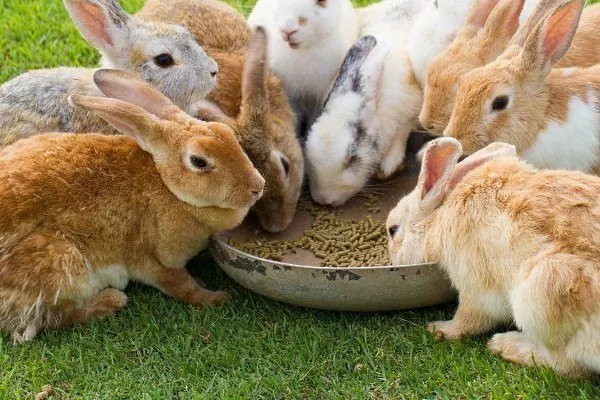
Feed composition:
- cereal grains and legumes in ground or crushed form;
- animal feed;
- herbal flour;
- waste from the dairy, flour milling, and oil extraction industries;
- vitamin and mineral complexes.
You can buy any compound feed for feeding rabbits, the only exception being compound feed intended for feeding birds, since it contains shells.
- Legumes. Legumes are a source of protein. Rabbits readily eat sainfoin seeds, but they must be mixed with grains, as overfeeding with protein can cause abortions in the second half of pregnancy or death due to paralysis due to toxicity.
- Bran. The product is rich in B vitamins and fiber, stimulating milk production.
- Oilcakes, meals. They are rich in iron and phosphorus. They are not used in their pure form. They are first steeped in boiling water and added to animal feed or cooked vegetables. Flax, soy, sunflower, and hemp meal are also used.
Cottonseed meal should not be added to food because it contains toxic substances. Meals are lower in fat, but they have higher protein content. Sunflower, soy, and flaxseed meal are used in food. - Animal flour. Fish meal and bone meal are generally not used in their natural form, as they can cause toxicity. They are typically added to pelleted feed as a source of protein.
The proportion of concentrates in the diet depends on the season and can be up to 60%.
Vitamins and minerals
When feeding rabbits mixed feed, there is no need for vitamin and mineral supplements. The following are recommended as vitamin supplements:
- Yeast. They are rich in proteins and B vitamins (except B12), D, and other biologically active substances that help better digest protein-carbohydrate foods. Dry brewer's yeast is considered the most nutritious, while baker's yeast and fodder yeast are slightly inferior in vitamin content.
- Herbal flour. The vitamin composition is rich in proteins, macro- and microelements, and carotene. It has a positive effect on the growth and vitality of animals, their fertility, and disease resistance.
- Pine flour. It contains chlorophyll, vitamins, macro- and microelements, phytohormones, phytoncides, bacteriostatic and anthelmintic substances.
To replenish mineral reserves, the following are introduced into the diet:
- Chalk. It contains 37-40% calcium, in the form of powder or lumps of varying sizes. Construction chalk is not suitable for feeding, as it contains various toxic impurities.
- Bone meal. It contains up to 265 g of calcium and up to 145 g of phosphorus.
- Table salt — a source of sodium. It is added to balance the sodium-potassium ratio in the diet. Plant foods are rich in the latter element. 1 kg of salt contains up to 40 mg of sodium.
All the above additives are introduced in an amount of 0.5-1% (by weight).
How to feed rabbits at different times of the year?
Depending on the time of year, the rabbits' diet is enriched with certain types of food.
An approximate menu for adult rabbits during the dormant period is presented in the table:
| Type of feed/Season | Summer (in 1 day) | Winter (in 1 day) |
| Concentrated feed (g) | 100 | 200 |
| Green fodder (g) | 600 | — |
| Succulent feed (g) | — | 300 |
| Hay (g) | 200 | 300 |
| Branches (g) | 100 | 100 |
Features of feeding in summer
During the warmer months, when succulent and green foods are abundant, adult rabbits' diets are dominated by these foods, with only a small portion coming from concentrates. If the diet consists primarily of branches and vegetables, the portion of greens is reduced by half. Since plant foods contain a high amount of potassium, salt is added.
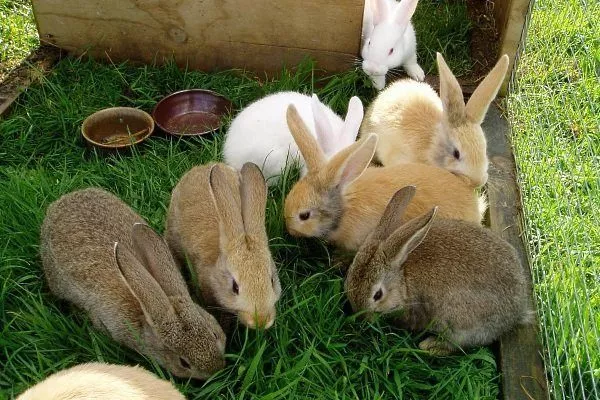
Three meals a day:
- morning - 1/2 of the norm of concentrated feed and 1/3 of grass;
- day - 1/2 of the green fodder norm;
- Evening - 1/2 of the concentrate norm, 1/3 of green fodder and branches.
Features of feeding in winter
When cold weather sets in, long-eared geese require highly nutritious food. The proportion of concentrated and roughage feed in the diet is increased, and silage and root vegetables are also added.
Three meals a day
- morning - 1/2 concentrated feed and hay;
- day - succulent food;
- Evening - 1/2 part concentrates and hay, branch feed.
Nutritional composition and norms depending on various factors
Depending on the sex, age and purpose of the rabbits, the diet will also be different.
What to feed a doe rabbit?
The diet of a nursing doe is enriched with vitamins and minerals as much as possible, since the rabbits are fed exclusively on their mother's milk.
| Feeds/Periods | During pregnancy | During lactation |
| Concentrates (g) | in winter - 120
in summer - 80 | in winter - 160
in summer - 140 |
| Green (g) | in summer - 600 | in summer - up to 2,000 |
| Coarse (g) | in winter - 200 | in winter -250 |
| Juicy (g) | in winter - 250 | in winter - 450 |
Feeding baby rabbits
For the first two weeks after birth, baby rabbits should be fed with their mother's milk, so during this time, special attention should be paid to the nursing mother's diet. Sometimes, if the babies begin to lag behind in weight, dry food and hay should be introduced before 20 days.
- At three weeks of age, young rabbits begin to shed their teeth. They are now able to chew coarser food. Twice a week, they are fed dried grass, but succulent feed is not yet allowed.
- At one month of age, mash, fresh hay, and grass are introduced into the diet. However, the babies continue to feed on their mother's milk, but now it accounts for only 20% of their total feed intake.
- At 3 months, the rabbits are weaned from their mother, and their food becomes more varied: bran, grass, and a small amount of fresh vegetables are added to the dry food and hay.
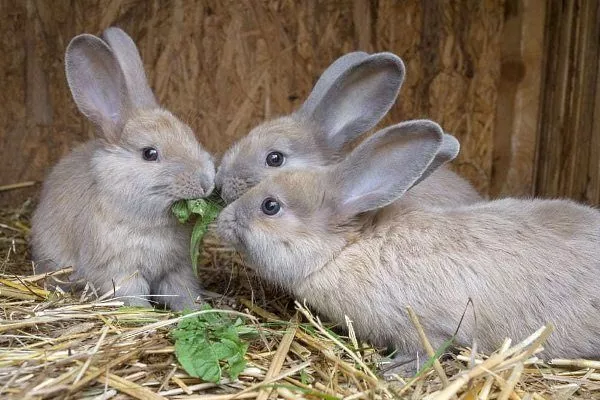
The nutritional norms for rabbits depending on their age are presented in the table:
| Type of food/Age | From 1 to 2 months | From 3 to 4 months | From 5 to 7 months |
| Concentrates (g) | 35 | 55 | 75 |
| Hay (g) | 50 | 100 | 150 |
| Root vegetables (g) | — | 300 | 350 |
Feeding for slaughter (fattening)
The diet of rabbits fattened for slaughter differs from that of regular rabbits. A sample rabbit feeding schedule is presented in the table below:
| Type of feed/Season | Winter (in 1 day) | Summer (in 1 day) |
| Concentrates (g) | 80 | 70 |
| Green fodder (g) | — | 700 |
| Roughage (g) | 150 | — |
| Root vegetables (g) | 500 | — |
Nutrition of meat and fur rabbits
Rabbits are raised for their dietary meat (meat breeds) or warm, thick down (fur breeds). The diets of these two species differ. The ration for down breeds is increased by 20-25%. They require more energy and sulfur-containing amino acids, which are found in down. Therefore, throughout the season, they are fed 3 g of bone meal and 11.5 g of table salt daily. When collecting down, 115 mg of cobalt chloride is added to the feed per rabbit once a week.
The table shows the annual feed requirements of fur breeds:
| Feed | Quantity (kg) |
| Green | 420 |
| Concentrated | 341 |
| Coarse (hay) | 109 |
| Juicy (root vegetables) | 91 |
The diet of beef cattle must include both animal and vegetable protein. The main sources of protein are green fodder, oilcakes, and bone meal. Protein should account for at least 20% of the diet. The remaining 80% is carbohydrates, which are found in large quantities in legumes, cereals, and root vegetables. Among vegetables, carrots, alfalfa, and turnips are among the highest in carbohydrate content.
Granulated feed is an essential component of the diet of meat breeds.
Diet of decorative rabbits
Fancy rabbits need to wear down their teeth, so they'll chew on everything in the apartment unless kept in a cage. This is worth keeping in mind when choosing a pet. The main diet for indoor rabbits is hay and grass.
For good digestion, it's best to stock up on dandelion leaves, burdock, tansy, sow thistle, and white clover. Succulent foods, fresh or cooked, include red carrots, green beans, beets, cabbage, as well as apples and pears. Cabbage and beets are fed in limited quantities.
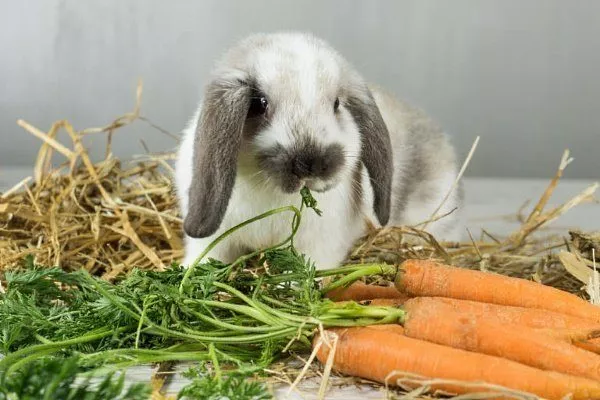
Grains—rye, oats, and barley—are a must in their diet. To help wear down their teeth, rabbits are given twigs or special sticks made from grain and enriched with micronutrients.
You can buy ready-made balanced feeds in stores, but at least 20% of the total food intake should be succulent and green varieties. Pet rabbits should always have access to clean water and hay.
What is prohibited to feed rabbits?
Every type of food has its exceptions. For rabbits, these include plants that contain toxic substances.
Of green fodder it is prohibited to give:
- hemlock;
- buttercup;
- celandine;
- lily of the valley;
- henbane.
Of the branches (roughage), shoots of broom, wolfberry, buckthorn, bird cherry, wild rosemary, and elderberry are not used for the same reason—they contain toxic substances. The same applies to shoots of garden stone fruits—apricot, cherry, plum, sweet cherry, and peach—which contain hydrocyanic acid.
Of the coniferous trees, cedar and fir branches are not used, as they contain a large amount of essential oils.
When feeding succulent foods, restrictions apply to turnips, cabbage, rutabagas, and beets. These vegetables should be given in small quantities or excluded from the diet. They cause intestinal bloat, which can be fatal.
Rabbits are herbivores. Feeding them table scraps, including bread, baked goods, etc., is prohibited.
When, how and how much water to give?
Animals have a very fast metabolism, so they drink frequently and generously. In summer, some of their water comes from fresh greens, so 1 liter of fresh, clean water is sufficient. A mother nursing her young needs twice as much water—about 2 liters per day.
In winter, with the introduction of large amounts of concentrated and dry food into the diet, water consumption increases. Water bowls should be kept full at all times, and the water should be changed daily. Rabbits may refuse chlorinated tap water, as they are very sensitive to this element. It is best to filter it or let it settle beforehand. Melted water, obtained from pure ice or snow, is considered to be of higher quality.
Rabbit nutrition depends on a number of factors. Beginning rabbit breeders often suffer losses due to improperly formulated diets, forgetting to take numerous nuances into account. Furthermore, given the fragile digestive system of rabbits, nutritional errors can have dire consequences, including death.