
Before slaughtering a rabbit, you should carefully familiarize yourself with the procedure and explore all available methods for killing the long-eared animal, of which there are many. The slaughter process involves several stages, from determining the animal's readiness for slaughter to disposal and sanitization, which will be discussed below.
How to select rabbits for slaughter?
Farmers often breed rabbits not only for their own consumption but also for profit, both from meat and valuable wool. However, to obtain high-quality material, it's important to adhere to basic requirements—time and age of slaughter, health, body weight, and purpose.
- ✓ Check the rabbit for signs of stress before slaughter, as this may reduce the quality of the meat.
- ✓ Ensure that the rabbit has not been treated with antibiotics in the last 30 days before slaughter.
Health
The first thing rabbit breeders pay attention to is the health of their pet. It must be completely healthy, with no signs of any illness. But most importantly, it's important to be sure the rabbit is free of infections and helminthiasis. It is strictly forbidden to consume, and therefore sell, meat from rabbits with chronic pathologies or systemic disorders.
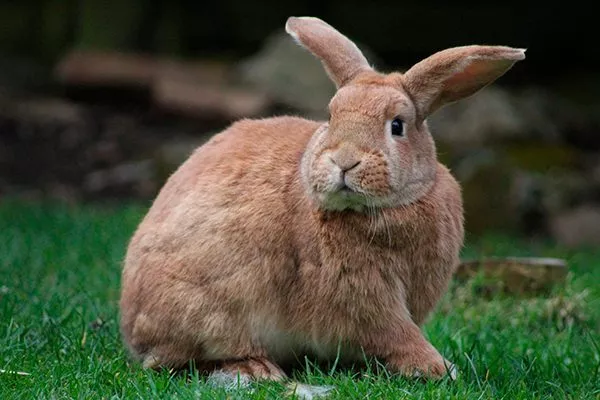
Therefore, before slaughtering rabbits, it's necessary to call a veterinarian to assess their health, provide an evaluation, and provide a conclusion. Another important factor is the timing of the last vaccination. At least 30-40 days should pass between vaccination and slaughter.
Age and weight
Newborns and young animals are strictly prohibited for slaughter—only adult animals are required. Pregnant females are also prohibited. The minimum age for slaughter is 4 months for meat-producing breeds and 7 months for skin-producing breeds. If very tender meat is desired, the weight should be approximately 1.5-2.0 kg.
Experienced farmers know how to correctly calculate slaughter time based on the birth period. See the generally accepted schedule in the table:
| Birth by season | Average age for slaughter | Approximate month for slaughter |
| From late summer to the first months of autumn | 105-135 days. | From December to the end of January. |
| Early to mid-summer | 120-150 days. | November-December. |
| The last months of spring | 205-210 days. | During November. |
| Throughout the winter | 115-120 days. | From March 1 to May 10. |
Wool quality
Rabbit fur should be healthy—no ruffles or loose patches. It should be shiny and free of shedding. To ensure high-quality fur, select mature rabbits (young rabbits that have reached puberty are also suitable), as a healthy hormonal balance has a positive effect on the coat's condition.
When rabbits are slaughtered, depending on the purpose of use - features
Some rabbit breeders raise rabbits exclusively for meat, others only for their pelts. But even if you're looking for a versatile option, you need to consider certain aspects of the slaughtering process to ensure you get delicious, tender meat and high-quality fur.
For meat
Rabbit meat should be not only tender but also juicy, so the animals should be at least 4 months old. This doesn't apply to broiler breeds, however, as they can be slaughtered as early as 2-2.5 months. This is because these breeds gain weight very quickly, reaching 1.5-2 kg.
To obtain the skin
Experts recommend slaughtering rabbits for fur after at least two molts. The interval between molts is approximately four months, so the optimal age is seven to eight months. Slaughtering should be done until the molt is completely finished. This can be verified in several ways:
- Check the strength of the coat by plucking a few hairs from different areas of the body. This will let you know if the shedding is complete. If it is, separating the hairs from the skin will be difficult.
- Stroke the animal with your palm. If you see traces of fur on your hand, it means the shedding is in full swing.
- Part the fur and examine the skin color. After shedding, the skin turns white, and during natural shedding, it darkens. However, keep in mind that this doesn't apply to breeds with white coats (their color doesn't change).
As for rabbits with a very dark color, then not pure white, but other shades (light gray, white and blue) are acceptable.
How to prepare a rabbit for slaughter?
The success of slaughter and the quality of rabbit products directly depend on preparatory measures, so they should not be ignored. What is absolutely necessary:
- Show to the vet. This has already been discussed above. This will help avoid many quality issues with meat products.
- Insulation. It's important to separate animals being prepared for slaughter from other animals 24 hours before the process. This reduces stress on the day of slaughter.
- Cleansing the stomach and intestines. This is a crucial step to avoid unpleasant consequences, primarily intestinal rupture during slaughter. Furthermore, there will be no unpleasant odors when butchering the rabbit. A strict diet requires a full day of fasting. The only exception is clean water, which helps the feces pass more quickly and efficiently.
- Refusal of water. The animal is deprived of water 4-5 hours before slaughter.
- Bathing. This is done to remove bacteria from the fur that could contaminate the meat during slaughter. Wash the animals approximately a couple of hours before slaughter—the timing depends on the season, fluffiness, etc. But the main rule is that the fur must be completely dry at the time of slaughter.
Necessary tools
When euthanizing rabbits, especially if several are being slaughtered at once, it's important to prepare everything you need in advance. What you'll need:
- Set of knives. You'll need two or three of these. One for cutting the slaughtered animal and then butchering it, and the second for skinning. These tools should be very sharp. The third knife should be dull, as it's used to skin the animal.
- Spacer. The tool holds the carcass during skinning. If possible, purchase a ready-made one. If not, make your own. You'll need a 0.3 m stick. First, sharpen one end, then make a small indentation in the center.
- Slaughtering tool. It depends on the method of killing.
- Capacities. Required for placing internal organs, all waste and blood filling.
- A basin of clean water. It is convenient to quickly wash your hands in it.
- Rags. They are needed for wiping hands and surfaces.
- Frame. Used to stretch the skin during tanning.
- ✓ Cutting knives should be made of stainless steel to prevent oxidation and spoilage of meat.
- ✓ The spacer must be treated with an antiseptic before use to avoid contamination of the meat with bacteria.
If you are butchering a rabbit for the first time, take some ammonia with you in case of loss of consciousness or clouding of consciousness.
Equipment for a home slaughterhouse
To kill rabbits, you need to set up a slaughterhouse. First, decide on a location. It's best to choose a sheltered location away from living quarters and, most importantly, the hutch. Caged rabbits experience severe stress when they hear the squeal of a slaughtered rabbit.
Next, prepare the following:
- If necessary, install a table.
- Cover all surfaces where slaughter will take place with plastic sheeting (it's easier to throw away or wash than tables, walls, or floors). Paper will also work.
- Prepare special clothing, rubber gloves, and an apron.
- Place the spacer stick and other tools here.
Methods of slaughter
There are many methods for killing rabbits, and every farmer can choose the most suitable option. This is especially important if the rabbit farm is large and slaughtering is frequent. Each technology has its own characteristics, advantages, and disadvantages, which should be considered in advance.
Mechanical
This is considered the simplest and most common method. It involves using a stick. One end of the stick is wrapped in rubber or cloth to prevent bruising on the animal's body.
The main advantage is that death occurs within 15-20 seconds at most, as the carotid artery, which connects the dorsal aorta to the brain, is severed. A second advantage is that the animal doesn't have time to feel pain, which is humane.
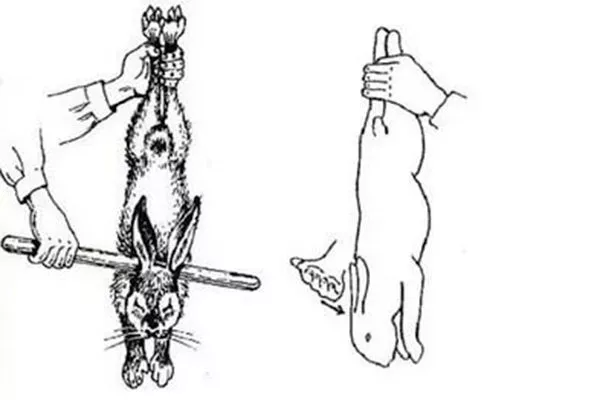
The main drawback is that you need to learn to strike very quickly and sharply, finding the right spot. The blow must be precise—if it's too weak, the rabbit will die in agony, and the meat will become tough; if it's too strong, bruises will appear.
How to kill correctly – step-by-step instructions:
- Bring the rabbit.
- Grasp his hind legs.
- Raise it in front of you.
- Wait 1-2 minutes for the long-eared one to calm down.
- Take a stick in your other hand.
- Hit sharply on the area of the back of the head behind the ears.
- Hang immediately to bleed.
See how experienced farmers do it in our video:
Neck wringing
As with the previous case, death occurs instantly when the cervical spine is twisted. The key is to act confidently and quickly. Otherwise, the rabbit will not die immediately. There are two methods for twisting the neck:
- The first is a one-handed turn. To do this, pick up the rabbit or hang it by its hind legs. It's best to hold it close to you with one hand, and with the other, firmly grasp its head and quickly turn it 240 degrees.
- The second is refraction with two hands. The animal should be held between your knees, your fingers clasped together, and the leash should be placed on the animal's head from the chin to the very back of the head. Once the eared creature calms down, make a sharp turn.
Electric shock
This method is distinguished by its increased speed of killing rabbits—literally in a couple of seconds. However, it's important to master the basic rules before using it. Otherwise, you can scorch the fur and cause bruises on the body, which will degrade the quality of the meat.
The principle of electric current application is based on the use of a special device with a two-wire electrical cord with two extended prongs. The required voltage is 220 V and a current of 5 A.
How to hammer using current:
- Place the animal in your arms or on a flat surface.
- Calm him down.
- Insert one needle into the buttock.
- Insert the second pin into the muscle tissue on the temple or between the ears.
- Connect the current.
- Bleed.
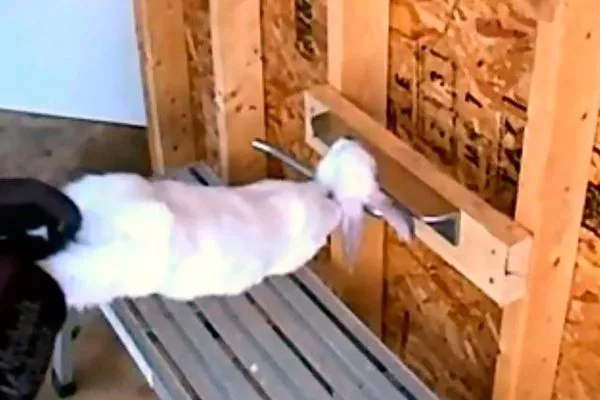
The French way
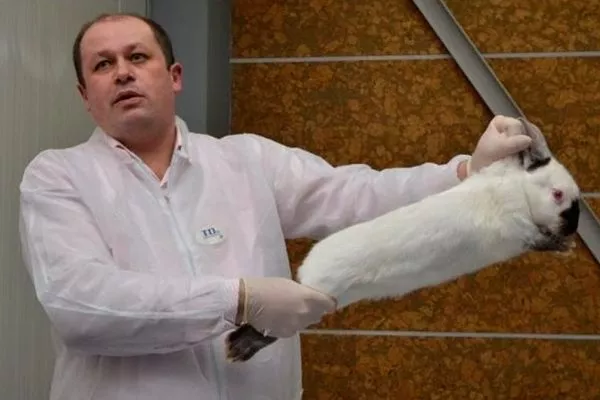
The French technique for killing rabbits is a bloodless method. It involves rupturing internal blood vessels as follows:
- Place the rabbit on a flat horizontal surface.
- Calm him down.
- With one hand, firmly grasp your ears (you can use your head).
- With your other limb, grab the hind legs.
- Sharply spread your arms out to the sides.
Air embolism
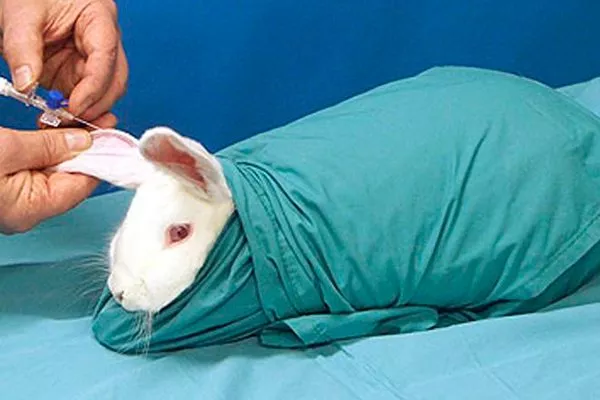
This technique isn't very common, and for good reason: the rabbit dies within at least a minute, experiencing painful spasms that make the meat very tough. Nevertheless, some people use this method. It involves pumping air into a medical syringe and injecting it into the animal's vein.
Pin shot
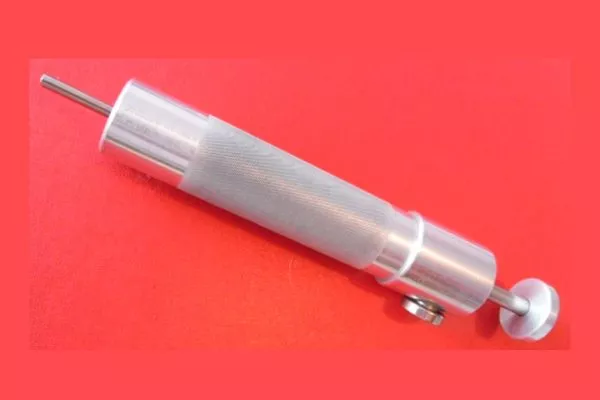
This method is considered humane, as death occurs instantly. However, the main drawback is that not every rabbit breeder can perform the euthanasia procedure themselves, as the process is as follows:
- Place the rabbit on your hands or a table.
- Secure it with your hand or ask an assistant to do this.
- Find the desired point. It is located along the visual line between the left ear and the right eye, or vice versa.
- Press the shutter release button. The needle will instantly pierce the medulla oblongata.
With a knife
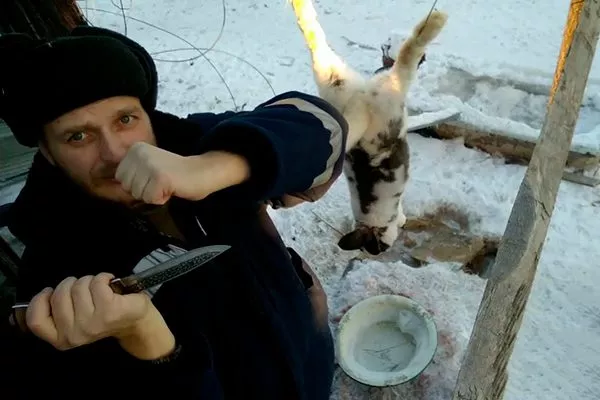
The use of bladed weapons is practiced in Islam and is a blood-based method. It's quite painful for the animal, but the advantage is that all the blood immediately drains from the dead long-eared animal. The process is as follows:
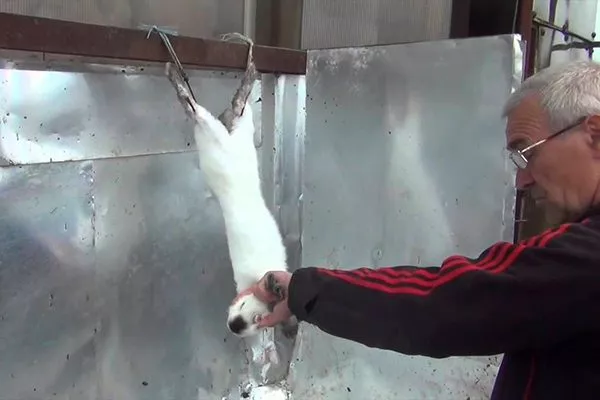
- Hang the rabbits by their hind legs.
- Grab your ears with one hand.
- Cut the throat with a sharp movement.
Bleeding and skinning
Bleeding is a mandatory process and is performed immediately after slaughter. This allows the animal to drain completely, ensuring high-quality meat. Farmers often raise animals for both meat and fur, so methods that involve cutting the throat are rarely used.
The bleeding process:
- When the convulsions stop, place the rabbit on the spreader.
- Make cuts on the paws (between the bone and tendon) and tie them to the hind legs.
- Make incisions to allow blood to drain. These can be done in the throat, nose, eyeball, or submandibular jugular vein.
After this, skinning is carried out, which involves the following actions:
- Make circular cuts on the hind legs using a very sharp knife.
- Cut the skin from the inside along the line from the groin to the neck between the ribs.
- Remove the skin using the stocking method.
- Remove fur from forearms or cut off front legs.
- Cut the skin off along the head, without touching the fur on the muzzle.
- Cut off the ears, tail and paws at the wrist.
The final stage of slaughter is disposal and sanitization.
After slaughtering rabbits, it's important to clean the area and dispose of any debris. Otherwise, bacteria will develop. Here's what to do:
- wash off blood and other residues from all surfaces, and if you used film/paper, simply throw it away;
- wash all dirty containers;
- Throw away and burn rags and other unnecessary parts of the animal.
To ensure a hassle-free rabbit slaughter, be sure to learn all the intricacies and nuances of the process, don't ignore the preparatory steps, and adhere to sanitary and hygienic requirements. Remember the golden rule: never get too attached to these cute, long-eared creatures—you won't be able to slaughter them after that.