
Viennese Blue rabbits are distinguished by their beauty, the coat color that perpetuates their name, and the excellent yield of nutritious meat. The article below explains everything about keeping these animals commercially and as pets.
Story
When getting to know the breed, it would be useful to learn about how and when it was developed.
Withdrawal
We owe the creation of the Vienna Blue rabbit to the Austrian breeder Johann Constantin Schulz. He achieved this result between 1895 and 1897 by crossing the giant Belgian Flanders rabbit with the Moravian Blue rabbit.
The specimen was first exhibited at the Prater Pet Festival in 1897 under the name "Blue Giant." Weighing seven kilograms, the rabbit looked enormous. Experts recommended reducing the breed's weight in future breeds. However, its fur was superb! Gray with a blue tint. The quality of its fur was excellent.
Schulz and his team of breeders fulfilled the experts' wishes, reducing the weight and, consequently, the breed's name. The breed received recognition in 1903, under the name Vienna Blue. The breed's first high praise came from rabbit experts in Germany, and later from Dutch and Swiss breeders.
Improvement
Rabbit lovers in our country only had the opportunity to become acquainted with this breed nearly three decades later. Local breeders appreciated their overwhelming merits and recognized them as valuable for breeding.
Subsequently, the breed was preserved and measures were taken to improve it, adapting it to the local cold climate, increasing the weight and size of the individual, improving the taste of the meat, and bringing the fur quality indicators as close as possible to ideal criteria.
Description of the breed
To decide on a breed for rabbit breeding or to purchase a pet, the first thing you should study is the characteristics and disposition of rabbits.
Appearance
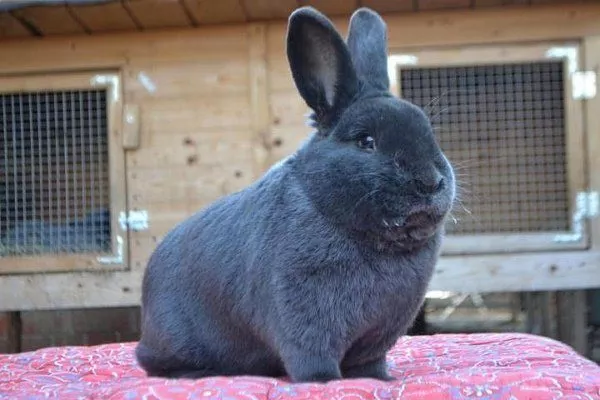
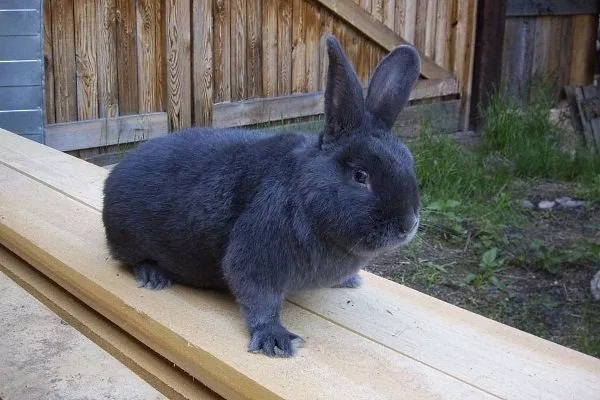
The Viennese Blue's appearance is significantly different from other rabbits. They are medium-sized, rarely exceeding 55 cm in length, and a mature animal on a moderate diet weighs approximately 5 kg. The body is large and muscular, with a broad chest and back. The limbs are straight and strong. The head is small, and the ears are of medium length.
Rabbit fur deserves special attention. It's a beautiful, uniform gray-blue color, without spots or patches of white or black hairs. By summer, the fur may change to a brownish hue, returning to its original color after the fall shedding. The characteristic blue iridescence comes with the second shedding after birth; before that, the fur is usually gray.
The density of the fur is ideal across the entire surface of the skin - there are no areas of sparse fur or tangled clumps.
Traits of the breed's quality and its value
The criteria for determining the pedigree component include the following:
- Body:high density, up to 57 cm long, developed muscles, wide chest and back.
- Ears:length 13-15 cm, rounded.
- Eyes: from dark blue to blue.
- Limbs: strong, straight, with sharp claws.
- Weight:4-5 kg. Specimens weighing up to 7 kg are rare.
- Hair: uniform, bluish-gray, without other color inclusions, fur density is 20-21 thousand hairs per 1 sq. cm of skin.
The breed's value is determined not only by the speed of maturation and meat gain. The main focus is the industrial use of Vienna Blue rabbit pelts to imitate valuable fur.
Productive characteristics of the breed
Central Russia has the most suitable climate for raising Viennese Blues. This breed can also thrive and reproduce in colder regions.
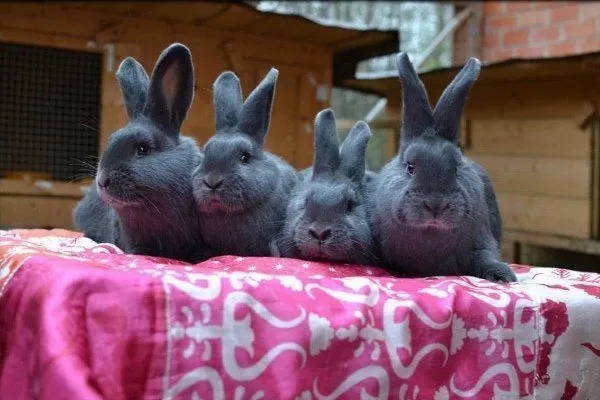
Under favorable conditions, the animals mature quite early. At 2 months, a rabbit can weigh up to 1.6 kg, at 3 months – up to 2.5 kg, and at 16-18 weeks, a Viennese Blue can weigh up to 3.6 kg.
Females produce up to 10 gray rabbits per litter, each weighing up to 75 g. The doe is a responsible nursing mother, so the survival rate of the babies is high, even in cold climates.
Blue rabbits generally live up to 7-7.5 years, but there are cases where animals have lived up to 12 years.
This breed is characterized by average yield, maturation rate, and price. Adult animals produce large pelts, and the meat yield after slaughter is approximately 60%.
Temperament
Viennese Blues are the most suitable long-eared rabbits for keeping as pets and breeding. They are completely non-aggressive, calm, and friendly. They are shy and curious. They are easy to train, quickly becoming accustomed to people and tame.
However, under unfavorable conditions, negative actions on the part of a person can be responded to with aggression.
If such a rabbit is purchased for decorative use, it should be taken into account that as it grows, the amount of food required by the animal will increase, and its thick fur will require care.
Advantages and disadvantages
The breed has undeniable advantages:
- A precocious breed. With optimal nutrition, animals rapidly gain strength and reach maturity. Slaughter is possible starting at 4.5 months.
- Low feed consumption. Compared to other meat breeds, these animals eat little. The amount of feed consumed is influenced by the fact that, due to their early maturity, the animals' lifespan is short.
- Excellent fur quality. Among meat breeds, this breed has the highest-quality pelt. The fur is beautiful and thick, resembling premium fur. You can read about how to tan rabbit skins at home. here.
- Simple care and maintenance. The breed is renowned for its undemanding nature. They don't require any special living conditions or excessive feeding. They don't suffer from any health problems.
The Viennese Blue has no obvious faults. Potential problems during breeding include:
- the possibility of falling into depressive and stressful states;
- counter-aggression as a defensive reaction;
- Graying of fur in adults over 4-5 years old.
Watch the video below for an overview of the Viennese Blue rabbit breed:
Prospects for breeding Viennese rabbits in Russia
Due to their adaptability and warm fur, Viennese Blues can thrive and reproduce throughout almost all of Russia. The northern climate requires only limited shelter during periods of abnormally low temperatures.
The breed does not require special training of the breeder or the organization of complex additional conditions for rabbit breeding.
Possessing a good rate of weight gain, high meat value and fur qualities, rabbits are suitable for narrow and industrial breeding.
Maintenance and care
The care and maintenance procedures for Viennese Blues are no different from those for other rabbit breeds. Breeding and raising animals is not limited to outdoor hutches. Barns, hutches, and other structures are also suitable. However, to improve fur quality and prevent the development of common diseases, it is recommended to locate the hutches outdoors. This has several advantages:
- prevention of diseases and their progression;
- increasing the immunity of animals;
- the possibility of selecting and organizing individual meals;
- mating planning and litter control.
Depending on minimum temperatures, health, and other conditions of the animals, cages are moved under cover or indoors. Combining housing methods is a common practice in rabbit farming.
The main rule of rabbit breeding is to provide comfortable hygienic conditions in an area of sufficient size.
Feeding
The composition of rabbit food is determined by the season and the breeder's goals. For example, in winter and during fattening, the diet contains a higher proportion of concentrated products, while in summer, it shifts to a predominance of green fodder.
| Nutrition | Compound |
| Green |
|
| Juicy |
|
| Rough |
|
| Concentrated |
|
We recommend that you also read the article about How and what to feed rabbits.
Green fodder forms the basis of the eared bat's diet. The succulent and coarse food supplies fiber, vitamins, and microelements.
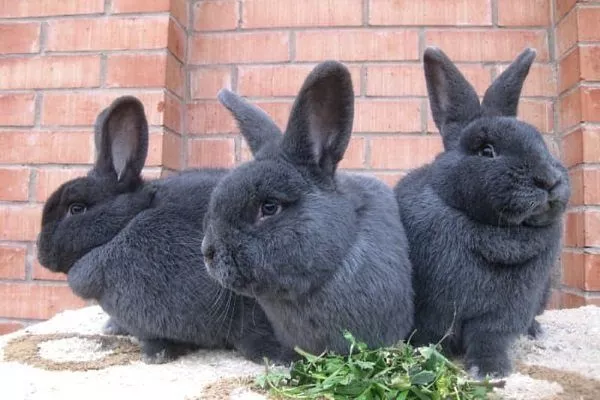
Don't forget about supplemental vitamin and mineral supplements, which are especially necessary in the fall and spring, during pregnancy and lactation, and in other conditions that can lead to deficiency. To avoid overdosing, keep in mind that many formulas are already fortified with vitamins and minerals.
Rabbits are fed three times a day. Succulent feed is given in the middle of the day.
Animal feed should always be fresh and readily available. Check leftovers daily to ensure they are fresh and safe to eat. Failure to do so will inevitably impact your rabbits' well-being.
A container with clean water, hay and food for sharpening teeth are not removed from the cage.
Keep your rabbits away from mushrooms, potatoes, tomatoes, sugar and other sweets, sunflower seeds, red cabbage, bread, onions, garlic, and nuts. These foods are harmful to rabbits.
Features of reproduction
When breeding rabbits, it's important to be able to select individuals for slaughter, i.e., those requiring fattening, and those intended for further breeding. This selection process involves three stages:
- The first stage - at weaning rabbits from the female, from the 28th to the 60th day from birth.
- The second stage - at the age of 3 months.
- The third stage - at the age of about 5 months, upon reaching sexual maturity.
It's important to ensure that breeding pairs are not formed from individuals from the same litter. Otherwise, the offspring will be weak, and the breed will degenerate.
Selection criteria for parental pairs:
- perfect health;
- absence of congenital defects and respectable appearance;
- development appropriate to the breed;
- well-developed mammary glands in females.
- ✓ Activity level and general health.
- ✓ Compliance with breed standards for weight and size.
- ✓ Fur quality: density, color, absence of defects.
Animals no younger than 7 months are allowed to mate, although sexual maturity occurs much earlier. With good litter results, a pair can be kept for 5 years. If the litter is low in fertility, or the female abandons the young, eats them, etc., try breaking up the pair by rotating the partners, or selecting a new pair from among the reparent individuals.
Gestation takes up to 35 days, nursing lasts no more than 2 months, and the young can be separated from their mother as early as a month after birth. Avoid litters of more than 5 per year to avoid irreparable harm to the mother's health.
Health and prevention
To prevent diseases and epidemics, in addition to maintaining hygienic conditions and providing a nutritious diet, rabbits are vaccinated. Vaccinations against viral infections, such as rabbit viral hemorrhagic disease and myxomatosis, are particularly important. The first vaccination is given at 1.5 months, the next at 3 months. Subsequently, animals are vaccinated once a year.
If the Viennese Blue rabbit lives as a pet, it is necessary to vaccinate against rabies.
- First vaccination at 1.5 months.
- Second vaccination at 3 months.
- Annual revaccination.
Breeding and use of the breed
Breeding this breed of rabbits is all about producing tasty, nutritious meat and high-quality pelts. Rabbit meat is considered a dietary product, superior in nutritional value to poultry. It is used to prepare a variety of everyday and festive dishes.
Vienna Blue pelts are used in clothing, accessories, and interior decoration. The fur's special value lies in its perfect imitation of premium fur.
How to choose a good healthy individual?
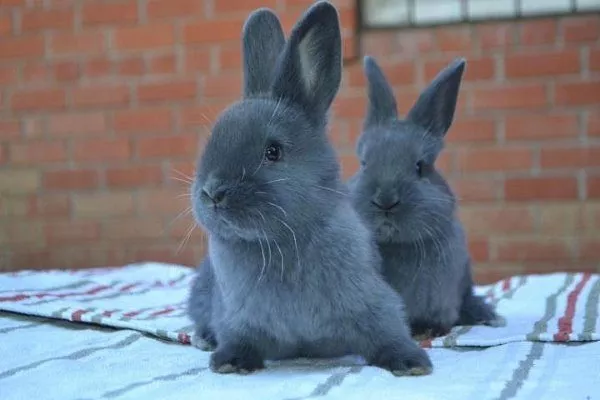
When selecting a specimen, inspect the entire animal without hesitation. Focus your inspection on the following details:
- A healthy rabbit is active, jumps, and has its tail pointed upwards.
- A healthy rabbit's back is rounded. Humps and dips are a sign of illness.
- A head turned to the side or tilted to one side indicates problems with cerebral circulation.
- Check your bite. Normally, the upper teeth overlap the lower teeth.
- The eyes of a healthy animal are clean, shiny and have a clear gaze.
- The condition of the coat must be perfect.
Ask the seller about the pedigree and genetic abnormalities, whether the animal has been vaccinated, what illnesses the animal has had, and what medications were used to treat it. Inquire about the pet's favorite foods.
Home maintenance
The Viennese rabbit's beauty makes them a great choice for pets. They are often bought for children and given as gifts for all kinds of holidays. Their friendliness is a good quality for a pet.
The rabbit should be kept in a cage that won't restrict its daily activities. Be sure to install and secure a water bottle and feeder in the cage so that your Viennese Blue doesn't paw at them, causing further clutter.
If you need advice on how to make your own rabbit waterer, this article is Here.
A rabbit's diet should be as similar as possible to its breeding diet; otherwise, a lack of nutrients and elements can lead to poor health. Replace the water with fresh water daily. Use hay and straw, preferably from a variety of grasses and crops, for bedding.
Be prepared to frequently clean the cage and surrounding area. This is necessary to maintain order and prevent illnesses in your rabbit. Don't forget to keep your rabbit up to date on vaccinations and take your rabbit to the veterinarian if you suspect any health issues or illnesses.
It's very difficult to train a pet to use a litter box, so when walking your rabbit around your house, keep in mind that it may leave its excrement anywhere.
This rabbit breed is not suitable for breeding in a house or apartment. It requires a lot of space to house the relatively large animals and produces a lot of waste and debris. The percentage of Viennese rabbits kept as pets does not exceed 7%.
Purchase of individuals
To breed, you should purchase at least one pair of rabbits. The female and male must be from different parents. Ideally, buy two female rabbits and one male rabbit. When purchasing, pay attention to appearance, behavior, and pedigree.
You can purchase a male or female cat for pet use. Be sure to check for vaccinations.
Viennese Blues can be purchased online or in person at rabbit farms, from hobby breeders, and elsewhere. Even if this breed isn't listed, delivery from Europe is possible. The price per animal ranges from 800 to 2,000 rubles.
Other varieties
Based on the Viennese Blue rabbit, the following varieties were bred: Viennese White and Viennese Black.
| Name | Weight of an adult (kg) | Body length (cm) | Fur color |
|---|---|---|---|
| Viennese Blue Rabbit | 4-5 | 55 | Gray-blue |
| Viennese Black Rabbit | 5-7 | 60 | Black with a gray shimmer |
| Viennese White Rabbit | 4-5 | 55 | White |
Black
This breed originated in Germany. The resulting rabbits were larger, with round ears and black fur with a metallic gray sheen. While this variant hasn't achieved the same widespread fame and recognition as the Viennese Blue or Viennese White, it is still recognized as a popular breed that produces rabbit meat and beautiful fur.
White
This breed was developed in Austria by rabbit breeder Wilhelm Muck. These rabbits are distinguished by their dense, high-quality, and pure white fur, without a single speck of hair of another color. This variety's eyes are a beautiful blue.
In terms of maintenance, they are just as unpretentious and adaptable as Viennese Blue rabbits.
Reviews of Viennese Blues
They quickly adapted and began reproducing. The first litter yielded eight babies. When the rabbit was just under six months old, he weighed 5.2 kg. We are delighted with the fur of the Vienna Blue rabbits; the quality is beyond praise!
The Viennese Blue is a rabbit breed that doesn't require complex living conditions. In fact, they tolerate cold temperatures well, even in outdoor cages. Profitable breeding is possible with both home and commercial breeding, and with optimal care and nutrition.