
The Soviet Chinchilla is one of the most popular breeds for meat and fur. These rabbits are versatile and productive – in addition to high-quality fur reminiscent of a real chinchilla, they produce a lot of tasty meat. Learn how to choose breeding rabbits, how to care for them, and how to breed them – further in the article.
History of the subspecies' origin
In 1927, the first American Chinchilla rabbits were brought to the USSR. They were distinguished by their small size and thick fur. After crossing them with larger breeds and through extensive and targeted selection, they were able to reach a weight of 5 kg.
The creation of the new breed involved hybrids obtained from crossing rodents - small chinchillas, and rabbits of the breed White giantThe new breed, the Soviet Chinchilla, was officially registered in 1963.
The authors of the breeds are considered to be rabbit breeders from two fur farms - "Cherepanovsky" (Novosibirsk region) and "Anisovsky" (Saratov region) and specialists from the rabbit farm of the Research Institute of Rabbit Breeding (founded in 1932).
Description of the breed
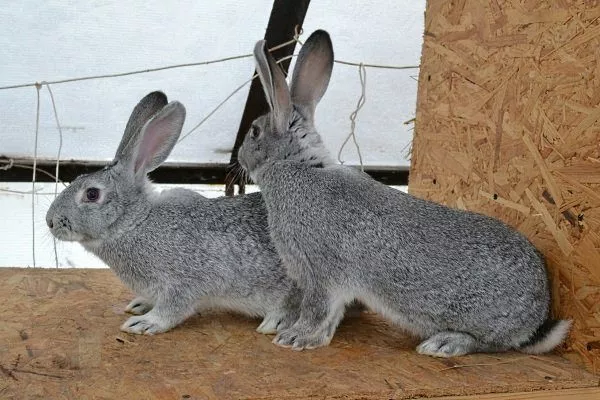
The Soviet Chinchilla is a large breed. Chinchilla rabbits are easily recognized by their large size and beautiful fur.
Breed constitution
Main external features:
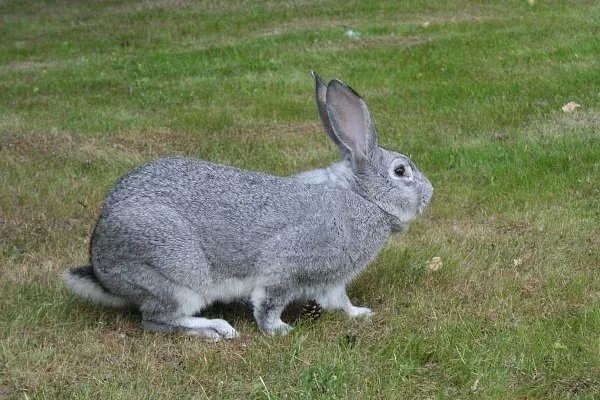
- The body is massive, strong, and slightly elongated. Length is 60-70 cm. The sternum is massive and rounded, with a girth of 38-40 cm. The back is long and arched.
- The paws are large, strong, and fleshy.
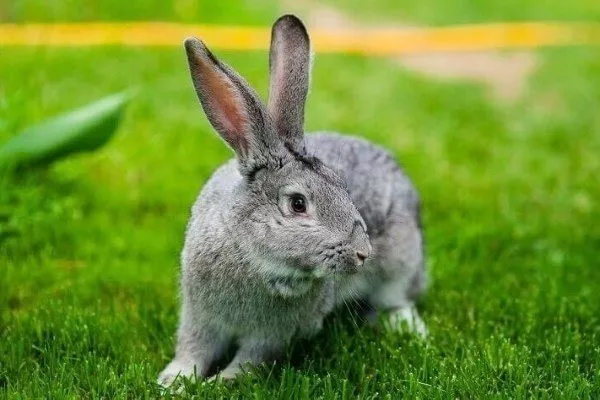
- The head, in comparison with the large body, is small and neat.
- The ears are erect and of medium length.
An adult rabbit weighs between 4 and 8 kg. The average weight is 5-6 kg.
Fur and skin
Chinchilla fur is considered one of the most expensive in the world. Soviet Chinchillas have soft, fluffy fur. Their coloring is silvery-blue. There are scattered white patches on the belly and around the eyes, and a black border on the tip of the tail and ears. The nape of the neck is marked by a light wedge. Their eyes are usually cherry-brown, but blue is also common.
The fur of this breed is unique; it's not only dense and beautiful, but also has a unique coloring. Today, there are plenty of scammers passing off the fur of these rabbits as expensive chinchilla fur. This is no surprise, as both furs are thick and shiny, and their coloring is virtually identical.
The distinctive feature of the breed is its uneven color.
Main defects
Litters often contain rabbits with obvious defects. Such animals are immediately culled and separated from the herd, as they are not suitable for breeding.
The main defects of the breed include the following characteristics:
- drooping croup;
- presence of bald spots;
- uneven fur;
- presence of red color in the coat;
- humped back;
- large ears, drooping and "breaking".
Character
Soviet Chinchillas have excellent personalities; their behavior is no different from that of smaller rabbits. They are also kind, responsive, and love affection. However, their large size makes them difficult to keep as pets.
Economic characteristics
Soviet chinchillas are bred both on small private farms and on large livestock farms. The rabbits quickly pay for themselves, as demand for their bluish fur and dietary meat is always stable.
Economic characteristics of the breed:
- The average cost of a skin is 3,500 rubles.
- Age for slaughter: 3-4 months.
- The meat is lean, making it suitable for children and dietary nutrition. It contains minimal bones and tendons. The fat layer is low in calories.
- The cost of sexually mature individuals – aged 3-4 months – is about 1000 rubles.
Chinchilla skins are readily purchased by felt and fur factories.
If you need advice on how to properly tan a rabbit skin at home, this article is located here.
Productivity
Large rabbits produce not only valuable bluish fur but also delicious, dietary meat. The young gain weight quickly, reaching 90-95% of their body weight by six months. Key productivity indicators are listed in Table 1.
Table 1
| Characteristics | Description |
| Male weight, kg | 6-7 kg, maximum – 8 kg |
| Female weight, kg | 5-6 kg |
| Number of babies in a litter | 7-8 pieces |
| Weight of a 2-month-old rabbit | 1.9-2 kg |
| Meat yield at slaughter | 58-60% |
Advantages and disadvantages
The breed was bred as a versatile one, so it's slightly inferior to meat-producing varieties. However, with proper feeding, substantial rabbits can be fattened up fairly quickly.
Advantages of the Soviet Chinchilla:
- They quickly adapt to different weather and living conditions.
- High productivity in females.
- Due to their large size they produce a lot of meat.
- The fur is highly prized due to its high quality and unique coloring. The density of the fur is twice that of other breeds.
Flaws:
- Spacious cages are required for keeping.
- A lot of grain and hay are required for feeding.
- The farm requires significant investment.
Keeping as a pet
This breed is rarely kept as a pet. It's too large—about the size of a small dog. It requires a lot of space and food. A cage will take up about a quarter of a living room. It's better to keep decorative and dwarf rabbits as pets.
Content options
Soviet Chinchillas, like other rabbits, can be bred using any of the following housing methods: aviary, cage, or pit. Let's take a closer look at each of these three options.
In the enclosures
This option is suitable for areas with a mild climate and warm winters. When kept in an enclosure, the rabbits can be provided with grazing. The problem with this type of housing is their behavior. They are burrowing animals and may dig holes.
Features of the organization of enclosure maintenance:
- A free plot of land covered with grass is required.
- An awning is stretched over the top to protect from the sun.
- Slate is dug in around the entire perimeter of the enclosure to protect against digging, or the floor is covered with metal mesh.
- Install side feeders. Don't spill food on the floor; only in the feeders—to prevent the animals from contracting intestinal infections.
When kept in an aviary, there's no need to clean the cages every day. The downside is uncontrolled breeding and inbreeding.
In the cells
Caging is the best option for breeding rabbits for their valuable fur. The advantages of this method include:
- Possibility of individual feeding and rational use of feed.
- Prevention of inbreeding and birth control.
- The ability to monitor animals and promptly identify sick animals.
In warm climates, rabbits can be kept in cages all winter. In areas with harsh winters, the animals are moved to special insulated hutches.
Features of the cell arrangement:
- The cages are placed so that they are not exposed to direct sunlight and cold winds.
- The cages are approximately 3.5 meters long. Large animals need space. If they don't move enough, their joints will hurt.
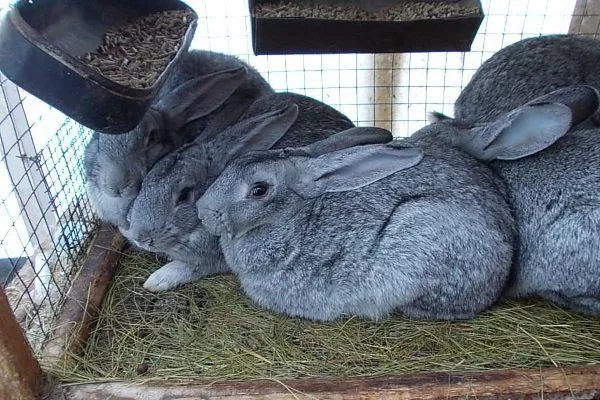
- Cages are made of wood and mesh. Wooden cages have slatted floors to allow droppings to fall through.
- Feeders and waterers are attached to the edges of the cages. Learn about making your own waterers from this article.
- A farrowing cage is created in the farrowing cage. In this cage, the doe creates a nest for her kits. Farrowing cages can be removable or permanent.
- Cages can be installed in sheds during the cold season. They can also be built in 2-3 tiers under a canopy.
In the pits
This method is commonly used when raising rabbits for meat. The main drawback is deterioration in fur quality. Specifics of pit construction:
- Straw is placed at the bottom of the pit. It is changed regularly. A mesh floor can also be installed to allow the manure to fall through.
- The walls are covered with hard materials that rabbits cannot chew through.
- Feeders and drinking bowls are placed along the walls.
- A burrow is dug in one corner; the animals will eventually expand its size. The entrance to the burrow is blocked with a small door, which makes it easier to catch the animals.
- The pit is covered from above to protect it from predatory animals and precipitation.
When kept in a pit, rabbits enjoy a favorable microclimate—a virtually natural habitat. However, there's no birth control here, and it's impossible to breed purebred rabbits.
Feeding
Rabbits are herbivores. The diet of animals bred for fur and meat should include:
- grain and compound feed;
- green herbs (in summer);
- succulent feed;
- hay (in winter);
- boiled potatoes;
- whey;
- bone meal;
- vitamin and mineral supplements.
Features of feeding rabbits:
- When kept indoors, the main diet consists of green fodder and hay. Stone fruit branches should not be given, as they contain harmful substances.
- The animals are fed carrots, turnips, raw potato peelings (in small quantities), beets (gradually introduced), kale, pumpkin, zucchini, Jerusalem artichoke, cucumbers, and lettuce.
- To ensure good growth, rabbits are fed a grain mixture containing corn, oats, and barley. Alternatively, they are fed a compound feed that, in addition to grain, contains meal, fish or bone meal, and various additives.
- Rabbits can be fed vetch, alfalfa, sweet clover, red clover, and fireweed. The grass should be wilted first, otherwise it can cause digestive problems. Oat, corn, and rye sprouts are also beneficial for rabbits.
- Feeding with wild meadow herbs is allowed - nettle, plantain, reed, yarrow, dandelion, oregano and other edible species.
- Many wild herbs are poisonous. Rabbits should not be fed hemlock, foxglove, celandine, or parsley.
Read another article of ours about this, When and what to feed rabbits.
Table 2 shows feed standards for mature rabbits. Feed composition for adult rabbits is shown in Table 3.
Table 2
| Period | Cereals, g | Bran, g | Hay, g | Green fodder, g | Table salt, g | Root vegetables, g |
| Winter | 35 | — | 170 | — | 0.7 | 150 |
| Summer | 30 | — | — | 650 | 0.7 | — |
Table 3
| Ingredients | Percentage of rabbit weight, % |
| Crushed oats and wheat | 30 |
| Crushed barley and corn | 45 |
| Bran | 12 |
| Sunflower meal and cake | 12 |
| Chalk | 0.5 |
| Table salt | 0.5 |
To ensure proper digestion, rabbits are always given hay or greens. Feeding them a single feed is possible only if it contains grass meal.
Rabbit breeding
Soviet Chinchillas have average fertility rates. Females become pregnant several times a year. Sexual maturity occurs at 3.5 months, but to ensure a litter, a female aged 5-6 months is selected for mating. A female can mate up to six times a year.
The female rabbit comes into heat every 5-7 days, and every 8-9 days in winter. During this period, the female rabbit is restless. For mating, the female is placed in the male's cage, but not vice versa. The feeder and waterer are removed during mating. To check if the female is covered, she is returned to the male's cage 5-6 days after mating. If she behaves aggressively, fertilization has been successful.
We recommend reading the article about mating rabbits, rules and features of their mating.
Kindling and care of rabbits
Gestation lasts 26-36 days. Two weeks before the birth, prepare the area:
- the cage is disinfected;
- large sawdust or straw is sprinkled on the floor;
- change the water regularly – it should be fresh;
- In 10-12 days the female lines the nest - stores fluff and straw, if she does not do this, the rabbit breeder will have to work hard.
For a pregnant rabbit, favorable conditions are created - there is no noise, she is given water and food on time, her health is checked, flashes of light are not allowed, and the rabbit is not disturbed without reason.
- ✓ Decreased activity and appetite.
- ✓ Rapid breathing at rest.
- ✓ Change in behavior: aggression or apathy.
Kindling is usually easy and requires no human intervention. Soviet Chinchilla does are excellent mothers, easily nursing up to ten kittens. Lactation is high—up to 200 ml per day.
There are cases where females behave aggressively, scattering their young throughout the cage. Such females are not bred and are culled, as raising the young on their own is extremely difficult.
Reasons for aggressive behavior in a female rabbit:
- no milk;
- mastitis;
- another heat;
- cold in the room;
- Lack of nutrients during pregnancy.
Baby rabbits are born naked, blind, and helpless. But even if many babies are born, it is not recommended to give them to other does. Baby rabbits grow quickly on their mother's milk. Survival rates are high. Their eyes open on the 10th day, and they emerge from the nest by the 15th to 20th day.
At the age of one month the rabbits are separated from their motherBy this time they are able to eat regular rabbit food.
Crossbreeding of the Soviet Chinchilla with other species
To produce good fattening stock, Soviet Chinchillas are crossed with other breeds. Good results are achieved by crossing female Soviet Chinchillas with White Giant or New Zealand White males.
Giant chinchilla
The Giant Chinchilla is similar in many ways to the Soviet Chinchilla, but giant rabbits are even larger and more powerful. This breed was developed by crossing the silver subspecies with the Flemish Chinchilla. They have an elongated, rounded body and erect ears. Their coat is light blue. There are snow-white speckles around the eyes. The underparts are pure white.
This subspecies is advantageous for breeding. Individuals weigh 6-7 kg. They require spacious cages, plenty of water, and food.
How to choose the right rabbit?
When purchasing purebred rabbits for breeding, be sure to check the documentation and evaluate the animals' appearance, age, and health.
- ✓ Check the pedigree and vaccination records.
- ✓ Assess physical condition: activity, clear eyes, nutritional status.
- ✓ Ensure that there are no defects specified in the breed standard.
Rules for choosing rabbits:
- Without documentation for the animal, determining the subspecies is extremely difficult, especially for novice rabbit breeders. The characteristic coloring doesn't appear immediately; the breed can only be identified by its fur after the first molt.
- There must be documentation of vaccinations and veterinary examinations. A rabbit's appearance can indicate its health. Soviet Chinchillas should have a muscular, large body, as well as:
- fluffy wool;
- clear eyes;
- active behavior;
- plump body.
- The structure and color of the fur are assessed - they must correspond to the characteristics characteristic of the breed.
- They carefully inspect for defects. Flaws are common in purebred individuals, making them unsuitable for breeding.
In the video below, an expert discusses the standards for the Soviet Chinchilla rabbit breed:
Vaccination and diseases
The best way to protect rabbits from disease is by following proper husbandry practices and vaccinating them regularly. Some diseases progress so quickly that they can kill rabbits within a day or two.
Rabbits are vaccinated twice:
- first vaccination – at the age of 1.5 months;
- second vaccination - 2-3 months after the first.
The most common diseases of rabbits:
- Coccidiosis. Preventative treatment with anthelmintics is necessary. The disease can be fatal if not treated promptly. The liver and intestines are affected. The causative agents are single-celled parasites called coccidia.
- Myxomatosis. Tumors appear on the animals' bodies. This is a viral disease transmitted by blood-sucking insects. Infection can also occur through contact with objects. There is no specific treatment. Sick animals are eliminated, the premises are disinfected, and a long quarantine is imposed. The only preventative measure is vaccination.
- Pasteurellosis. Transmitted by wild birds and rodents. Symptoms include fever, lethargy, and loss of appetite. Hemorrhages in internal organs occur. There is no effective treatment.
Reviews of the Soviet Chinchilla rabbit breed
Industrial breeding of Soviet Chinchillas focuses on pelts—cheap fur is always in demand in Russia, but rabbit meat consumption is limited. Small-scale rabbit breeders are more interested in meat, as selling pelts in small quantities is problematic.
My main source of income is meat; selling skins is quite difficult.
Soviet Chinchilla rabbits are easy-to-care-for and highly productive – their owners receive not only high-quality, beautifully colored fur but also plenty of tasty meat. This breed is suitable for raising in a variety of climates, and even novice rabbit breeders can handle them.