
The silver rabbit is highly prized for its attractive appearance, high-quality fur, and delicious, dietary meat. This breed is used for both meat and fur production. This is made possible by the animals' rapid growth, high productivity, and relatively high meat yield.
The Origin of the Silver Rabbit
The first representatives of this breed were brought from India to Europe by Spanish explorers. Subsequently, active breeding of Silver rabbits began. The breed's name today also includes the term "silver," acknowledging the origin of the breed.
Over time, the breed became very popular in the French Champagne region. It is here that the popular French Champagne rabbit variety, commonly known as the "Silver," originates.
Representatives of the breed arrived in Russia in the 19th century. In 1952, breeders from Poltava developed the breed from a French stock. The new variety was named "Poltava Silver," but it is also sometimes called "Soviet Silver."
Breed differences
The main distinguishing features of this breed are its thick fur, an attractive silvery hue, and high-quality meat. The breed is very popular among farmers because the animals require little care, yet grow quickly and can be slaughtered as early as four months.
| Name | Weight of an adult (kg) | Body length (cm) | Fur color |
|---|---|---|---|
| Silver rabbit | 5 | 55 | Silver |
| Poltava silver | 5 | 55 | Silver |
Appearance
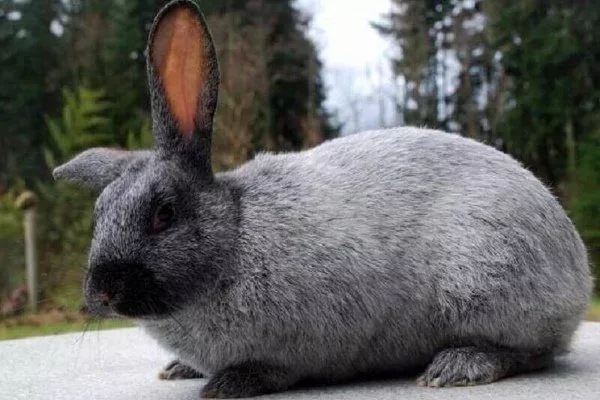
Adults are quite large, weighing around 5 kg. Individuals weighing up to 7-7.5 kg have been observed. They have a harmonious and strong build. Their bodies are proportional, approximately 55 cm in length, with a broad rump and deep chest. The chest circumference reaches 35 cm.
The head is neat and not large, with a muzzle that tapers slightly toward the nose. The ears are straight and long (about 10 cm), and the eyes are large and brown. The back is straight and level, the muscles are clearly defined, and the legs are strong and correctly positioned. Sexual maturity occurs at approximately 4 months of age.
Features of fur
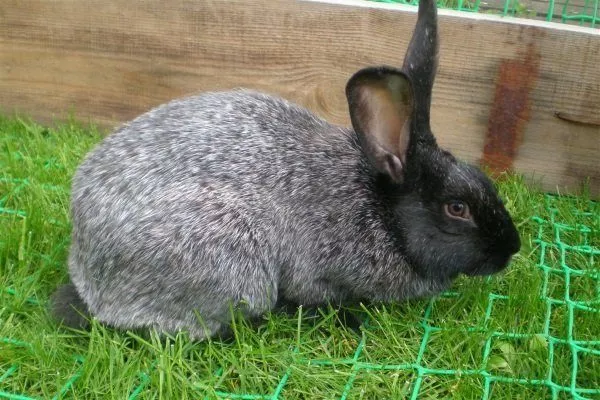
The main distinguishing feature of this species is its incredibly beautiful fur. The light outer hair is almost entirely white. The guard hair is black, and the undercoat is light blue. The combination of these shades creates a noble and very attractive silver hue. The fur on the nose, ears, paws, and tail is slightly darker.
Peculiarities of mating and breeding
When breeding Silver rabbits, it is recommended to select a male of a different breed. It is crucial that the male's fur color not be too light. Failure to follow this advice will result in the loss of the noble silvery hue of the fur, which is the reason this breed is prized.
- ✓ The male's fur color should be darker than the female's to preserve the silvery tint of the offspring.
- ✓ It is preferable to choose males from breeds with contrasting fur color.
Maintenance and care
Silver rabbits have an excellent ability to quickly adapt to new environments and easily get used to people. Their thick fur not only makes them attractive but also allows them to survive even in sub-zero temperatures.
The room where the rabbits will be kept should be free of drafts and dampness, including excessive heating, as they do not tolerate heat well. For larger animals, it's best to choose spacious enclosures or cages that mimic natural conditions as closely as possible.
If rabbits are kept in very cramped cages or enclosures, their productivity will decline. They are easy to care for, but be sure to clean their cages regularly. During cold weather, you can lay a layer of straw on the bottom of the cage and replace it with fresh straw periodically.
The survival of the herd depends on the conditions in which animals live.
Feeding Features
In summer, the diet should be based on green fodder, and in winter, on high-quality, fresh hay. Grain is best given as a treat or only before a planned mating. It is also beneficial for pregnant does and nursing sows.
When grain is consumed too frequently, animals begin to rapidly gain weight and become obese. Consequently, muscle mass gain slows.
Hay and grass contain coarse fibers, which ensure proper digestion of animals. Regular consumption of coarse feed ensures the natural and proper wear of rabbits' teeth.
In spring, animals should be transitioned from hay to green grass. However, the transition should be gradual. Fresh greens should not be fed; they should be left to sit for a few days first. A sudden change in feed can cause serious digestive upset and other problems related to the gastrointestinal tract. Root vegetables should also be included in the diet.
Rabbits of this breed are most active in the evening, so it's best to feed them their main diet in the afternoon. Feeders and waterers should always be kept spotlessly clean. Change the water regularly—several times a day. In cold weather, it's best to offer warm water.
Read on to learn how to make a rabbit waterer yourself. Here.
Breeding conditions
At 4 months of age, individuals become sexually mature, and mating can begin at this time. The female should weigh at least 2.5 kg or slightly more. It is not recommended to use very thin or obese animals for breeding.
When planning to breed rabbits, it is worth considering the following recommendations:
- During estrus, females go into heat for 5 days. Then, there's a short break of 8 days, and then the cycle repeats.
- Add one male of a different breed to a group of 6-7 females. Leave the animals alone and try not to disturb them.
- One female can give birth to about 5 offspring in one year.
- The gestation period lasts one month. At one time, the female gives birth to 7-9 babies.
- The weight of newborn rabbits ranges from 75 g.
- After kindling, after about a day, the female goes into heat again and is completely ready for a new one. mating.
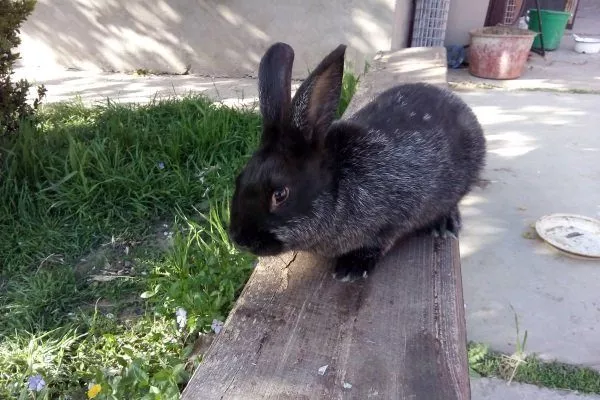
Newborn rabbits have black fur, and after about 30-40 days, silver stripes become visible:
- on the belly and tail;
- on the back, ears, head;
- breast;
- At the age of 4 months, the rabbit's body becomes completely silvery.
Provided they have a normal and complete diet, rabbits grow and gain weight quickly.
Experienced breeders recommend selecting males of a different breed, but their fur color shouldn't be too light. Ideally, parents with different coat colors would be better. This minimizes the risk of light-colored parents producing similarly light-colored offspring.
- ✓ Provide a layer of straw on the bottom of the cage for additional insulation.
- ✓ Maintain the room temperature at least at -22°C to ensure comfortable keeping of rabbits.
Rabbits don't require any special or greenhouse-like conditions. Their fur is quite warm and dense, so they can easily tolerate mild temperatures. They can be kept in open cages even at temperatures of -17 to -22 degrees Celsius.
When keeping animals outdoors, keep in mind that they don't tolerate heat well. Therefore, it's necessary to install an additional awning under which they can find shade.
We present to you a video in which the author will show you what silver rabbits (also known as "Poltava silver") look like – from seven-day-old rabbits to adults:
Breed profitability
A distinctive feature is their high milk production and fertility. The females are very caring towards their offspring. They constantly monitor and care for the young, feed them, and aggressively protect them from strangers. A female can give birth to 7-8 babies at a time, each weighing approximately 70 g.
It is not recommended to crossbreed with light silver colored rabbits, otherwise the offspring will lose the shade inherent to the breed.
Rabbits grow quickly, gaining approximately 1 kg of weight each month. By 4 months of age, they can weigh around 4 kg. If you plan to breed rabbits for sale, keep in mind that approximately 3 kg of feed units will be needed per 1 kg of weight gain.
After slaughter, approximately 60% of the meat remaining is high-quality and tender. The product is truly high quality. The meat is tender and juicy, and has a very attractive appearance.
The fur can also be prepared for sale, as it is highly prized. The pelts are quite wide, uniformly colored, and widely used in light industry. They are used in production without additional dyeing.
This is why breeding this breed is becoming quite profitable and promising. This variety is suitable for both large and small farms.
Breeding as a pet
Rabbits of this breed are of the meat-and-fur variety, are quite large in size, but can also be kept as pets. These animals have a docile and gentle nature, are playful and active, and are almost never aggressive, especially toward humans.
They adapt easily to new owners and can quickly become the family's first choice. Due to their playful nature and high activity levels, rabbits are very active. Therefore, you'll need to provide a large area for their pet to roam freely.
Silver rabbits do not require much care.
Advantages and disadvantages of the Silver Rabbit
The main advantages of representatives of this species are:
- high endurance;
- large and regular litter;
- rapid weight gain and accelerated growth;
- they easily tolerate low temperatures, so they can be kept in open cages;
- early maturity;
- undemanding in their choice of food;
- high-quality fur, which has a high cost.
The disadvantages of the breed include:
- do not tolerate hot climates well;
- To breed, you need to build a full-fledged farm.
Reviews
Silver rabbits can be both wonderful pets and a source of considerable income. They require little care, are easy-to-eat, and live comfortably in cages without causing any problems.