
Giant rabbits attract breeders with their large size. This giant breed produces delicious, lean meat and high-quality fur in a variety of colors. They are popular for farming, providing a primary source of income, and are simply a delight to the eye due to their decorative features.
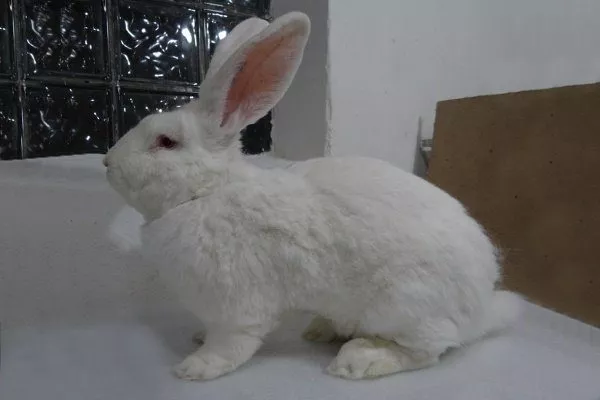
White Giant Scaly-breasted Giant Scaly-breasted Male, 1.5 months old.
The origin of the Riesen rabbit breed
The first rabbits appeared in Flanders in the 16th century. They were short-haired animals with dense, rich gray fur. Even then, these long-eared animals were distinguished by their large size, massive build, and powerful legs. They weighed 6 kg or more. The Riesen's first name was the Belgian Giant.
In the 19th century, rabbits arrived in Germany, where their mass breeding and selective breeding began. The Germans emphasized the breed's weight gain and meatiness. In 1937, these domesticated animals were officially patented as the "Deutsche Riesen" or "German Giant." Since then, they have been actively bred not only in Germany but also throughout Europe.
Not all breeders recognize the breed's purity, considering the Riesen rabbit merely a branch of the Flanders rabbit. The debate continues.
Description and characteristics of the breed
The Giant Rabbit is a meat-producing breed distinguished by its large size and robust build. These pets are clumsy and unwieldy, so it's best to keep them in spacious cages.
Giant rabbits have a kind and docile nature. They don't fight with other rabbits, get along well with other animals in the barnyard, and don't fight for territory. Giant rabbits are comfortable interacting with people, are easily trained, and remember their name and simple commands from their breeder.
Appearance
Rabbits have well-developed muscles. Their bodies are proportionate to their heads, with a massive frame, a broad back, and a strong chest. Males have a round muzzle with puffy cheeks, while females have an elegantly elongated muzzle. Rabbits have brown eyes and erect ears, 13-20 cm long, resembling bowling pins.
Most of the rabbit's muscles are located in the lower body, but the front legs are also massive to maintain balance. The body length is 65-80 cm, and adults weigh 10 kg, but there are cases of Giant Rabbits growing to 15 kg or more.
The coat is short and wiry, up to 5 cm long. The breed comes in a variety of colors, from blue to dark gray, and reddish hues are also possible. There are no standards for coat color, so judging purity based on this characteristic is inappropriate.
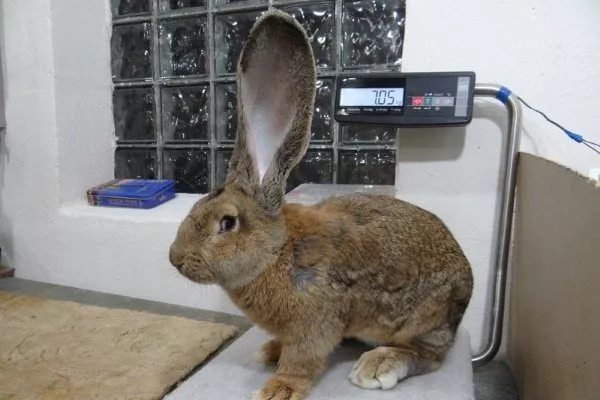
Agouti-colored Giant Squirrel. Male, 5 months old.
Productive qualities
When breeding Riesen rabbits, the emphasis is on the breed's meatiness. These animals produce tender, dietary meat with a pleasant flavor, which breeders sell commercially. Most often, rabbits are bred solely for their gourmet meat products.
The animal's valuable fur also deserves attention. Unlike smaller rabbits, Riesen pelts are large, with evenly distributed fur, and are highly prized in the light industry for clothing and insulation.
Advantages and disadvantages
Before you start breeding Riesen rabbits, study the advantages of this breed:
- docile nature;
- high fertility;
- tasty, dietary meat;
- valuable skin;
- maternal instinct of females.
These pets have their own disadvantages, which make breeders think twice about making the right choice:
- slow growth;
- clumsiness;
- aesthetics of the breed;
- high feed costs;
- risk of obesity;
- the need for large cages and enclosures;
- fastidiousness in keeping conditions;
- risk of disease (weak immunity).
Selecting a good individual
To choose healthy, purebred animals, study the breed standards. Otherwise, the value of the pets and their products (meat, fur) decreases significantly. Breeding rabbits are not cheap, and this is also important to consider when purchasing.
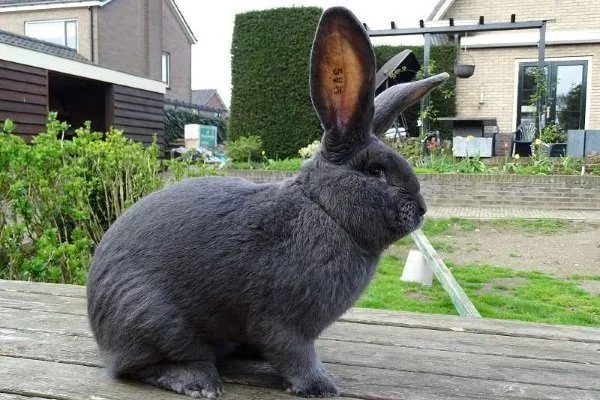
Blue Riesen. In Holland, it's called the Flemish Giant.
Basic rules
Buy a Riesen rabbit from a breeding farm where the breeder has certificates and there's no doubt about the breed's purity. Buying a rabbit at a market promises disappointment, as the animal may turn out to be a mixed breed rather than a purebred.
Other recommendations when choosing Riesens:
- Buy rabbits when they are 3-4 months old.
- Choose spring-breeding animals.
- Do not purchase adult rabbits for breeding.
- Choose healthy individuals: well-fed, with a straight back and even coat.
- Make sure that the animals have a correct bite and healthy teeth.
- Inspect the ears: they are erect, without mucus or flaking inside.
When selecting a pet, do not lift it by its hind legs or ears. The former can cause tendon rupture, while the latter can cause severe fright, even leading to cardiac arrest.
Signs of purebredness
Pedigree rabbits are considerably more expensive. To avoid buying a Riesen with defects or a half-breed, pay attention to the following breed standards:
- clean paws;
- sinewy muzzle;
- smooth coat without bald spots;
- erect ears 13-20 cm long;
- the weight of an adult is from 8 kg;
- clean ears;
- correct bite;
- absence of dental caries;
- good appetite.
- ✓ The presence of a sinewy muzzle and clean paws.
- ✓ Erect ears 13-20 cm long.
If 1-3 of these characteristics are abnormal, it's best to avoid an expensive purchase. The rabbit may be purebred, but it's unlikely to produce healthy offspring.
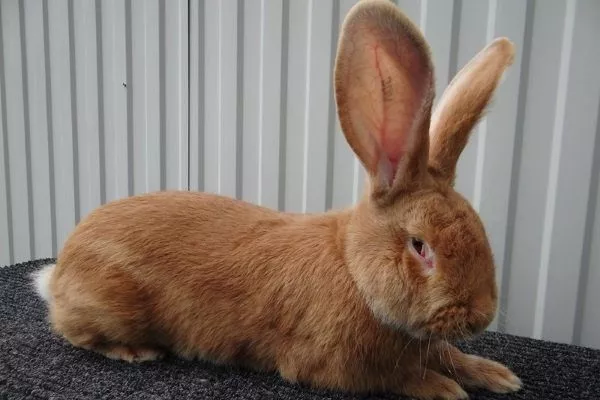
Red Giant Scaly-sided cat. Male. In the photo, he's a little over 3 months old.
Signs of culling
Professional breeders have specific criteria for culling pets. These include:
- short, drooping ears;
- narrow pelvis in females;
- weight less than 8 kg;
- bald spots on the hair;
- weak, deformed paws;
- flattened muzzle;
- malocclusion;
- carious teeth.
Maintenance and care
Animals require high-quality care. This includes not only choosing a large and spacious cage, but also keeping the rabbits clean, feeding them properly, administering preventative vaccinations, and promptly responding to the first signs of illness. Otherwise, entire nests of rabbits die.
- ✓ The optimal temperature for keeping Riesen rabbits: in winter not below +5°C, in summer not above +25°C.
- ✓ The humidity level in the room should be maintained between 60-75% to prevent diseases.
Content Principles
Riesen rabbits have difficulty adapting to the Russian climate and cannot tolerate severe frosts. The main challenge for domestic breeders is to create the necessary conditions for raising and breeding these domestic animals.
Remember that in a damp and dirty environment, Riesens' immune system weakens, and they quickly die. Another danger for pets of all ages is the harmful effects of drafts and scorching sunlight.
Features of cell arrangement
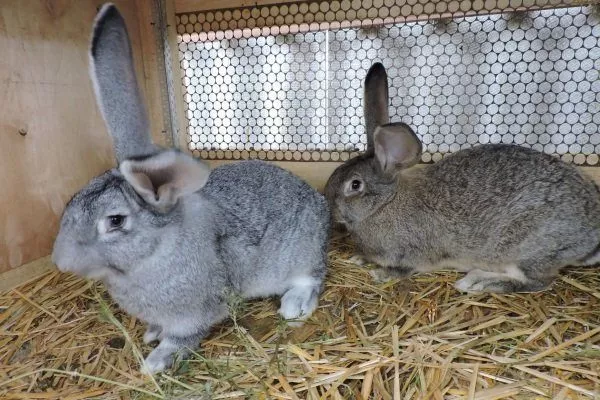
Rabbits are large and require spacious cages. It's important that Giant Rabbits don't crowd each other or become aggressive. The optimal cage dimensions are 100 x 110 x 75 cm, and for a doe after kindling, 170 x 110 x 50 cm.
Other recommendations for setting up a home for rabbits:
- Maintain the temperature in the barn: no less than 5 degrees in winter and no more than 40 degrees in summer.
- Maintain the permissible humidity limit – 60-75%, otherwise the animals will get sick.
- Place a layer of straw or a hay mat on the bottom of the cage to prevent the long-eared birds from damaging their paws on the metal bars.
- Arrange windows on the south side to provide a diffuse flow of light.
- Use additional lamps for lighting.
- Place a large feeder and water bowl in each cage. Clean the dishes as they become dirty.
- Ensure good ventilation and ventilate the room regularly.
Care and hygiene
To keep animals healthy, active, and productive, it's important to properly care for them. Dry and clean cages are key to the health of Riesen rabbits. This list of valuable recommendations doesn't end there:
- Make sure there are no cracks in the barn where rodents and other pests can enter.
- According to the plan, thoroughly disinfect the barn twice a year.
- Clean the cages daily, refresh the food, and add clean water to the drinking bowls.
- Change the bedding in the cages regularly to avoid dampness.
- Avoid exposure to direct sunlight, otherwise the rabbit will die in the heat.
- Set up the enclosure, make sure there is no poisonous grass or foreign objects.
- Keep the enclosure clean and tidy.
- Regularly inspect your pet's fur and ears for bald spots and parasites.
- Use a stiff bristle brush to brush out.
What to feed Riesen rabbits?
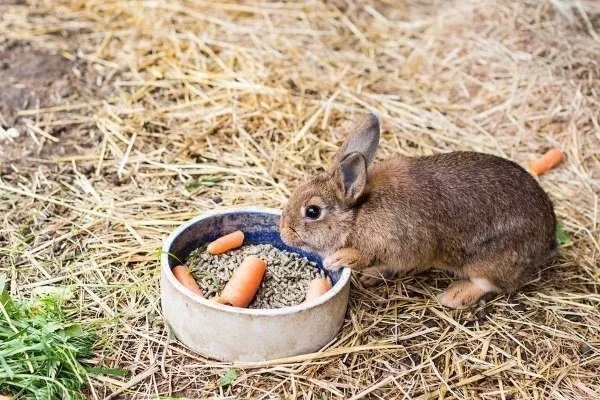
Animals need clean water drinking bowl with a renewed portion of water. Feed the rabbits 3 times a day, at equal intervals, to avoid obesity in adults. The basis of the daily diet for Riesens:
- green fodder;
- roots;
- tree branches;
- vegetables;
- compound feed;
- vitamin and mineral supplements;
- river sand, bone and meat meal.
Fresh meadow grass provides rabbits with vitamins and nutrients. Feed this ingredient in a dried form, otherwise it can upset the animal's digestion and reduce its appetite.
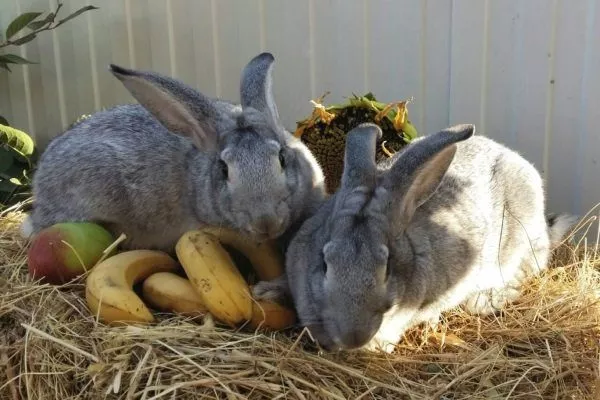
Stock up on hay and mixed feed for the winter, and remember the benefits of twig brooms and wet mash. Giants love fresh fruit, which provides them with vitamins and water. In the summer, no feeding is complete without fresh fruit.
The dangers of obesity
Rabbits need a vitamin-rich and balanced diet. Overfeeding should be avoided, as it negatively impacts fertility and health. Obesity can develop, which:
- Males are unable to fertilize females and become less active. The fertility rate of Riesens decreases.
- Overweight female rabbits give birth to fewer babies, and it is difficult to avoid pathologies during labor.
Diet planning
A Riesen rabbit's diet depends on its age, gender, and breeding goals. Here's an approximate feeding schedule for a rabbit:
- breakfast: half of the daily dose of concentrates;
- dinner: hay or dried grass depending on the time of year;
- dinner: the remaining concentrates combined with root vegetables.
Pay special attention to wet mash. Add vitamin and mineral supplements, meat and bone meal, and river sand. This food ingredient is especially important during periods of vitamin deficiency (fall and winter) and is beneficial for pregnant does.
A rabbit needs a varied diet, and the breeder is offered 2 types of feed:
- dry: compound feed, vitamin and mineral supplements;
- combined: liquid and thick mixtures of roughage and green fodder, food waste.
Feeding in different seasons
The daily diet of a Giant rabbit also depends on the season and climate. The pet's taste preferences are also important. The daily diet may be:
- Summer. Includes fresh grass, root crops, vegetables, compound feed and mineral supplements.
- Winter. Includes compound feed, grain crops, tree branches, silage, wet mash, mineral fertilizers.
Breeding
Rabbits become sexually mature at 3-4 months, but mate Only at 8 months. The best males are selected from various nests. The following evaluation criteria are taken into account when selecting a male:
- increased activity;
- good appetite;
- physical endurance;
- absence of signs of disease;
- weight within normal limits (for age).
There are up to 5 females per male. Mating requires a separate cage, in which the rabbits remain for 20 minutes. Beforehand, remove any food, water, or other objects that could distract the animals and disrupt the fertilization process.
There are two ways to check whether a female rabbit is pregnant. For example, gently feel her abdomen to avoid causing a miscarriage. When pregnant, the abdomen is firm and elastic, and the female rabbit will become nervous when touched in this way. Alternatively, after a couple of weeks, reintroduce the male to the female and observe her reaction. A pregnant female rabbit will definitely not allow him to approach her.
Pregnant does need a balanced diet. In addition to compound feed and green grass with wet mash, their daily ration should include chalk, bone meal, feed phosphates, and tricalcium phosphates.
Watch this video in which an experienced Riesen rabbit breeder explains when and how to mate this breed:
Setting up a nesting box for a female rabbit
A separate habitat is provided for the pregnant female. This should be a spacious cage with clean bedding, fresh food, and water. If the water bowl is empty, the doe becomes aggressive after the birth. There have been cases of her eating her own young.
A removable nesting box is essential. This is a rectangular wooden box with a round hole for access. To properly set it up, first protect the nesting box from direct sunlight. Proper light distribution promotes activity and the gradual emergence of the kittens.
The nesting box shouldn't become an extension of the cage, otherwise the doe will defecate, eat, and sleep in it. Buy such a device at a specialty store or make one yourself. Essentially, a nesting box is an extension of the cage, with a separate entrance.
Shortly before giving birth, the doe prepares the nest. She collects everything she can find, and may even rip her own fur from her chest. This process, which awakens the maternal instinct, must not be disrupted. The breeder must understand that the litter will occur soon.
Climate conditions and temperature regime for breeding
When breeding rabbits, it's important to avoid drafts and direct sunlight. In hot weather, animals become uncomfortable and may even die. Drafts negatively impact an immature immune system, potentially harming all offspring.
When keeping Giant rabbits, cool their pens in hot weather and heat them in winter. A shade cloth would be a good idea to provide shelter from the intense heat while pasturing. In summer, make sure their water bowls are always full.
Kindling
A rabbit's pregnancy lasts 30-40 days. As labor approaches, the doe's behavior changes. She becomes aggressive and restless, or, conversely, overly calm and sleeps a lot. Her appetite and thirst increase, and her desire to make a nest becomes fanatical. These are characteristic signs of impending labor.
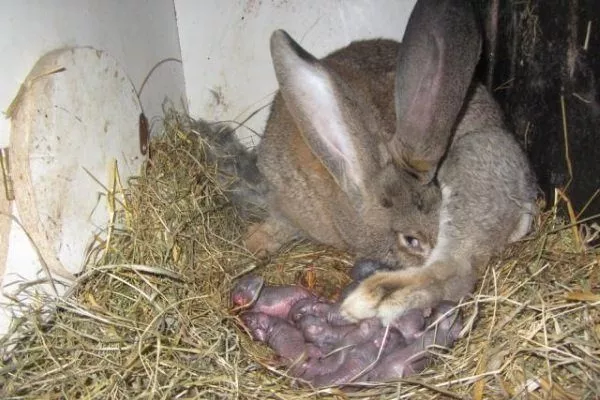
The female gives birth at night or early in the morning. A litter consists of up to 8-12 kits, which the mother rabbit meticulously cares for. Keeping a water bowl clean at all times significantly reduces the risk of cannibalism. The doe may give birth to her next litter in 8-10 months.
Care and feeding
Immediately after birth, the babies are breastfed. Doe rabbits have a well-developed maternal instinct, and lactation is well established. For the first week, the young feed exclusively on their mother's milk; after that, crushed potatoes with steamed bran are added to their diet. After a month, the animals eat like adults.
Initially, rabbits require four meals a day, but as they mature, they are transitioned to three meals a day (like adults). Clean water must be available in drinking bowls, and the doe must be given increased feeding after kindling.
Sometimes it happens that the mother rabbit does not produce milk or she refuses the babies - then you will have to feed the babies yourself, and our article "How and what to feed newborn rabbits without a mother".
Lactation ceases after two months. By this time, the young should be transitioned to a full adult diet, otherwise weight gain will slow. To acclimate the animals to the new diet more quickly, include wet mash in their daily diet.
Diseases
Monitor the health of your flock. If one rabbit becomes ill, the entire nest can die. Dangerous diagnoses:
- MyxomatosisThe digestive tract is affected, resulting in a rash and large ulcers appearing on the body.
- CoccidiosisThis is a parasitic disease that, if it eats away at the lining of the digestive tract, can lead to the death of the rabbit.
- Pasteurellosis. An infectious disease, especially dangerous for young rabbits. All offspring may die.
- Infectious stomatitis. It affects the oral mucosa. The animal initially refuses food and then dies of exhaustion.
- Rhinitis. This is a consequence of drafts and violation of the temperature regime when keeping Riesen rabbits.
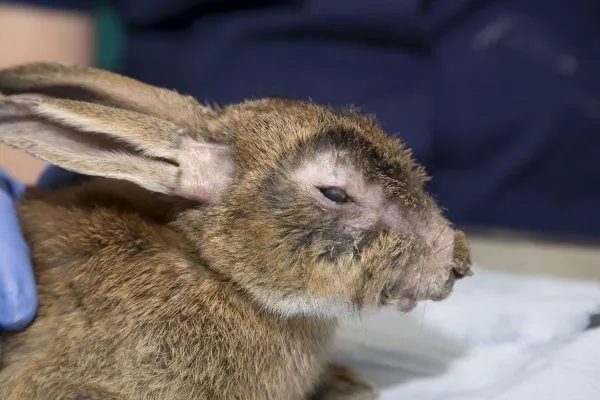
Myxomatosis in rabbits
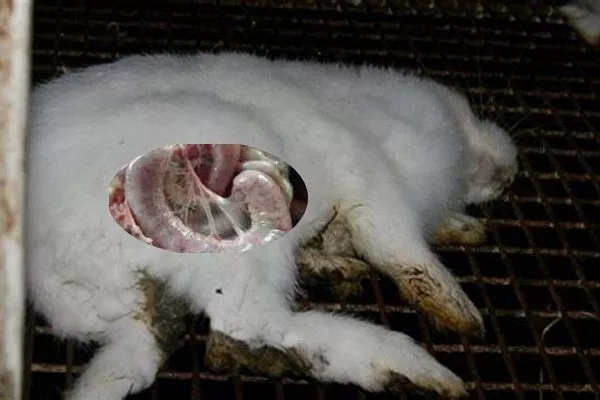
Coccidiosis in rabbits
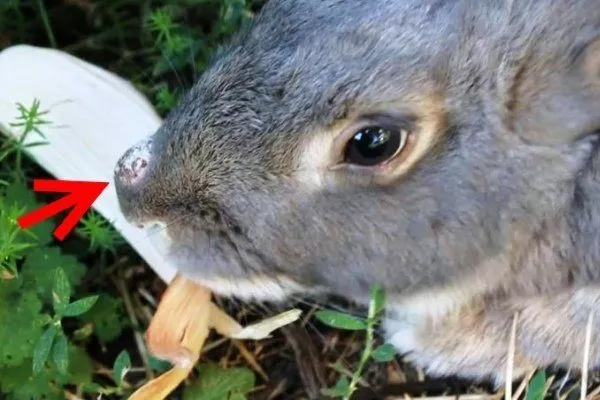
Pasteurellosis in a rabbit
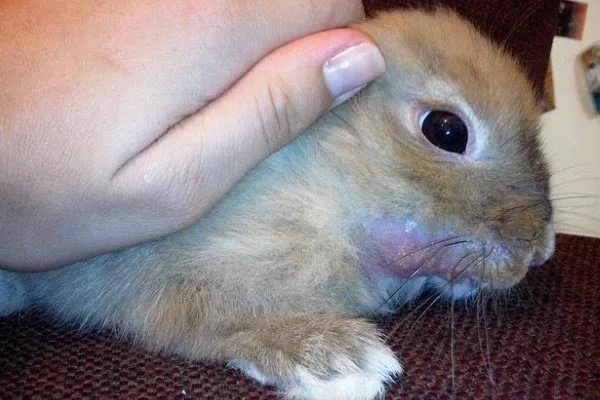
Rabbit with infectious stomatitis
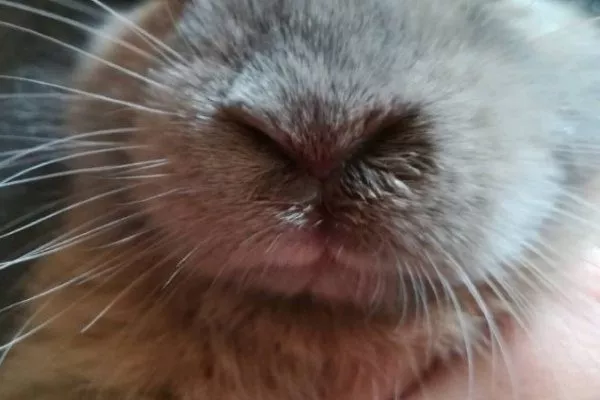
The nose of a rabbit with rhinitis
Vaccination
Giant rabbits, like other breeds, are prone to illness. To avoid the loss of your entire flock, ensure they receive preventative vaccinations in a timely manner. The recommended vaccination schedule is as follows:
- The first vaccination against VGBK is carried out at 1.5 months, and the veterinarian must ensure that the animal is healthy.
- The second vaccination is against myxomatosis and is given to the rabbit 2 weeks after the previous one.
- Revaccination against VGBK is carried out after another 2-3 weeks, depending on the condition of the animal.
- Revaccination against myxomatosis is carried out after the same time interval from the previous one.
Reviews
Giant rabbits are attractive due to their size and well-groomed fur. Before breeding such an animal, provide them with spacious cages and a clean, dry enclosure. Next, ensure they receive high-quality nutrition and age-appropriate vaccinations. With the right approach, breeding Giant rabbits is a challenging but profitable endeavor.