
Rex rabbits are a unique breed suitable for commercial breeding and keeping as pets. These clean and playful animals make loyal companions. Their dietary meat and valuable fur attract many breeders. Before choosing this breed for breeding, familiarize yourself with its characteristics.
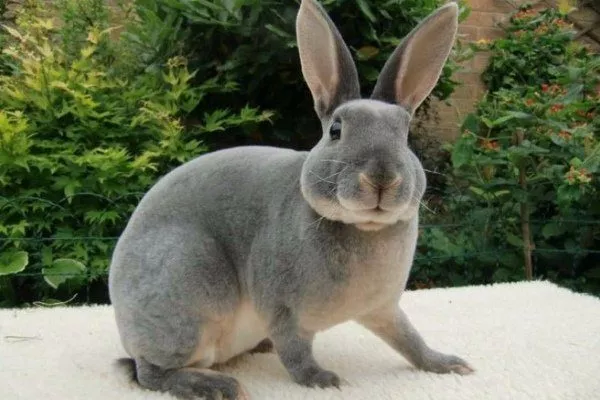
History of the breed's origin
The Rex rabbit's ancestors are members of the Belgian breed. These animals first appeared in France in 1919. They remained largely unnoticed for a long time, and it was only in 1924 that they were exhibited in Paris, where they sparked widespread admiration and widespread love. Following this, Rex rabbits spread throughout Europe, Asia, and America, becoming farmland pets and household favorites.
"Rex" is Latin for "king," reflecting the quality of this domesticated animal's fur. The rabbit was created through a genetic mutation in the Belgian Giant rabbit. It acquired its final appearance through extensive selective breeding of domestic and wild breeds. In 1988, another variety of the breed, the Mini Rex, was developed.
Characteristics of the Rex breed
Meat-fur rabbits resemble beavers in appearance, attracting attention with their unusual coloring and valuable pelt. Distinguishing features of the Rex rabbit include short, curved whiskers and short, velvety fur. These rabbits are either slaughtered or raised as pets.
This breed produces lean meat and valuable fur. Due to their low fertility, the price of their pelts is high, and the rabbit itself is not cheap. This applies not only to the cost of young and adult rabbits, but also to the specifics of their daily care.
Appearance and standard
| Name | Weight of adults (kg) | Body length (cm) | Ear length (cm) |
|---|---|---|---|
| Rex | 3-4.5 | 40-55 | 11-12 |
| Mini Rex | 1.2-1.4 | Not specified | 5-7 |
Adult rabbits weigh between 3 and 4.5 kg. They have a small, elongated head, a sturdy body 40-55 cm long, and powerful hind legs (for pushing). The Rex rabbit has a compact appearance, and its unusual whiskers and kind eyes are especially striking.
Other characteristics and standards of the breed:
- fur – soft and thick, no more than 2 cm long;
- ears – erect, medium length 11-12 cm;
- eyes - brown, completely match the color of the claws;
- bones - thin, indicate the nobility of the breed;
- hair covering - soft, fine, but very thick.
Character
When first introduced, the Rex rabbit is very shy and wary, has difficulty making contact with people, and takes a long time to acclimate to new surroundings, keeping to himself. Once adapted, the animal displays a good-natured nature and gets along well with all family members and pets.
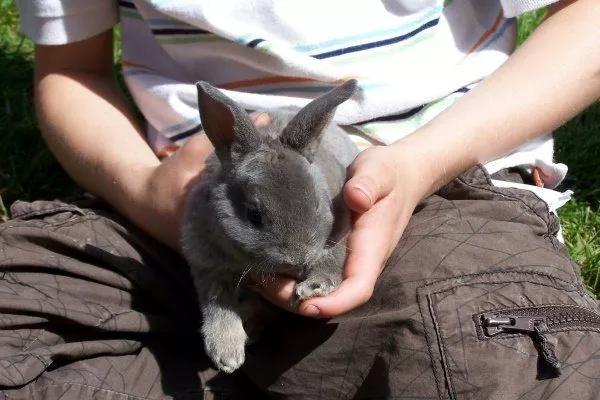
Rex rabbits are mischievous, restless, and fidgety, chewing on everything they can reach in the house. Before getting one of these four-legged friends, it's best to think twice and provide your pet with a separate enclosure for walks.
The animal is highly intelligent, quickly litter-trained, and is easily trained. It understands its name and responds to calls. Some rabbits can even stand on their hind legs, beg for food, and play.
Rex females have a well-developed maternal instinct, so they care not only for their own rabbits, but also for their foster children.
Physiological features
Rex rabbits have softer fur than other rabbit varieties. The guard hairs are finer and the same length as the undercoat. There are no sharp transitions in the animal's coat.
The Rex has excellent physical characteristics, looks great in photographs, and resembles a toy. Physiological characteristics of the breed:
- whiskers - short, curved, sticking out in opposite directions;
- the body length of an adult is not less than 54 cm;
- ears are set vertically (erect);
- the fur is smooth and resembles natural velvet in feel and appearance;
- males have a round and powerful head, while females have a slightly elongated muzzle;
- The weight of adults is 4-4.5 kg.
Rabbit fur
The rabbit is soft to the touch, like a plush toy. The fur is short—up to 2 cm—and the same length as the undercoat. If you stroke the animal against the grain, the fur immediately returns to its original position.
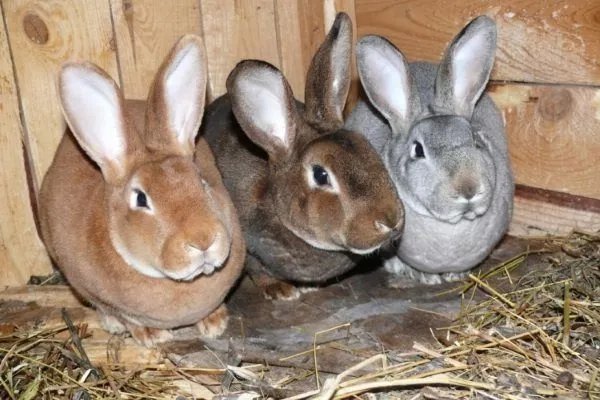
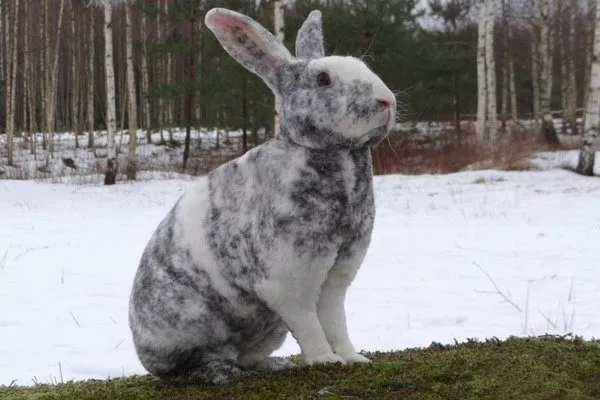
There is no standard color for the Rex breed. Rabbits come in blue, white, black, brown, spotted, and other colors. Even the most unexpected colors are found, which become the Rex's signature.
Castors are especially prized—eared, brown-colored specimens with high-quality fur. The chinchilla coloring is considered rare; these rabbits have a particularly elegant and aesthetically pleasing appearance.
We present to you a video about the variety of colors of Rex rabbits, filmed at a show in Leipzig:
Economic characteristics
Rex rabbits are a medium-sized meat and hide breed. When slaughtered, the animals yield tasty, dietary meat and valuable pelts. The pelt is used in dietetics and the food industry. The pelts are also used for outerwear.
Features of maintenance and care
Rex rabbits can be kept in harsh climates. They tolerate low temperatures well and are often found in the northern regions of Russia. These animals are easy to care for, with the exception of newborn kittens, for which it's important to follow certain rules:
- TemperatureRabbits thrive in temperatures between 15 and 25 degrees Celsius. They prefer cooler temperatures over 30 degrees Celsius.
- The structure of the enclosureFor the house, it's best to choose materials that rabbits won't chew. A shelter is essential, otherwise the animal will die in the heat. The floor should be mesh, with bedding on top that is regularly cleaned and disinfected.
- Cleanliness and orderIt's important not only to regularly clean the enclosure and cages, but also to wash and brush the animal itself. Otherwise, its immunity weakens.
- ✓ Optimal temperature for newborn rabbits: 18-22°C, humidity 60-70%.
- ✓ The need to have a farrowing box with soft hay bedding in the cage for the female before kindling.
Home maintenance
If your rabbit lives in an apartment, it needs a spacious cage, a feeder, and a waterer. It's best to place the house in the shade to avoid direct sunlight. Drafts are also dangerous for the animal's health.
Basic recommendations for keeping rabbits at home:
- Hide electrical wiring in boxes.
- Hide the corners of furniture to prevent your pet from getting hurt.
- Offer your pet cardboard boxes and balls as toys.
- Clean the cage once every 2 days, disinfect it against infections and parasites.
- Add a fresh portion of hay each time, remove the old, damp one.
- Change the water in the drinking bowl daily.
Read on to find out which one to choose and how to make a drinking bowl for rabbits yourself. Here.
Diseases and vaccinations
To minimize the risk of disease in Rex rabbits, regular veterinary checkups are essential. The breeder should also inspect the animal's fur, ears, teeth, and nose. If any alarming symptoms arise, consult a specialist.
Read about ear diseases in rabbits and their treatment in this article.
A mandatory requirement for keeping a Rex rabbit is preventative vaccination against hemorrhagic fever and myxomatosis. A rabies vaccination is administered at 2-3 months, either at home or at the veterinarian's office.
Feeding
The daily diet consists primarily of fresh hay and dry pellets three times a day. Aspen or birch bark is excellent for sharpening teeth. The bark should be replaced as it wears down. The daily diet varies depending on the season:
- In summer, give your rabbits more fresh grass, fruits and vegetables, but don't forget about fortified feed and the benefits of hay.
- In winter, feed rabbits with compound feed (65% of the daily menu), hay, tree branches, root vegetables, and a mixture of grain crops.
Dill, parsley, cauliflower, carrot tops, and carrot tops are especially beneficial for rabbits. Vitamin and mineral supplements should be selected individually and purchased from veterinary pharmacies.
Features of breeding the Rex breed
Rabbits need quarantine when breeding, even if they are vaccinated and healthy. When changing habitat or climate, their immune system can weaken, and the animal can become ill and infect the entire herd.
The survival rate of young animals is low. Providing water bowls, proper feeding, and supplementary feeding increase the chances of preserving and raising healthy offspring. The young are fed with mother's milk or a special formula and are transitioned to adult rabbit feed after 21 days.
Choosing a good rabbit
For breeding, buy purebred rabbits. You can determine the color of the rabbit by the following characteristics:
- massive body;
- thin bones;
- curled and short mustache;
- large hind legs;
- even distribution of wool (without differences);
- no bald spots;
- standard weight;
- soft fur on the hind legs;
- moderate activity.
The male and female differ in the shape of their head: his is massive and rounded, while she has a flattened, elongated muzzle.
Signs of culling
If you stroke an animal against the grain, the fur is firm and elastic, immediately returning to its original position. If this doesn't happen, the breed's purity is questionable.
If a rabbit weighs less than 2 kg or more than 5 kg, this is another sign of culling. Such individuals are not suitable for breeding. The same applies to passive and lethargic animals, as they may be sick.
Other signs of culling Rex rabbits:
- drooping, thinning of the ears;
- bald spots on the body;
- fur length more than 2.4 cm;
- the presence of a double or triple chin;
- ear length more than 13 cm;
- poor hair development.
Kindling and care of rabbits
The breed's weakness is low fertility. A litter can consist of up to 5-6 pups. Before giving birth, the female prepares a nest, insulating it with her own fur. She becomes calm, moves little, and sleeps more.
Kindling occurs in the fall or winter. The mother gives birth at night or in the morning, a process that lasts from 20 to 60 minutes. Afterward, she licks the newborn rabbits and covers them with her fur to keep them warm.
Milk comes with the birth, which the mother feeds her newborns. If lactation fails, the kits are transferred to another female for nursing. Water in the drinking bowl is essential, otherwise the adult rabbit may eat her kits.
Peculiarities of caring for offspring:
- Baby rabbits have weak immune systems and can die from any infection or poor feeding practices. It's important to keep their cages clean and avoid widespread illnesses. Young rabbits grow slowly, reaching 2.3 kg by four months.
- To ensure the survival of the young, the best option is to leave them with the female. Nothing helps a breeder raise healthy breeding stock better than maternal instinct. The chances of survival double with the mother.

When and how to properly separate the rabbits from the doe, you can read in the following article.
Profitability
The price of an adult rabbit ranges from 4,000 to 6,000 rubles. More expensive specimens are also available. The price is determined by the rarity of the breed, the difficulty of acquiring it, and the age of the animal. Raising rabbits for sale is an opportunity to make a good profit with minimal investment.
Advantages and disadvantages of the breed
Rex rabbits captivate everyone, and children love them. Their appearance is unique, and their character is gentle and docile. The breed's list of advantages doesn't end there:
- unpretentiousness in nutrition;
- rapid weight gain;
- tasty dietary meat;
- frost resistance;
- rapid puberty.
Along with the advantages, there are a number of disadvantages to this choice that are important to know before purchasing:
- small offspring;
- poor heat tolerance;
- demanding in care;
- timidity;
- low stress resistance;
- high mortality rate of young animals due to improper care;
- Animals bite when they smell a specific smell from human hands.
Mini Rex Rabbits
The Mini Rex, a dwarfism gene variant, was first bred in 1971. This animal is stocky, has short legs, and weighs 1.2-1.4 kg. Its ears are 5-7 cm long, and its fur is short. Mini Rex cats are often purchased as pets.
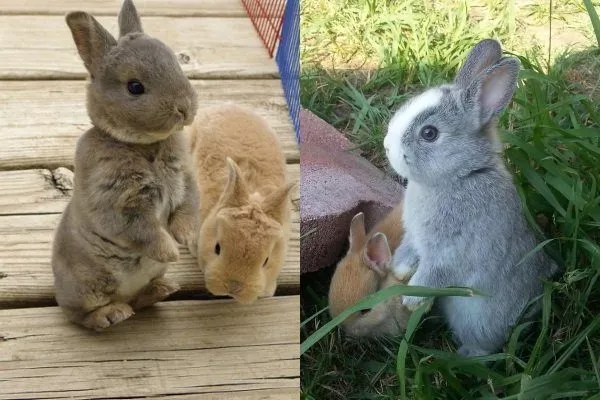
In appearance, the animal resembles a plush toy. The only difference from the standard variety is the miniature size of the Dwarf Rex. The body structure and characteristics of the breed are identical.
Reviews
Rex rabbits have valuable fur and dietary meat and are used for commercial breeding or as pets. They are most often purchased as pets, attracted by their unforgettable appearance.