
The Lionhead rabbit is a decorative dwarf breed with an exotic appearance. These animals attract attention in any color. The breed's name comes from the "lion's mane" on their heads.
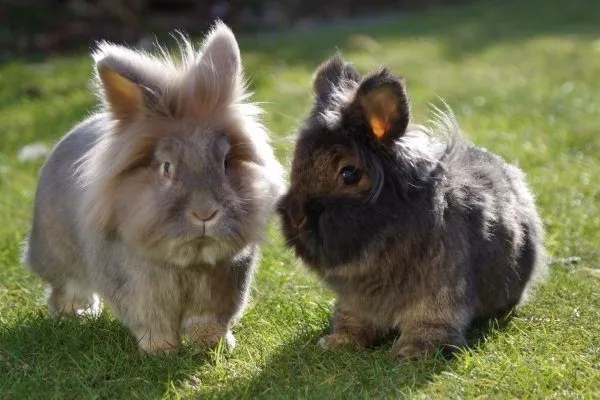
Decorative rabbits of the Lionhead breed

Rabbits have a lot of fur on their heads.
History of origin
Lionhead rabbits are a relatively recent development, appearing at the end of the last millennium. They were developed by American breeders through extensive crossbreeding of fluffy and shorthaired breeds. A few years later, these decorative rabbits began actively participating in international exhibitions.
According to another theory, the Lionhead rabbit is the result of crossing a Swiss Fox and a Belgian Dwarf. Later, Angora Dwarf rabbits were used in breeding, hence the similarity in fur structure and length.
The first Lionhead rabbit appeared in Belgium, but was officially patented in the United Kingdom in 2002. The breed was brought to Russia in 2000, and has since become popular among both adults and children.
Description of the breed
These fluffy, small-sized rabbits are suitable not only for mass breeding but also as pets. Babies up to 6 months weigh up to 1 kg, while adults weigh up to 2 kg. A distinctive feature of the breed is the large amount of fur on its head, giving rise to its second name, the Lionhead.
Fancy rabbits have a charming appearance. The standard includes approximately 60 colors. The most common are black, white, gray, ash, gold, and orange.
The general impression of the Lionhead breed is of a stocky, small-sized animal with a lush mane.
Appearance
The rabbit has a shortened body and a flattened croup. The body is proportionate to the lower limbs. The head is small, with distinct cheekbones on the sides that flow smoothly into the neck.
The eyes are set wide apart, and the ears are erect and up to 9 cm long. The fur on the body is evenly distributed but shorter than on the head. The hind limbs are long and strong, enabling the animal to jump high.
Character
The Lionhead rabbit breed is a relatively new one, so its behavior is not fully understood. Generally, these animals have a docile nature, are friendly and welcoming, and coexist well with humans.
Rabbits are very intelligent. They can learn a few simple commands throughout their lives. Don't frighten them, as they can become aggressive and even bite. Don't buy this "toy" for small children, as a rabbit can become hostile if seriously frightened.
This animal has an inquisitive nature and won't sit in a cage for long. The rabbit loves to travel, so provide it with a spacious enclosure with high railings. It will quickly become accustomed to its new home and neighbors, behaving like a full-fledged member of the family.
Breed standards
Lionhead rabbits differ in appearance from other breeds. When purchasing a pet for breeding and exhibition, the following standards are considered:
- a grounded body with well-developed muscles and no fat;
- proportional chest, hips, shoulders;
- round head with a mane 5-7 cm long;
- short ears, rounded at the ends;
- approximate weight of an adult is 1700 g;
- wide-set brown eyes;
- visual absence of neck;
- triangular bib 7-8 cm long;
- 60 colors, including combinations of primary tones.
Breed defects
Rabbits that have:
- thin, faded fur;
- the mane falls onto the ears and nose;
- long hairs in the croup area;
- the body is narrow, disproportionate to the lower limbs;
- ears longer than 9 cm, falling onto the cheeks;
- sharply chopped croup;
- low stand.
An animal with a defect stands high on its legs and appears thin and emaciated. Such rabbits are not shown and are sold by breeders at a lower price—not for breeding.
Lifestyle and behavior
A pet rabbit lives in a cage, but it shouldn't be confined to a cage most of the time. Let it out for a walk twice a day. During this time, remove other pets from the house, as dogs and cats can be very frightening.
Remember that rabbits are rodents. While roaming around your apartment, they may chew on electrical wiring, baseboards, and carpets. To avoid such problems, provide your rabbit with an enclosure, preferably outdoors.
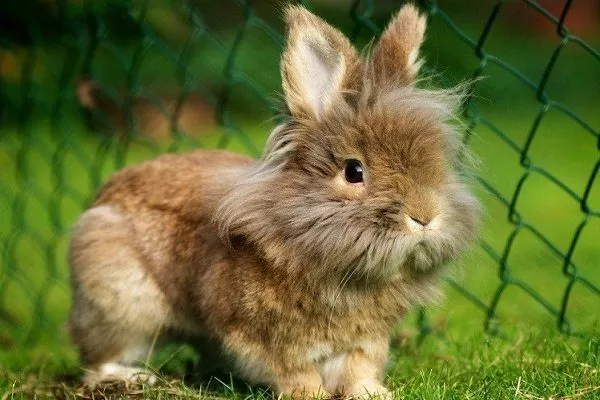
Pet rabbits are trainable, so with the owner's dedication and persistence, they'll quickly figure out where the litter box is and what it's for. Once trained, there will be no problems with cleanliness or odors in the apartment.
Lionhead rabbits are friendly with humans, but they dislike any interference with their freedom. For example, if held against their will, they become irritable and may even bite.
In its new home, the rabbit is quiet. It's unsociable, retreating to a far corner and avoiding contact. It needs a few days to adapt to the new surroundings, unfamiliar sounds, and smells. During this period, don't frighten it, otherwise it may become aggressive in self-defense.
To avoid shocking your pet, show maximum care and understanding. Give your rabbit freedom and the opportunity to develop its habits. Once its lifestyle is established, conflicts will no longer arise.
Lionhead rabbits help children with autism learn and develop basic skills.
Life expectancy
If a rabbit lives stress-free, is cared for, is properly fed, and is healthy, it can live 7 to 9 years. Poor nutrition, improper care, and lack of veterinary attention at the first signs of illness can shorten its lifespan.
There are known cases of Lionhead rabbits dying of boredom and loneliness in comfortable living conditions. There are also reports of animals living up to 11 years. Genetics and congenital diseases also influence a rabbit's lifespan.
Maintenance and care
Since your rabbit has long hair, brush it regularly. This will not only remove dead hair but also help prevent digestive problems. Brush your rabbit once a week for 15-30 minutes.
To prevent illness, clean the cage regularly and avoid odor buildup. Provide age-appropriate vaccinations and deworming treatment for effective prevention.
Cage requirements
When buying a house for your rabbit, keep in mind that it will be there for most of the day. The cage should be spacious and roomy. The optimal size is 100 x 80 x 70 cm. Buy accessories right away, such as a feeder, drinking bowl, a piece of wood for sharpening the incisors. Choose litter that doesn't contain pine sawdust, which can cause severe allergies in animals.
Place the cage in a visible location so your rabbit can observe everything going on in the house. Make sure it's out of direct sunlight and drafts, otherwise your pet will become lethargic, sick, and even die. The optimal room temperature is 23 degrees Celsius (73 degrees Fahrenheit). Be sure to provide fresh air and light.
Hygiene and care
Rabbits are clean animals that regularly groom themselves. Long fur gets caught in the stomach and becomes matted, causing intestinal obstruction. This condition results in death.
Rabbits are generally low-maintenance in terms of care. Daily brushing, changing the litter box, and cleaning the cage are essential. This will prevent unpleasant odors in the apartment, and the lack of a shedding period makes them suitable for allergy sufferers.
Other recommendations from experienced rabbit breeders:
- Brush your rabbit's teeth 3 times a week.
- Comb out tangles from the mane promptly and prevent their appearance.
- Trim your rabbit's claws once a month.
- Provide your animal with physical activity.
- Monitor your rabbit's weight.
- Do not bathe the animal, otherwise it will experience severe stress.
- Introduce new foods gradually; avoid sudden changes in diet.
Diet
A rabbit's diet consists of 80% succulent grass and 20% grains. For feeding, gather dandelions, alfalfa, burdock, and wheatgrass. Feed the animal dried grass, otherwise it can disrupt digestion and cause bloating.
Suitable cereals for rabbits include oats, wheat, and barley. Thin rowan and acacia branches are very beneficial, and fresh meadow grass hay, such as clover and plantain, is rich in nutrients.
Add fresh vegetables to your pet's daily diet in limited quantities. For example, carrots are beneficial for wearing down teeth. Don't forget the benefits of cabbage leaves, turnips, pumpkin, apples, and beets. Fruits and vegetables that increase gas production remain prohibited.
To balance your pet's diet, introduce fortified feed into the daily menu, place a small piece of chalk in the cage, and mix bone meal and meat and bone meal into the food.
A rabbit should eat in moderation and not overfeed. Overfeeding leads to obesity and early death.
For information on what to feed a pet rabbit, watch the following video:
Breeding
Lionhead rabbits are very fertile. They are polygamous, with one male per 3-4 females in farm settings. They begin breeding at 6 months of age and continue to do so year-round. More has been written about rabbit mating. here.
Pregnancy lasts 30-40 days. The doe is calm, sleeping most of the time. A litter consists of 3 to 6 babies. Before giving birth, the doe tears off her down and lines a warm nest. For breeders, this is a sign that a litter is imminent.
A pregnant doe should always have fresh water available. The more dry food she eats, the more often she drinks. If fluid levels are low, the doe will eat her babies in the first hours of life.
Experienced rabbit breeders claim that sterilization of females prolongs their life.
Caring for young animals
Baby rabbits are born very small and pink. They are hairless, blind, and unable to move independently. They stay with their mother at all times and should not be touched or moved outdoors (due to drafts).
Read about separating a doe from her babies in next article.
For the first 3-4 weeks, baby rabbits feed exclusively on their mother's milk. By the age of one month, they begin to try compound feed and alfalfa hay, but they are still breastfed. Their diet must include mineral supplements and vitamins.
- ✓ Ensure constant access to mother's milk: this is critical for the survival of the rabbits.
- ✓ Maintain the temperature in the nest: young birds are sensitive to cold.
Possible diseases
After severe stress, a rabbit may develop diarrhea. The stool returns to normal within 24 hours. If this doesn't happen, urgent veterinary attention is needed. Factors that can trigger fright include small children, cats, extraneous noises, etc. Another sign of strong emotions is grunting and twitching in sleep.
Regularly inspect your pet's coat for parasites. If any are detected, promptly treat with antiparasitic and anthelmintic medications to prevent coccidiosis from developing.
Possible diseases:
- Gastrointestinal stasis. A disorder of intestinal peristalsis that requires immediate veterinary attention.
- Urinary dermatitis. Hair loss on the hind legs, inflammation of the skin in these areas.
- Myxomatosis. Suppuration of the eyes and the appearance of blisters due to untreated fleas.
If sniffling or ulcers appear on the face, immediate veterinary attention is required.
How to choose a Lionhead rabbit?
When purchasing a four-legged friend, approach the purchase with special care. A sick animal won't survive long. Basic rules for choosing:
- Healthy ears, clean nose and eyes - when mucus accumulates, the question of the animal's health arises.
- Dense body - if the bones are soft, this is one of the symptoms of rickets.
- The absence of dirt under the tail is one of the signs of a purebred breed.
- Physical activity – passive behavior should be a warning sign of whether the rabbit is healthy.
- The absence of defects on the teeth – overgrowing of incisors is one of the symptoms of congenital pathology.
- ✓ Check your rabbit's activity: a healthy animal shows interest in the world around it.
- ✓ Inspect the fur: it should be thick, without bald spots or signs of parasites.
- ✓ Assess the condition of your eyes and nose: the absence of discharge indicates good health.
Advantages and disadvantages
When purchasing a pet, weigh the pros and cons. Start with the advantages of Lionhead rabbits:
- devotion to the owner;
- miniature size;
- cleanliness;
- ease of care;
- attractive appearance;
- large selection of colors;
- moderate or no shedding;
- friendly character.
Disadvantages of choice:
- frequent timidity;
- food selectivity;
- high price;
- period of adaptation to a new place;
- unpredictable character.
For information on keeping lionhead rabbits, watch the following video:
Reviews
The lionhead rabbit is a pet and a source of income for many rabbit breeders. If you provide the animal with favorable conditions, it will delight you with its appearance and good nature for years to come.