
Californian rabbits are a beautiful and easy-to-care-for breed. Raising them makes for a profitable business. These animals adapt well to new environments and can inhabit both the south and north. They grow rapidly, producing not only delicious meat but also high-quality fur.
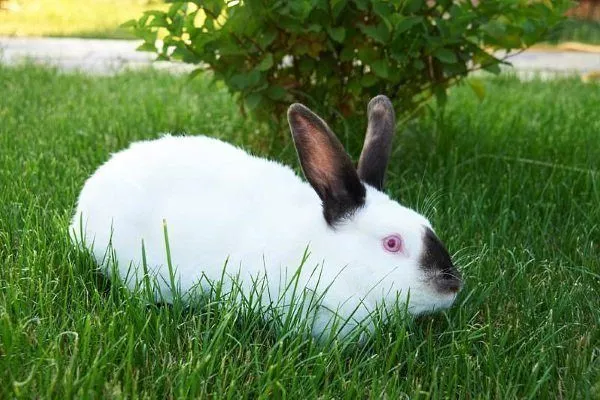
History of origin
This rabbit species originates from the state of California in the United States. Initially, these animals were hybrids, created by crossing several breeds—the New Zealand White, Soviet Chinchilla, and Russian Ermine.
The main goal of the research was to create a unique breed capable of rapid growth and high-quality fur. Scientists developed the Californian strain, which produces tasty, high-quality, and tender meat. In 1928, this species was recognized as a distinct species, and the animals were no longer considered hybrids.
In the 1970s, this breed was introduced to our country. The animals easily adapted to life in central Russia. Today, they are actively bred both on large farms for industrial purposes and on small farms. These efforts have directly contributed to the rapid spread of this species across the globe.
Today, Californians rank second among the most popular meat types.
External features
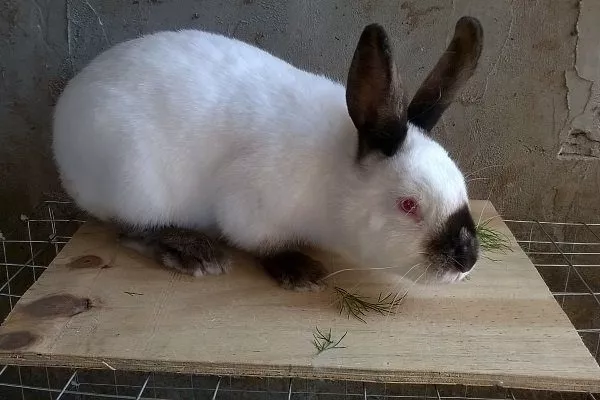
The main characteristics by which one can identify the breed being described are:
- the body shape is cylindrical;
- outwardly it seems that the animal is not of the largest shape;
- paws of medium length, slightly thick;
- thick and dense fur, stuffed;
- small neck;
- the ears are not very long;
- small head, not heavy;
- red eyes;
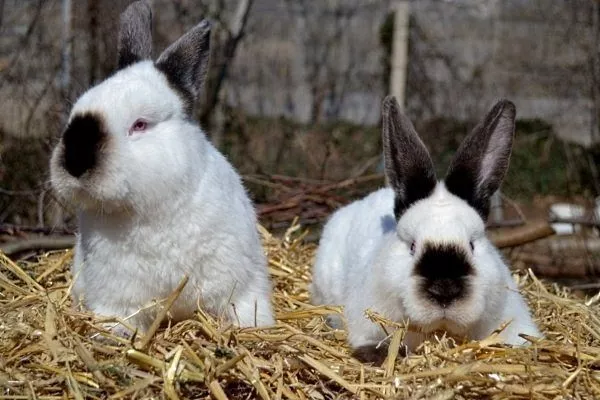
- The fur is almost entirely white, but the paws, nose and tail are dark brown.
Smoky blue or chocolate colored rabbits are rare. Inexperienced breeders may confuse this breed with Butterfly rabbits. To distinguish between these two similar breeds, pay special attention to the face – Butterfly rabbits have dark eyes and a small spot on their nose, resembling a butterfly with its wings spread.
Young rabbits don't immediately develop spotting. Young rabbits often have light or lilac-blue markings, but with age, the breed's distinctive features become more pronounced.
Buy young animals only from experienced breeders who will not deceive you.
Breed characteristics
The Californian breed is considered an industrial breed, but these rabbits can also be kept in private households. While these animals may grow more slowly, unless they are raised for meat, this is not a significant factor. These rabbits also make excellent family pets.
Character and behavior
Californians are known for their calm and docile nature. Even when in unfamiliar surroundings, they remain calm and experience virtually no stress. However, they are very active and inquisitive, so they are not exactly apathetic.
They have a gentle nature and quickly become attached to people. They are very playful, making them popular pets. They are highly intelligent, but they do have one quirk: they love to chew. Therefore, care must be taken to prevent them from damaging furniture or expensive items in the apartment. When walking a rabbit around the apartment, constant supervision is required.
Females become caring mothers who can care for their young on their own. No additional human assistance is required. They can also be given other rabbits, and the females will actively care for them if they share a cage.
Productive qualities
Californians are excellent producers, making them a popular choice among professional farmers. Mature animals weigh approximately 5.8-6 kg. They grow rapidly, and are ready for slaughter at 5-6 months. A baby rabbit weighs approximately 50 g, but reaches 2 kg within two months. Seven months is considered the turning point, as active growth ceases.
The fat-to-meat ratio is good, making this breed more profitable for development. You can get approximately 80% high-quality meat and about 2% fat.
One female rabbit gives birth to approximately 8-14 kits. They have a strong maternal instinct and are also excellent milk producers. All this contributes to the rapid growth of the young. Over the course of a year, a single female rabbit will give birth to no more than 35 kits.
There's a compactness index used to evaluate a breed's productivity. For Californian rabbits, this figure is approximately 60%. This is the maximum for meat breeds.
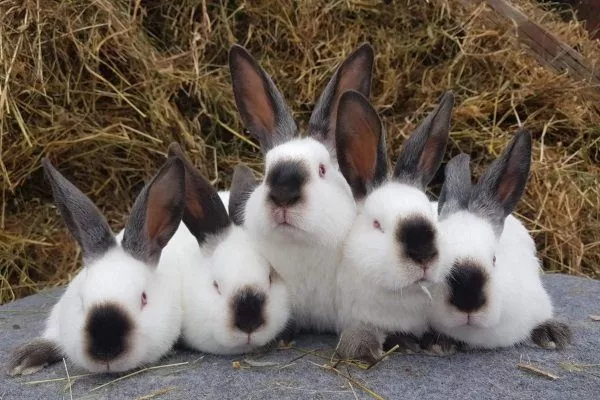
Growing this breed requires minimal financial and time investment, but productivity is at the highest level.
Californian rabbit weight chart by month
Your rabbit's weight will change depending on its age. Below is a rough chart showing how a rabbit's weight increases as it grows:
| Age of the rabbit | Weight, kg |
| Newborn baby rabbit | 0.6 |
| One month | 0.9-1.1 |
| Two months | 1.5-1.8 |
| Three months | 1.8-2.6 |
| Four months | 2.6-3.5 |
| Five months | 3.5-3.7 |
| Six months | 3.9-4.2 |
| Seven months | 4.5-6 |
Pros and cons
The breed described has many advantages, which include:
- from 5 months the animals are ready for breeding;
- females are characterized by excellent milk production and good maternal instinct;
- it takes a minimum amount of time for a rabbit to reach its maximum weight;
- high fertility – one female can produce up to 35 rabbits per year;
- high genetic stability.
The main drawback of Californians is their sensitivity to diet and feed. Therefore, they are not always suitable for home rearing.
The video below provides an overview of the Californian rabbit breed:
How to choose rabbits?
Farmers recommend considering the following points when purchasing rabbits:
- take animals from small litters;
- Conduct a thorough examination of each individual;
- if the animal is healthy, it is well-fed, its fur is shiny, thick and clean;
- eyes are clean and clear;
- If you are going to take a pair of females, choose them from several nests;
- do not take individuals with a very swollen belly and dull fur;
- clear nose, no visible discharge;
- inspect your ears – there should be no discharge or inflammation;
- The animal should be active and in a good mood.
Healthy individuals are inquisitive and friendly, and are not afraid of contact with strangers. They should not be passive or overly shy.
Signs of purebredness
Individuals that have the following characteristics are considered purebred:
- eyes are red;
- a hump is visible on the nose;
- coat color - dark spots on a light background, located on the tips of the paws, tail and ears, over time, spots may appear under the eyes;
- The spots should be only black, brown shades are extremely rare.
- ✓ Presence of a hump on the nose.
- ✓ Dark spots under the eyes that appear with age.
Acceptable deviations from the norm
Minor deviations are allowed:
- head and neck elongated;
- the body type is not harmonious;
- ears are loosely set and not widely spaced;
- non-silky wool;
- the chin is very pronounced.
Even with all this information, the rabbits are purebred and there is no doubt that they match the breed.
Growing and caring for them at home
This species is so popular due to its ability to quickly adapt to new environments. They adapt easily and begin to rapidly gain weight and develop. The animals require minimal maintenance to ensure a comfortable life.
Requirements for housing for maintenance
Rabbits feel comfortable in a cage. It's important that it's high enough to allow an adult rabbit to stand on its hind legs and move around freely. Be sure to provide a small hiding place inside the cage where the animal can hide from people and get some sleep.
There should always be access to waterers and feeders, as Californians should not be restricted in either drinking or feeding.
Hay can be used as bedding. Change the bedding regularly, as it absorbs odors and collects food residue. Place the animals' cages in a semi-shaded, draft-free area that is regularly ventilated. Avoid overheating or overcooling the animals.
Be sure to provide a nesting box for the females, where they will give birth and raise their young. Once the animals have grown stronger, they are transferred to a cage. A nesting box not only protects them from the cold but also allows the female to feel completely comfortable and safe.
Feeders and drinkers
Rabbits are very active, so simple waterers and feeders are absolutely not suitable, as they will constantly paw in them and introduce dirt into their food. This can cause an upset stomach or lead to a dangerous infection.
Use special nipple drinkers, but you can also make them yourself from simple plastic bottles. this article You will learn how to make a drinking bowl yourself.
Opt for hopper-type feeders. This type of feeder looks like a trough with a closed compartment. The food compartment is attached to the outside, leaving only the bottom portion inside the cage. These feeders prevent dirt from getting into the food and are very easy to use.
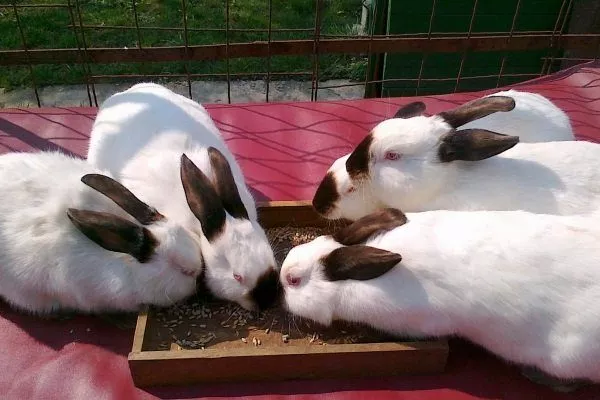
Organizing a dog walk
Rabbits are very active and love to jump, so they need regular outdoor exercise. To organize a walk, set up an area and fence it with mesh:
- Use a metal mesh (fraction no larger than 5 cm).
- Bury the net into the ground at least 0.5 m deep, as the animals have a habit of digging holes.
- The net will provide the animals with reliable protection from predators, as well as other animals that may carry infections.
- Cover the enclosure with mesh and top.
- Cover the floor with boards or fill it with cement.
- No more than 5 adult rabbits and 25 babies should be kept per 20 sq. m.
- Make the enclosure at least 1 m high.
- It is desirable that one of the walls be completely solid, which will provide protection for the animals from the wind.
- Place the enclosure on a slight elevation to prevent melting snow and rain from flooding it.
- Rabbits need protection from the sun and bad weather, so build a small canopy on top and place feeders and waterers under it.
Free-range allows the animal to improve its health. Weight gain accelerates, and female rabbits care for their offspring because they share a similar scent when kept in the enclosure.
Feeding ration
The animals' productivity is determined by how well-balanced and balanced their diet is. This directly impacts their activity and health. Remember, Californians' diets change with the seasons.
We recommend reading the article about When and what to feed rabbits.
What you need to consider:
- These animals are growing and developing very rapidly, so their bodies require food containing high amounts of protein. Feed them fish meal daily; meat meal is also suitable, and dairy products with protein are essential.
- Traditional feeds are also suitable, such as branches, special compound feed, fresh herbs, and various root vegetables mixed with hay. Water bowls should be filled with fresh water. During hot weather, provide more water, and in winter, warm it up before feeding.
- Depending on the age of the rabbits, the feeding frequency changes. For adults, feeding 2-3 times a day is sufficient. Recently weaned rabbits should be fed at least 5-6 times. When and how to wean rabbits – read on. Here.
- Californians aren't picky and will eat almost anything. Periodically add clover, fresh dandelions, sainfoin, and burdock. Plantain and tansy are also good choices.
The quality and balance of the diet are crucial. Animals require a regular supply of vitamins and valuable micronutrients.
- In winter, use silage as an alternative to greens. Californians enjoy cabbage, zucchini, carrots, and pumpkin. For a more varied and healthy diet, add bananas and parsley. However, add such delights to your menu with caution and in small quantities, as they can provoke an allergic reaction or serious gastrointestinal upset.
- The diet should include oats, barley, corn with bran, and beans. Roughage, such as ash or aspen branches, maple, and linden, is also beneficial.
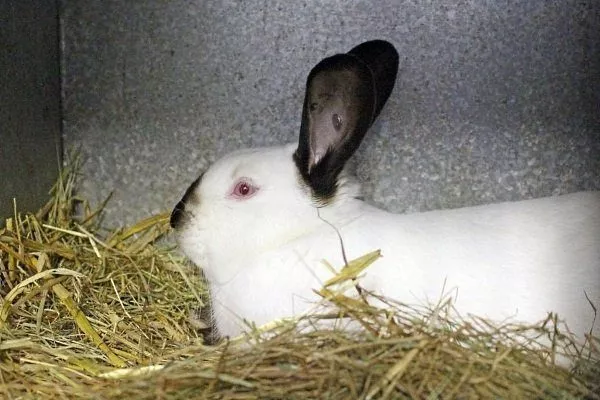
Care and hygiene
Care for your pet's claws, ears, eyes, fur, and skin is important. Perform a thorough inspection of each animal approximately every 7-10 days. This approach will allow you to detect any problems early and resolve them quickly.
Basic care recommendations:
- Pay special attention to the condition of the coat. Be careful not to let tangles form, but if they do, carefully trim them off. Be careful not to injure the pet. Brush the coat regularly with a special brush. Try to use brushes made of natural fibers. Perform this procedure approximately every 7-10 days.
- Your skin should always be clean and perfectly smooth. Watch for scabs, pimples, lesions, or blemishes. These symptoms indicate a disruption in your body—for example, severe stress or a hormonal imbalance.
- Maintain the condition of your ears by keeping them perfectly clean. Clean them regularly—at least once every 30 days and whenever they become dirty.
- Carefully inspect your rabbit's eyes every day. Tearing can occur due to a speck of dirt or injury. If mucus or dry discharge appears, gently remove it with a cotton ball soaked in warm water. If both eyes begin to water or discharge pus, inflammation has set in and the rabbit should be taken to the veterinarian immediately for treatment.
Peculiarities of Keeping Californians for Commercial Purposes
Their low maintenance and easy care make Californian rabbits suitable for both cages and pits. However, it's important to know some subtleties and recommendations for setting up a rabbit's home to ensure maximum comfort.
In the cells
Cages should be made of mesh or natural wood. Inside the cages where the females live, create a brood nest where she can raise her young.
Conditions
Cages measuring 0.5 square meters can accommodate no more than 5 rabbits. Be sure to line the bottom with bedding (sawdust or straw), and place water bowls and feeders within easy reach. If you feed greens, add them to the cage in small amounts to ensure the rabbits receive vitamins.
Disinfection of cells
Regular cage disinfection is mandatory. This can be accomplished in several ways:
- Physical techniques – Treat with a germicidal lamp or heat with a blowtorch. You can simply dry the cages in the sun on warm days, which will kill worm eggs, harmful bacteria, and viruses.
- Biological agents – Use enzymes to treat certain types of bacteria. Use this method as sparingly as possible.
- Combined methods – use both chemical and physical methods simultaneously.
- Chemical methods – use special chemicals.
In the pits
Pits can also be used for housing Californian trout. This allows for the most natural conditions for the animals, especially in industrial farming.
How to arrange a pit?
You can make such a hole yourself by following the following sequence of actions:
- Dig a hole approximately 2x2x1 m in size;
- using slate, strengthen the walls;
- cover the floor with boards or mesh;
- Cover the hole with a roof and install a fence around it.
Conditions
Using pits is quite popular because it requires less time and effort to care for the animals. Rabbits can dig their own pits, mate, and raise their young. Be sure to provide sufficient water and regular feeding.
Care
Clean the pit periodically, regularly removing any food and hay debris. This is necessary to prevent the animals from getting sick and their appearance from deteriorating. During cleaning, remove the animals from the pit and ventilate it regularly.
How to breed rabbits correctly?
Already at 5 months of age, rabbits are ready engage in mating and produce offspring. The average lifespan of breeding animals is 9-11 years. Maintaining high productivity requires careful monitoring of the animals' nutrition and health.
Principles of selection for reproduction
To obtain offspring, choose both males and females very carefully. Pay particular attention to the build, weight, and activity level of the animals. If the animal is too large or too small, it is completely unsuitable for continuing the herd. Individuals must fully meet the standard.
Kindling and care of young animals
On average, a female can produce offspring 4-5 times per year. Avoid breeding animals too frequently, as this shortens their lifespan. At 5 months of age, a female's body is fully prepared for mating and pregnancy. Females go into heat every 8 days, lasting 3-4 days.
A female rabbit carries her litter for 29-31 days, giving birth to 8-11 kits at a time. In most cases, birth is relatively straightforward, and the mother produces enough milk to feed her entire litter.
Feeding the young
A newborn rabbit weighs approximately 40 grams, gaining weight quickly and weighing almost 1.5 kg by two months. By five months, they weigh 3.5 kg, after which growth begins to decline. The babies are born blind, their eyes opening at approximately 10-12 days. During this time, their diet consists exclusively of their mother's milk. The mother rabbit can nurse her offspring independently for up to two months.
At 20 days old, the babies begin to try adult food. From one month of age, you can gradually increase their complementary foods. Wean the young from their mother no earlier than 45 days after birth. Regularly add vitamin B to their water and enrich their food with chamomile and St. John's wort. This will help the young organisms adapt to the new diet more quickly.
Feed your baby small amounts of yogurt, which helps the baby's still-developing body digest this new food more easily. After reaching two months of age, introduce vegetables into the diet.
Do not overfeed does, as overweight does cannot be used for further breeding.
Vaccination
Get vaccinated on time:
- at 28 days – against myxomatosis;
- at 45 days – against viral hemorrhagic disease of rabbits;
- revaccination is performed every 90 days;
- In the future, vaccinations will be carried out every six months.
Purchase vaccinations only from veterinary pharmacies. Carefully read the included storage and use instructions.
When to slaughter for meat?
At 5 months, animals can be slaughtered, as weight gain slows after this period. The average rabbit weighs approximately 3.5 kg. At this age, the meat has the best flavor, unlike that of older animals. Slaughter for meat can begin as early as 3 months.
Breeding prospects
This breed is not only versatile but also the most comfortable of all meat-producing domestic animals. No special conditions or knowledge are required to start your own rabbit breeding business. Simply purchase one male and several females, and within six months you'll have a full-fledged herd.
Where and how is it best to buy a Californian rabbit?
It's best to purchase this breed from a professional farmer who specifically breeds Californians. This approach will ensure an animal whose growth, development, and reproduction will be unimpeded. Before purchasing, consider how the animals are cared for and the condition of the young and adult animals.
Why don't rabbits grow when fattened?
The following factors, which can slow down weight gain, directly influence the growth rate of Californians:
- the basis of the diet of young animals is hay in combination with compound feed;
- the temperature in the room where the animals are kept does not correspond to the norm;
- The quality of fattening is influenced by the water temperature, which should be approximately +18-20 degrees Celsius;
- each individual requires at least 300 ml of water, since without a sufficient amount of water it is impossible to achieve good weight gain;
- rabbits are given a large amount of vegetables;
- Low weight gain may be caused by the presence of latent infections.
- ✓ The optimal temperature of drinking water should be +18-20°C to improve feed absorption and weight gain.
- ✓ Daily water consumption per individual should be at least 300 ml to ensure good weight gain.
Reviews of the breed
Californian rabbits are a unique breed in every way. After six months, the animals reach a good weight and are ready for slaughter if raised for meat. Meat production is good. They do not require any special housing conditions or diet.