
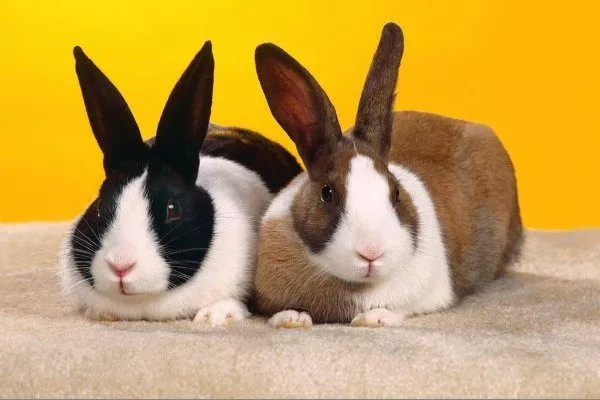
The Dutch rabbit is one of the most popular breeds worldwide. Its main characteristics are its small size, varied colors, and incredibly beautiful appearance.
History of origin
Much remains unknown about the origins of this breed. However, the date is certain: 1800. Active work on breeding Dutch rabbits began in England.
Numerous mutations occurred in the rabbit's genes, resulting in the animals acquiring unusual physical characteristics—red eyes, soft white fur, and a sturdy body. The mutant individuals were then repeatedly crossbred. In 1947, an exhibition was held in Amsterdam where the scientists presented the results of their work—the Dutch rabbits.
Description of the breed
Initially, this breed was considered a meat and fur breed; the average live weight of a single rabbit could reach 5.5 kg. After the development of broiler breeds, Dutch rabbits became more compact and considered ornamental.
His peaceful nature and unusual appearance made him very popular among breeders.
External data
Representatives of the breed described have the following appearance characteristics:
- strong body of compact size;
- large and strong hind legs, compared to the front ones;
- on average, the weight fluctuates between 1.4-1.8 kg, but some animals can reach 3 kg;
- the neck does not have clearly defined outlines;
- short ears, covered with hair;
- chubby cheeks;
- the head is not large, the muzzle is slightly flattened;
- soft and thick fur, not too long;
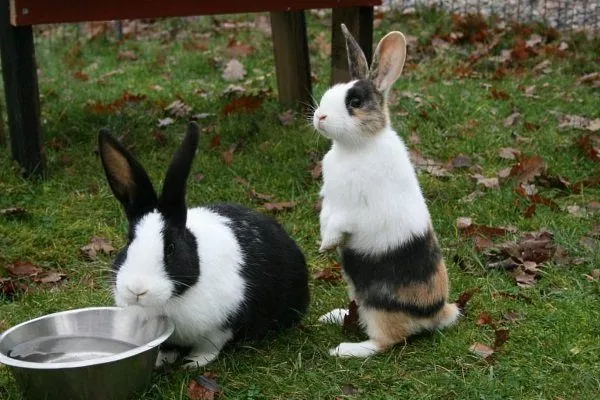
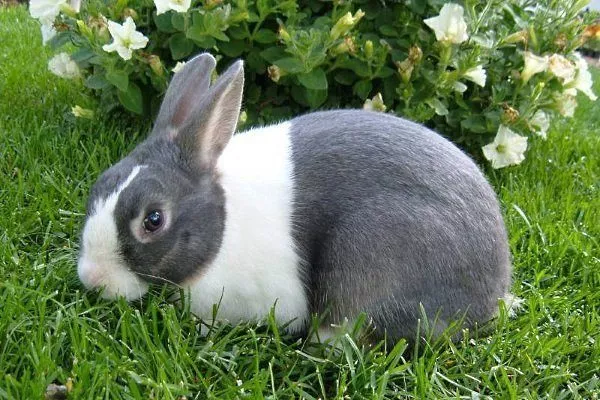
- The color of the fur is the main feature of the breed - the back of the body is dark, the front is white;
- There are individuals whose fur has three shades;
- eyes can be brown or gray-blue;
- On average, life expectancy is 8-11 years.
Color
These animals can have fur in a wide variety of interesting colors. Dutchies are a rare breed, but today there are more than 25 different fur color variations. They come in traditional colors, as well as ash-blue, deep red, black and white, silver-gray, and more.
Watch the video below for an overview of the Dutch Rabbit:
Thanks to its high quality and unique color options, Dutch fur is in high demand in the natural fur industry.
Weight
Adults weigh between 4 and 6 kg. Their bodies are muscular and fairly strong. They grow quickly and gain weight rapidly, so by 5 months of age, they are ready for slaughter if raised for meat production.
Character
Dutch Terriers are friendly and affectionate animals with a docile nature. They are sociable, brave, and inquisitive, which sets them apart from other decorative breeds. They are ideal as family pets. Another characteristic of Dutch Terriers is their quick learning ability, making them easy to litter train, which greatly simplifies cleaning.
Maintenance and care
Dutch rabbits aren't fussy, but to ensure they feel comfortable, certain conditions need to be created. First and foremost, you need to consider purchasing and furnishing the cage in which the rabbit will live.
- ✓ The room temperature should be maintained between 18-22°C to prevent heat stroke.
- ✓ Air humidity should not exceed 60% to avoid respiratory diseases.
Selecting and arranging a cage
Make sure that the animal's house meets the following characteristics:
- the cage is quite spacious – approximately 70-50 cm;
- do not leave the cage near heaters or in the sun, as rabbits do not tolerate heat well;
- do not leave the cage in a draft;
- cover the bottom of the cage with straw, hay or wood shavings;
- Attach a drinking bowl to the side grate so that the rabbit has constant access to water (read Here on how to make a drinking bowl yourself);
- choose heavy feeders that the animal cannot tip over;
- In the cage, equip a place for rest and a toilet.
Care instructions
Regularly cleaning the cage helps keep your pet healthy. Remove food debris and clean the litter box daily, change the bedding, and provide fresh water regularly.
Perform a thorough cleaning approximately every 7-10 days:
- Move the rabbit to a safe place, remove the bedding completely with all food remains.
- Thoroughly clean the cage with a stiff-bristled brush. Use a toothbrush to clean all hard-to-reach areas.
- Wash the cage with warm water and a vinegar solution (equal parts water and vinegar) or plain soap. Finally, rinse thoroughly with clean water.
- Once the cage is thoroughly dry, lay out new bedding, add water and food.
- Always leave a small, uncleaned corner or a piece of old bedding. Animals have a habit of marking their home, and if they don't smell their own scent, they'll become restless.
When cleaning, do not use chemicals. If they remain in the cage, they can cause serious health problems for your rabbit.
Preventive vaccinations
Regular preventative vaccinations help keep your rabbit in tip-top health. Try to stick to the following schedule:
- up to 45 days, vaccination against myxomatosis is given;
- at 4.5 months, a booster vaccination is carried out and in the future it is done every six months;
- At 2 months of age, the animal is vaccinated against rabies.
To avoid weakening your immune system, take deworming medication before each vaccination.
Feeding Features
The Dutch diet should include:
- compound feed, which contains all the valuable minerals and vitamins;
- oats with corn;
- dried grass - about 250 g per day per individual;
- dandelion with nettle;
- fruits and vegetables;
- brewer's yeast, as it contains a large amount of amino acids and vitamins;
- salt and chalk (feed).
We recommend reading the article – How, when, and what to feed rabbits.
Breeding
When planning to breed Dutch rabbits, you need to acquire a male and female. A female rabbit can give birth to approximately 7-9 kittens at a time. Pregnancies occur 6-8 times a year. Do not begin mating until the animals are 7 months old. Animals older than 3 years are not suitable for breeding.
When the sow begins to estrus, her behavior changes—she becomes overly nervous and begins plucking her fur. During this period, she should be placed in the same cage with the male. Gestation lasts approximately 30 days. Before the birth, the sow constructs a "nest" from her own plucked fur; a farrowing cage can also be prepared for her in advance.
Breed profitability
Rabbits not only make excellent pets but also produce beautiful fur. Rabbit pelts are widely used to produce expensive fur garments. Dutch rabbits are a source of excellent, tender, and nutritious meat.
Females can give birth to up to 10 kits at a time. The young grow quickly and gain weight rapidly. Therefore, this breed is used for both meat and pelts. The fur is used as a secondary product and is in high demand.
| Parameter | Dutch rabbit | Other ornamental breeds |
|---|---|---|
| Cost of a cage | Above average | Average |
| Monthly feed costs | 30-40 USD | 20-30 USD |
Advantages and disadvantages
The main advantages of the described rabbit breed are:
- miniature size, so they can be kept in small cages;
- not picky about food;
- easy to care for and grow;
- learns quickly and can use a litter box;
- non-aggressive and docile nature;
- beautiful appearance.
However, there are also some disadvantages to the breed:
- the cage and other accessories for care and maintenance are expensive;
- the animal's house needs to be cleaned every day and the water needs to be kept fresh at all times;
- The animals have a tendency to chew everything around them, so they should not be allowed out for a walk around the apartment without supervision;
- a specific aroma may appear;
- Shedding occurs regularly and during this period more attention needs to be paid to the pet.
At night, the animals may exhibit increased activity, which interferes with a peaceful rest.
Reviews
The Dutch rabbit is one of the most sought-after representatives of this breed. It's ideal for apartment living. Easy to care for and feed, it's easy to raise, even for those new to these animals.